If you’re specifying LED lighting for a US commercial or industrial project, one decision has more direct impact on the economics of that project than almost any other: whether the products you specify carry DLC Standard or DLC Premium listing under version 5.1. The difference can mean $25–$50 more per fixture in utility rebate money — and on a warehouse installation running 100 or 200 units, that difference is material.
But in 2026, the picture is more complicated. DLC V6.0 is now in effect, with V5.1 products facing a delisting deadline that will affect rebate eligibility for current stock. This article explains exactly what DLC 5.1 Premium means, what the performance criteria are, how rebate programs differ between Standard and Premium, and what the V6.0 transition means for US buyers and distributors specifying LED fixtures now.
Key Takeaways
- DLC Premium listing under V5.1 requires higher efficacy (typically ≥150–170 lm/W) and controls-ready capability — and triggers bonus rebates of $25–$50 per unit or more from many utility programs.
- Between 70–85% of US utility rebate programs require DLC listing to qualify for any incentive at all — making DLC status a gatekeeping criterion, not just a bonus.
- DLC V6.0 is now in effect as of January 2026. V5.1 products will be delisted from the active QPL on December 15, 2026. Distributors should audit their stock now.
What Is the Design Lights Consortium (DLC)?
The Organization and Its Role
The DesignLights Consortium is a non-profit organization that sets performance standards for commercial LED lighting and maintains the Qualified Products List (QPL) — a publicly searchable database of products verified to meet its technical requirements. The DLC’s technical requirements define performance thresholds for the QPL, which is used by 75% of North American energy efficiency programs to identify high-quality, energy-efficient commercial lighting eligible for rebates and incentives.
For US facility managers, electrical contractors, and distributors, the QPL is the gateway to utility rebate money. Specify a product that isn’t on the QPL, and the project typically receives either a reduced incentive (if any) or none at all — requiring time-consuming engineering review to substitute for the QPL verification that most utilities depend on.
Standard vs Premium — The Two Tiers That Matter
Within the DLC QPL, every product is listed as either DLC Standard or DLC Premium. The difference isn’t cosmetic — it reflects measurable differences in efficacy, light quality, and controllability, and it directly maps to the rebate tier a product qualifies for.
Over a 100-unit installation, that $25–$50 differential represents $2,500–$5,000 in immediate capital recovery from utility incentives — often offsetting a meaningful portion of the incremental cost difference between lower-efficacy and high-efficacy fixture options.

DLC 5.1 Premium — What Are the Actual Requirements?
The V5.1 Performance Criteria
DLC V5.1, finalized in 2020, significantly raised the bar from earlier versions in two areas: efficacy and light quality. Version 5.1 added new color quality requirements to ensure good color rendering and better consistency over time, and introduced improved glare performance for products seeking DLC Premium V5.1 qualification.
For DLC Premium listing specifically, the key requirements include:
| Requirement | DLC Standard (V5.1) | DLC Premium (V5.1) |
|---|---|---|
| Efficacy (typical — high bay) | ≥100 lm/W | ≥150–170 lm/W (category-specific) |
| Color Rendering Index (CRI) | ≥70 (general); ≥80 (display) | ≥80 (stricter color quality testing) |
| Controllability / Dimming | Recommended but not always mandatory | Controls-ready: REQUIRED |
| Glare Performance (UGR) | Standard limits | Enhanced/stricter limits for Premium |
| Spectral Quality | Basic chromaticity compliance | Tighter chromaticity; R9 requirements |
| Testing Standard | IES LM-79 photometric; LM-80 lumen maintenance | Same, with additional color quality verification |
The controls-ready requirement is the most operationally significant distinction for industrial applications. The general dimming capability requirement for DLC Premium applies to almost all product categories — and for industrial fixtures in some use cases, the additional costs due to technical re-engineering and additional components can be disproportionate relative to the customer’s desire to pay for dimming. This is a real design constraint that procurement teams need to understand before assuming every high-efficacy fixture will qualify for Premium.
Why Controllability Matters for the Rebate Program
The controls-ready requirement isn’t arbitrary — it reflects a shift in how utility programs calculate and verify energy savings. Networked lighting controls (NLCs) combined with high-efficacy fixtures deliver multiplicative energy savings that static fixtures don’t: occupancy sensing, daylight harvesting, and scheduled dimming can reduce actual energy use by an additional 20–40% beyond the fixture’s nominal efficacy improvement. The DLC expects growth in the adoption of controlled lighting as new luminaire control categories make it easier for energy efficiency programs to offer incentives specifically for products with integral controls — helping accelerate the shift toward connected lighting.
For industrial facilities considering DALI 2.0-controlled weatherproof LED fixtures — a configuration where occupancy and daylight sensors integrate directly with the lighting management system — DLC Premium listing combined with NLC qualification can unlock both the Premium fixture rebate and an additional controls incentive from some programs.
How Rebate Programs Treat DLC Premium — Real Program Examples
The 70–85% Rule
Between 70–85% of rebate programs require that a product is DLC-listed in order to get a rebate at all. Non-listed products may still qualify for some incentive, but typically at a lower dollar amount and requiring additional engineering review. This means DLC listing is effectively a prerequisite for accessing rebate incentives on most US commercial and industrial projects — not an optional quality marker.
Within that DLC-required majority, the split between Standard and Premium rebate amounts varies significantly by utility and program:
Programs like those operated by Eversource (Connecticut, New Hampshire, Massachusetts) have in the past explicitly required V5.1 compliance for all lighting incentives. Custom programs — which calculate rebates based on actual energy savings rather than prescriptive per-unit amounts — generally reward Premium-tier products more richly because their higher efficacy generates larger documented energy savings per fixture.
The Verification Problem: Don’t Assume — Check the QPL
A common and costly mistake on commercial projects is assuming that a product is DLC-listed because marketing materials state “DLC qualified” or because a prior version was listed. The QPL is a live database, and listing status can change — products get delisted when they don’t meet updated technical requirements. As of late 2024, the QPL contains over 337,000 verified products but also includes over 600,000 delisted entries — creating significant risk for buyers who inadvertently select outdated hardware that no longer qualifies for incentives.
Always verify QPL status at designlights.org before finalizing a product specification — particularly for project bids where rebate assumptions are built into the financial model.
The Critical 2026 Update: DLC V6.0 and the V5.1 Delisting Timeline
What Changed with V6.0
The practical implication for distributors is significant. Any V5.1 product in inventory that is not upgraded to V6.0 listing by the manufacturer will lose active QPL status after December 2026. Once delisted, the product can still be sold — but it will no longer automatically qualify for rebates under programs that require current QPL listing. Products submitted for V6.0 application by October 9, 2026 have a chance of being processed before the December 15 delisting date.
What Distributors Should Do Now
For distributors carrying LED inventory for the US market, the V5.1-to-V6.0 transition is an active inventory management issue, not a future concern. The actions to take are: audit current stock against QPL listing status, identify products likely to be delisted in December 2026, communicate with manufacturers about their V6.0 transition plans, and prioritize stocking V6.0-qualified products for projects with extended timelines. As LED technology has evolved, DLC technical specifications have consistently increased efficacy requirements — V5.1 itself represented a significant improvement over V3.1 standards from 2015, with higher lm/W thresholds enabling additional energy savings.
For distributors looking to carry weatherproof industrial LED products with genuine engineering depth — products where the high-efficacy drivers and quality LED components justify the higher lm/W ratings required for Premium listing — specifying from a manufacturer with ISO 9001-2015 certification and documented photometric test reports is a prerequisite for any DLC application. Explore Fanxstar’s weatherproof LED range for products engineered for the industrial environments — cold storage, wet processing, parking structures — where DLC-eligible high-efficacy fixtures deliver the clearest energy savings case.
DLC Premium and Industrial LED Fixtures: Practical Considerations
The Industrial Dimming Challenge
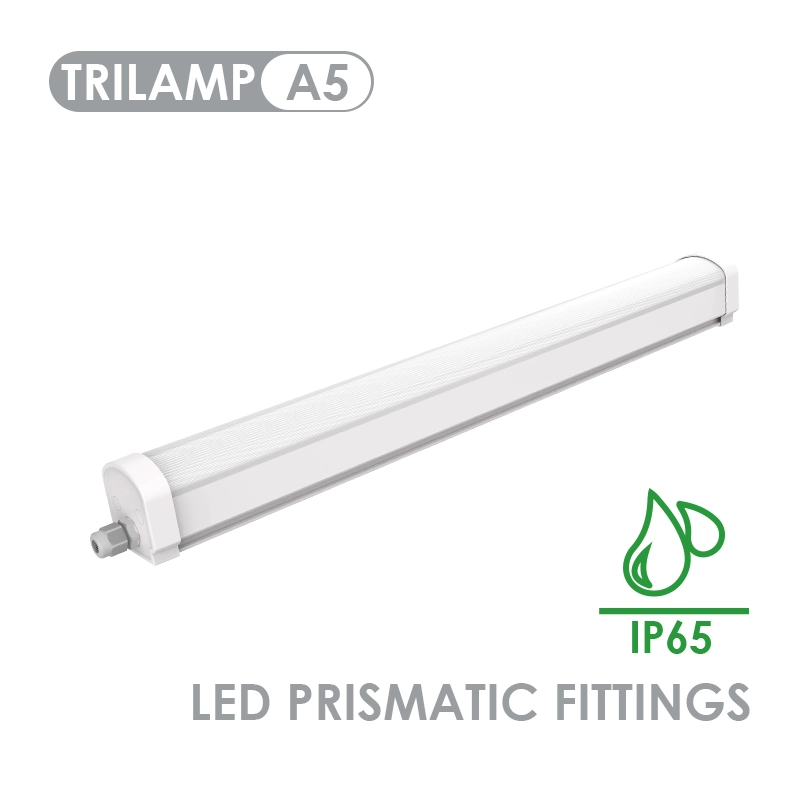
For industrial weatherproof applications — vapor tight fixtures, tri-proof LED battens, cold storage fixtures — the controls-ready requirement for DLC Premium creates a genuine specification challenge. Many IP65/IP66-rated industrial fixtures have historically been fixed-output designs optimized for durability rather than dimming capability. Adding a 0–10V or DALI 2.0 dimming interface to a sealed weatherproof enclosure adds design complexity and cost.
The important thing for procurement teams to understand is that “controls-ready” does not require that the fixture be installed with active controls — it requires that the fixture be capable of dimming to 10% or less of full output via a standard control interface. A DALI 2.0-capable tri-proof fixture installed in a cold storage facility can be operated at full output with no active control system — but its DALI 2.0 capability satisfies the DLC Premium controllability requirement and qualifies it for Premium-tier rebates.
When DLC Standard Makes More Sense
Not every project requires Premium listing. For applications where the utility rebate program offers no differential between Standard and Premium (some programs use flat per-fixture amounts regardless of tier), the additional cost of a Premium-tier fixture may not be justified by the incremental rebate. Verify the actual rebate program structure in your territory before assuming Premium always delivers a better ROI. Custom programs that calculate rebates on documented energy savings will reward Premium fixtures naturally — prescriptive programs with flat rates may not.
For US-market buyers and distributors who want to discuss DLC-eligible product specifications, including controls capability and photometric documentation requirements, Fanxstar’s technical team works directly with distributors to support product selection and specification. Contact us to discuss your project’s DLC documentation requirements.
Frequently Asked Questions
What does DLC Premium mean for utility rebates?
DLC Premium listing under V5.1 qualifies a fixture for higher-tier utility rebates in programs that differentiate between Standard and Premium products. In warehouse and industrial applications, the bonus rebate for Premium fixtures is typically $25–$50 per unit above the Standard rate. The Premium tier requires higher efficacy (typically ≥150–170 lm/W depending on category) and controls-ready capability (dimming to ≤10% full output via a standard interface). Not all programs offer a Premium differential — verify your utility’s program structure before specifying.
Is DLC 5.1 still valid in 2026?
DLC V5.1 products currently listed on the QPL remain valid and rebate-eligible until December 15, 2026, when the DLC will delist V5.1 products that have not been upgraded to V6.0. After that date, delisted products will not automatically qualify for rebates from programs requiring current QPL status. If you are purchasing V5.1 products now for projects completing before December 2026, those products can still earn rebates — but verify QPL listing status and confirm your utility’s policy on transitional products.
What’s new in DLC V6.0 compared to V5.1?
DLC V6.0, effective January 2026, raises efficacy thresholds for Premium luminaires, expands support for advanced controls and networked lighting integration, and provides new control categories that simplify verification of controls-based energy savings. The V6.0 Premium tier will require even higher lm/W performance and deeper controls integration than V5.1 Premium. The QPL transition deadline is December 15, 2026 — after which V5.1 products that haven’t qualified under V6.0 will be delisted.
Can weatherproof LED fixtures qualify for DLC Premium?
Yes, if they meet the efficacy and controls requirements for their category. IP-rated weatherproof fixtures (vapor tight, tri-proof, high bay) can qualify for DLC Premium if they achieve the required lm/W threshold and include a dimming interface (0–10V, DALI 2.0, or similar). The controls-ready requirement does not mandate that the facility installs active controls — only that the fixture is capable of dimming to 10% or less. Fixtures intended for cold storage or wet processing environments can be designed with both IP66 sealing and DLC Premium controls capability simultaneously.
How do I verify a product’s current DLC QPL status?
Go to designlights.org and use the product search tool. You’ll need to create a free account. Search by manufacturer name, product family, or model number. Check the “Technical Requirements Version” field to confirm whether the product is listed under V5.1 or V6.0, and verify the listing status is “Active” rather than “Delisted.” Always do this before finalizing a specification on any project where utility rebates are part of the financial model.