Key Takeaways
-
Purpose-Built: Asymmetric beams are engineered to direct light laterally onto vertical surfaces (shelves, walls), unlike symmetric beams that waste light on floors.
-
Precision Matters: The optimal beam angle (20°-40°) depends on shelf height and depth. Correct selection ensures uniform coverage without glare.
-
The 1:3 Rule: For perfect uniformity, mount fixtures at a distance from the wall equal to one-third the height of the vertical surface.
-
Efficiency Boost: By focusing light where it’s needed, asymmetric optics can increase vertical illuminance by 30% while reducing energy costs.
Standard wide-angle lighting often fails to deliver enough brightness on vertical shelves. Asymmetric beam angles direct lighting exactly where products need it. Selecting the right LED linear lighting with focused optics improves product visibility, increases lux on shelf faces, and reduces glare.
What Are Asymmetric Beam Angles?
At its core, an asymmetric beam angle describes a light beam that is intentionally shaped to be non-uniform. Unlike a symmetric beam, which spreads light evenly in a circular pattern, an asymmetric beam directs light intensely in one direction. It is a controlled “wash” of light, specifically engineered to illuminate vertical surfaces like retail shelves and warehouse racking.
Symmetric vs. Asymmetric: A Direct Comparison
|
Feature |
Symmetric Beam |
Asymmetric Beam |
|---|---|---|
|
Light Distribution |
Uniform, circular (e.g., 90°) |
Directional “flood” to one side |
|
Target |
General floor area |
Vertical shelves & walls |
|
Efficiency |
Wastes light on floor/ceiling |
Concentrates light on product |
|
Uniformity |
Prone to hot spots |
Even coverage top-to-bottom |
How to Choose the Perfect Beam Angle
Selecting the ideal asymmetric beam angle is the key to transforming your shelves. Follow this guide based on your setup:
-
Shallow Shelves (< 3 ft): Use a narrow 20° to 30° asymmetric beam. This highlights products without washing out the shelf above.
-
Standard Shelves (3-6 ft): A 30° to 40° beam is versatile, providing excellent vertical illuminance for most retail displays.
-
Deep/High Shelves (> 6 ft): Use a wider 40°+ beam to cover the larger surface area typical in warehouse aisles.

Installation Guide: The 1:3 Rule
Achieving perfectly even vertical illumination requires precise positioning. The fundamental rule is to mount the fixture at a distance from the wall equal to one-third the height of the vertical surface.
Example: To light a 9-foot tall shelf, position the fixture 3 feet away from the face of the shelves.
Lateral Spacing
To prevent dark spots between fixtures, space your linear fixtures at a distance equal to their mounting distance from the wall (a 1:1 ratio). This ensures the beams overlap seamlessly.
Advanced Applications: Retail & Warehouse
Warehouse Aisle Lighting
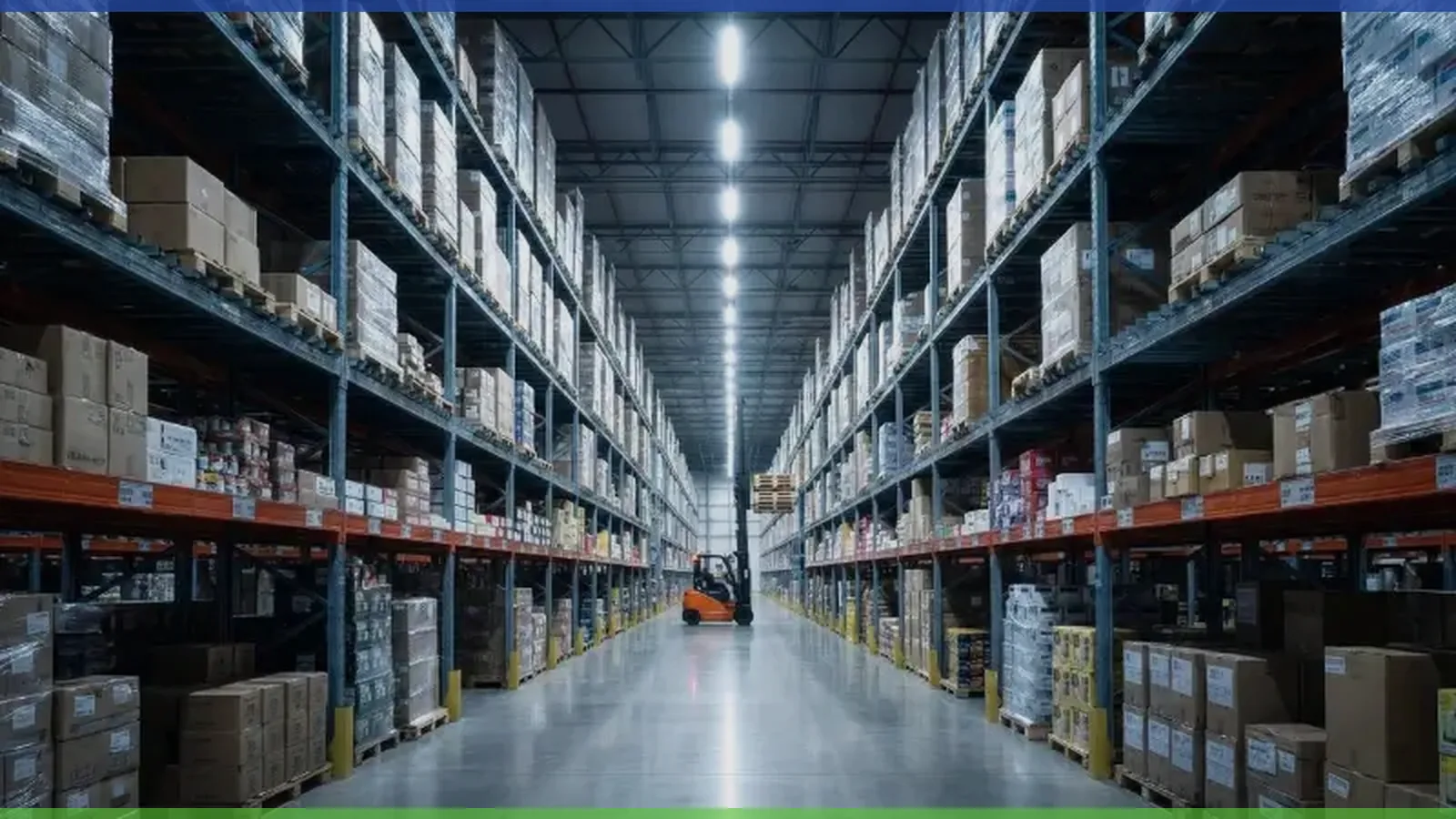
In warehouses, symmetric high bays waste light on the floor. Asymmetric linear high bays project a rectangular beam down the aisle, illuminating rack faces. This can increase vertical lux by 20-30% without extra power.
Retail Merchandising
Asymmetric beams are a silent salesperson. By using wall washing track lights, retailers can make walls appear brighter and spaces larger, while directing customer attention to high-margin products on vertical displays.
Common Mistakes to Avoid
-
Wrong Angle: Using a symmetric wide beam for shelves creates glare for shoppers and shadows on products.
-
Mounting Too Close: Placing fixtures directly above or too close to the shelf creates a “scalloping” hot spot at the top and darkness below.
-
Ignoring Surface Texture: Dark or textured walls absorb light. You may need to increase intensity or adjust placement to compensate.
FAQ
Can I use a regular LED downlight for shelf lighting?
Standard downlights create hot spots and shadows on vertical surfaces. Dedicated asymmetric wall washers are far superior for uniform shelf illumination.
How do I know if a fixture is asymmetric?
Check the photometric data (IES file). The light distribution curve will look skewed or elongated to one side, rather than a symmetrical circle.
What is the benefit of asymmetric lighting in warehouses?
It directs light onto the rack faces where workers need to read labels, rather than the floor. This improves picking accuracy and safety while saving energy.
Is asymmetric lighting only for commercial use?
No. It is excellent for residential applications like lighting bookcases, kitchen backsplashes, and art walls.