Key Takeaways
-
The Sticker Price Illusion: A $5 fluorescent tube masks a cycle of high-cost maintenance, labor, and energy waste that far exceeds the initial savings.
-
Invisible Overheads: Businesses pay a “cooling tax” via increased HVAC loads (fluorescents run hot) and mandatory EPA mercury disposal fees.
-
Maintenance Debt: Ballast failures and specialized equipment rentals (like scissor lifts) often make labor costs 10x higher than the hardware itself.
-
Strategic ROI: Transitioning to LED retrofits typically pays for itself within 12–24 months by eliminating the legacy maintenance ecosystem.
For many facility managers, the decision to stick with traditional lighting comes down to a simple line item on an invoice: the unit price. A standard T8 or T12 fluorescent tube often costs as little as $5. However, this low entry point creates a “Sticker Price Illusion.” Much like a cheap printer that drains resources through expensive ink, a fluorescent bulb carries a heavy tail of secondary expenses.
1. The Maintenance Trap: Labor & Equipment
The true burden of fluorescent lighting isn’t found on the utility bill—it’s found on the payroll. Fluorescent tubes have a short lifespan (10,000–15,000 hours), meaning a facility with 500 fixtures could be replacing bulbs weekly.
Beyond the Bulb: The Real Cost of Access
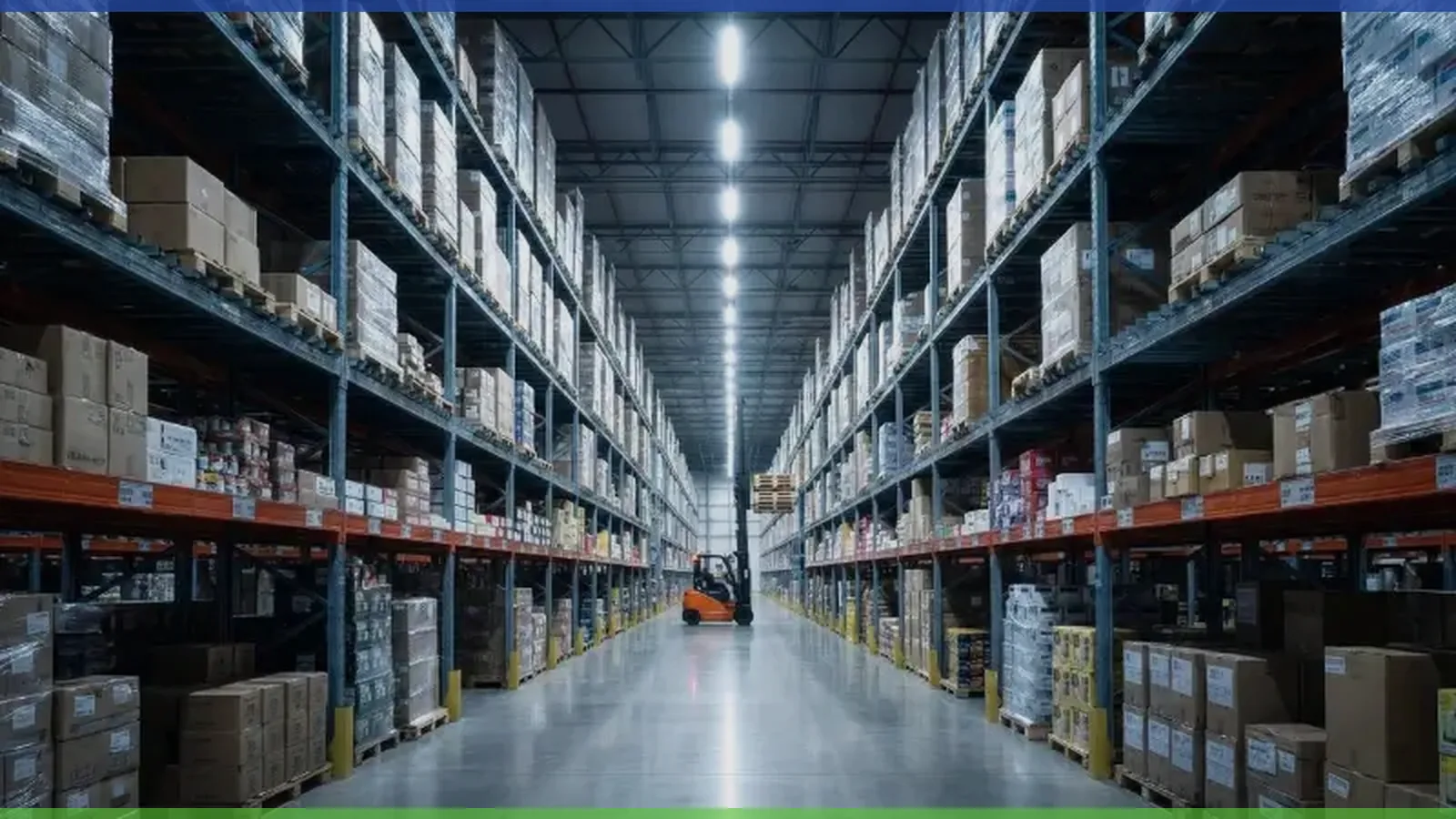
In warehouses or high-ceiling retail spaces, swapping a bulb isn’t simple:
-
Labor Hours: A simple swap often requires two employees—one on the lift and one “spotter” for safety compliance.
-
Equipment Rentals: For ceilings over 15 feet, facility managers must coordinate scissor lift rentals, incurring delivery fees and daily rates.
By switching to LED fixtures rated for 50,000+ hours, you effectively eliminate this recurring cycle of disruption.
2. Ballast Failure: The Invisible Expense
The most significant “invisible” drain isn’t the bulb—it’s the ballast. This essential component regulates current but is a ticking clock of maintenance liability.
The “Plug-and-Play” Trap
Many attempt to use “ballast-compatible” (Type A) LED tubes to save time. While convenient, this creates future maintenance issues because the aging ballast will eventually fail, requiring a second service call. To achieve a true ROI, experts recommend direct-connect (ballast-bypass) installations using integrated LED tubes to remove the failure point entirely.
|
Cost Factor |
Fluorescent System |
LED Retrofit |
|---|---|---|
|
Hardware Lifespan |
15,000 Hours (Bulb) |
50,000+ Hours |
|
Ballast Replacement |
Required every 3-5 years |
Eliminated (Driver-based) |
|
Labor Cost (10 Years) |
High (Multiple cycles) |
Low (Install & Forget) |
3. The ‘Cooling Tax’: Impact on HVAC
Traditional lighting acts as an unintended space heater. Fluorescent bulbs rely on an electric arc through gas, emitting significant infrared heat.
-
Fluorescent: Emits ~200-290 BTU/hr per fixture.
-
LED: Emits ~130 BTU/hr.
In climate-controlled facilities, this heat load forces your HVAC system to work harder. Switching to LED removes this “cooling tax,” potentially lowering overall energy bills by an additional 5-10%.
4. Environmental Compliance (EPA Regulations)
Fluorescent lamps contain mercury, a potent neurotoxin. This classifies them as hazardous waste under EPA Universal Waste regulations.
The Legal Burden:
-
Training: Staff must be trained in hazardous waste handling.
-
Disposal Fees: You cannot throw tubes in the trash. Specialized recycling services charge per foot for disposal.
-
Liability: Improper disposal can lead to significant federal fines.
LEDs are mercury-free and RoHS compliant, eliminating this legal and environmental headache.
Calculating Your Real ROI
Transitioning to LED is a strategic financial move. Use this formula to build your business case:
ROI = (Total Annual Savings ÷ Initial Project Cost) × 100%
*Total Savings = Energy Savings + Maintenance Labor + HVAC Reduction + Disposal Fee Avoidance
Retrofit vs. Full Replacement
-
Retrofit Kits: Lower upfront cost ($20-$50/fixture). Best for good-condition housings.
-
Full Replacement: Higher cost but maximizes efficiency (up to 80% savings) and aesthetics.
FAQ
How much does it cost to dispose of fluorescent tubes?
Recycling costs vary but typically range from $0.10 to $0.50 per foot. For a large facility, this adds thousands to the operational budget annually.
Can I just swap my fluorescent tube for an LED?
Yes, but be careful. “Type A” tubes work with the existing ballast (which may fail soon). “Type B” (Ballast-Bypass) tubes require rewiring but offer better long-term reliability.
Do LEDs really last 50,000 hours?
Yes, high-quality industrial LEDs are rated for 50,000 to 100,000 hours (L70). This translates to 5-10 years of typical usage, compared to just 2-3 years for fluorescent.
Why do my fluorescent lights hum?
The “hum” is caused by the magnetic ballast vibrating at 60Hz. It’s a sign of older, inefficient technology. LEDs use solid-state drivers that are silent.