Key Takeaways
- Most LED lighting customs problems start when the buyer classifies the catalog name instead of the shipped article.
- HS codes begin with a global six-digit structure, but national tariff digits, duty measures, and documentation requirements vary by market.
- A complete luminaire, LED light source, driver, spare part, and unassembled kit can point to different evidence paths.
- The safest RFQ asks the supplier to align product description, photos, datasheet, packing list, and certificate scope before shipment.
Choose the code from the shipped article, not the sales phrase
Why buyers need more than a single HS number
A buyer is not asking for a single magic number when they look up HS codes for LED lighting is usually trying to prevent a shipment from being stopped, reclassified, or billed under a different duty line. The International Trade Administration explains HS codes as a foundation for import and export classification, while the World Customs Organization describes the Harmonized System as a structured nomenclature used internationally. That means the first six digits create a common language, but the operational decision still depends on the exact product and the destination country.

For LED lighting, the critical question is whether the shipment is a complete luminaire, a light source, a module, a control gear, a spare component, or a kit. A carton marked “LED light” may contain a fully enclosed weatherproof fixture, LED boards for assembly, drivers, mounting accessories, or replacement tubes. Customs review does not stop at the phrase printed on the sales invoice. It looks for the article’s essential character, construction, and declared use.
The practical buyer rule
A useful starting point for many complete lighting fittings is heading 9405; for example, the USITC HTS search page for 9405.42.40.00 shows an LED luminaire pathway within U.S. tariff structure. But the buyer should not treat that example as universal. The same project may include complete luminaires, LED light sources, drivers, brackets, emergency battery packs, or control accessories. The code decision must follow the article being shipped, not the broad project name.
The rule for an ODM buyer is therefore simple: freeze the shipped condition before freezing the code. If the supplier is still changing driver location, emergency option, sensor module, housing material, or assembly state, the classification evidence is not yet stable. A code chosen too early can become wrong after a seemingly small product change.
Where LED lighting classifications go wrong
Complete luminaires and components are not the same thing
A complete luminaire normally has housing, light source, optics or diffuser, wiring, and a mechanical form that can be installed as a lighting fitting. A loose LED board, a separate driver, or a replacement light source is a different commercial article. Even when all items are intended for the same project, customs may see them as different goods when they ship separately.
CBP ruling records are useful because they show how classification turns on product facts. In CBP ruling H024878, the agency analyzed an LED module under heading logic rather than simply accepting a broad LED label. The lesson for buyers is not to copy one ruling blindly. The lesson is to prepare product facts in the same disciplined way: physical form, function, components, and intended installation.
National digits create the delay, not only the first six HS digits
The European Commission TARIC page describes TARIC as the EU database for measures related to the Common Customs Tariff and other trade rules. The EU Harmonized System page also explains that the EU Combined Nomenclature is based on the WCO Harmonized System. In practice, this means a buyer may be correct at the six-digit HS level but still need the correct eight- or ten-digit national code for the shipment route.
This is why a supplier quote that says only “HS 9405” is not enough for a commercial shipment. The buyer needs to know which national code the broker intends to use, what product description supports it, and whether the declared origin, certificate, and packing list align. If the invoice says waterproof LED light, the datasheet says LED module, and the packing photos show separate components, the risk is not a theoretical compliance issue; it is a real clearance delay.
Smart, emergency, and ODM options can change the evidence package
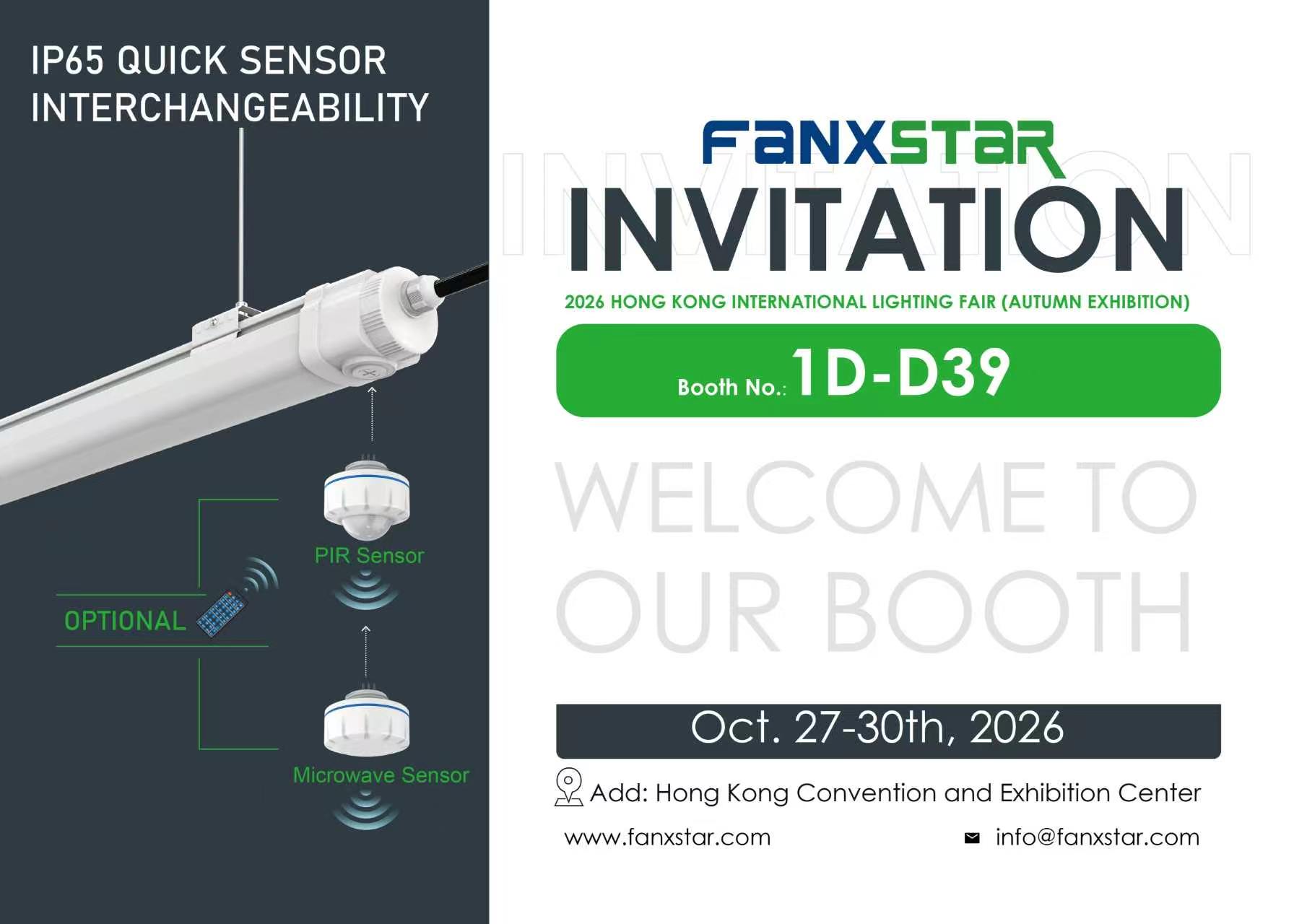
Modern LED fixtures often include microwave sensors, PIR sensors, emergency batteries, dimming drivers, plug-in connectors, or modular end caps. Those options may not always change the final code, but they do change the evidence the broker and customs reviewer expect to see. If the product is described as a complete luminaire, the photos and packing list should show the complete luminaire. If parts ship separately, the paperwork should say so honestly.
ODM projects add another layer. A buyer may approve a sample with one driver, then request a different market voltage, different emergency pack, or different cable entry before mass production. If the documents are not refreshed after the design change, the shipment inherits the old sample description. That is where customs delay often begins.
A buyer-side decision tree before shipment release
Step 1: define the article in the carton
Before asking for a code, list the exact items in the carton. Is each unit ready to install? Are drivers built in or packed separately? Are sensors installed, optional, or loose accessories? Are brackets or emergency packs integral to the fixture or spare parts? A five-minute product breakdown prevents a long email thread after goods reach the port.
For multi-line shipments, avoid one generic description. A carton of complete vapor-tight fixtures and a carton of spare drivers should not be forced into the same line merely because both belong to the same lighting project. The commercial invoice should describe each line at the same level of precision used in the datasheet and packing photos.
Step 2: anchor the global heading before choosing local digits
Once the shipped article is clear, the buyer and broker can work through the global heading and the importing market’s national digits. The supplier should not be expected to replace the licensed customs broker, but the supplier should provide the technical facts that make classification possible. That includes product photos, construction notes, material information, light-source configuration, and whether the item is a complete luminaire or a component.
The strongest workflow is not “supplier gives HS code and buyer accepts it.” The stronger workflow is “supplier gives product evidence, broker confirms classification, and buyer checks that invoice language matches both.” This turns classification into a document-control problem instead of a last-minute argument.
Step 3: make the paperwork tell one story
The invoice, packing list, datasheet, certificate, and label should use compatible product descriptions. If the product is a weatherproof LED luminaire, the invoice should not describe it as an LED module. If the product ships with a sensor option, the datasheet should not omit the sensor. If the fixture is custom-made for a project, the model number on the label should still connect to the quotation and test evidence.
A buyer should also ask for photos of the packed goods before final release. A simple carton photo and label photo can reveal whether accessories are mixed, whether model names changed, or whether the invoice description is too broad. That is not bureaucracy. It is a cheap check before the goods become expensive to correct.
Evidence checklist for LED lighting RFQs
What the supplier should provide
For lighting buyers, the evidence pack should include a datasheet, product photo, installation state, material summary, rated voltage, model number, certificate scope if relevant, and packing breakdown. For custom projects, it should also include a revision note showing what changed after the sample. The code itself is only a conclusion; the evidence explains why the conclusion is defensible.
Fanxstar buyers using the Fanxstar custom LED lighting ODM service can make the RFQ more useful by naming the destination country, shipment form, product variant, and broker requirements at the start. That lets the engineering and export teams align model description, label, and packing evidence before the final invoice is prepared.
What the buyer should verify internally
The buyer should confirm the importing entity’s code policy, broker’s preferred documentation, local duty measures, and whether the order includes multiple product types. If a product is imported into more than one region, do not assume that the same national digits will apply everywhere. Keep a simple classification log by model, market, and shipment condition.
The log does not need to be complicated. It can include model, product description, shipped condition, source evidence, broker-confirmed code, destination market, and revision date. That small table becomes valuable when the same ODM platform is sold with different sensors, drivers, or emergency options.
How Fanxstar buyers can reduce customs delay before production
Use the ODM sample as a documentation rehearsal
For Fanxstar, the business relevance is strongest when a lighting project is custom or semi-custom. A standard product category such as a weatherproof LED lighting product platform may have a familiar export description, but ODM changes can create ambiguity. The sample stage should therefore test not only light output and fit, but also the model description that will appear on documents.
If a buyer will ship a sensor version, test the sensor version. If the final order includes an emergency battery pack, make the certificate and packing evidence reflect that option. If the product will be imported as a complete luminaire, avoid shipping core components separately under a description that implies a complete fixture. These are small decisions upstream and expensive corrections downstream.
Prepare a low-friction handoff to the broker
Before mass production, send the quotation, datasheet, photos, packing plan, and destination market to the broker for classification confirmation. If a broker asks for more technical details, Fanxstar can provide fixture-level information such as housing type, driver location, sensor option, product image, and installation state. For a project ready to quote, buyers can contact Fanxstar for an ODM lighting quote with the destination country and intended shipped condition so the commercial document set starts clean.
The goal is not to promise that customs will never question a shipment. The goal is to remove avoidable contradictions. If the documents tell one coherent story, the buyer has fewer preventable reasons for delay.
Illustrative delay-risk estimate for customs documents
A two-day hold is often a document-control failure, not a tariff mystery
Consider a simple scenario estimate. An importer prepares one shipment with complete weatherproof luminaires, spare drivers, and loose mounting accessories, but the invoice uses one generic line: LED lights. If the broker requests clarification after the container arrives, the buyer may lose two business days collecting new photos, revised descriptions, and supplier confirmations. That estimate is not a customs rule; it is a realistic document-control exposure that appears when the shipped articles are different but the paperwork pretends they are identical.
The decision implication is practical. Before shipment release, ask whether each invoice line can be matched to a physical item in the packing photos. If a reviewer cannot connect the words, images, and datasheet within a few minutes, the shipment is not broker-ready. The cost of fixing that file before dispatch is small compared with the disruption of fixing it after a clearance question has already started.
Classification logs are useful only when they include revision state
Many buyers keep a code list by model number, but ODM lighting changes can make that list stale. The safer log records model, shipped condition, option set, destination market, evidence file, broker-confirmed code, and revision date. When a sensor, emergency battery, driver, housing, or cable-entry option changes, the log should show whether the old evidence still applies. This prevents the team from reusing a previous code for a product that no longer matches the previous sample.
FAQ
What HS code is usually used for LED lighting?
Many complete LED luminaires fall under heading 9405, but the exact national code depends on the shipped article and importing market. Buyers should not use one number for every LED-related item.
Can an LED driver use the same HS code as the fixture?
Not automatically. A separate driver, spare part, or light source can be classified differently from a complete luminaire. The invoice should describe each shipped line accurately.
Who should confirm the final import code?
The importing party or customs broker should confirm the final code for the destination market. The supplier should provide product facts, photos, datasheets, and packing details that support the broker’s decision.
Should the HS code be checked before sample approval?
Yes. For ODM projects, the sample configuration should match the product that will be documented for shipment. If the driver, sensor, emergency pack, or assembly state changes later, recheck the evidence.
Does a certificate decide the HS code?
No. A certificate can support the product description, but classification is based on the goods being imported and the tariff rules of the destination market.