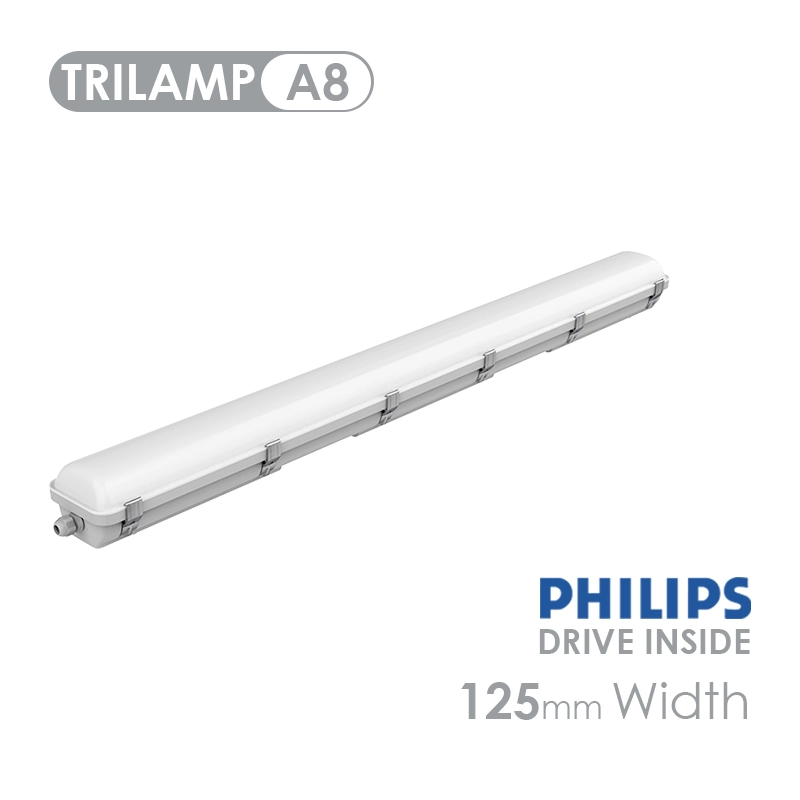
Australia and New Zealand sit at a unique intersection in the global LED weatherproof market: LED lighting is growing at 8.0% CAGR globally through 2033, yet the ANZ compliance framework for LED luminaires is among the most rigorously enforced in the world. LED luminaires are classified as Level 3 high-risk electrical articles in Australia’s Electrical Equipment Safety System (EESS), requiring SAA certification, RCM registration, and EESS database listing before any product can legally be sold or installed. The Trans-Tasman Mutual Recognition Arrangement (TTMRA) means SAA certification obtained in Australia simultaneously covers New Zealand — a single compliance pathway covers both markets. For Australian and New Zealand distributors, electrical contractors, and facility managers sourcing weatherproof LED fixtures from China, the critical procurement question is not product price. It is which manufacturers have invested in genuine SAA/RCM compliance, and can prove it at the EESS database level.
Key Takeaways
- SAA + RCM is legally mandatory for LED luminaires in Australia — a Level 3 electrical product under EESS. Non-compliant imports face fines up to AUD 100,000 and product seizure enforced by ACMA.
- RCM registration can only be applied for by an Australian-based Responsible Supplier — the Chinese manufacturer cannot self-register. Verify that your supplier has an active Australian Responsible Supplier relationship and that the specific product appears in the EESS database at eess.eecsb.gov.au.
- SAA certification covers New Zealand automatically via TTMRA — buyers supplying both ANZ markets from a single certified product source can do so without duplicate certification processes.
- Certification scope must be verified at the SKU level — SAA for one wattage of a product family does not automatically cover all wattages in that family. Request the certificate number referencing the specific model and wattage being ordered.
- Chinese specialist manufacturers with genuine SAA coverage can offer 30–50% unit cost advantage over equivalent Western brands for high-volume ANZ commercial and industrial installations, making compliance verification — not product origin — the correct procurement filter.
SAA / RCM: The ANZ Compliance Framework Explained
SAA certification ensures that electrical products entering the Australian market comply with local safety regulations, specifically the AS/NZS standards framework for LED luminaires. The RCM (Regulatory Compliance Mark) consolidated the previous C-Tick and A-Tick marks in 2016, combining electrical safety (SAA) and electromagnetic compatibility (EMC) requirements into a single label. For weatherproof LED luminaires as Level 3 products, the compliance requirement is: EMC test report + SAA test report against AS/NZS standards + SAA Certificate of Suitability + RCM registration in EESS.
Chinese manufacturers and exporters can apply for IEC or AS/NZS test reports in their own name, but these reports must be submitted by an Australian importer to apply for RCM registration. The registration cannot be held by the Chinese manufacturer — it is always held by the Australian Responsible Supplier (typically the importer or distributor). This structural requirement means that a Chinese manufacturer claiming “SAA certified” is accurately describing their test certification, but the RCM registration in the EESS system is held by their Australian partner. Buyers should verify: the SAA Certificate of Suitability number from the manufacturer, cross-referenced against the EESS public database to confirm active registration, responsible supplier identity, and scope covering the specific model and wattage being ordered.
For specific ANZ compliance guidance for weatherproof LED fixtures, Fanxstar’s technical blog covers SAA/RCM documentation requirements, EESS verification steps, and the TTMRA framework for buyers managing both Australian and New Zealand installations.

The Top 7 Chinese Manufacturers for the ANZ Weatherproof Market
1. Fanxstar Technology — Weatherproof Specialist with Full SAA/RCM Coverage
Fanxstar holds SAA certification across their weatherproof range alongside UL/ETL, ENEC, TUV, CE, ErP, and CB — providing legal market access in Australia, New Zealand, the EU, and North America within a single product family. For Australian distributors, this multi-region certification stack eliminates the common problem of sourcing separate products for different destination markets. Founded in 2016 as a China National High-Tech Enterprise with 42 LED patents, Fanxstar’s weatherproof range covers IP65, IP66, and IP69K-rated luminaires in polycarbonate and aluminum alloy housings, rated from −40°C to +70°C — covering cold-chain and food processing applications that account for significant weatherproof demand in the ANZ food industry supply chain. Luminous efficacy of 120–160 lm/W, 5–10 year warranty options, and European warehouse stocking complement their ANZ Responsible Supplier arrangements.
For Australian distributors, the combination of SAA/RCM documentation depth and full OEM/ODM customization capability — private label, custom wattage, sensor integration — addresses the two most common procurement pain points when sourcing weatherproof LED from Chinese manufacturers. Contact the Fanxstar ANZ export team for EESS database verification references and product samples.
2. ShineLong Technology — ODM-First with Genuine ENEC and SAA
ShineLong, established in 2010, holds SAA alongside TUV, ENEC, UL, ETL, DLC, and CB certification. Their ODM model means 60–70% of revenue derives from customized product programs, making them a viable factory partner for Australian distributors building private-label weatherproof ranges. Their IP66 aluminum alloy tri-proof products reach 160 lm/W efficacy with IK10 impact resistance and sensor/emergency integration options available factory-configured. ISO 9001, ISO 14001, ISO 45001, and BSCI certifications signal a manufacturing organization that has systematized quality and compliance rather than treating certifications as one-time marketing investments.
3. Opple Lighting — Large-Scale Chinese Brand with ANZ Distribution
Opple Lighting, one of China’s largest commercial lighting manufacturers, has established ANZ market presence through distributor channels in Australia. Their commercial and industrial range includes weatherproof and IP-rated products suited for retail, commercial property, and light industrial sectors. Opple’s scale enables competitive pricing and broad SKU availability, but their weatherproof range is part of a generalist portfolio rather than a dedicated specialty. For Australian distributors sourcing standard commercial weatherproof products at volume through established channel relationships, Opple is a known brand with existing infrastructure. SAA/RCM status should be verified per specific weatherproof SKU rather than assumed at the brand level.
4. NVC Lighting — Established Export Brand for Commercial Applications
NVC Lighting has been active in ANZ export markets for over a decade, with weatherproof and IP-rated products distributed through the electrical wholesale channel. Their commercial range covers standard IP65 formats suited for warehouses, car parks, and commercial facilities at competitive price points. NVC’s scale ensures product availability, though weatherproof specialization depth is lower than dedicated specialists. For price-sensitive commercial procurement of standard IP65 formats where volume and distribution stocking availability are priorities, NVC is a viable option — provided SAA/RCM certification is verified at the SKU level for the specific product being ordered.
5. FSL (Foshan Electrical and Lighting) — Historical Export Pedigree
FSL is one of China’s oldest lighting manufacturers, operating since 1958, with extensive export history across commercial and industrial applications. Their broad product catalog includes IP-rated commercial lighting, and their long-standing export operation has navigated multiple generations of Australian certification requirements. For Australian buyers who weight supply chain stability and manufacturer longevity alongside price competitiveness, FSL’s decades of export operation is a meaningful signal of organizational reliability. Verify current EESS registration for specific weatherproof SKUs before placing volume orders.
6. RC Lighting — Shenzhen Export Specialist
RC Lighting focuses on outdoor and industrial LED lighting for export markets, with product coverage including weatherproof and IP-rated fixtures with CE, RoHS, and ISO 9001 certification. SAA coverage is available on selected export product lines. Their strength lies in outdoor and high-lumen-output applications — car parks, warehouse perimeters, and outdoor industrial facilities. For Australian buyers, confirming current SAA/RCM registration for specific models and verifying the Responsible Supplier arrangement through the EESS database is the critical pre-qualification step before placing volume orders.
7. Sansi LED — Shanghai Industrial Specialist
Sansi LED, operating since 1993, brings over three decades of industrial LED manufacturing experience to the ANZ export market. Their weatherproof and tunnel lighting products are supplied to infrastructure and industrial projects across multiple markets, with international certification coverage including SAA for selected product lines. Sansi’s depth in industrial applications — tunnel, high-bay, and harsh-environment fixtures — makes them relevant for Australian infrastructure projects where technical depth alongside price matters. Their smart city and industrial pedigree, backed by substantial R&D investment over their operating history, distinguishes them from newer catalog manufacturers.
ANZ Procurement Matrix: SAA-Certified Chinese Weatherproof Suppliers
| Manufacturer | SAA/RCM | IP Range | Also Holds | OEM/ODM | Warranty |
|---|---|---|---|---|---|
| Fanxstar | SAA + RCM ✓ | IP65/66/69K | UL/ETL, ENEC, TUV, CB, CE | Full OEM/ODM | 5–10 yr |
| ShineLong | SAA + RCM ✓ | IP65/66 | UL, ETL, ENEC, TUV, DLC | ODM-first | 5 yr |
| Opple | Verify SKU | IP54/65 | CE, CCC | Limited | 3 yr |
| NVC Lighting | Verify SKU | IP65 | CE, CCC | Limited | 2–3 yr |
| FSL | Verify SKU | IP65 | CE, CCC | Yes | 2–3 yr |
| RC Lighting | Selected models | IP65 | CE, ISO9001 | Yes | 3 yr |
| Sansi LED | Selected models | IP65/66 | CE, ISO9001 | Yes | 3–5 yr |
Australia’s GEMS Legislation and the Fluorescent Phase-Out: What It Means for Weatherproof
The ANZ weatherproof LED market is benefiting from a structural regulatory tailwind in 2026. Australia’s Greenhouse and Energy Minimum Standards (GEMS) legislation sets minimum efficiency thresholds for commercial lighting, and the March 2026 regulatory update restricts certain legacy fluorescent technologies from sale. This effectively accelerates the replacement of fluorescent vapor tight and tri-proof installations across Australian warehouses, cold-chain facilities, food processing plants, and commercial car parks — the core application segments for weatherproof LED. Industrial buyers replacing fluorescent vapor tight with LED can achieve 50–70% energy savings while gaining IP protection appropriate to their installation environment.
LED lighting market forecasts project consistent growth through 2031, with commercial and industrial replacement cycles — precisely the categories where weatherproof fixtures dominate — driving a disproportionate share of volume growth. The combination of fluorescent phase-out pressure, energy cost increases, and GEMS efficiency mandates creates a durable procurement pipeline for SAA-certified LED weatherproof in Australia through the second half of the decade. For application-specific selection guidance covering cold storage, food production, parking structures, and warehouse environments common in the ANZ market, specialist resources help match IP rating, cold-start specification, and SAA certification scope to actual installation requirements.
How to Verify SAA/RCM Compliance Before Placing an ANZ Order
The step-by-step verification process for any Chinese weatherproof manufacturer claiming SAA/RCM compliance is as follows. First, request the SAA Certificate of Suitability number for the specific product model and wattage being ordered — not just the product family. Second, cross-reference this number against the EESS public database at eess.eecsb.gov.au, confirming the certificate is active, the Responsible Supplier is identified, and the product scope covers your exact configuration. Third, confirm the EMC test report references current AS/NZS standards — certificates based on superseded standards may no longer be valid for continued market access following regulatory updates. Fourth, request the AS/NZS test report from the testing laboratory to verify it covers the installed configuration including mounting hardware, not just the bare fixture. The DOE confirms LED technology’s enduring 75% energy advantage over conventional sources — the long-term investment case for weatherproof LED is clear, but only products that pass this compliance checklist deliver on that promise in the ANZ regulatory environment.
Frequently Asked Questions
Does Australian SAA certification automatically cover New Zealand?
Yes. Under the Trans-Tasman Mutual Recognition Arrangement (TTMRA), SAA certification obtained in Australia is recognised as valid for New Zealand. A single SAA/RCM-certified product can be legally imported, distributed, and installed in both markets. This makes the ANZ region a single compliance target for Chinese exporters with genuine SAA certification, and a single source-of-truth EESS database check covers both markets.
How do I verify a Chinese manufacturer’s SAA certificate is genuine?
Request the SAA Certificate of Suitability number for the specific model and wattage being ordered. Cross-reference this number against the EESS public database at eess.eecsb.gov.au. The database entry confirms the certification body, product scope with specific model references, Responsible Supplier identity, and validity period. A manufacturer who cannot produce a specific certificate number referencing your exact product configuration is not compliant for that product — regardless of what their product label or marketing materials state. The EESS database is publicly accessible and free to query.
What IP rating is recommended for Australian food production facilities?
IP66 is the minimum for Australian food production and beverage processing facilities with routine high-pressure washdown. IP69K is required for zones subject to steam cleaning or high-temperature pressure washing above 80°C. Beyond IP rating, NSF certification is increasingly specified by food industry procurement teams applying international procurement standards, providing an additional confidence signal on material safety and cleanability in food contact zones. Verify gasket material compatibility with the specific cleaning chemicals used in the facility — standard EPDM gaskets may not be compatible with peracetic acid or sodium hydroxide cleaning agents used in food-grade washdown protocols.
Can the Chinese manufacturer self-register for RCM in Australia?
No. RCM registration can only be applied for by a local Australian company — the Responsible Supplier — who must obtain an RCM number from the Australian government. Chinese manufacturers and exporters can obtain IEC or AS/NZS test reports in their own name, but these reports must be submitted by the Australian importer or distributor to complete the RCM registration process. The registration is held by the Australian Responsible Supplier, not the Chinese manufacturer. When evaluating a Chinese supplier, ask specifically for the name of their Australian Responsible Supplier and verify that supplier’s EESS registration is active for the product being ordered.
Author: Julie Zhu, Senior Lighting Solutions Consultant, Fanxstar Technology | 15+ years in industrial LED lighting export | [email protected] | SAA/RCM requirements are subject to regulatory updates by ACMA and ERAC; verify current certification status via the EESS database before import decisions.