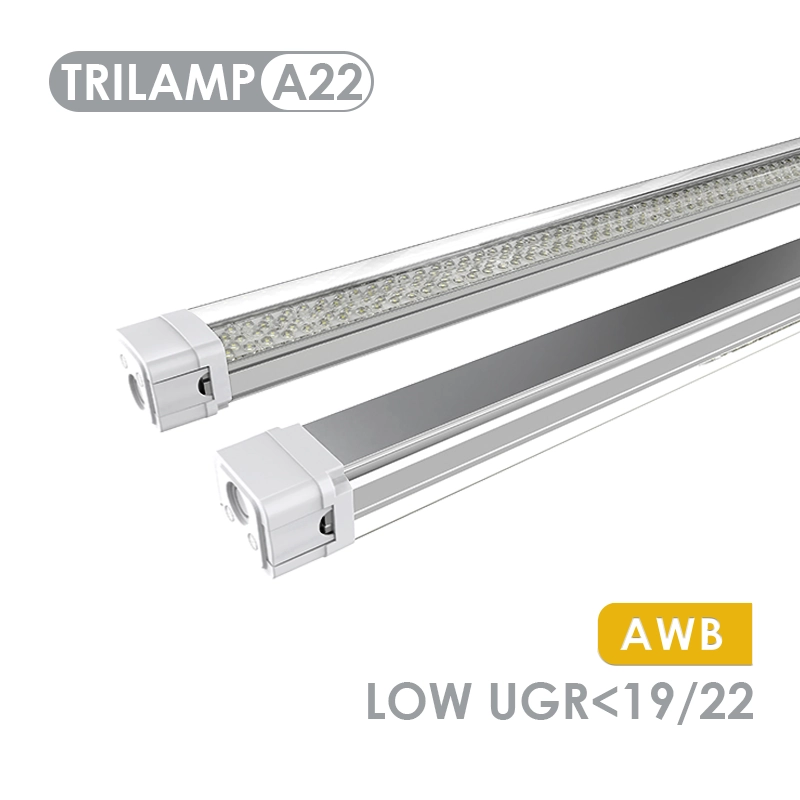
In the high-intensity environment of a modern poultry farm, the air quality is defined by a significant presence of ammonia (NH3). While essential to manage for bird health, this corrosive gas represents a major engineering hurdle for facility infrastructure. Standard industrial lighting often fails prematurely in these conditions, leading to flickering, reduced luminous flux, and total hardware failure. Implementing ammonia-resistant protocols is no longer an option—it is a mandatory requirement for operational longevity and animal welfare.
Key Takeaways
-
Chemical Shielding: Utilizing PMMA (Acrylic) covers instead of Polycarbonate (PC) is vital, as PMMA is naturally resistant to ammonia-induced yellowing and stress cracking.
-
Thermal Integrity: High-purity AL6063 aluminum heat sinks ensure that drivers stay cool, preventing the accelerated corrosion that occurs at higher temperatures.
-
Ingress Excellence: A minimum of IP66 protection is required to withstand frequent high-pressure washdowns and to block toxic fumes from sensitive electronics.
-
Bird Welfare: Flicker-free drivers create a calming environment, reducing stress-related behaviors like feather pecking and cannibalism.
-
Economic ROI: Investing in ammonia-tolerant fixtures typically reduces maintenance costs by 60% and increases fixture lifespan by up to 300% compared to standard LEDs.
The Bio-Chemical Threat: Why Ammonia Destroys Lighting
Ammonia builds up rapidly in poultry houses through the decomposition of organic matter and bird waste. Recommended levels are generally under 25 ppm, but during winter months with reduced ventilation, concentrations can spike significantly. To a standard lighting fixture, this environment is essentially an “acid bath.”
Ammonia acts as a powerful corrosive agent that attacks standard metals and plastics. In many “budget” LED fixtures, ammonia penetrates the housing and causes electrochemical migration on the circuit board, leading to short circuits. Furthermore, it triggers a chemical reaction in standard polycarbonate lenses, causing them to turn brittle and opaque, which effectively “traps” the light inside the fixture and lowers the lux levels reaching the birds.
|
Risk Factor |
Impact on Standard Fixtures |
Ammonia-Resistant Solution |
|---|---|---|
|
Chemical Attack |
Yellowing and Stress Cracking |
PMMA (Acrylic) Diffusers |
|
Metal Oxidation |
Rust and Heat Sink Failure |
Anodized AL6063 Aluminum |
|
Electrical Integrity |
Circuit Board Corrosion |
Vapor-Tight Foamed Gaskets |
|
Service Life |
8,000 – 15,000 Hours |
50,000+ Hours |
Material Science: The PMMA and AL6063 Advantage
The success of industrial poultry lighting depends entirely on material selection. At Fanxstar, we prioritize two specific materials to combat the poultry environment: PMMA and AL6063 Aluminum.
Why PMMA (Acrylic) is Superior to Polycarbonate (PC)
While Polycarbonate is known for its impact resistance, it has a fatal flaw in agriculture: it reacts with ammonia. Ammonia molecules penetrate the PC matrix, causing “crazing” or microscopic cracks. PMMA, however, has a molecular structure that is inherently stable against NH3. It maintains over 90% light transmission for years, ensuring that your barn remains brightly lit without the need for constant lens cleaning or replacement.
Thermal Management with AL6063
High temperatures accelerate chemical reactions. If a lighting fixture runs hot, the ammonia in the air will corrode the metal components even faster. Utilizing high-purity AL6063 aluminum allows for wide-area cooling plates that draw heat away from the LEDs efficiently. This technical synergy keeps the fixture stable and protects the sensitive electronic drivers from thermal stress.

Sealing and Ingress Protection Standards
In a poultry barn, dust and moisture are constant. Lighting must meet IP66 or IP67 standards to ensure that high-pressure washdowns do not compromise the unit. This is achieved through advanced sealing technologies:
-
Foamed-in Gaskets: These create a continuous, elastic seal that adapts to temperature-induced expansion and contraction, unlike simple rubber rings.
-
Stainless Steel Fastening Clamps: Plastic clips can become brittle in ammonia; 316-grade stainless steel remains rust-free and keeps the housing hermetically sealed.
-
Tool-Free Access: While seals must be tight, maintenance should be efficient. Fanxstar designs allow for tool-free module access, reducing the time workers spend in high-ammonia zones.
Optimizing for Poultry Welfare: Light Quality
Lighting is a biological tool in poultry farming. Birds perceive light differently than humans, detecting flicker at much higher frequencies. Flicker-free drivers are mandatory for a calm flock. When birds are stressed by “stroboscopic” effects, feed conversion ratios (FCR) drop, and mortality rates rise.
Homogenous Illumination: Uniform light distribution ensures that there are no “dark spots” where birds might huddle or become aggressive. A consistent 20-50 lux environment supports healthy movement and eating habits throughout the day.
|
Standard Recommendation |
Intensity (Lux) |
Impact on Bird Behavior |
|---|---|---|
|
Minimum Survival |
< 5 Lux |
Lethargy, poor skeletal growth |
|
Legislative Minimum (EU) |
20 Lux |
Standard movement and foraging |
|
Animal Welfare Standard |
50 Lux |
Stimulates comfort behaviors; reduces injury |
|
Precision Picking/Cleaning |
100+ Lux |
Enhanced visibility for farm staff |
Economic Logic: ROI and Total Cost of Ownership (TCO)
While the initial capital expenditure (CAPEX) for ammonia-resistant LEDs is higher than standard fixtures, the Total Cost of Ownership (TCO) is significantly lower. Standard fixtures in a high-ammonia barn often require replacement within 18 months. An engineered Fanxstar solution will perform reliably for 5 to 10 years.
“Calculate your ROI based on maintenance avoidance and energy reduction. A German farm study recently showed that switching to smart, ammonia-resistant LEDs yielded a 7% increase in egg output and a 25% reduction in total energy bills.”
Installation and Routine Care
To maximize the life of your vapor-tight lighting system, follow these engineering best practices:
-
Layout Planning: Ensure 80% of the active floor area receives uniform lux levels to prevent huddling.
-
Mounting: Use corrosion-resistant chains or brackets that can withstand high vibration from ventilation fans.
-
Cleaning: Use only soft cloths and approved pH-neutral solutions. Abrasive cleaners can scratch PMMA diffusers and reduce light output.
-
Monthly Inspection: Check for any loose clamps or signs of moisture inside the lens. Early detection prevents catastrophic driver failure.
Conclusion: The Future of Poultry Illumination
Advancing your facility to ammonia-resistant lighting is a strategic investment in both technology and biology. By choosing materials like PMMA and AL6063, and ensuring flicker-free performance, you protect your infrastructure and your flock simultaneously. As the global market for animal welfare continues to tighten, those who implement high-standard lighting will lead the way in production efficiency and sustainability.
Frequently Asked Questions (FAQ)
Why shouldn’t I use Polycarbonate (PC) in a chicken barn?
Polycarbonate is highly sensitive to chemical attack from ammonia. Over time, it will develop microscopic cracks (crazing) and turn yellow, which significantly reduces light output and makes the fixture impossible to clean effectively.
What is the difference between IP65 and IP66 for poultry farms?
IP65 protects against low-pressure water splashes. IP66 is designed to withstand powerful water jets, making it the safer choice for barns that require aggressive high-pressure washdowns between flocks.
Do LED lights really help reduce bird aggression?
Yes. By providing stable, flicker-free light and allowing for precise spectrum control (such as dimming red wavelengths during high-stress periods), LEDs promote a much calmer environment than traditional fluorescent tubes.
How long do ammonia-resistant LEDs last?
High-quality ammonia-resistant LEDs are typically rated for 50,000 to 100,000 hours. In a standard poultry barn environment, this equates to roughly 8 to 12 years of reliable service with minimal maintenance.
Are there rebates for switching to these smart LEDs?
Many government agricultural agencies and utility providers offer incentives for switching to high-efficiency LEDs. Because these fixtures also support animal welfare, some specialized green-farm grants may also apply.