An original bill of lading protects cargo control through a physical document, while a telex release accelerates delivery after the originals are surrendered and the carrier authorizes release without paper presentation. LED lighting importers should choose the release method from payment risk, trust level, document timing, and carrier requirements, not only from speed.
Key Takeaways
- A bill of lading can act as a receipt, carriage evidence, and document of title, depending on the document type.
- Original B/L is stronger for title control and letter-of-credit style payment workflows, but it creates courier and timing risk.
- Telex release can reduce document delay, but usually requires surrender of originals, carrier confirmation, and sometimes indemnity or fee settlement.
- For LED lighting imports, align payment terms, consignee identity, destination practice, and shipping documents before vessel arrival.
What the Bill of Lading Controls in a Real Import Shipment
The B/L is not just a shipping label
Maersk explains the bill of lading as a legal document of title that allows the holder to claim cargo, and also as evidence of the carriage contract. CBP’s help page on bill of lading documents similarly frames the BOL as a legally binding document connected with receipt of goods and transport conditions. For an LED lighting importer, this is why B/L handling can become more urgent than product inspection once the vessel is near the destination port.
If the release document is wrong, delayed, or inconsistent with payment terms, the container can sit at port while storage, demurrage, and customer pressure accumulate. The cargo may be ready, the customs entry may be nearly complete, and the buyer may still be unable to obtain the delivery order because the document-control step is unresolved.
The timing pressure is sharper for project lighting than for ordinary replenishment stock. A container of emergency fixtures, tunnel lights, parking luminaires, or supermarket replacements may be tied to installers, site access windows, public opening dates, or penalty clauses. When the document release is late, the loss is not only freight cost; it can become idle labor, missed commissioning, and delayed handover.
Original, telex, and sea waybill are different control mechanisms
An original bill of lading usually requires physical presentation, especially when title control matters. A telex release authorizes cargo release without presenting the physical original at destination after the originals are surrendered according to carrier procedure. A sea waybill or express release can be faster still, but it does not function as a negotiable document of title in the same way.
The buyer should treat these as payment and control choices, not only logistics choices. A first order from a new supplier, a bank-controlled shipment, or a letter-of-credit transaction may need the discipline of original documents. A repeat order between trusted parties may justify telex release if the carrier, shipper, consignee, and payment status all align.
A useful way to decide is to ask who should carry the risk before cargo release. If the seller still needs payment protection, original documents can preserve leverage. If the buyer has already paid and needs fast destination release, telex can reduce courier dependency. If neither party can explain who is protected by the chosen method, the release decision is not ready.
Original B/L vs Telex Release in Buyer Terms
Original B/L protects control but adds timing friction
An original B/L gives stronger document control because cargo release is tied to the original paper document. That can protect sellers, banks, and buyers in higher-risk transactions. The cost is time: originals may need to be couriered, endorsed, checked, and presented before cargo release. If documents are late or lost, the shipment can arrive before the buyer has the paper needed to pick it up.
FIATA’s resources page explains that FIATA documents have a recognized tradition and are intended to facilitate international exchanges. That broader trade-document context matters because the paper is not ceremonial. It creates a chain of control, responsibility, and trust. When a buyer chooses an original B/L, the team should budget time for document movement, endorsement, and bank review if applicable.
Telex release speeds cargo release after surrender
Maersk’s electronic cargo release guide describes a process where a shipper can release cargo to the consignee online rather than handing over the original B/L at a counter. Maersk’s surrender FAQ states that online BL surrender applies to original or negotiable bills and does not apply to waybills. That distinction is crucial: telex release is not the same as having no original document ever issued.
Telex release is attractive when the buyer has paid, the supplier is ready to surrender originals, and both sides trust the consignee identity and carrier process. It reduces physical-document delay, but it can introduce risk if the release instruction is unclear, sent late, mismatched with the consignee, or inconsistent with payment terms.
Which Release Method Fits Which LED Lighting Order?
Use original B/L when title or payment control matters
If the order uses a letter of credit, bank collection, new buyer-supplier relationship, high cargo value, or resale while goods are in transit, original B/L control may be safer. The seller may not want to surrender control until payment conditions are satisfied. The buyer may also want a negotiable document that aligns with trade finance or internal compliance.
The downside is operational. An LED lighting shipment may contain bulky but time-sensitive goods: project fixtures, replacement luminaires, emergency lights, or retail-display products. If the document courier is late, the goods can incur port charges even when everything else is ready. Buyers should decide early whether the extra control is worth the timing risk.
Use telex release when speed and trust are stronger than title control
Telex release can be practical for repeat orders, intercompany shipments, fully paid invoices, trusted suppliers, or low dispute risk. It helps when the vessel transit is short and paper originals may not reach the destination before cargo arrival. It is also useful when the buyer wants fewer courier dependencies.
But the release still needs controls. The consignee name must match. Local carrier rules must allow the method. Charges may need to be paid. The shipper may need to surrender originals. Hapag-Lloyd’s telex release letter of indemnity form shows that carriers may require the requesting party to indemnify the carrier for release without original presentation. That is a real risk-transfer signal, not a minor formality.
That indemnity point matters because telex release can feel informal in email language even though the carrier still needs a defensible release instruction. The importer should keep the surrender confirmation, release notice, consignee name, payment clearance, and destination contact in one shipment file. If a dispute appears later, the team needs to show why cargo was released without physical originals.
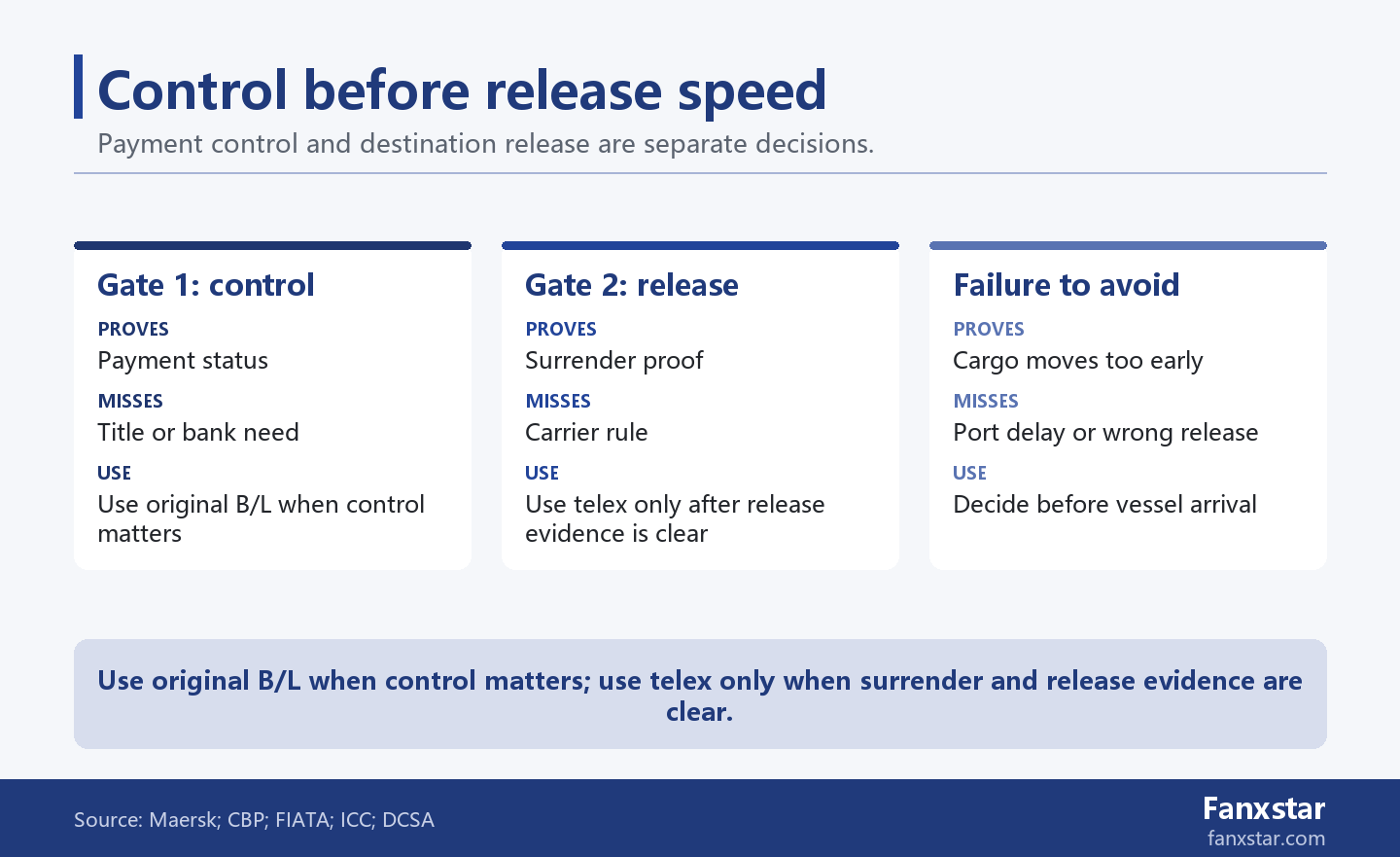
A Two-Gate Release Checklist Before Vessel Arrival
Gate one: commercial control
Before choosing telex release, confirm payment status, buyer-seller trust, bank involvement, consignee name, and whether the shipment needs document-of-title control. If payment is unsettled or bank presentation is required, speed should not override control. If the buyer and seller have a mature relationship and payment is complete, telex release may be reasonable.
DCSA’s bill of lading standard page frames electronic bill of lading standards as a way to support adoption and straight-through processing. These digital trends do not erase the control question; they make it even more important to know which release mechanism the shipment actually uses and who has authority to request release.
Gate two: carrier and destination readiness
After the commercial decision, confirm the carrier procedure, local destination practice, required fees, surrender status, release instruction wording, and consignee identity. A telex instruction that arrives after vessel discharge can still create avoidable delay. A release instruction with the wrong consignee name can become a cargo-control problem. A carrier requirement for an indemnity or original surrender can stop release if the shipper assumed the process was automatic.
The practical timing rule is simple: decide the release method before the vessel approaches destination. Waiting until arrival turns a document strategy into a port-cost problem. For LED lighting importers working against installation deadlines, that delay can be more expensive than the document fee.
A simple schedule helps: review the B/L draft before departure, decide the intended release method after final payment status is clear, confirm surrender or courier path while the vessel is in transit, and verify destination release instructions several days before arrival. The exact timing differs by carrier and route, but the sequence should not begin when the container is already waiting.
How to Align B/L Decisions With LED Lighting Procurement
Document terms should match payment terms
If a purchase order says deposit before production and balance before shipment, the B/L release method should reflect how the seller confirms final payment. If the seller agrees to telex release before payment is secure, the seller may lose leverage. If the buyer requires original documents after paying in full, the buyer may lose time. The release method should not be an afterthought handled by logistics alone.
For LED lighting projects, also confirm whether the shipment includes multiple product lines, partial shipments, or project deadlines. A container of emergency lighting for a public-site deadline may require different document urgency from stock replenishment. A shipment with multiple consignee entities or forwarders needs even cleaner naming and release instruction control.
Build the shipment file before documents are issued
The shipment file should include commercial invoice, packing list, B/L draft, consignee details, notify party, HS code references, product description, payment status, and intended release method. If the B/L draft uses a broad product description that does not match the invoice or packing list, correct it before issuance. If the buyer plans telex release, state who will request surrender, who pays fees, and what confirmation is needed.
This is where a general trade-document topic becomes relevant to Fanxstar buyers. When ordering custom or project-based lighting, the release method should fit the shipment schedule and payment arrangement. Buyers can use Fanxstar’s HS codes for LED lighting guide alongside this B/L checklist so product description and release documents do not fight each other.
Fanxstar Application Fit for Import Buyers
Use document planning to protect installation timing
Fanxstar does not replace the buyer’s freight forwarder, bank, carrier, or customs broker. Its practical role is to help the buyer keep product description, model information, packing details, and shipment timing clear before documents are issued. For an ODM lighting order, that can prevent the release document from describing a product differently from the invoice or evidence file.
If a buyer is preparing a project shipment, send Fanxstar the required consignee details, destination country, preferred release method, forwarder requirements, and product-line description early. For a custom order, also confirm final model names and packing plan before B/L draft review. That keeps the logistics document aligned with the product the buyer expects to receive.
What to confirm before final release
Confirm payment status, B/L type, consignee identity, carrier surrender rule, destination acceptance, and who receives the release notice. If using telex release, ask for confirmation that originals have been surrendered according to carrier procedure and that all charges required for release are settled. If using original B/L, confirm courier timing and document custody before vessel arrival.
The best choice is not always the fastest choice. It is the release method that matches trust, payment, carrier procedure, and delivery deadline with the least preventable risk.
FAQ
Is telex release the same as an original bill of lading?
No. Telex release usually follows surrender of the original bill of lading and carrier authorization to release cargo without presenting the paper at destination. It changes the release process; it does not mean document control never existed.
When should an importer use original B/L instead of telex release?
Use original B/L when title control, bank involvement, letter-of-credit terms, new trading relationships, or high cargo value make document control more important than speed. The trade-off is courier time and possible document delay.
Can telex release cause cargo-control risk?
Yes. Risk appears when the release instruction is unclear, the consignee name is wrong, payment is not settled, originals are not surrendered correctly, or the carrier requires indemnity or fees that were not planned.
What should LED lighting buyers check before vessel arrival?
Check the B/L draft, consignee name, release method, payment status, carrier surrender rule, invoice and packing-list consistency, and forwarder instructions. Waiting until arrival can turn a document issue into port storage cost.