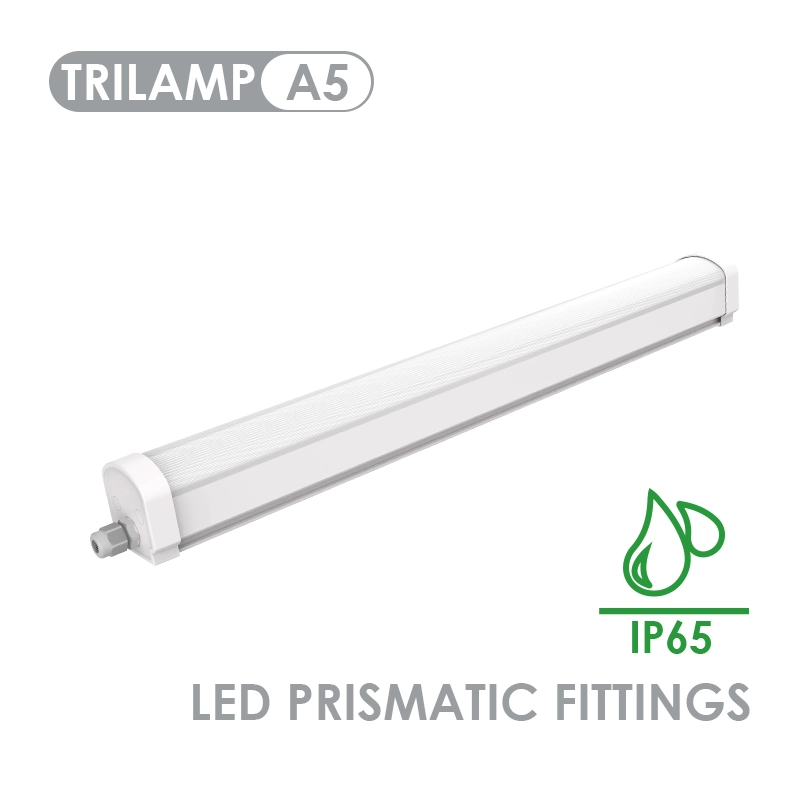
Upgrading to LED tri-proof lighting delivers clear advantages over older fluorescent systems. For facility managers, the debate between fluorescent and LED is no longer just about light—it is a transition from legacy gas-discharge technology to advanced solid-state electronics. Users often see energy savings of up to 80%, accompanied by superior durability and minimal maintenance requirements. This guide explores the fundamental differences and provides five compelling reasons why making the switch today is the smartest financial and operational decision for your facility.
Key Takeaways
-
80% Energy Reduction: Transitioning from ballast-heavy fluorescents to high-efficacy LEDs slashes utility costs immediately.
-
Maintenance-Free Longevity: LED tri-proof fixtures offer up to 100,000 hours of life, eliminating frequent bulb changes and costly downtime.
-
Superior Durability: Integrated “Tri-proof” engineering provides IP66/IP65 protection against water, dust, and corrosion.
-
Enhanced Workplace Safety: Eliminate fluorescent flicker and mercury hazards while improving visibility with high-CRI, instant-on illumination.
-
Smart Automation: Modern LEDs support daylight harvesting and motion sensors, cutting lighting costs by an additional 40-70%.
Fluorescent vs. LED: Understanding the Technological Shift
To make an informed decision, it is essential to understand the core differences. Fluorescent lights use gas-filled glass tubes and require ballasts to regulate current. This system is inherently fragile and sensitive to environmental stressors. In contrast, LED tri-proof lights rely on solid-state technology (Light Emitting Diodes), which generates light through the movement of electrons in a semiconductor. This integrated architecture is engineered for the rigorous demands of industrial environments.
|
Feature |
Fluorescent Tri-Proof Lights |
LED Tri-Proof Lights |
|---|---|---|
|
Technology |
Gas-discharge (Fragile tubes) |
Solid-state (Durable SMD chips) |
|
Energy Efficiency |
Low (40-60W for equivalent output) |
High (15-25W for equivalent output) |
|
Lifespan |
8,000 – 15,000 hours |
50,000 – 100,000 hours |
|
Light Quality |
Flickering, lower CRI (60-85) |
Flicker-free, high CRI (70-98) |
|
Environmental |
Contains Mercury (Toxic) |
Mercury-free (Eco-friendly) |
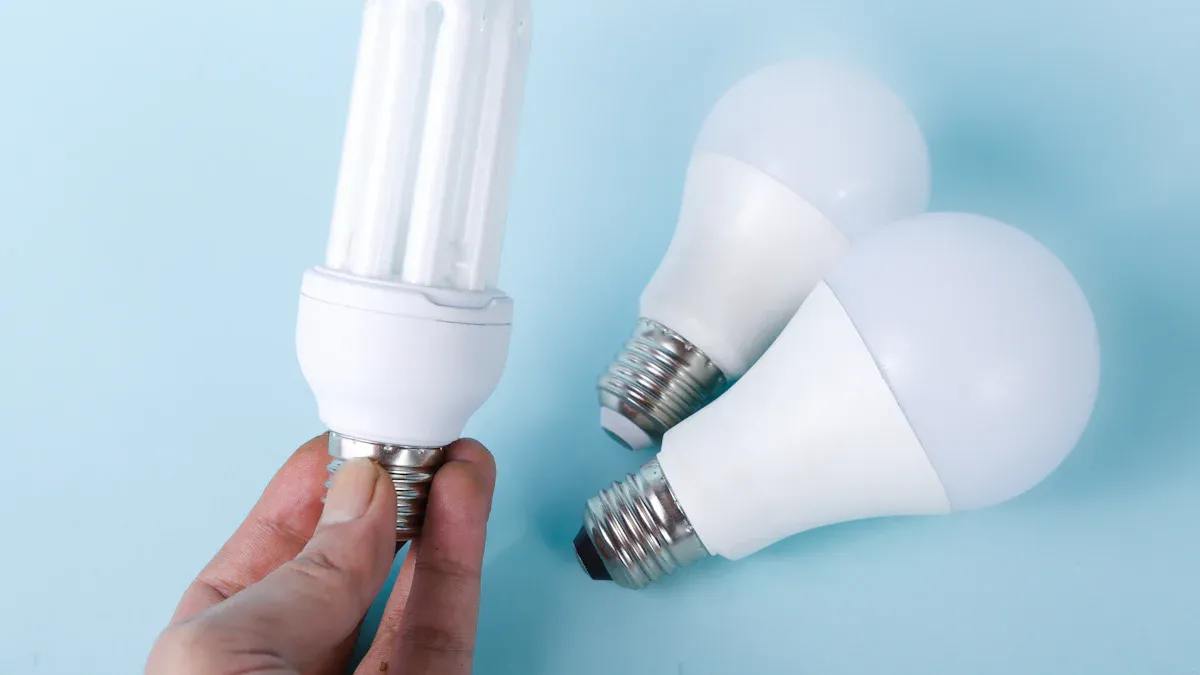
1. Massive Energy Savings: Cut Utility Bills by up to 80%
The most immediate factor is the radical reduction in power consumption. Fluorescent systems are notorious for inefficiency, largely due to the parasitic power draw of ballasts, which consume an additional 15% to 20% of energy beyond the lamp’s rated wattage. Modern LED battens reach luminous efficacy levels between 160 and 210 lumens per watt (lm/W), far surpassing traditional fluorescent tubes which often waste light in a 360-degree pattern trapped within the housing.
LED tri-proof fixtures utilize directional lighting, focusing 100% of their output exactly where it is needed. Facilities that switch to LED see dramatic energy savings and lower thermal loads on HVAC systems, as LEDs convert energy into light rather than heat.
2. Unmatched Durability: IP66 and IK10 Protection
In high-stakes industrial environments, “Tri-proof” signifies resistance against water, dust, and corrosion. While fluorescent vapor tights often use low-grade polycarbonate that becomes brittle, modern LED tri-proof lights use high-density polycarbonate diffusers and aluminum alloy housings. The IP66 rating ensures the fixtures withstand powerful water jets and dust ingress, while the IK10 rating provides the highest level of impact resistance against mechanical shocks.
Upgrading from fluorescent to LED is like trading an old, unreliable car for a modern electric vehicle. The new system runs smoother, lasts longer, and adapts to changing conditions with ease.
3. Drastic Reduction in Maintenance and Lifespan
Facility managers often face a constant replacement cycle with fluorescent lights. Most LED tri-proof fixtures are rated for 50,000 to 100,000 hours—meaning they can last up to 10 times longer than legacy tubes. This eliminates the hidden costs of maintenance, such as scissor lift rentals, diverted labor, and production line cordons.
Furthermore, many LED models feature tool-free maintenance. Quick-wiring connectors and modular designs allow staff to replace modules or upgrade fixtures in seconds without specialized tools, keeping operations efficient and minimizing downtime.

4. Health & Productivity: Flicker-Free Environments
Traditional fluorescent tubes rely on a gas-discharge process that produces a stroboscopic effect. Research shows that this flicker can cause headaches, fatigue, and reduced concentration in workers. Flicker-free LED lighting provides a stable, uniform light distribution that reduces eye strain and visual stress. This improved lighting quality helps teams work faster and with fewer mistakes, significantly boosting overall workplace safety and productivity.
5. Smart Controls & Automation: The Future of Savings
Modern LED shop lights can be integrated with advanced automation features. Daylight harvesting uses sensors to detect natural sunlight and dim the LEDs accordingly, potentially cutting lighting costs by an additional 70%. Motion detection ensures that lights only activate when a space is occupied, responding instantly via microwave sensors. These smart features extend product life and optimize energy use for every shift, providing a level of operational intelligence impossible with legacy fluorescent systems.
Making the Switch: Practical ROI Considerations
While the initial investment for LED tri-proof lighting may be higher than fluorescent, the Total Cost of Ownership (TCO) is significantly lower. Most facilities achieve a full return on investment (ROI) within 12 to 24 months through utility bill reductions and eliminated maintenance costs. Additionally, because LEDs are mercury-free, they avoid the specialized hazardous waste disposal surcharges associated with fluorescent tubes, supporting your facility’s ESG goals.
Frequently Asked Questions (FAQ)
Q: What makes LED tri-proof lights better for industrial use?
LED tri-proof lights are specifically engineered to resist dust, water, and impacts. Their solid-state design handles vibrations and temperature fluctuations much better than fragile fluorescent tubes, leading to a much higher industrial lighting lifecycle.
Q: Can I replace fluorescent tubes with LED fixtures easily?
Yes, many modern LED tri-proof models support 1:1 replacement for T5/T8 fixtures. These are designed to fit into existing spaces with minimal wiring changes, making the conversion process smooth and cost-effective.
Q: How much can I save on my energy bill?
Most facilities see a reduction of 60% to 80% in lighting-related electricity costs. When you factor in the elimination of ballast draw and reduced HVAC cooling needs, the savings are substantial.
Q: What is the significance of the IK10 rating?
The IK10 rating is the highest grade of impact protection. It ensures the fixture can endure high levels of physical stress or accidental bumps from machinery, which is crucial for safety in high-traffic warehouses and parking garages.
Q: Are LED tri-proof lights environmentally friendly?
Absolutely. LEDs are 100% recyclable and contain no toxic mercury or lead. They align with the United Nations Minamata Convention on Mercury, helping businesses stay ahead of evolving environmental regulations.