For decades, Metal Halide (MH) fixtures were the gold standard for illuminating expansive industrial spaces. However, in the modern landscape of facility management, these legacy systems have become a significant financial liability. Facility managers now see rapid Return on Investment (ROI) when they upgrade to LED linear high bays, cutting costs by up to 70% through lower energy use and drastically reduced maintenance requirements.
Key Takeaways
-
Immediate Energy Reduction: Transitioning from 400W Metal Halide to 165W LED reduces energy consumption by over 60%, delivering ROI often in under 24 months.
-
Elimination of Hidden Costs: LEDs last 4 to 7 times longer than MH fixtures, eliminating expensive maintenance cycles involving scissor lifts and specialized labor.
-
Intelligence Boosts ROI: Integrating sensors like daylight harvesting and occupancy detection can increase total energy savings to as much as 80%.
-
Financial Incentives: Utility rebates (DLC-qualified) and tax deductions (such as Section 179D) can offset a substantial portion of upfront hardware costs.
-
Improved Light Quality: High-CRI LED light enhances worker safety, reduces errors, and improves overall facility throughput.
The Real Cost of Legacy Lighting: Why Upgrade?
Understanding the ROI of an LED transition begins with acknowledging the inefficiencies of High-Intensity Discharge (HID) technology. Metal Halide lamps are “silent killers” of industrial budgets due to two main factors: the Ballast Factor and Lumen Depreciation.
The Inefficiency of Legacy HID Systems
A “400W” Metal Halide fixture doesn’t actually draw 400 watts. Due to the ballast required to regulate the arc, the total draw is typically between 455 and 465 watts. Furthermore, MH lamps suffer from aggressive lumen depreciation. They can lose up to 50% of their light output halfway through their lifespan, forcing managers to “over-light” spaces initially just to maintain safety standards later.
Why LED Linear High Bays Win
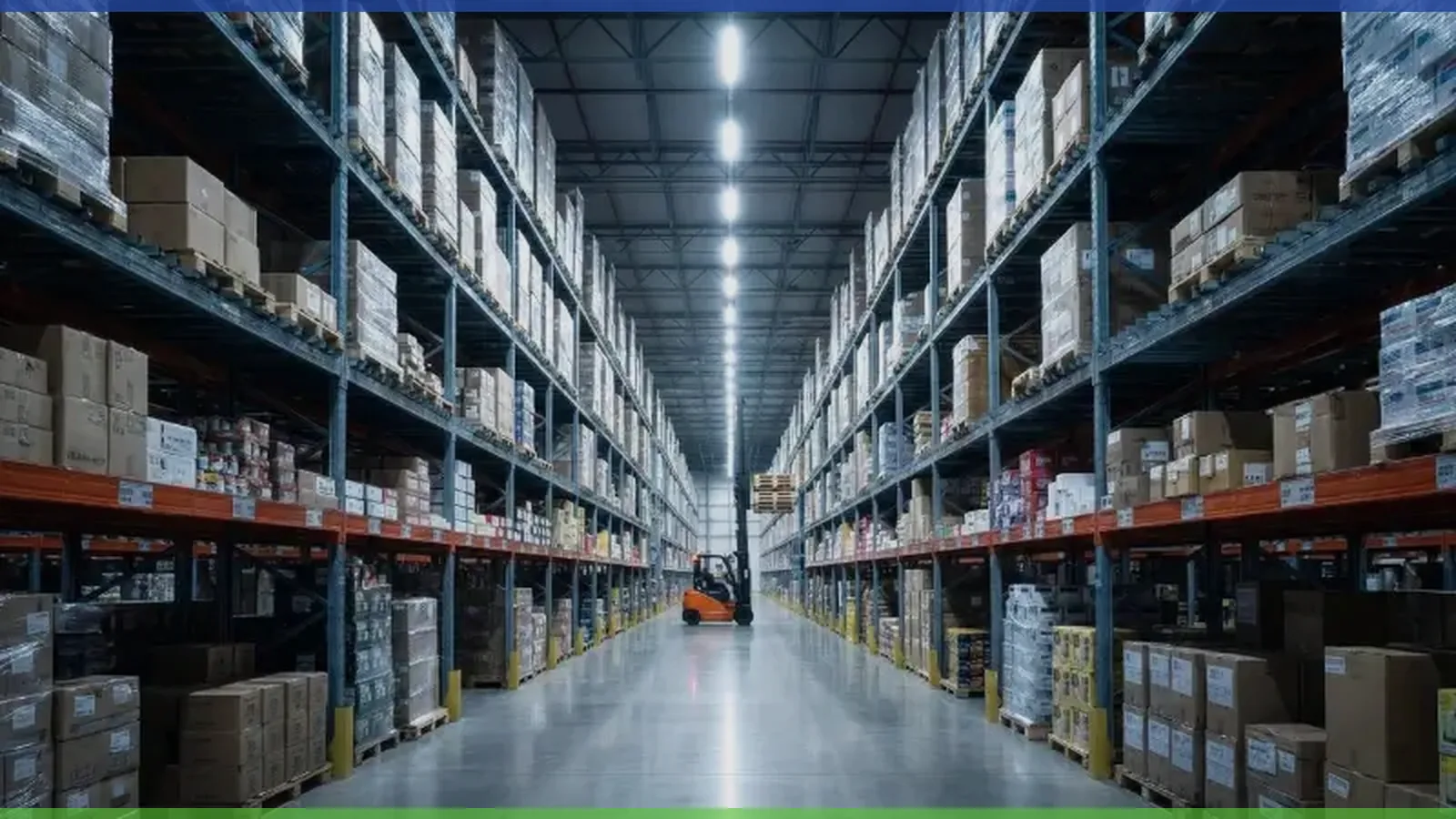
Transitioning to LED Linear High Bays offers a fundamental shift. These fixtures provide directional light, eliminating the waste associated with omnidirectional MH bulbs that rely on reflectors. They run cooler, reach full brightness instantly, and offer superior lumen maintenance over 50,000 to 100,000 hours.

ROI and Payback Breakdown: The Numbers
While the upfront cost of LED fixtures is higher than traditional MH fixtures, the total cost over a 10-year period is significantly lower. Most industrial facilities achieve a full payback within 12 to 36 months.
Total Cost Comparison (Per Fixture over 10 Years)
|
Fixture Type |
Upfront Cost |
Energy Costs |
Labor/Maint Costs |
Total 10-Year Cost |
|---|---|---|---|---|
|
Metal Halide (400W) |
$60 |
$720 |
$200 |
$980 |
|
LED Linear High Bay (165W) |
$180 |
$270 |
$0 |
$450 |
Calculating the Payback Period
Facility managers often use the Simple Payback Period method to measure investment speed. It is calculated by dividing the total project cost by the annual savings generated.
Formula: Total Project Cost ÷ Annual Savings = Payback Period (Years).
Example: If a warehouse retrofit costs $40,000 and generates $25,000 in annual savings, the payback period is 1.6 years.
Intelligent Controls: Maximizing the Return
Modern LED linear high bays aren’t just bulbs; they are platforms for intelligent energy management. Adding smart controls can shorten payback periods by accelerating annual savings.
Combined Control Strategies
-
Daylight Harvesting: Sensors measure natural sunlight and dim LEDs accordingly, saving up to 60% in areas with skylights or windows.
-
Occupancy & Motion Sensing: Lights turn on only when activity is detected. This responsive lighting can reduce energy output by an additional 20-30% in warehouse aisles.
-
IoT Connectivity: Allows fixtures to communicate with Building Management Systems (BMS) to optimize schedules and track performance.
|
Control Type |
Typical Energy Savings |
Impact on ROI |
|---|---|---|
|
Daylight Harvesting |
Up to 60% |
Shortens Payback |
|
Motion Sensing |
20% – 30% |
Shortens Payback |
|
Combined Intelligent Strategy |
Up to 80% |
Maximum ROI |

Financial Incentives and Rebates
To qualify for rebates, LED products must meet strict certification standards. In the US and Canada, DLC certification is essential for most utility programs. Rebates can significantly lower the net cost of the project.
-
Prescriptive Rebates: Fixed “dollars-per-fixture” payments ranging from $50 to $150 per high bay.
-
Federal Tax Deductions: Section 179D allows facility owners to claim tax benefits for substantial energy reductions.
-
Custom Incentives: Often based on the total kWh saved, favoring large facilities with aggressive control strategies.
Practical Challenges and Success Strategies
Despite the clear benefits, retrofits can face hurdles like compatibility or operational disruption. Successful managers mitigate these by following a structured roadmap:
-
Conduct a Lighting Audit: Document current ballast factors and fixture counts.
-
Pilot Zones: Test fixture choices and sensor logic in a small area before a full rollout.
-
Tool-Free Installation: Choose fixtures with tool-free connectors to reduce labor costs and downtime.
-
CCT Selection: Typically, 4000K or 5000K is recommended for industrial spaces to maximize visibility and alertness.
Real-World Results
Case Study: A 200,000-square-foot distribution center reduced its annual energy costs from $180,000 to $48,000 and cut maintenance expenses by $35,000 annually after upgrading to LED linear high bays. The project achieved a full payback in under 1.8 years.
Frequently Asked Questions (FAQ)
What is the typical payback period for switching to LED linear high bays?
Most facilities achieve a full payback in 12 to 24 months. When utility rebates are applied, many projects reach payback in less than a year.
How much energy does a 400W Metal Halide fixture actually draw?
Due to the ballast factor, a standard 400W MH fixture typically draws between 455 and 465 watts. This hidden draw is a major factor in ROI calculations.
Why are linear high bays better than UFO (round) high bays for warehouses?
Linear high bays provide a rectangular light distribution that mirrors warehouse aisles. This minimizes wasted light on pallet tops and concentrates illumination on the floor, allowing for lower wattage fixtures to meet safety standards.
What are DLC-qualified products and why do they matter?
The DesignLights Consortium (DLC) sets strict performance and efficiency standards. Most US and Canadian utility providers require fixtures to be DLC-qualified to be eligible for rebates.
Do LED linear high bays help with HVAC costs?
Yes. LEDs produce significantly less heat than Metal Halide fixtures. This reduction in “thermal load” can lower HVAC cooling costs by 10-20% in climate-controlled facilities.