

In the global procurement of industrial equipment—particularly linear lighting systems—the shipping cost is often the single largest variable affecting the final landed price. As freight rates remain volatile, the ability to maximize container space has shifted from a “logistics preference” to a “financial necessity.” For a high-value lighting manufacturer, the difference between a container at 70% capacity and one at 95% capacity can represent a 22% reduction in total per-unit shipping costs.
Maximizing container space is a science that begins at the product design stage and extends to the final load plan at the dock. By optimizing packaging dimensions, utilizing modular shipping methods like SKD (Semi-Knocked Down), and understanding the physics of “Dimensional Weight,” companies can significantly increase the product value contained within a single 40ft HQ container.
Key Takeaways
-
Volumetric ROI: Improving container utilization by 15% can lead to nearly 22% cost savings on long-haul transpacific routes.
-
Dimensional Weight (DIM): Shipping costs are driven by volume as much as mass. “Right-sizing” cartons for long linear lights is essential to avoid the “Air Tax.”
-
Modular Advantages: SKD shipping allows for denser packing of components, reducing total shipment volume and potentially lowering import tariffs.
-
Weight Distribution: Proper load planning (placing heavy drivers at the bottom and light housings at the top) prevents product damage and stabilizes the container.
-
FCL vs. LCL: For large projects, Full Container Load (FCL) provides a lower cost-per-unit and faster transit times than Less than Container Load (LCL).
The Economics of Container Utilization
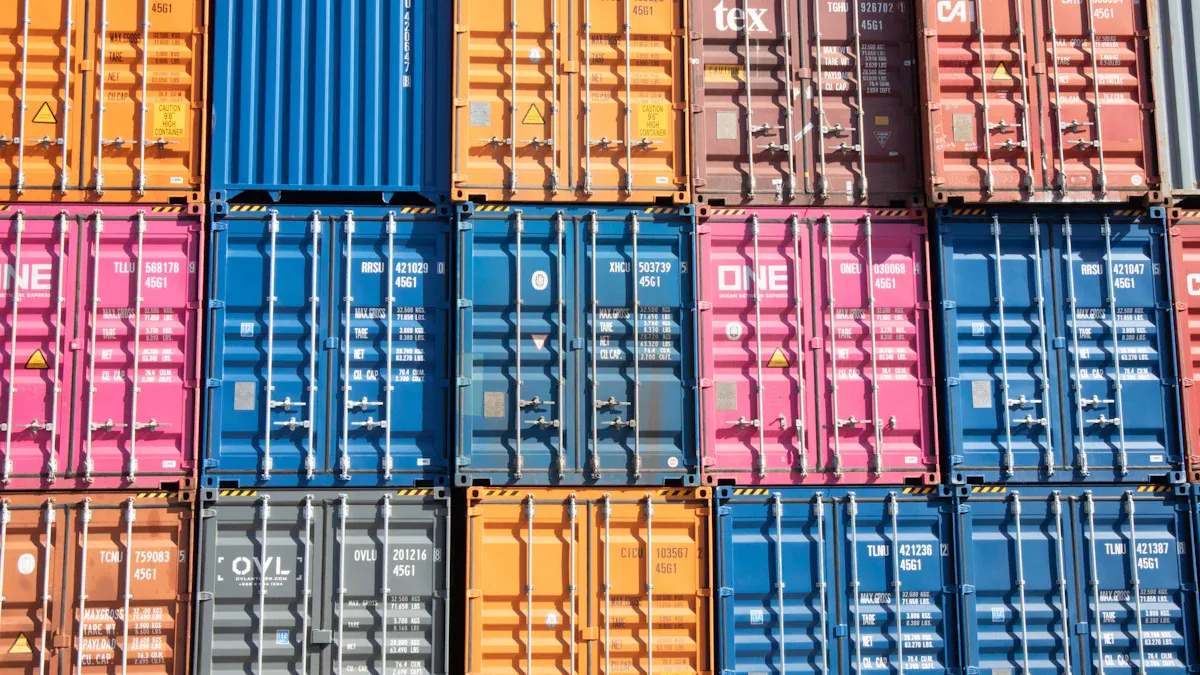
Space efficiency in international maritime shipping is the ultimate profit multiplier. When a container is sent with “empty air,” the company is effectively paying for the transportation of nothing. In the lighting industry, where products like 1.5-meter linear battens are standard, the risk of wasted space is exceptionally high.
|
Efficiency Factor |
Impact on Landed Cost |
Strategic Goal |
|---|---|---|
|
Space Optimization |
15-22% Reduction |
Increase units per cubic meter (CBM). |
|
Dimensional Weight |
Variable Surcharges |
Ensure density exceeds the “DIM” threshold. |
|
Loading Speed |
Demurrage Mitigation |
Reduce man-hours during dock operations. |
|
Damage Mitigation |
Insurance & Re-ship Costs |
Zero shifting during maritime transit. |
Dimensional Weight (DIM) and the “Air Tax”
A common pitfall for inexperienced buyers is ignoring Dimensional Weight. Carriers calculate the “DIM weight” by multiplying L x W x H and dividing by a specific factor (e.g., 5000 or 6000 for air/sea). If the volumetric weight is higher than the actual weight, the carrier charges you for the volume. Industrial lights are long but relatively light, meaning they are frequently hit with this “Air Tax.”
To mitigate this, Fanxstar focuses on packaging innovation. By utilizing slimmer, reinforced cartons and nesting components, we reduce the L x W x H footprint without compromising the structural integrity of the light. Reducing a carton’s width by just 2cm can allow for an extra vertical row in a 40ft HQ, adding hundreds of units to the total manifest.
Core Strategies: SKD, Modular, and Multi-Functional
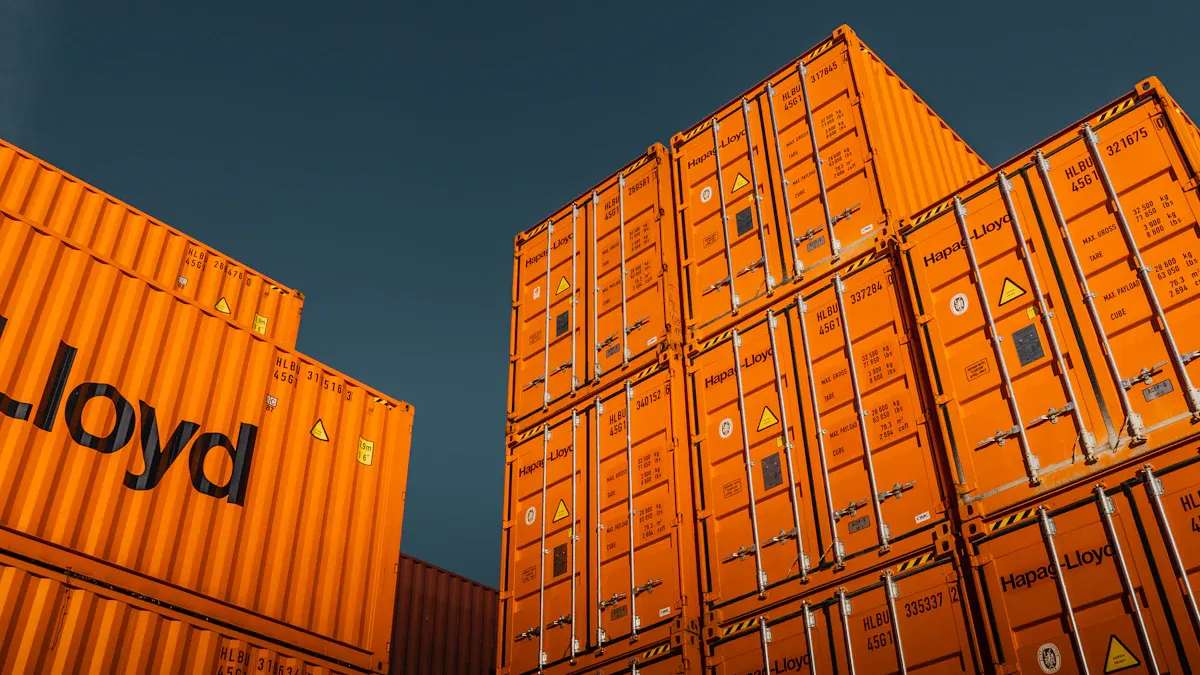
1. Modular and SKD (Semi-Knocked Down) Shipping
Shipping fully assembled 8-foot linear lights is a volumetric nightmare. SKD shipping involves shipping the aluminum housings, the internal drivers, and the diffusers separately. These components can be nested into each other, vastly increasing density. This not only lowers the freight-per-unit but often moves the product into a different HS Code category, potentially reducing import duties from “Finished Goods” (High Tariff) to “Components” (Low Tariff).
2. High-Density Palletization
Pallet selection is a critical logistics lever. Using standard Euro or US pallets may leave 5-10cm of “dead space” on the sides of a standard container. We recommend custom palletizing for large orders to match the exact internal width of the container. Brick stacking and interlocking layers prevent the load from shifting and allow for double-stacking in High-Cube containers, utilizing the full vertical height.
Pro-Tip: Weight Distribution and Bottom-Loading
A stable container is a safe container. When maximizing space, always place the densest items (such as LED drivers or power supplies) on the floor of the container. This lowers the center of gravity, preventing the container from swaying on the ship, and protects the more fragile aluminum housings and PC diffusers from crushing.
Packaging Optimization: The Multiplier Effect
In industrial lighting, the “standard box” is often too large. Choosing the right box for linear lights involves calculating the “Stacking Strength.” If a box is too weak, the bottom layer will collapse, causing the entire stack to tilt and wasting space. By using high-test 5-ply corrugated cardboard, we can stack fixtures higher, ensuring the top 50cm of the container isn’t wasted air.
-
Nesting: Designing housings so they can be stacked “male-to-female” reduces the vertical volume of the shipment.
-
Compact Drivers: Utilizing slimmer drivers allows for smaller internal packaging footprints.
-
Dunnage Reduction: Switching from bulky foam to honeycomb cardboard or airbags saves space while maintaining protection.
Technology in the Yard: AI and CTOS
Modern logistics doesn’t rely on guesswork. Container Terminal Operating Systems (CTOS) and AI-driven load planning software can model a container’s internal volume in 3D. By inputting the exact dimensions of every SKU, these systems can identify “pockets” of air where smaller boxes or loose cargo can be tucked. This ensures that every cubic inch is contributing to the shipment’s value.
Additionally, staying informed on peak season lead times allows companies to book containers when supply is higher, giving them the flexibility to choose “Standard” vs. “High Cube” containers based on their specific cargo density.
A Practical Implementation Checklist
-
Audit Carton Sizes: Measure your current packaging. Is there more than 5% “air” inside the box? If so, right-size it.
-
Verify Pallet Match: Ensure your pallets don’t create an “overhang” or leave gaps in the container.
-
Consider Loose Loading: For non-fragile items, hand-stacking (loose loading) can increase capacity by 10-15% over palletized cargo, though it increases labor costs at the destination.
-
Weight Audit: Are you hitting the container’s weight limit before the volume limit? If so, you need lighter packaging materials.
-
Sourcing Strategy: Coordinate with your manufacturer to optimize HS Codes and SKD options during the quote phase.
|
Strategy |
Benefit |
Key Implementation Difficulty |
|---|---|---|
|
SKD Shipping |
Max Volume Density |
Requires local assembly capability. |
|
Loose Loading |
Zero Wasted Air |
High labor cost at port of entry. |
|
Right-Sizing |
Reduced DIM Weight |
Requires custom box manufacturing. |
|
ASRS Automation |
High Picking Speed |
High initial investment in software. |
Summary: Turning Logistics into a Profit Center
Logistics should not be viewed as a static expense. By mastering the science of container space maximization, a business can effectively lower its per-unit cost, making its products more competitive in the global market. Whether through SKD modularity, right-sized packaging, or AI-enhanced load planning, the goal is clear: maximize the ratio of “Product Value” to “Shipping Volume.”
In a world where transpacific container rates can fluctuate by thousands of dollars overnight, the only constant you can control is the efficiency of your internal container space. Smart procurement managers work closely with manufacturers like Fanxstar to ensure that every shipment is an exercise in financial and volumetric optimization.
FAQ
1. What is the difference between FCL and LCL?
FCL (Full Container Load) means you rent the entire container for your exclusive use. LCL (Less than Container Load) means you share the space with other shippers. FCL is almost always more cost-effective per unit if you can fill at least 60% of the container, as it avoids the “per CBM” handling fees associated with LCL consolidation.
2. Why is “Dimensional Weight” important for LED lighting?
Because LED fixtures are long, thin, and lightweight, they often take up a lot of space relative to their mass. Carriers will bill you for the “Volume” they occupy on the ship or plane. If you don’t optimize your box dimensions, you could pay for a 20kg shipment even if the light only weighs 5kg.
3. Is SKD (Semi-Knocked Down) shipping worth the extra assembly cost?
If the freight savings and tariff reductions exceed the cost of local labor for assembly, then yes. For large 8-foot linear lights, SKD is almost always the more profitable choice for high-volume international orders.
4. How much extra space can “Loose Loading” provide?
Loose loading (hand-stacking boxes without pallets) can typically fit 10% to 20% more product into a container. However, this increases the time it takes to unload the container at the warehouse, so you must weigh the freight savings against the increased labor cost.
5. Can I mix different product types in one container to save space?
Absolutely. This is a common strategy where “heavy” goods (like steel mounting brackets) are placed on the bottom and “voluminous” goods (like lightweight LED battens) are stacked on top. This ensures the container hits its weight and volume limits simultaneously.








