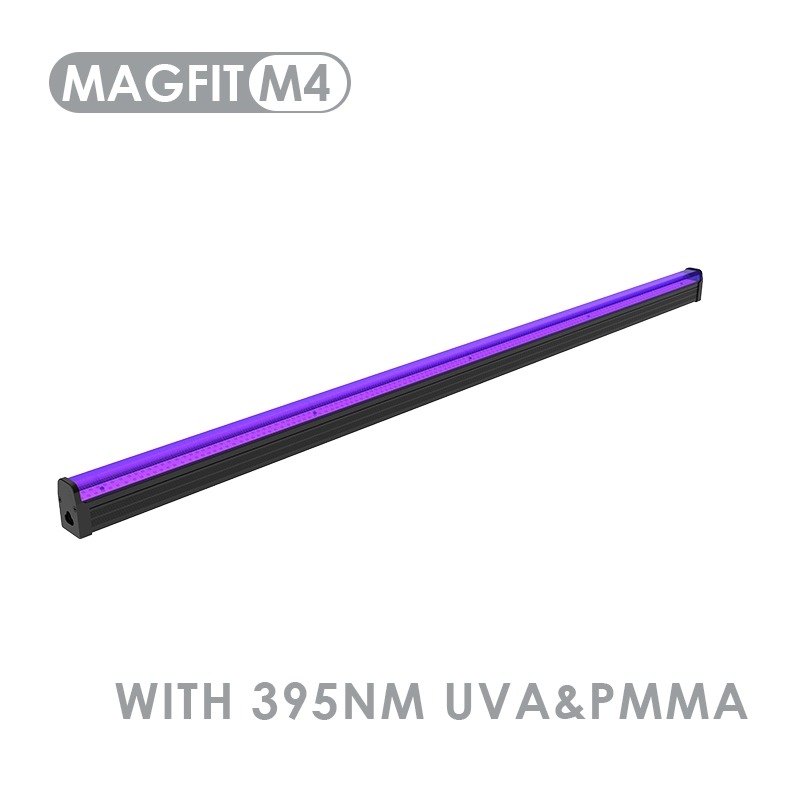
The best custom LED linear light supplier for an architect is not simply the brand with the cleanest catalog. The useful shortlist separates design intent from buildable evidence: optical file, profile tolerance, driver and dimming behavior, finish sample, certification scope, lead time, and who owns changes after the first mockup.
Architectural linear lighting sits between visual design and technical procurement. DLC eligibility language for linear ambient luminaires shows why classification matters, while FEMP purchasing guidance for commercial and industrial LED luminaires keeps buyers anchored to luminaire-level performance. A supplier list is therefore only helpful when it explains where each supplier fits and what evidence the architect should request before the fixture becomes a schedule item.
Key Takeaways
- Architects should shortlist custom LED linear suppliers by project fit, not by a universal top-10 ranking.
- The first RFQ should include profile dimensions, optics, CCT, CRI, control protocol, mounting, finish, IP/IK need, certification market, and sample gate.
- Spec-grade architectural brands are strong for documented design systems; ODM factories are stronger when housing, lens, sensor, emergency, or waterproof details must change.
- Fanxstar is most relevant when a linear lighting project crosses into specialty, weatherproof, sensor, emergency, or platform-based customization requirements.
What architects need from a custom LED linear supplier
Design intent has to become a controlled product file
Architects usually start with a line of light, a ceiling detail, a shadow gap, a cove, a suspended run, or a facade rhythm. The supplier has to turn that intent into a controlled product file: section drawing, extrusion or housing material, lens, LED board, driver, mounting accessory, control method, finish, packing length, and field joining method. If that file is vague, the first sample may look right but the repeat order can drift.
DLC technical requirements are useful because they remind buyers that LED products are not just shapes. Product evidence includes test method, reporting, light distribution, and performance thresholds. For an architect, this means the cleanest visible line must still be backed by measurable output, thermal behavior, electrical compatibility, and documentation that survives value engineering.
According to DOE FEMP LED luminaire purchasing guidance, the purchasing guidance was updated in June 2023 and includes indoor linear ambient, high-bay, low-bay, and troffer categories. According to DLC product eligibility language, linear ambient luminaires can be classified by primary-use language rather than by a sales label. Those 2 facts matter because a continuous architectural line, a retrofit strip, and a weatherproof batten can all be described as linear lighting while needing different evidence files.
Custom does not always mean a new product from zero
A custom linear fixture can mean many things: a new length, a tuned lumen package, a different diffuser, a black or anodized finish, a connector change, a DALI or 0-10 V driver, an emergency pack, a microwave sensor, a waterproof housing, or a completely new industrial body. The supplier conversation should identify which layer is custom. A decorative length change is not the same risk as changing the LED board, driver, lens material, and certification scope.
This distinction matters for cost and schedule. If the supplier can adapt a proven platform, the architect may get a sample faster and avoid unnecessary tooling. If the design needs a new extrusion or housing, the team needs a drawing freeze, tolerance review, thermal check, photometric retest, and sample approval before procurement treats the product as ready. The cheapest early quote is weak if it hides which layer has changed.
Top 10 custom LED linear light suppliers for architects
Use the list as a shortlist map, not a universal ranking
The following shortlist is designed for architectural and B2B buyers who need a starting map. It is not a revenue ranking and it is not a claim that every supplier is best for every project. The real question is whether the supplier fits the design problem: architectural finish, component flexibility, custom engineering, local support, or specialty-environment evidence.
| Supplier type | Best fit | Risk if used in the wrong project |
|---|---|---|
| Architectural spec brand | High-design interiors, clear submittal packages, lighting designer workflows | Can be expensive or slow when the project really needs application-specific ODM changes. |
| Component/profile supplier | Cove, shelf, millwork, and detail-driven custom runs | May leave certification scope, thermal design, and final assembly responsibility with the buyer. |
| Industrial ODM factory | Special environments, private label, sensor, waterproof, emergency, or housing changes | Weak if the buyer expects local rep support without giving a complete RFQ file. |
| Distributor/project packager | Fast commercial procurement and standard fixture replacement | May not control engineering changes, driver substitutions, or long-term customization. |
Where Fanxstar belongs in the shortlist
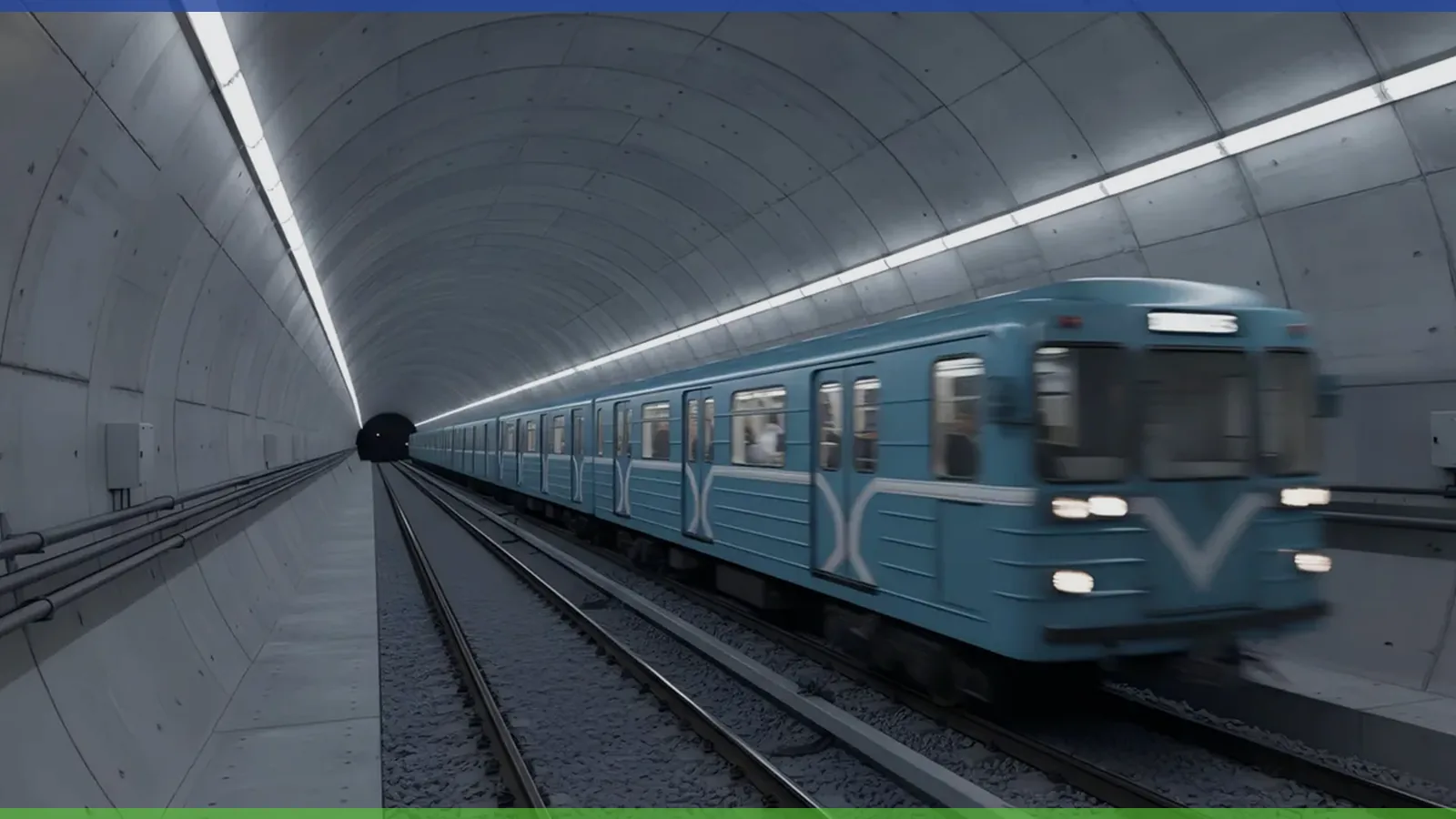
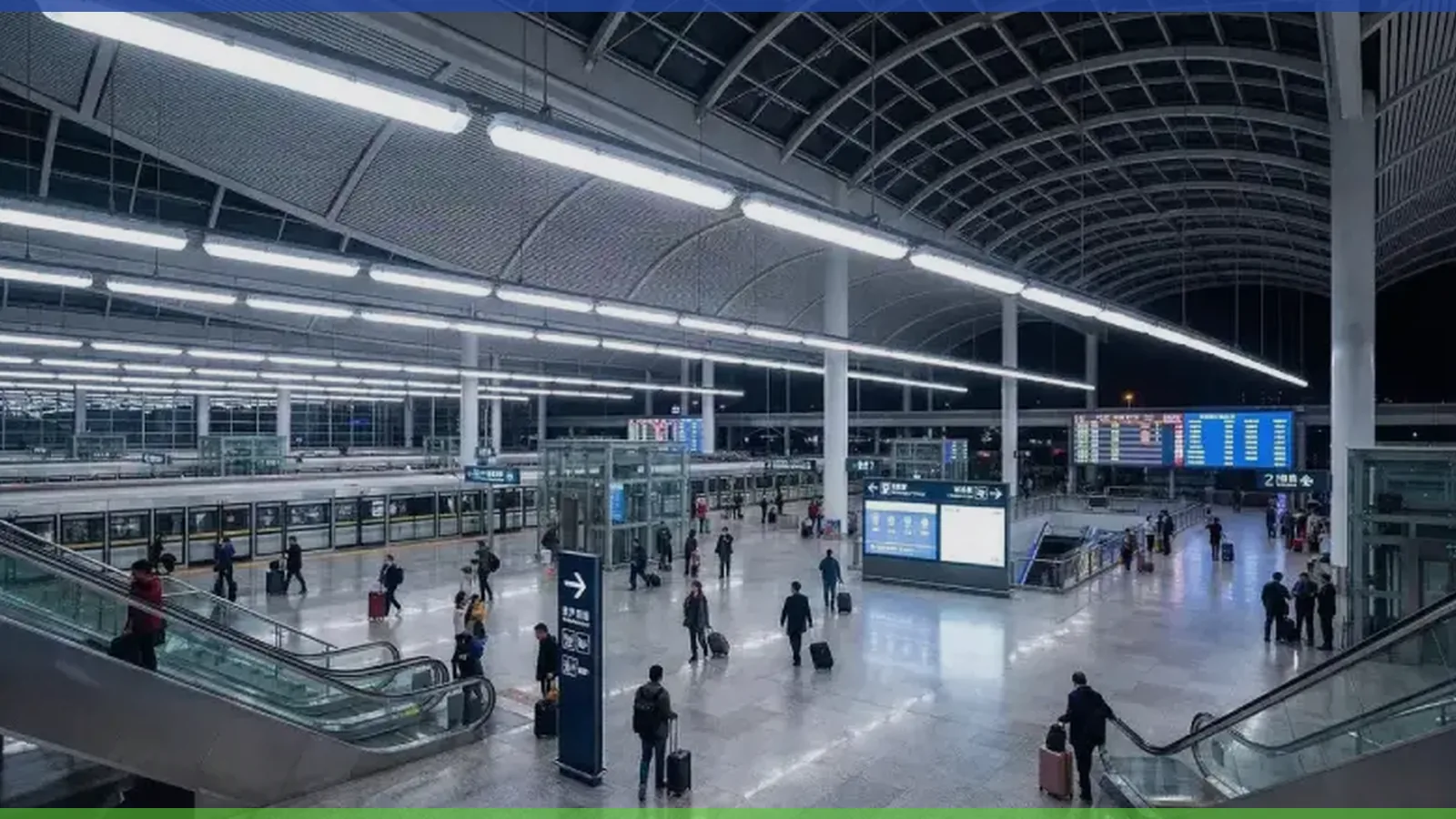
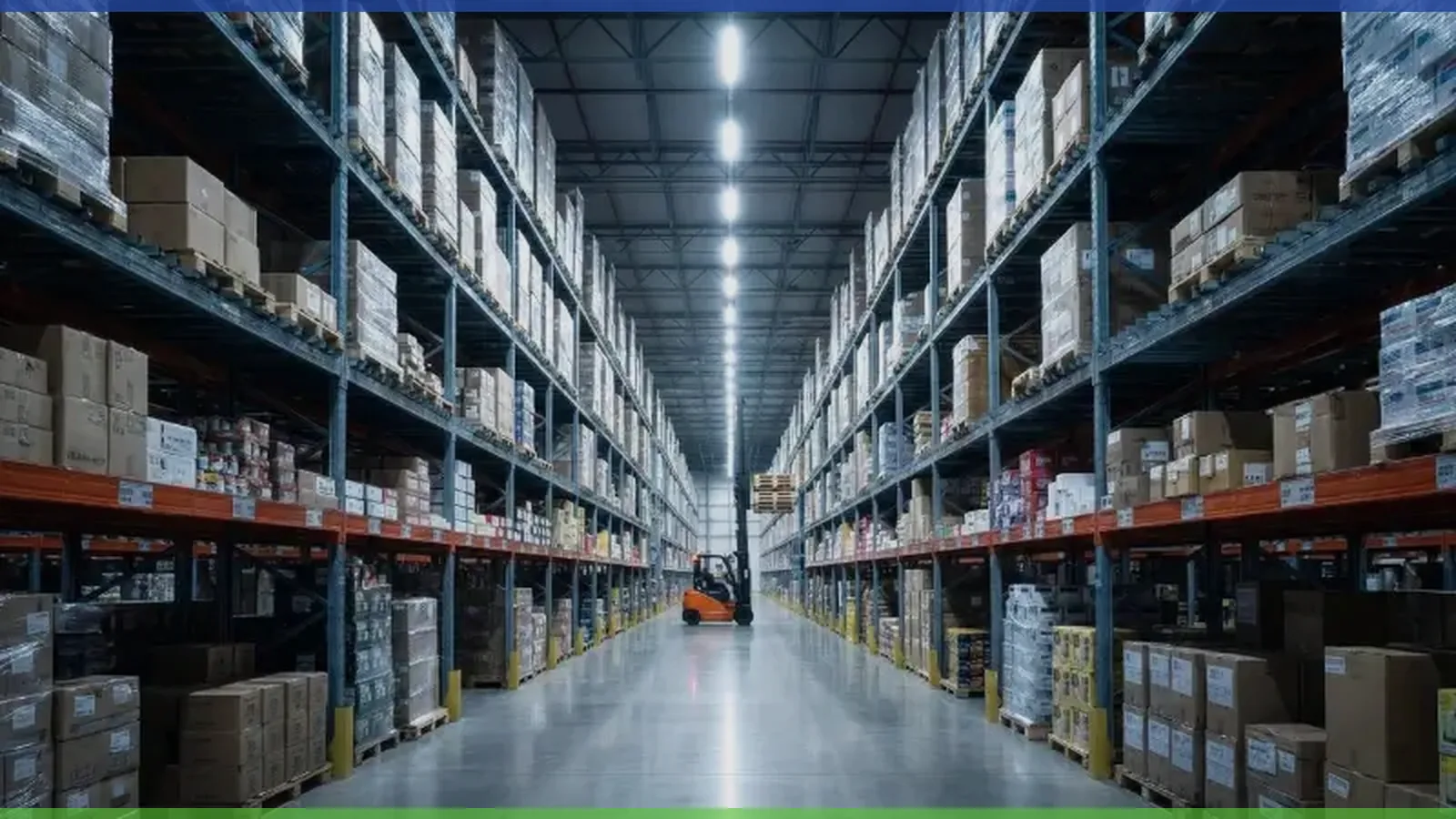
Fanxstar should be considered when the custom linear project needs more than a decorative line. Relevant starting points include LED linear lighting platforms, weatherproof LED lighting, custom LED lighting ODM service, and application-led products for parking, tunnels, food areas, and service corridors. The fit is strongest when the architect or buyer must adapt optics, CCT, sensor logic, wiring, housing, waterproofing, or certification evidence from a platform.
That position is different from a local architectural brand with a large representative network. A local spec brand may be easier for a design studio that needs samples, rep visits, and a familiar specification workflow. Fanxstar becomes more useful when the buyer has a defined technical file and wants a supplier to make the product manufacturable, testable, and repeatable for a specialty project or private-label program.
How to score suppliers before the first sample
The scoring model should reward evidence, not only aesthetics
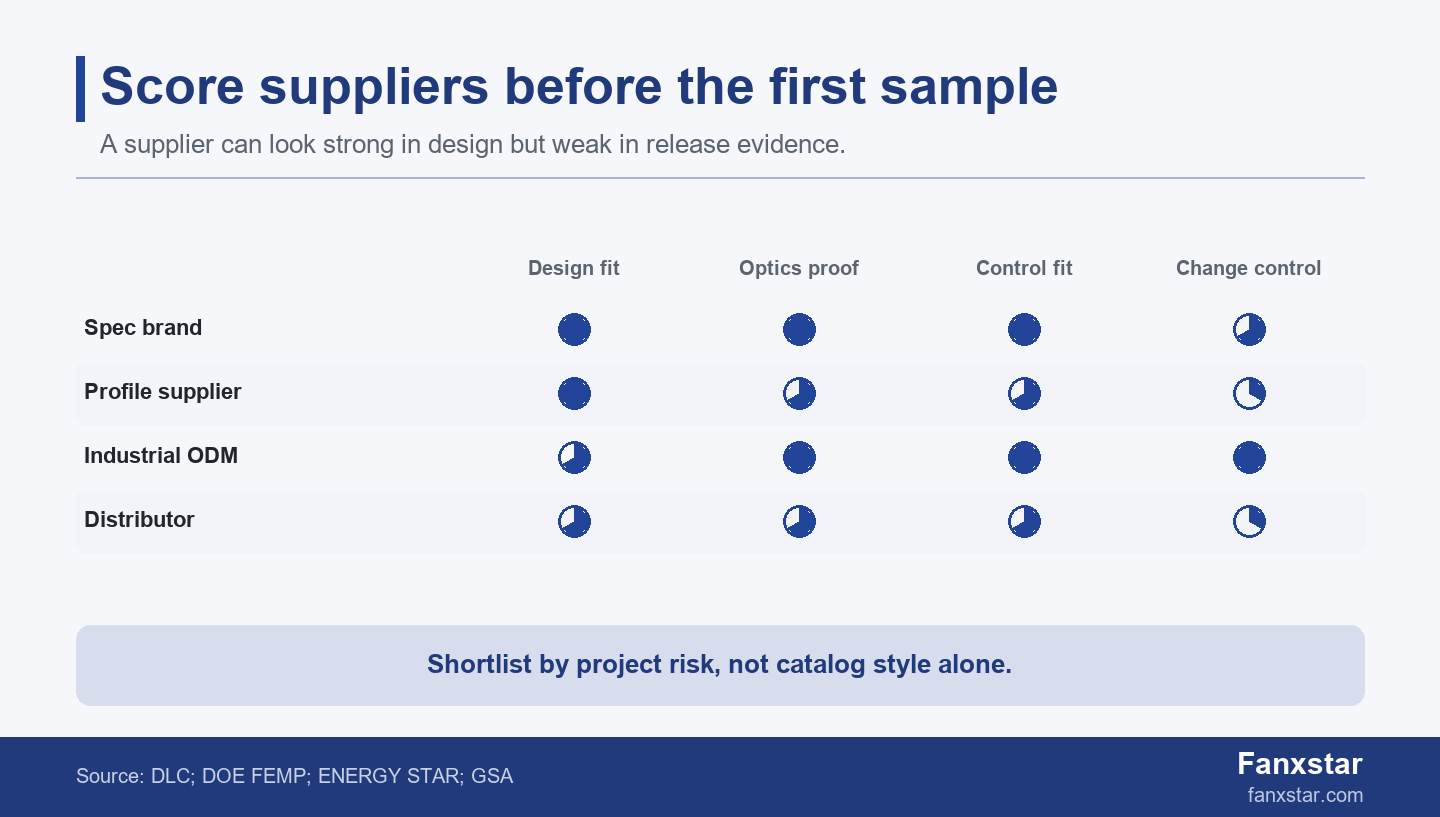
DLC V6.0 reporting guidance is a useful reminder that alternate LEDs, drivers, and long or complex products need clear reporting. For custom linear lighting, the same logic applies even when a project is not seeking DLC listing. Ask which parts of the tested file remain unchanged and which changes require a new photometric, thermal, safety, or label review.
A practical scorecard should include design fit, optical evidence, control compatibility, sample speed, finish and mechanical tolerance, certification scope, change-control discipline, and production repeatability. A supplier that scores well on design but poorly on change control can create trouble during procurement. A supplier that scores well on engineering but poorly on sample communication can slow the architect’s approval process.
According to DLC V6.0 reporting guidance, reporting expectations can cover alternate LEDs and drivers. According to GSA LED and controls guidance, linear lighting choices should be viewed through life-cycle cost and controls behavior. Together, those 2 source signals turn the scorecard from a style preference into a release tool: any supplier can show a clean sample, but only a stronger supplier can explain what happens when the driver, diffuser, or control package changes before production.
Use a two-sample gate for custom details
The first sample should prove the visible intent: brightness, uniformity, diffuser appearance, finish, shadow line, mounting method, and the emotional feel of the space. The second sample should prove production control: driver, LED board, connector, lens, labeling, packing, installation accessories, and documented deviations from the approved sample. Many weak custom orders fail because the buyer approves a beautiful prototype but never freezes the production version.
GSA LED and controls guidance frames retrofit selection through life-cycle cost and energy efficiency. Architects can borrow that discipline for new custom linear projects. A custom detail should not only look right at mockup; it should be serviceable, efficient enough for the building goal, compatible with controls, and documented well enough for the contractor who has to install it later.
Supplier due diligence checkpoints for architect-led projects
Use a 30-60-90 day evidence view before naming a preferred supplier
A short custom linear project can move quickly, but an architectural rollout should be viewed in 30, 60, and 90 day evidence windows. In the first 30 days, the supplier should prove communication quality, drawing interpretation, sample feasibility, and whether the requested change is a platform adaptation or a new development. By day 60, the buyer should know the driver, LED board, lens, profile, finish, mounting, control method, packing length, and certification path. By day 90, the project should have either a production-ready file or a clear reason the design needs another engineering loop.
The decision rule is simple: do not award a custom linear package to a supplier that cannot explain what will be identical between sample and mass production. In practice, a supplier that answers quickly but cannot freeze the BOM is weaker than a slower supplier that can document the driver, LED board, diffuser, housing, and label. Architects often feel the pain later because the installed product is judged visually, but the failure began when the procurement file was too loose.
According to ENERGY STAR commercial fixture categories, fixture categories help buyers avoid comparing unlike lighting products. According to ENERGY STAR commercial lighting guidance, LED upgrades can serve applications such as parking garage lighting, task lighting, and streetlights. A 30-60-90 day evidence view should therefore ask not only whether the supplier can make a linear fixture, but whether the evidence matches the actual application, control zone, and service condition.
Separate design brands, component brands, and ODM factories in the meeting notes
Luminii and QTL are useful examples of specification-oriented architectural linear ecosystems, while Fanxstar represents a different path: an ODM supplier that becomes relevant when the project needs application-specific housing, optics, sensor, waterproof, emergency, or private-label adaptation. Those categories should not be scored with one generic number. A spec brand may win on representative support and submittal familiarity; an ODM factory may win on engineering control and product adaptation.
Use at least 2 sample gates for a serious custom package. Sample 1 should protect the design intent: luminous appearance, color, glare, finish, mounting, and line continuity. Sample 2 should protect production: locked BOM, label, wiring, accessory bag, packaging, and inspection checklist. If the supplier claims eligible platform-based customization can produce a first sample in 7-10 days, the buyer should still ask what is proven in that first sample and what remains open for mass production evidence.
RFQ language that improves supplier responses
Send the constraint stack before asking for price
A useful RFQ starts with the line length, mounting condition, visible aperture, output target, CCT, CRI, dimming or control protocol, input voltage, finish, lens preference, IP or IK requirement, ambient temperature, certification market, packing length, and sample deadline. If the project is in a food plant, tunnel, parking garage, damp service area, or facade, add cleaning exposure, vibration, corrosion, cable entry, and maintenance access. That information lets suppliers price the real fixture, not a placeholder.
ENERGY STAR commercial lighting guidance notes that LED options serve many commercial applications, but the buyer still has to define the local task. A suspended office line, a wet corridor, a cold backroom, and a tunnel maintenance route can all be linear LED projects while requiring different housings, optics, and evidence. The RFQ should make those differences explicit before the quote comparison starts.
According to International Trade Administration import regulation guidance, imported products may require documentation, safety, quality, and conformity checks. For an architect-led lighting package, that external rule becomes a simple RFQ discipline: ask for the product evidence early enough that a 7-10 day sample promise does not hide a 60 day documentation problem.
Ask what changes trigger retesting or reapproval
The most important supplier question is not only price. It is: which changes are allowed without retest, and which changes reopen the evidence file? Driver substitution can affect flicker, power factor, dimming, and safety documentation. Diffuser substitution can affect glare, output, impact resistance, and IP behavior. LED board substitution can affect lumen maintenance and color consistency. A project that cannot answer this question is not ready for production release.
If the project is moving toward custom manufacture, send Fanxstar the drawing, target market, mounting condition, and sample objective through Fanxstar custom LED lighting ODM service. The useful deliverable is not a generic quote; it is a recommendation on which platform can be adapted, which evidence must be checked, and what sample gate should be used before a larger order.
FAQ
Who is the best custom LED linear light supplier for architects?
The best supplier depends on the project layer being customized. A spec-grade architectural brand can be best for design-system support, while an ODM factory can be better when housing, diffuser, sensor, emergency, waterproofing, or certification details must change from a proven platform.
Should architects choose a catalog linear light or custom ODM fixture?
Choose a catalog product when the design, certification, controls, and installation already match the project. Choose custom ODM when the visible detail or operating environment requires a different lens, housing, wiring, mounting, control method, or proof package.
What should be included in a custom linear light RFQ?
Include drawings, length, aperture, mounting, lumen target, CCT, CRI, driver and dimming protocol, finish, lens, certification market, IP or IK requirement, ambient temperature, sample deadline, and the rule for approving substitutions.
Can Fanxstar support architectural linear lighting projects?
Fanxstar is relevant when an architectural linear project needs specialty LED lighting ODM support, especially for weatherproof, sensor-ready, emergency, or application-specific fixtures. Pure decorative architectural projects may also need local specification support from a design-focused brand.