Key Takeaways
-
The IP69K Standard: Standard IP65/66 ratings fail under the 1,450 PSI pressure of car wash sprayers. Only IP69K-rated fixtures survive high-temperature, high-pressure washdowns.
-
The Silent Killer – Chemical Corrosion: Harsh surfactants and hot waxes degrade standard rubber seals and aluminum, necessitating stainless steel or specialized polycarbonate housings.
-
Thermal Shock Vulnerability: Rapid cycling between hot steam and cold water creates a “breathing effect” that sucks moisture past standard seals, causing internal failure.
-
Vibration Resistance: Mechanical stress from blowers and brushes shatters weak solder joints. Solid-state, vibration-resistant engineering is non-negotiable.
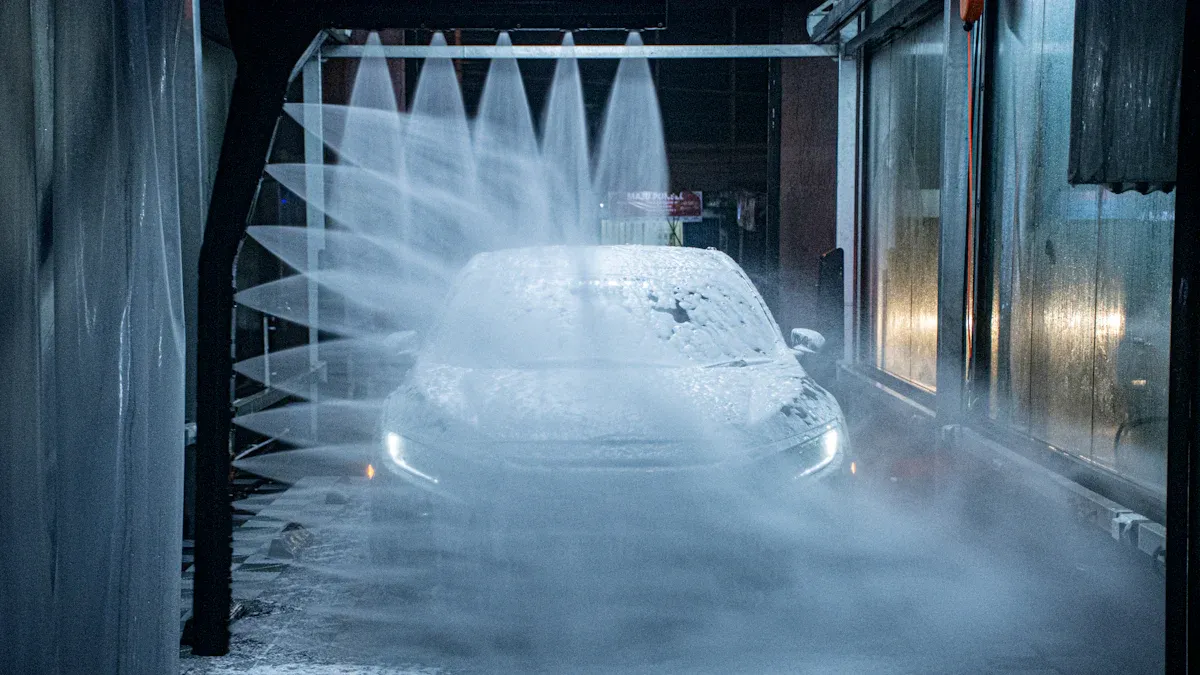
The interior of a car wash tunnel is one of the most demanding environments for electrical equipment on the planet. While general-purpose LED fixtures perform well in warehouses, a wash tunnel is a high-stress “micro-climate” where moisture, caustic chemicals, and extreme pressure converge to destroy standard hardware.
Understanding the root causes of car wash tunnel lighting failure requires a deep dive into the physics of ingress protection, material science, and thermal dynamics.
1. Moisture Ingress: Why IP65/IP66 Is Not Enough
A common and costly misconception among facility managers is that any “waterproof” light will suffice. However, the Ingress Protection (IP) rating system reveals why commercial-grade fixtures frequently fail within months.
The Physics of Pressure
-
IP65/IP66 Ratings: These certify protection against low to “powerful” water jets. However, they are typically tested at pressures far below the 1,000+ PSI generated by car wash pumps. These ratings rely on standard mechanical gaskets that can succumb to the sheer force of a concentrated spray.
-
The IP69K Solution: To prevent premature failure, operators must seek the IP69K rating. This is the highest level of protection available. IP69K-rated fixtures, like Fanxstar’s Tubular Lights, are engineered to endure a high-pressure wash with water heated to 80°C (176°F) sprayed at 1,450 psi.
Without this specific rating, water is inevitably forced past the seals. This leads to internal condensation, fogging that blocks light output, and eventually, a catastrophic short circuit.
2. Chemical Corrosion: The Silent Destroyer
While water intrusion is an obvious threat, chemical exposure is the insidious “silent killer.” In a tunnel, the air is a saturated mist of surfactants, hydrofluoric acid derivatives, and hot waxes. These substances initiate a process of chemical corrosion that dismantles standard fixtures from the outside in.
|
Component |
Standard Fixture Vulnerability |
Car Wash Solution |
|---|---|---|
|
Seals |
Rubber gaskets dry out, crack, and degrade. |
Silicone or EPDM gaskets resist chemical breakdown. |
|
Housing |
Standard aluminum pits and oxidizes. |
316 Stainless Steel or specialized Polycarbonate. |
|
Lens |
Acrylic clouds and yellows under UV/Chemicals. |
PMMA or Treated Polycarbonate maintains clarity. |
To combat this, look for corrosion-resistant housings that utilize vapor-tight designs and materials specifically tested against acidic and alkaline environments.
3. Thermal Shock and the “Breathing Effect”
In high-volume washes, fixtures experience a brutal cycle of temperature extremes. One moment, the tunnel is filled with hot steam; the next, it is hit by cool ambient air or cold rinse water. This rapid transition creates **thermal stress**.
The Mechanism of Failure
This phenomenon is governed by the coefficient of thermal expansion. Because the aluminum housing, plastic lens, and rubber gaskets expand and contract at different rates, rapid temperature cycling creates a “breathing” effect. As the fixture cools rapidly, the internal air contracts, creating a vacuum that actively sucks moisture-laden air past the seals and into the housing.
Once inside, this moisture condenses on the electronics, leading to driver failure. Specialized breather valves are critical in these environments to equalize pressure without letting moisture in.
4. Impact Resistance (IK Ratings)
Physical impacts are unavoidable. Spinning brushes, high-velocity water jets, and even accidental bumps from vehicles can shatter standard fixtures. The industry uses IK ratings to measure impact resistance.
-
Standard (IK08): Survives a 1.7kg object dropped from 30cm. Often insufficient for car washes.
-
Car Wash Grade (IK10): Can withstand a 5kg mass dropped from 40cm (20 joules of energy).
An IK10 rating ensures that a stray brush arm won’t crack the housing, maintaining the waterproof seal. Fanxstar’s Tri-Proof Lights are built to this standard to ensure physical durability.
Selecting the Right Fixture: A Buyer’s Checklist
When upgrading your tunnel lighting, use this checklist to ensure you are buying a fixture engineered for survival, not just illumination.
-
IP Rating: Must be IP69K for high-pressure wash zones.
-
Material: 316 Stainless Steel or chemically resistant Polycarbonate housing.
-
Lens: Shatterproof Polycarbonate with anti-UV coating.
-
Shape: Tubular or smooth designs prevent water and chemical pooling on the fixture, which accelerates corrosion.
-
Mounting: Stainless steel clips are mandatory; plastic clips will snap.
Maintenance for Longevity
Even the best fixtures need care. A proactive maintenance schedule protects your investment.
-
Monthly Cleaning: Wipe down lenses to remove wax and chemical buildup. This layer acts as a thermal blanket, overheating the LEDs.
-
Visual Inspection: Check for fogging inside the lens—an early warning sign of seal failure.
-
Check Mounts: Vibration can loosen screws. Ensure stainless steel clips remain tight.
FAQ
Can I use standard outdoor LED floodlights in my car wash?
No. Outdoor lights are designed for rain (gravity-fed water), not the high-pressure, multi-directional jets of a car wash. They will fail due to moisture ingress.
What is the difference between IP67 and IP69K?
IP67 allows for temporary submersion. IP69K is specifically tested for high-pressure, high-temperature steam cleaning. For a car wash, IP69K is the only guarantee of survival.
Why are my LED lenses turning yellow?
This is chemical oxidation from harsh soaps reacting with low-quality plastic. High-grade polycarbonate with UV stabilizers prevents this degradation.
Are stainless steel clips really necessary?
Yes. Plastic clips become brittle and snap when exposed to car wash chemicals. Stainless steel maintains the pressure required to keep the gasket sealed.