In the highly competitive retail and supermarket sectors, the quality of the luminous environment is a primary architect of the customer journey. Visual merchandising depends on lighting that not only highlights product details but also fosters a seamless, welcoming atmosphere. Seamless linear trunking systems have redefined store aesthetics by delivering continuous ribbons of light that eliminate the visual clutter of traditional point-source fixtures. By optimizing lux levels and ensuring chromatic fidelity, these systems are proven to increase customer dwell time by over 30% while slashing energy overhead by up to 75%.
Key Takeaways
-
Luminous Continuity: Seamless splicing technology removes the “zebra effect” and dark zones, providing a homogenous flow of light across long retail aisles.
-
Efficacy Benchmarks: Top-tier linear systems like the Trilamp A3 achieve up to 185 lm/W, delivering superior brightness with minimal energy draw.
-
Visual Ergonomics: Achieving a UGR<19 rating is essential for reducing eye strain and increasing shopper comfort during prolonged browsing.
-
Chromatic Precision: High CRI (Ra 90+) modules ensure that merchandise colors appear vibrant and true-to-life, reducing return rates caused by color mismatches.
-
Operational Agility: Modular trunking allows for tool-free reconfiguration, enabling retailers to adapt lighting to changing store layouts in minutes.
The Impact of Modular Trunking on Supermarket Luminous Performance
Supermarket lighting plays a pivotal role in consumer perception of freshness and quality. When a facility transitions to seamless linear luminaires, the impact on product presentation is immediate. By utilizing specialized optical lenses (60°, 90°, or 120°), light is focused precisely on the shelving faces and end-caps. This targeted approach ensures that SKU labels are legible and produce displays appear saturated with high-quality light.
Modern LED linear lighting systems utilize advanced splicing covers and patented plug-in mechanisms. This architectural uniformity removes the breaks and shadows found in legacy fluorescent setups, creating a clean, uninterrupted ceiling line that complements modern industrial and minimalist store designs.
|
Lighting Strategy |
Luminous Efficacy |
Visual Impact |
Installation Effort |
|---|---|---|---|
|
Traditional Fluorescent |
80 – 90 lm/W |
Flickering; Interrupted Lines |
High (Individual Wiring) |
|
Standard LED Panels |
110 – 130 lm/W |
Uniform but Static |
Moderate |
|
Seamless Linear Trunking |
140 – 185 lm/W |
Continuous; Premium Aesthetic |
Lowest (Modular Rail) |
Advanced Features of Continuous LED Infrastructure
To maximize the return on investment (ROI), retail lighting must be demand-driven and technically resilient. Fanxstar’s professional LED solutions are engineered to meet these rigorous requirements.
1. Precision Optical Control
In retail, “too much light” in the wrong place results in glare. High-quality linear fixtures utilize micro-prismatic diffusers to achieve a UGR (Unified Glare Rating) below 19. This creates a visually comfortable environment that reduces pupil-adjustment stress, allowing shoppers to focus on the merchandise rather than the light source.
2. Intelligent Daylight Harvesting
Sustainability is a core metric for modern retail chains. Integrated smart sensors monitor natural light from windows and skylights, automatically dimming the artificial LED output to maintain a constant target lux level. This “Daylight Harvesting” can provide an additional 20-40% reduction in electricity spend, accelerating the project’s payback period.
3. High Chromatic Fidelity (CRI)
For fashion and fresh food, color accuracy is non-negotiable. Standard commercial lighting (CRI 80) often makes reds and blues look “muddy.” Utilizing CRI 90+ or 95+ modules ensures that products look as good in the store as they do in natural daylight. According to research in ScienceDirect, superior lighting quality can increase purchase conversions by up to 12%.
“Lighting a retail space with standard high-glare fixtures is like reading a book with a flashlight in your eyes. Upgrading to seamless UGR<19 linear lights is like reading under a high-end library lamp—the focus remains entirely on the content.”
Technical Recommendations for 2026 Store Rollouts
Selecting the correct luminous engine requires matching the fixture’s technical profile to the specific merchandise category.
|
Application Area |
Recommended CCT |
Required CRI |
Best Fixture Type |
|---|---|---|---|
|
Fresh Produce & Meat |
3000K – 4000K (Warm) |
Ra 90+ |
Magfit M4f (Fresh Spectrum) |
|
General Grocery Aisles |
4000K (Neutral) |
Ra 80+ |
Trilamp A3 (High Efficacy) |
|
Fashion Boutiques |
3500K – 5000K |
Ra 95+ |
Linear LED Pendant |
|
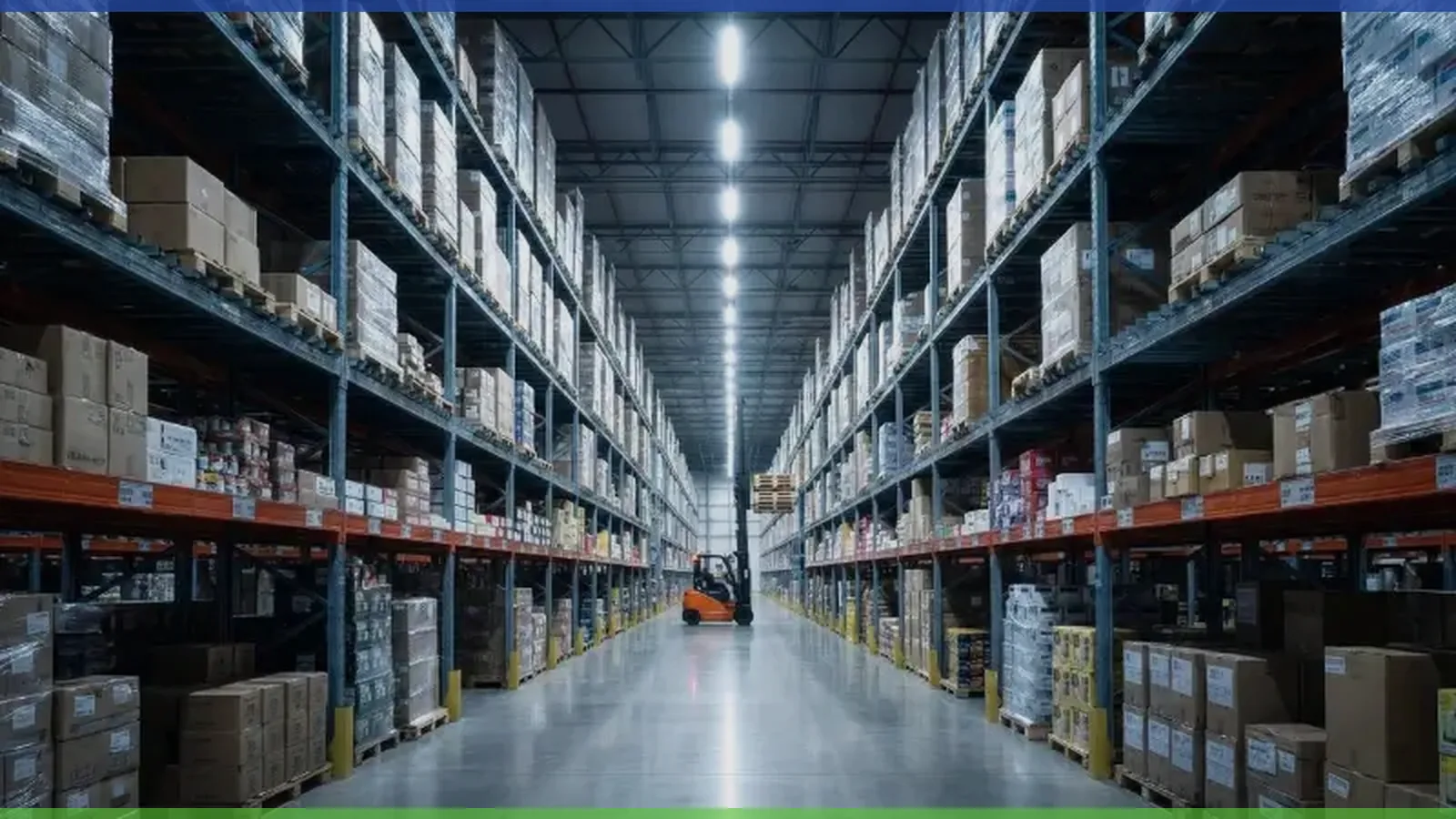
High-Bay Warehouses |
5000K (Cool) |
Ra 70+ |
Batman B2 (Long-Run) |

Operational ROI: Installation and Modular Maintenance
In a retail environment, labor costs for maintenance and installation can be punitive. Modular trunking systems utilize tool-free connectors that allow fixtures to be snapped into the power rail in seconds. This reduces installation labor time by up to 75% compared to individual hard-wired units. Furthermore, the modular nature of integrated LED systems means that if a driver fails, it can be replaced without dismantling the entire run, ensuring 100% facility uptime.
Luminous Maintenance (L80B10): Professional Fanxstar fixtures are rated for 70,000 to 100,000 hours of operation. This ensures that the brightness installed on day one remains consistent for over a decade of 12-hour-a-day retail operation.
Conclusion: Investing in Luminous Excellence
The transition to seamless linear lighting is a strategic pivot that future-proofs retail assets. By prioritizing photometric uniformity, high efficacy, and smart controls, store owners secure a high-throughput environment that elevates the brand and the bottom line. As consumer expectations for “experiential retail” grow, the role of high-standard linear illumination remains the most cost-effective tool for driving customer loyalty and sales growth.
Frequently Asked Questions (FAQ)
What is a seamless linear trunking system?
It is a modular lighting infrastructure consisting of pre-wired rails and click-in LED modules. It allows for continuous runs of light without gaps, making it ideal for long supermarket aisles and large-format retail stores.
Can these lights help reduce electricity costs?
Yes. High-efficacy LEDs (up to 185 lm/W) combined with daylight sensors and motion dimming can reduce lighting energy consumption by up to 80% compared to legacy fluorescent systems.
What is the ideal UGR for supermarket aisles?
A UGR (Unified Glare Rating) below 19 is recommended. This keeps the environment comfortable for shoppers and prevents the harsh glare that leads to visual fatigue and shortened store visits.
How difficult is it to reconfigure these systems?
One of the primary benefits is agility. Because the system is modular and tool-free, light modules, sensors, and even emergency units can be repositioned along the rail in minutes as store layouts change.
Do these systems support emergency lighting requirements?
Yes. Many Fanxstar luminous solutions offer integrated emergency modules and battery backups (LiFePO4) to ensure safe egress during power failures, fully compliant with safety codes.
Ready to upgrade your retail experience? Explore Fanxstar’s Retail & Supermarket Lighting Collection and secure your ROI today.