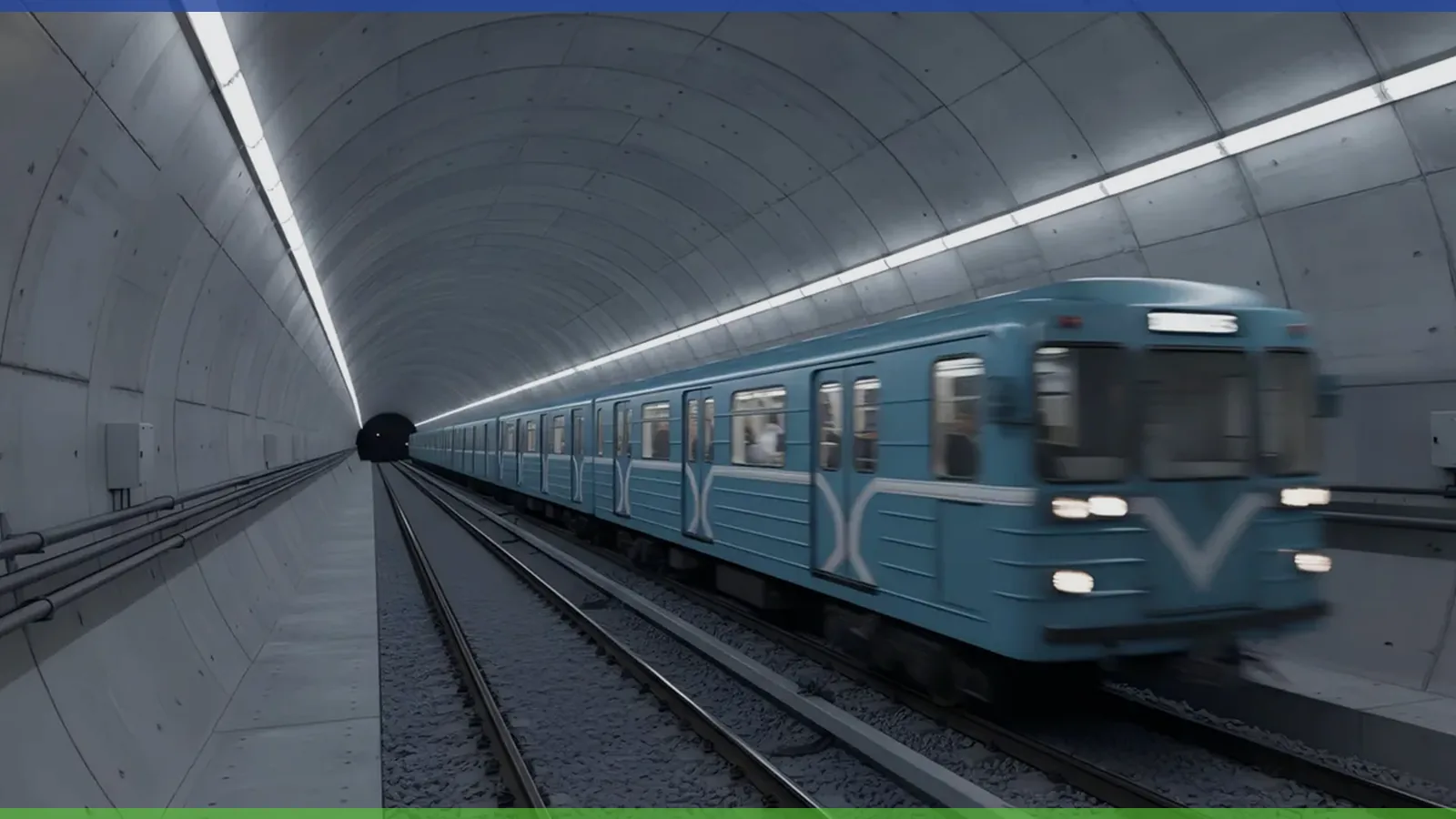
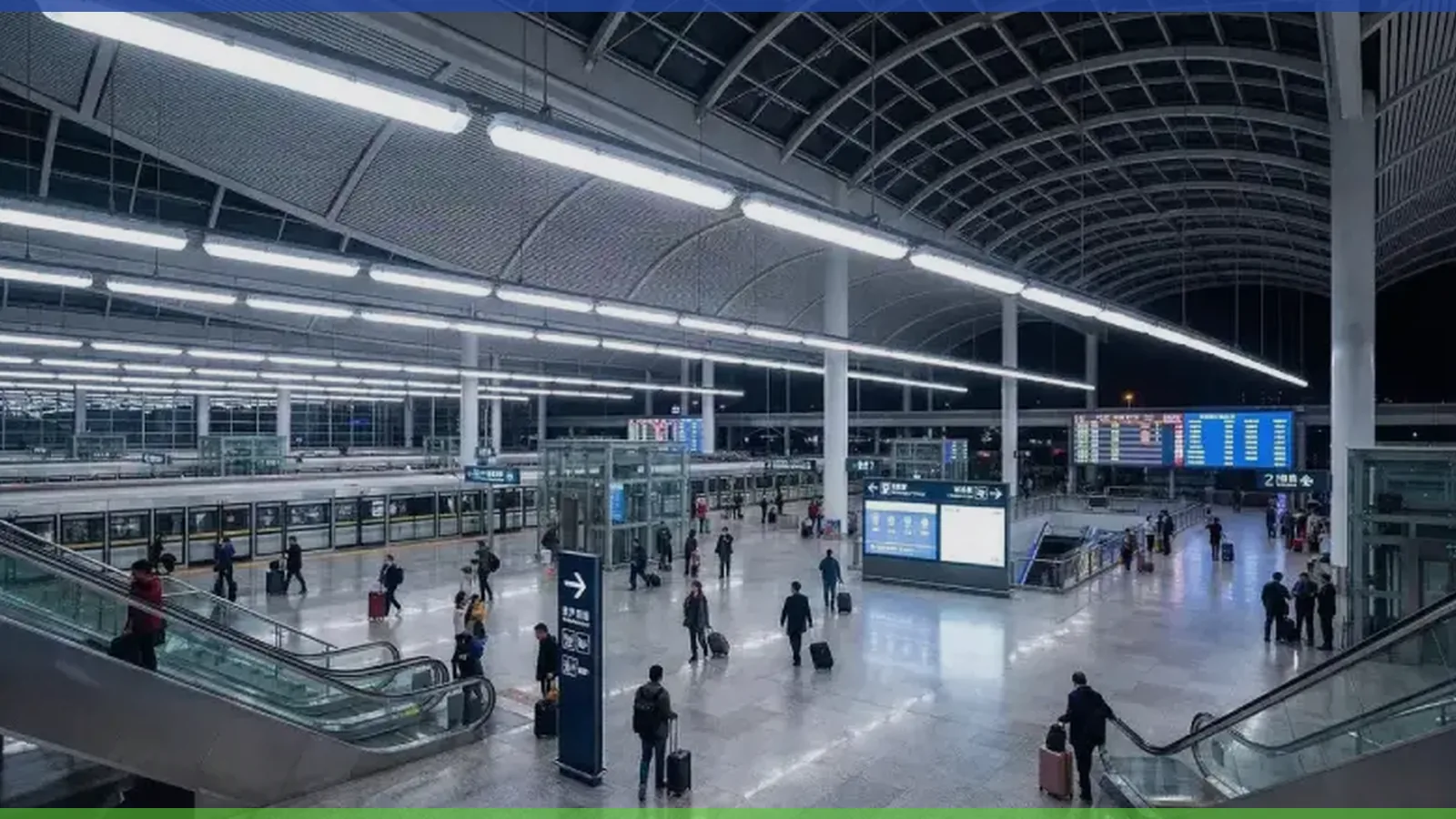
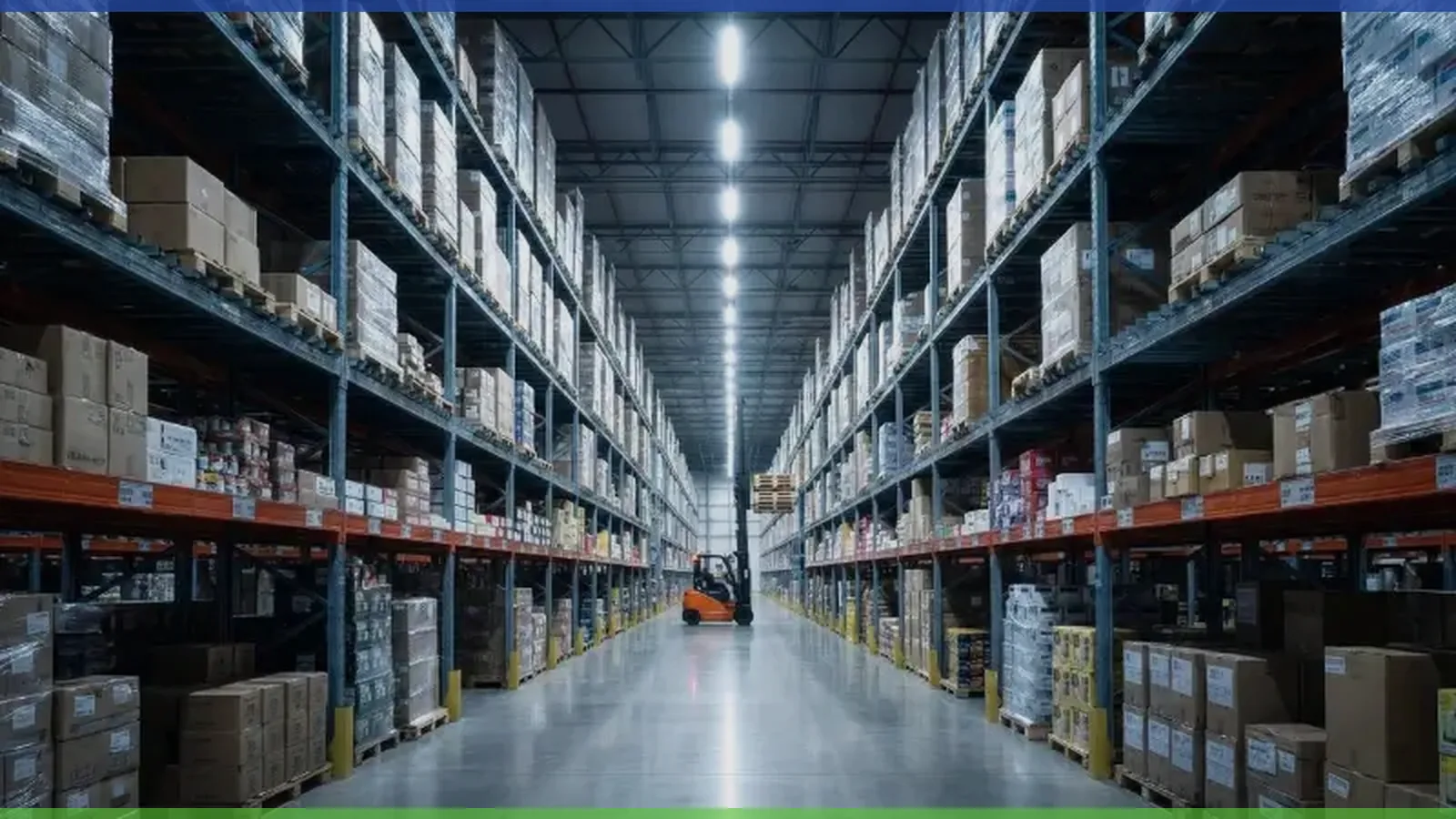
In the high-stakes world of transit infrastructure, railway tunnels represent one of the most demanding environments for electrical engineering. Constant mechanical stress from high-speed train movements, the “piston effect” causing rapid pressure shifts, and extreme humidity can cause standard luminaires to fail in weeks. To ensure passenger safety and operational continuity, transit projects require vibration-proof LED lighting that adheres to stringent international benchmarks. This guide explores the technical framework of tunnel illumination, from ANSI-C136.31 G-force ratings to the integration of fail-safe emergency modules.
Key Takeaways
-
Mechanical Integrity: Tunnel fixtures must comply with the ANSI-C136.31 standard, withstanding at least 1.5G (standard) or 3.0G (bridge/high-vibration) cycles.
-
Impact Protection: An IK10 rating is mandatory to ensure luminaires resist falling gravel, maintenance tools, and mechanical shocks from passing freight.
-
Hermetic Sealing: IP66 to IP68 ratings are required to prevent ingress from metallic brake dust and high-pressure washdowns during tunnel maintenance.
-
Flicker-Free Stability: Advanced DC drivers eliminate stroboscopic effects, which is vital for preventing visual fatigue among train operators and track workers.
-
Operational ROI: Transitioning to high-efficacy LEDs (up to 160 lm/W) reduces energy overhead by 70% and extends the relamping cycle to over 10 years.
Technical Standards for Railway Compliance
Designing luminous infrastructure for tunnels is not a generic lighting task. It requires luminaires that are effectively “hardened” against the physics of rail environments. Unlike surface lighting, tunnel fixtures are subject to constant harmonic resonance that can shake standard electronic components loose from their soldering points.
ANSI-C136.31: The Vibration Benchmark
The ANSI C136.27 and C136.31 standards define the minimum vibration resistance for transit luminaires. For most railway tunnel lighting, a 1.5G rating is the baseline. However, for fixtures mounted on bridges, overpasses, or in tunnels with high-frequency freight traffic, a 3.0G rating is often required to ensure the fixture withstands 100,000 cycles in each plane without structural or electrical failure.
|
Standard / Rating |
Physical Requirement |
Tunnel Application |
|---|---|---|
|
ANSI C136.31 (3G) |
100,000 cycles at 3.0G force |
Bridge-mount and High-speed Rail |
|
IK10 |
Resists 20 Joules of impact |
Debris and Vandalism protection |
|
IP68 |
Hermetically sealed against submersion |
Flood-prone or high-humidity zones |
|
IEC 60598-2-22 |
Emergency Operation |
Mandatory evacuation pathways |
Why Mechanical Resilience is Critical
Ordinary fixtures contain fragile components—such as large capacitors and high-profile sensors—that are susceptible to fatigue failure. In a railway tunnel, ground-borne vibration combines with the air pressure pulses from passing trains. Specialized tunnel luminaires utilize reinforced internal structures and specialized potting compounds to anchor components firmly in place.

The Challenge of the Piston Effect
The “piston effect” occurs when a train moves through a narrow tunnel, pushing a column of air ahead and creating a vacuum behind. This creates rapid pressure differentials that can “suck” moisture or dust through standard gaskets. High-quality LED tunnel lighting from Fanxstar utilizes foamed-in silicone gaskets and stainless steel fasteners to maintain a vapor-tight barrier, ensuring the internal electronics remain pristine for up to 100,000 hours.
Anatomy of a High-Performance Transit Fixture
Successful tunnel illumination relies on high-grade materials that resist the corrosive brake dust and metallic particles common in subway systems. AL6063 Aluminum is the preferred substrate for its exceptional thermal conductivity (approx. 200 W/m·K) and structural stiffness, which prevents the fixture from flexing under mechanical stress.
-
Reinforced Brackets: Heavy-duty mounting systems designed to prevent fixtures from vibrating loose over time.
-
Flicker-Free Drivers: Essential for maintaining visual clarity and preventing stroboscopic effects that can cause dizziness or errors during inspections.
-
Watertight Connectors: High-purity terminal blocks and watertight plug-ins ensure that moisture cannot enter the electrical path at the connection point.
-
High Color Rendering (CRI): For maintenance areas, a CRI > 80 is required to help workers accurately identify color-coded wiring and safety labels.
Safety and Emergency Evacuation
In the event of a fire or power outage, the lighting system transitions from an operational tool to a life-saving safety system. Emergency modules must be integrated into the fire-rated housing to guide passengers to safe exits. Modern emergency LED fixtures now feature automated self-testing functionality (EN62034 compliant), which performs routine battery discharge tests and reports system health via status LEDs, reducing the manual labor of tunnel safety audits.
|
Standard Recommendation |
Luminous Requirement |
Safety Goal |
|---|---|---|
|
General Tunnel Drive |
10 – 20 Foot-candles |
Driver and Operator visibility |
|
Emergency Egress |
1 Foot-candle (min) |
Safe passenger evacuation |
|
Maintenance Zones |
30 – 50 Foot-candles |
Technical precision and safety |
“In tunnel engineering, a failed light is more than a maintenance ticket; it’s a security breach. Vibration-proofing is the primary insurance against unplanned facility closures.”
Selection Guide: Finding the Optimal Solution
When selecting industrial LED fixtures for a railway project, facility managers should prioritize the Total Cost of Ownership (TCO) over initial CAPEX. While a standard industrial light may be cheaper upfront, the labor cost of replacing a unit inside a tunnel—often requiring track closures and nighttime crews—is five times higher than the fixture itself.
Top Recommended Fanxstar Series:
-
Trilamp A8 Series: Engineered with a rapid-cooling plate for high-power tunnel runs where thermal management is a priority.
-
A10 & A12 Series: Utilizes a rigid aluminum housing for maximum vibration resistance, rated for up to 74,000 hours (L80).
-
Batman B2 Series: Offers seamless splicing for long corridors, reducing installation labor and providing shadow-free illumination.

Conclusion: A Future-Proof Luminous Infrastructure
Transitioning to high-efficacy, vibration-proof LED solutions is a foundational step in modernizing global transit networks. By strictly adhering to ANSI vibration standards and prioritizing high IK/IP ratings, project managers ensure that their infrastructure remains safe and efficient for decades. As rail speeds continue to increase, the demand for high-performance, vibration-proof engineering will only grow more critical in the quest for zero-maintenance lighting solutions.
Frequently Asked Questions (FAQ)
What is the difference between 1.5G and 3.0G ANSI ratings?
1.5G is the standard for most transit corridors. 3.0G is an enhanced standard for bridges and tunnels where low-frequency vibrations from heavy locomotives are significant. A 3.0G rated light is built to survive 100,000 cycles of intense mechanical stress.
Why is the IK10 rating mandatory for tunnels?
Tunnels are harsh industrial zones. IK10 is the highest standard for impact protection, ensuring the luminaire can withstand a 20-joule impact from falling debris, maintenance tools, or accidental bumps from vehicles.
Can I use standard waterproof (IP65) lights in a subway tunnel?
While IP65 is dust-tight, it may not withstand the high-pressure water jets used during tunnel cleaning. We recommend IP66 or IP69K for areas that undergo aggressive washdown maintenance.
How does flicker-free lighting help in transit systems?
Train operators and track workers spend long hours under artificial light. Flicker-free technology reduces neurological fatigue and eye strain, which is critical for maintaining alertness and safety during high-stakes transit operations.
What is the maintenance lifespan of a Fanxstar tunnel light?
Our railway-grade LED fixtures are designed for a service life of 50,000 to 100,000 hours. In a typical tunnel operating environment, this results in over 15 years of reliable, maintenance-free illumination.
Need specialized engineering for your next transit project? Explore Fanxstar’s Full Rail & Tunnel Lighting Portfolio and secure your infrastructure today.