Facility managers overseeing large-scale operations often face a critical dilemma: should they simply retrofit existing fluorescent housings with LED tubes or replace the entire light fixture? While retrofitting is frequently marketed as a “quick fix,” new integrated LED luminaires often deliver a significantly stronger return on investment (ROI) over a 10-year horizon. This decision impacts not only immediate capital expenditure (CAPEX) but also long-term operating expenses (OPEX), energy efficiency, and facility safety.
Key Takeaways
-
Efficiency Benchmark: Integrated LED fixtures achieve up to 70% energy savings, compared to the 30-50% typically seen with basic tube retrofits.
-
Maintenance ROI: New fixtures eliminate old ballasts and sockets, which are common failure points in retrofitted systems.
-
Thermal Management: Integrated luminaires are designed to dissipate heat effectively, extending the service life of LED chips beyond 100,000 hours.
-
Rebate Advantage: High-efficacy integrated fixtures often qualify for higher utility rebates (DLC Premium) than simple LED tube replacements.
-
Strategic Selection: Retrofits suit short-term leases or tight initial budgets, while full replacement is the gold standard for owned facilities and long-term sustainability.
Technical Framework: The Cost of Modernization
An accurate financial analysis requires looking beyond the initial purchase price. For industrial environments, the “Labor-to-Material” ratio is a primary factor. While an LED tube is cheaper to buy, the manual labor involved in bypassing old ballasts or troubleshooting brittle sockets in an aged housing can quickly inflate costs.
|
Performance Metric |
LED Tube Retrofit (Type B) |
Integrated LED Luminaire |
|---|---|---|
|
Initial CAPEX |
Low ($15 – $35 per unit) |
Moderate ($80 – $150 per unit) |
|
Installation Time |
5-10 minutes per fixture |
15-20 minutes (New mounting) |
|
Luminous Efficacy |
100 – 130 lm/W |
140 – 185+ lm/W |
|
System Lifespan |
30,000 – 50,000 hours |
70,000 – 100,000 hours |
|
Warranty Support |
Usually 3 – 5 years |
Standard 5 – 10 years |
The ROI Equation: More than Just Electricity
When stakeholders evaluate lighting upgrades, they must account for the “Avoided Cost” of maintenance. In a retrofitted system, you are essentially placing new tires on a 20-year-old car; the chassis (sockets, wiring, housing) remains a liability. A full replacement provides a “clean slate” that guarantees operational continuity.
1. Energy Efficiency Gains
Transitioning from T8 fluorescent tubes to high-performance LED systems can reduce power draw by over 60%. However, integrated fixtures leverage optimized optics. Instead of wasting light in a 360-degree spread (common with tubes), integrated systems direct every lumen exactly where it is needed—on work surfaces and aisles. This “Targeted Illumination” significantly lowers the wattage required to achieve mandatory lux levels.
2. Maintenance and Lifecycle Savings
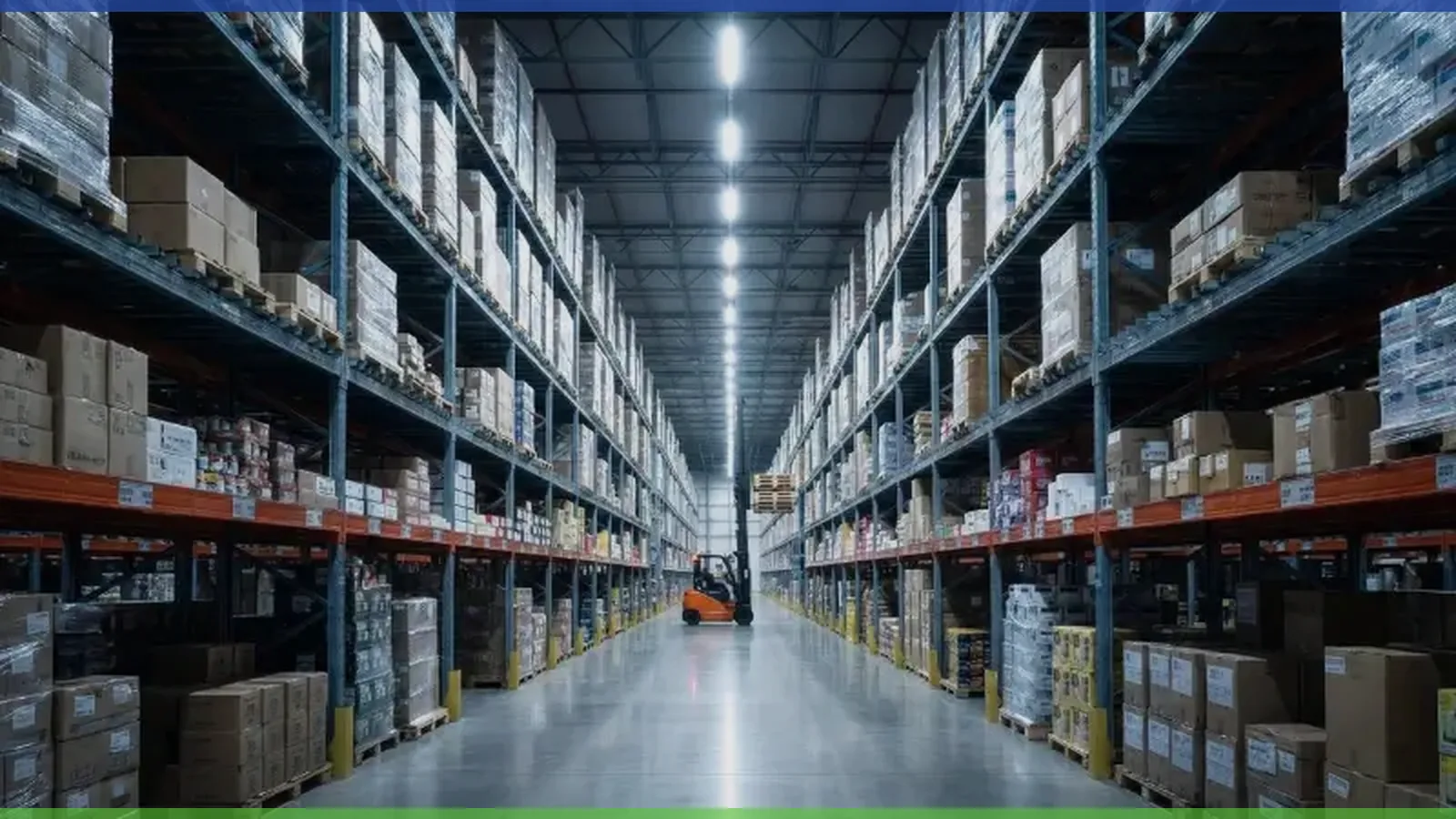
A standard warehouse might spend thousands annually on lift rentals and electrician labor to replace failed ballasts. Integrated fixtures eliminate the ballast entirely, utilizing robust internal or external drivers with built-in surge protection. This technical upgrade translates to a 90% reduction in maintenance-related labor over a decade.
“Choosing a full replacement for outdated fixtures is a proactive risk management strategy. It ensures that your safety standards and energy benchmarks are protected by modern warranties, not legacy hardware.”
The “Hidden Tax” of Hazardous Waste
Facility managers must navigate the legal obligations surrounding fluorescent disposal. Fluorescent tubes contain mercury vapor, and older ballasts may contain toxic PCBs. Disposing of these components requires specialized handling and documented compliance, adding roughly $2 per lamp to your project cost.
By moving to LED solutions, companies eliminate these environmental liabilities entirely. Solid-state lighting is mercury-free and RoHS compliant, simplifying your sustainability reporting and aligning your facility with Net Zero goals.
Step-by-Step: How to Calculate Your Payback Period
To secure project approval, you must demonstrate a clear timeline for the investment to break even. Follow this professional workflow:
-
Baseline Audit: Calculate the current annual kWh (Total Watts x Annual Hours x Electricity Rate).
-
Projected Load: Calculate the proposed system kWh using integrated LED specs.
-
Rebate Research: Identify available utility incentives (e.g., $10-$25 per fixture) and subtract from total project cost.
-
Maintenance Credits: Add the estimated annual savings from avoided ballast and tube replacements.
-
Payback Calculation: Divide the Net Project Cost by the Total Annual Savings (Energy + Maintenance).
Case Study Example: A 100,000 sq ft logistics center invested $40,000 in full integrated replacements. After a $10,000 utility rebate and $22,000 in annual savings, the project achieved a full ROI in just 1.3 years.

Future-Proofing with Intelligent Controls
The ROI of new fixtures is further accelerated by smart technology. Unlike retrofitted tubes, integrated LED luminaires are designed to work seamlessly with DALI 2.0 or Zigbee systems. Features such as Daylight Harvesting and Occupancy Sensing can provide an additional 30% reduction in energy usage, future-proofing the facility against rising utility rates.
|
Facility Setting |
Recommended ROI Strategy |
Primary Benefit |
|---|---|---|
|
Warehouse & Industrial |
New Integrated Fixtures |
Max Durability & High Mounting Height Performance |
|
Retail & Commercial |
Track or Linear Retrofit |
Aesthetic Flexibility & Quick Refresh |
|
Healthcare & Labs |
Full Integrated Replacement |
Hygiene (Sealed) & Superior CRI (Color Rendering) |
|
Educational Campuses |
New Luminous Systems |
Flicker-Free Safety & Cognitive Support |
Frequently Asked Questions (FAQ)
Why is the lifespan of new fixtures so much longer than retrofits?
New fixtures use “Solid-State” design where the LED chips are mounted directly to a metal heat sink (usually AL6063). Retrofit tubes are encased in glass or plastic, which traps heat and accelerates chip degradation, often shortening the lifespan to 50,000 hours or less.
Will I save more money on labor with retrofits?
Initially, yes. However, if the old sockets or wiring fail two years later, you will pay for a second labor event. Full replacement ensures all electrical components are new and covered by a single, comprehensive warranty.
What are the different “Types” of LED retrofits?
Type A (Plug & Play) works with existing ballasts. Type B (Ballast Bypass) requires rewiring to bypass the ballast. Type C uses an external driver. Type B and C are more efficient and technically superior to Type A for industrial use.
Do integrated fixtures look better than retrofitted ones?
Yes. Integrated linear fixtures provide a modern, sleek appearance with uniform diffusion. Retrofits can sometimes look uneven or “spotty” because the lens of the old fixture was not designed for point-source LED light.
Is the ROI better for facilities that run 24/7?
Absolutely. For 24/7 facilities, the payback period for a new integrated system is often under 18 months due to the extreme energy savings and the high cost of maintenance labor during busy production shifts.
Need a professional ROI analysis for your facility? Explore Fanxstar’s High-Efficacy LED Solutions and calculate your potential savings today.