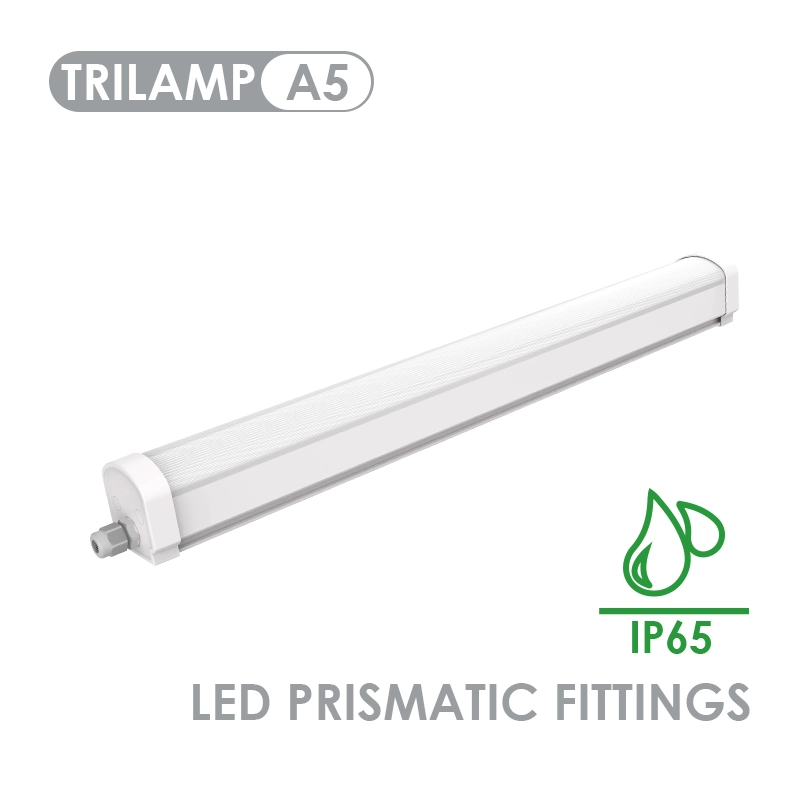
A tri-proof light is best understood as a sealed LED luminaire for wet, dusty, and sometimes corrosive environments, but the name is only useful when it is backed by enclosure, material, cable-entry, and application evidence. Buyers get into trouble when they treat tri-proof as a fixed product class. In real projects, the decision should start with the exposure: water direction, dust load, cleaning method, corrosion risk, temperature, mounting height, cable entry, maintenance access, and target market.
NEMA ANSI/IEC 60529 scope material identifies ANSI/IEC 60529 as a U.S. adoption of IEC 60529 for enclosure protection, while Intertek ingress protection guidance describes IEC 60529 as an IP standard used for electrical equipment including lighting. That is why a buyer should translate the tri-proof name into an IP and enclosure evidence file before comparing fixture prices.
Key Takeaways
- Tri-proof light is a market term for sealed LED luminaires used where moisture, dust, vapor, or light corrosion can damage ordinary fixtures.
- The term itself is not a certificate; buyers should ask for IP rating, housing material, diffuser, cable entry, mounting method, and test evidence.
- IP65, IP66, and IP69K-style washdown requests do not mean the same exposure, so the application must be described before supplier selection.
- Fanxstar tri-proof projects are strongest when the buyer sends an exposure map and lets the ODM team match a weatherproof, vapor tight, aluminum, sensor, or custom platform.
- A sample should prove the final housing, gasket, driver, lens, label, and cable entry, not only light output on a bench.
What Does Tri-Proof Light Mean?
Tri-proof is a useful shortcut, but it is not the proof
In many lighting markets, tri-proof means a luminaire designed to resist three common site problems: water or moisture, dust or dirt, and corrosion or vapor exposure. The phrase is practical because buyers need a quick way to describe sealed industrial LED fixtures. The limitation is that the three risks are not always equal. A cold-storage corridor, a parking deck, a food washdown area, and a dusty warehouse may all ask for tri-proof lights while needing different fixture bodies.
DOE FEMP commercial and industrial LED luminaire guidance keeps the buyer anchored to luminaire-level performance, not vague product names. A sealed fixture still has to provide the right distribution, output, efficiency, service life, and controls behavior. That is why a tri-proof definition should include both the enclosure condition and the lighting task.
The buyer-friendly definition is simple: a tri-proof light is a sealed LED luminaire selected for an environment where ordinary indoor fixtures may fail from moisture, dust, vapor, cleaning, impact, or service exposure. The useful question is not whether the fixture is called tri-proof. The useful question is which failure the fixture is being asked to prevent.
IP rating turns the name into an evidence request
The IP code helps because it separates solid ingress protection from water ingress protection. For example, an IP65 product and an IP66 product both start with the dust-tight side of the code, but the water test expectation is different. A buyer should not use those numbers as decorative labels. They should ask whether the exact model, gasket, end cap, cable entry, and mounting condition are covered by the evidence being shown.
Intertek ingress protection testing guidance ties ingress protection to dust, liquids, and access to hazardous parts. For a lighting buyer, that turns a supplier conversation into a testable request: show the IP evidence for this enclosure version, then explain whether any change to diffuser, clip, end cap, cable gland, or sensor module changes the evidence boundary.
This is also where many cheap tri-proof quotes become weak. The quote may name IP65, but the sample may use a temporary cable, different end cap, or different diffuser. If the approved sample is not the same as the production fixture, the buyer does not yet have evidence for the installed product. The name can remain the same while the risk changes.
Common Types of Tri-Proof and Weatherproof LED Lights
Choose the type by site failure mode
| Tri-proof type | Typical fit | Evidence to request |
|---|---|---|
| PC or full-plastic tri-proof | general damp, dusty, or light industrial areas | IP report, diffuser grade, clip strength, thermal limit |
| Aluminum weatherproof tri-proof | higher heat, tougher mounting, longer warranty programs | housing material, thermal path, corrosion condition, driver access |
| Vapor tight fixture | car parks, backrooms, service corridors, wet utility spaces | gasket structure, cable entry, lens sealing, mounting kit |
| Washdown-oriented fixture | food processing and hygiene zones | cleaning exposure, cable gland, chemical compatibility, IP target |
| Sensor or emergency tri-proof | warehouses, parking routes, evacuation paths | sensor zone, battery/driver boundary, code requirement, sample test |
DLC solid-state lighting technical requirements are useful in this decision because they remind buyers that LED products are classified and evaluated by more than marketing category. DLC product eligibility language also shows why primary use and product category should be named before evidence is judged. A 1200 mm sealed batten, 1500 mm vapor tight fixture, and sensor-ready emergency version may look similar from a distance, but their evidence files can differ in distribution, driver, housing, lens, emergency option, and listing path.
A full-plastic tri-proof can be cost-effective where impact and heat are moderate. An aluminum weatherproof model may be safer when heat dissipation, service life, or mechanical strength matters. A vapor tight fixture may suit damp corridors, utility spaces, and parking applications. A washdown-oriented version needs special attention to cable entry, gasket compression, cleaning chemistry, and whether an IP69K-style high-pressure cleaning claim is actually required for the market. Treat these 5 routes as application choices, not as good-better-best labels.
The diffuser and housing change the installed result
A buyer may focus on wattage, length, and IP rating, but the diffuser and housing often decide whether the fixture works in the space. A frosted diffuser can reduce visible LED dots and glare, but it may reduce output or change beam shape. A clear lens can improve punch but may be uncomfortable in lower mounting heights. A PC body can reduce corrosion risk in some environments, while aluminum may help heat and rigidity. None of those choices is automatically correct without the site conditions.
Fanxstar’s related aluminum vs full-plastic tri-proof heat discussion is useful when the project has heat, warranty, or service-life concerns. The material decision should be connected to the driver’s thermal load, mounting height, fixture spacing, cleaning exposure, and replacement access. A buyer who only asks for the cheapest tri-proof light may save on the product and lose on maintenance.
Where Tri-Proof Lights Are Usually Applied
Wet, dusty, and service-heavy sites need different proof
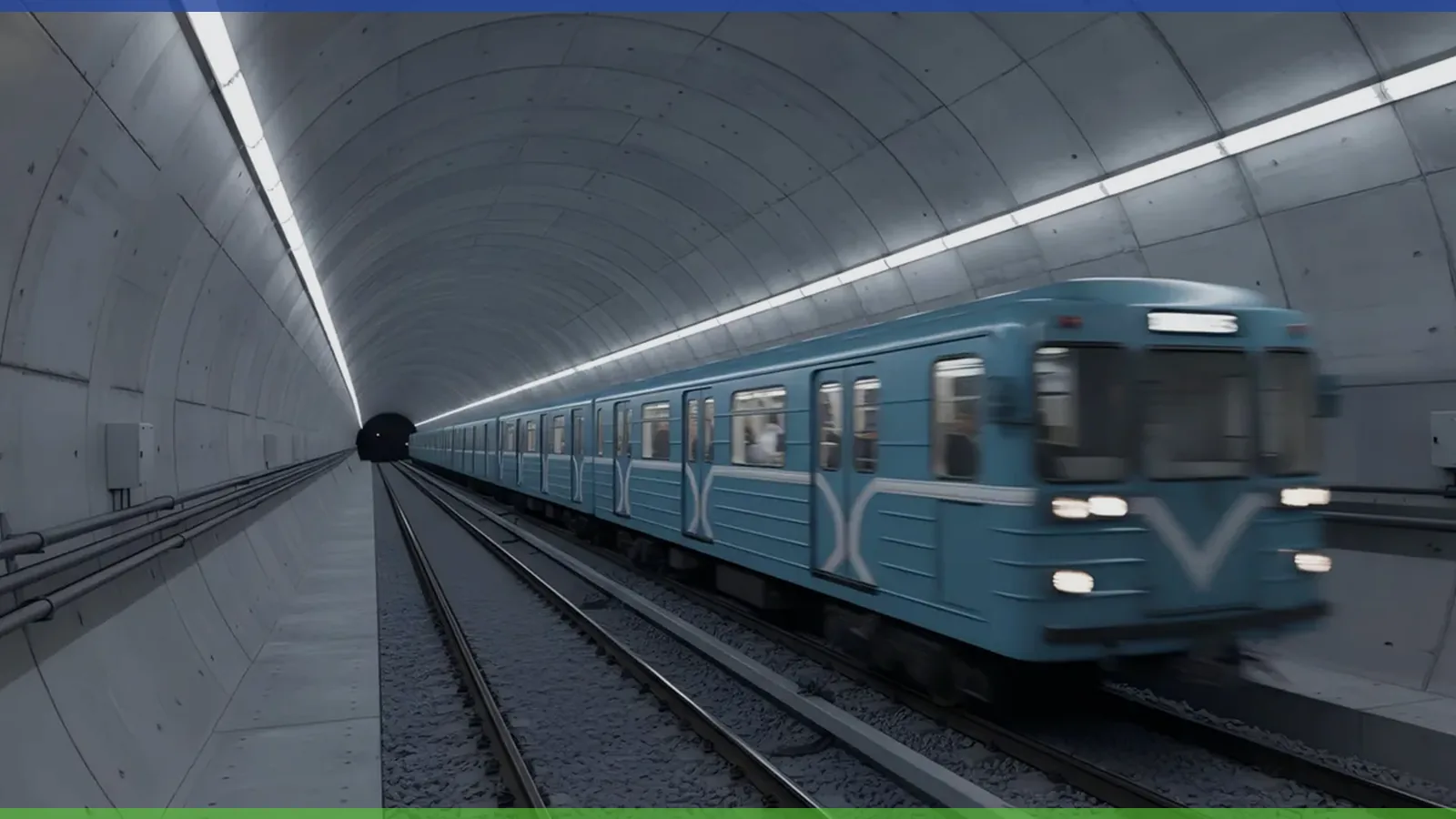
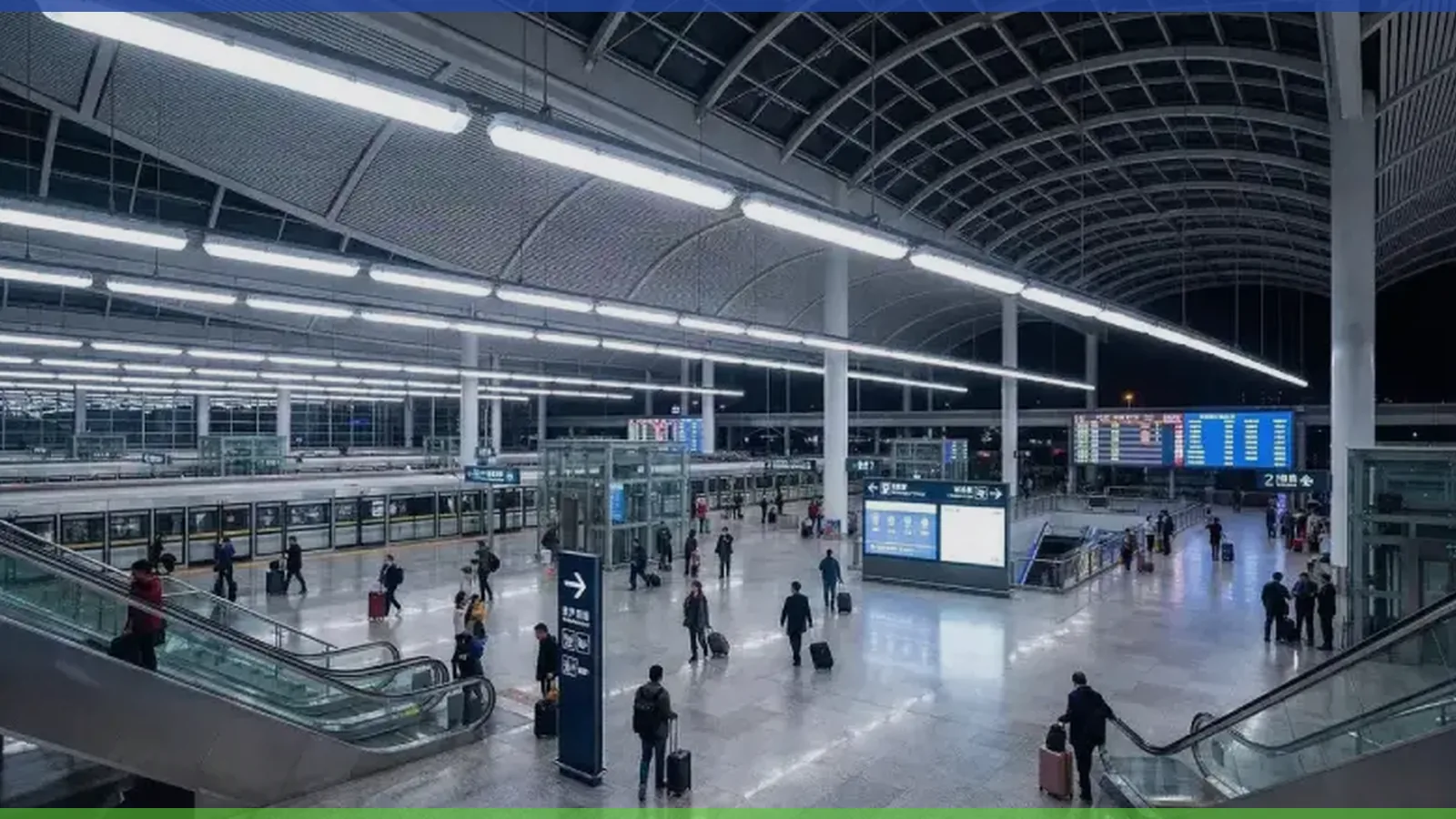
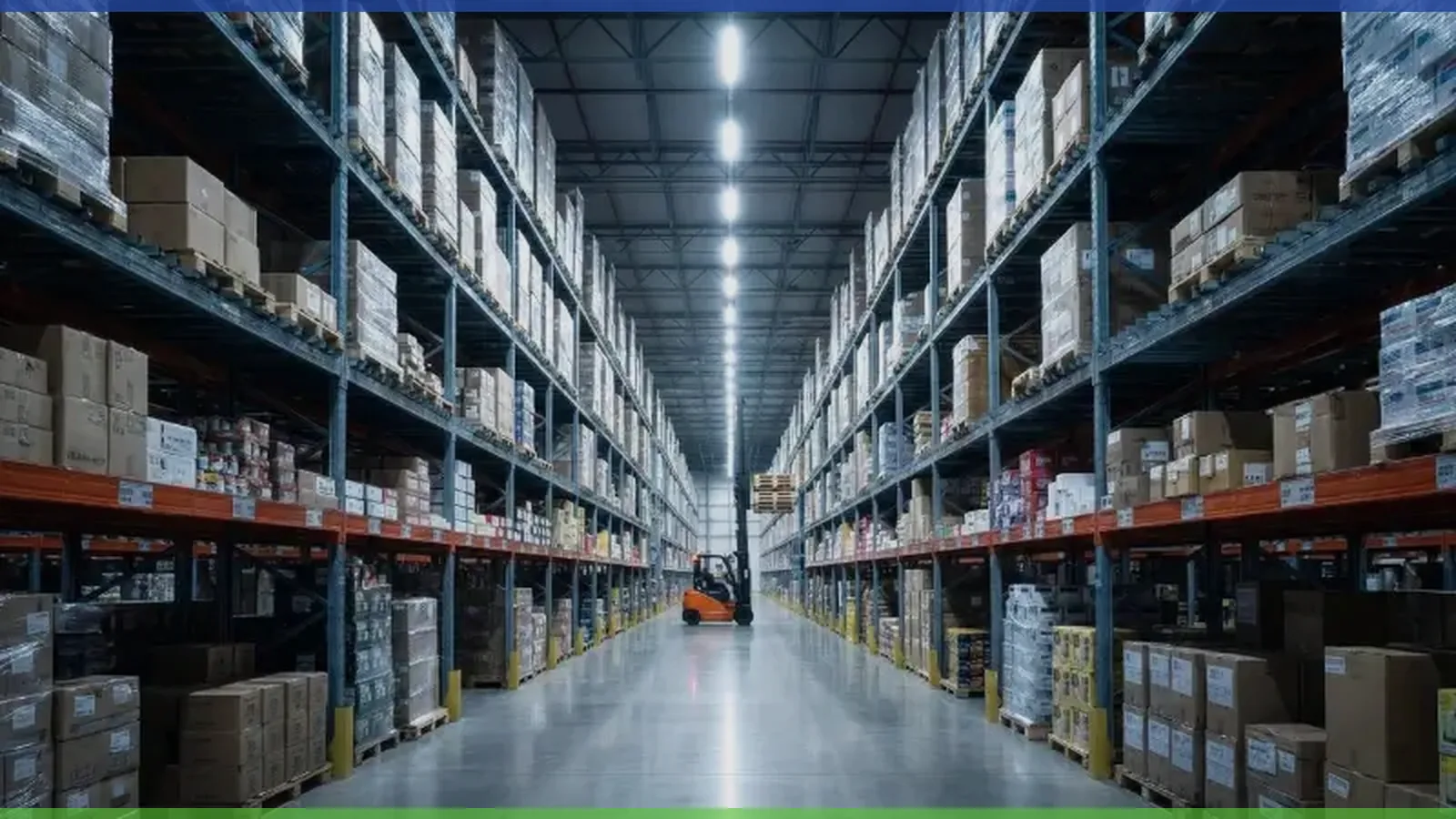
Typical applications include warehouses, parking garages, cold storage, food processing, supermarkets, service corridors, car wash areas, workshops, tunnels, public utility rooms, and industrial back-of-house spaces. The common pattern is not the building type. It is exposure plus maintenance. A dry warehouse with dust needs a different fixture conversation than a chilled washdown room or a parking deck with exhaust, vibration, and frequent switching.
ENERGY STAR commercial lighting upgrade guidance names commercial applications such as parking garage lighting and task lighting. That matters because tri-proof fixtures often sit in the practical middle of commercial lighting: not decorative, but directly tied to safety, energy, cleaning, service access, and uptime. The project should define what the fixture must keep doing after months of exposure, not only how bright it looks on day one.
Controls and emergency options can reopen the enclosure question
Tri-proof projects increasingly ask for microwave sensors, PIR sensors, daylight control, emergency battery backup, through-wiring, or quick connectors. Each addition can change the enclosure. A sensor lens may introduce a new opening. An emergency module may change heat and service access. A through-wiring path may change cable sealing. A quick connector may improve installation but needs its own environmental boundary.
That is why buyers should treat motion sensor LED lighting and LED emergency lighting options as engineering changes, not accessories pasted onto the same product. For Fanxstar ODM work, the RFQ should ask whether the sensor, emergency pack, wiring, and label are included in the same sample and evidence file as the base tri-proof luminaire.
How to Specify a Tri-Proof Light Without Overbuying or Underbuying
Use an exposure map before asking for price
| RFQ field | Why it matters | Weak answer to reject |
|---|---|---|
| IP target | Translates tri-proof into a testable enclosure requirement | waterproof enough |
| Exposure map | Separates humidity, hose water, dust, chemical cleaning, and corrosion | industrial environment |
| Material and diffuser | Controls impact, heat, glare, UV, and cleaning behavior | standard cover |
| Cable entry | Often decides whether the seal survives installation | normal wiring |
| Mounting and service | Affects gasket stress, access, and replacement cost | ceiling mounted |
| Certification market | Keeps reports, labels, and product version aligned | CE available |
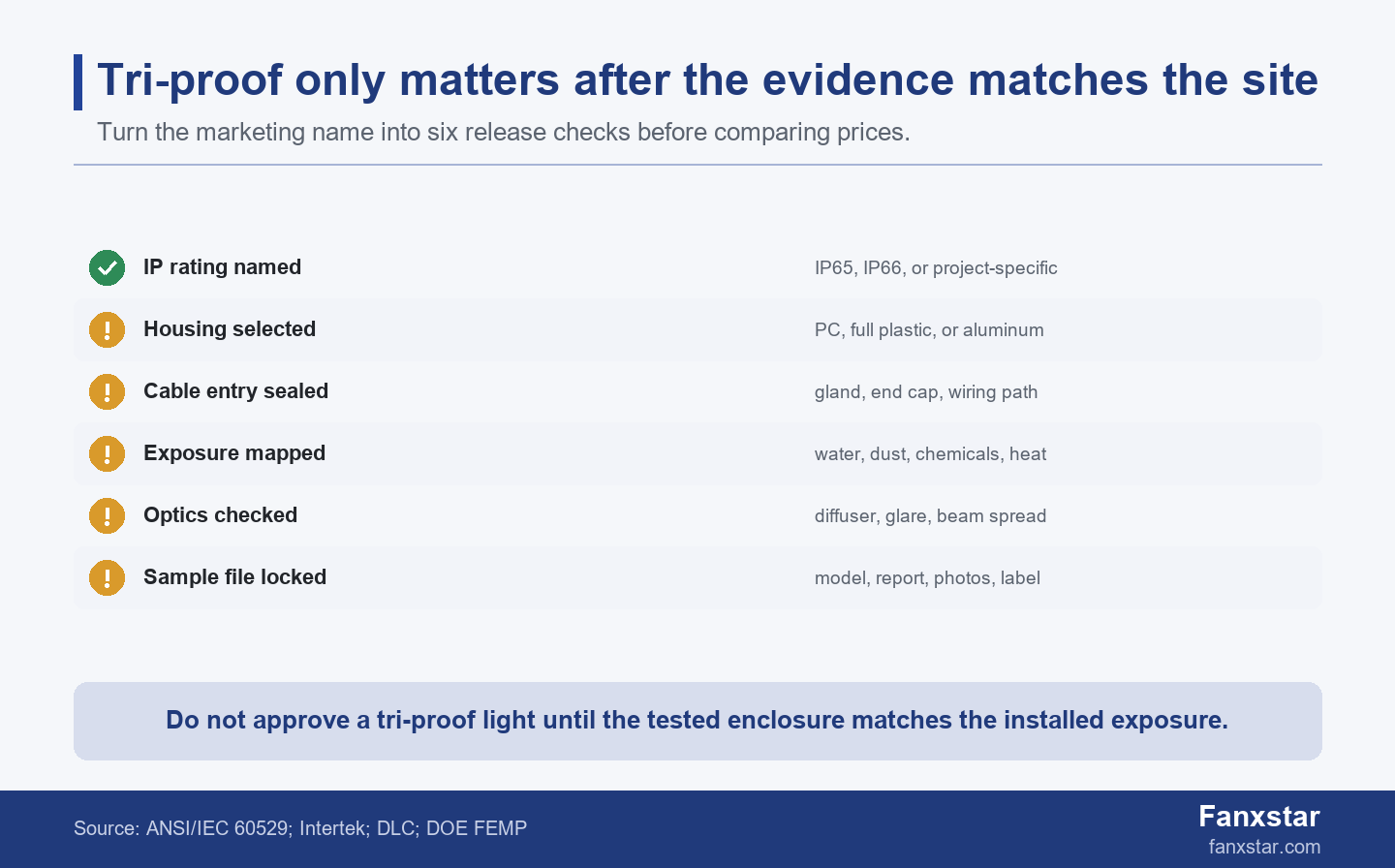
The exposure map should be short but concrete. Name water direction, hose or no hose, dust type, cleaning chemical if any, ambient temperature, mounting surface, vibration, cable entry direction, daily switching pattern, desired controls, target market, and maintenance access. That information turns the project into at least 6 release checks: enclosure, material, cable entry, optics, controls, and sample identity. It tells the supplier which platform can work and which claim needs proof.
Use Fanxstar IP rating guidance as a companion when the main uncertainty is waterproof or dustproof language. IP ratings are valuable, but they do not cover every real field issue. They do not automatically prove corrosion resistance, detergent compatibility, UV behavior, impact protection, driver quality, or installer workmanship. The buyer still has to write those project risks into the RFQ.
Separate sample approval from production release
A tri-proof sample should be checked in 2 layers. The first layer is lighting performance: output, distribution, glare, CCT, CRI, flicker concern, sensor range, and emergency behavior if included. The second layer is enclosure evidence: gasket, clips, screws, cable gland, end cap, label, driver compartment, material, and installation method. If the buyer approves only the light output, the most important proof may remain unchecked.
The production release should freeze the exact model and critical parts. If the supplier changes driver, diffuser, clips, gasket, cable gland, emergency pack, or sensor module after the sample, ask what evidence remains valid. This is especially important in private-label or ODM programs, where the product can be adapted quickly. Fast adaptation is useful only when the evidence file follows the change.
Based on our analysis, an illustrative tri-proof pilot can use 20 units for 30 days before a larger rollout, especially when washdown, condensation, or sensor switching is part of the risk. Losing 10 days to a better sample gate is cheaper than discovering a gasket, cable-entry, or driver-access problem after 500 units have been installed for 3 months. For urgent projects, ask the supplier what can be checked in 48 hours, what needs 2 weeks of sample exposure, and what cannot be proven without a field pilot.
For a procurement scenario estimate, keep the numbers practical rather than decorative. Based on our analysis, 20 units can reveal installation-fit variation better than 1 showroom sample. Based on our analysis, 30 days is a useful minimum for a pilot that includes cleaning, switching, and maintenance access. Based on our analysis, 48 hours is a reasonable document-response target for IP evidence, wiring drawings, and BOM confirmation. Based on our analysis, 2 weeks can expose packaging, mounting, and accessory gaps before production. Based on our analysis, 500 units should not ship until the approved sample and final BOM still match. Based on our analysis, 3 months of purchasing records help prove that no silent driver or gasket substitution occurred. Based on our analysis, 10 days spent on sample correction is cheaper than one field rework cycle.
Use the estimate as a working control list. Based on our analysis of this scenario, 20 units give the buyer enough samples to compare mounting variation. Based on our analysis of this scenario, 30 days lets cleaning and switching patterns appear. Based on our analysis of this scenario, 48 hours should be enough for document-response triage. Based on our analysis of this scenario, 2 weeks is a sensible exposure hold for damp rooms. Based on our analysis of this scenario, 500 units should trigger a final BOM lock. Based on our analysis of this scenario, 3 months of records can support change traceability. Based on our analysis of this scenario, 10 days of correction time can prevent a larger service visit. Based on our analysis of this scenario, 1 final sample should be photographed before mass production.
How Fanxstar Fits Tri-Proof and Weatherproof Lighting Projects
Use Fanxstar when the application is more specific than a catalog search
Fanxstar is a natural fit when the buyer needs weatherproof LED lighting product platforms, IP65 and IP66 waterproof LED lights, vapor tight LED light fixtures, or heavy duty weatherproof luminaires matched to a real environment. The stronger the exposure map, the better the platform recommendation can be.
For a straightforward replacement, a catalog platform may be enough. For food processing, cold rooms, parking garages, tunnels, wet backrooms, or private-label industrial programs, the buyer should send photos, mounting height, cleaning routine, target market, certification need, and sample goal. That lets Fanxstar decide whether the project needs a standard platform, material change, sensor-ready version, emergency option, or ODM adjustment.
The best tri-proof RFQ asks for evidence, not slogans
A useful next step is to send the site condition and desired sample gate through Fanxstar custom LED lighting ODM service. The request should say what must be proven before the buyer approves mass production: IP evidence, thermal behavior, cable entry, sensor function, emergency duration, label, packaging, and installation method. If the project is eligible for platform-based customization, ask which parts can reach a 7-10 day sample and which parts require a longer evidence loop.
The final decision rule is direct: buy tri-proof lights by the failure they prevent. If the failure is dust and moisture, the evidence should show enclosure performance. If the failure is cleaning chemical, ask about material compatibility. If the failure is maintenance cost, ask about driver access and replacement plan. If the failure is glare or poor layout, ask for photometrics. The name tri-proof only becomes useful after those proof points are attached.
FAQ
What does tri-proof light mean?
A tri-proof light is a sealed LED luminaire commonly used for wet, dusty, or mildly corrosive environments. The term is a market shortcut, so buyers should confirm IP rating, material, diffuser, cable entry, mounting, and application evidence before approving a fixture.
Is tri-proof the same as vapor tight?
Tri-proof and vapor tight are often used for similar sealed LED fixtures, but they are not always identical in product design or test evidence. The safer approach is to compare the exact IP rating, gasket structure, lens, cable entry, and intended application rather than relying on the name.
Which IP rating is best for tri-proof lights?
There is no single best IP rating for every tri-proof light. IP65 may be enough for many damp or dusty areas, while IP66 or washdown-oriented requirements may be needed for stronger water exposure. The right rating depends on the site, cleaning method, and installation condition.
What should I send Fanxstar before choosing a tri-proof light?
Send the application, photos if available, mounting height, water and dust exposure, cleaning routine, temperature range, target market, certification need, sensor or emergency requirement, and sample deadline. Those inputs help Fanxstar match a weatherproof platform to real project risk.