If you work in a maintenance workshop, you know how important good lighting is. LED lighting, especially in a neutral-white tone, stands out as the indispensable lighting solution. When you use this type of light, you notice big changes:
You see tools and parts more clearly, so you spot hazards faster and stay safer.
Your workspace feels brighter, which helps prevent accidents caused by poor visibility.
The steady, flicker-free glow lets you focus on the job, making you more productive every day.
Key Takeaways
LED lighting enhances safety by improving visibility, helping you spot hazards quickly.
Switching to LED saves energy and reduces electric bills, making it a cost-effective choice.
Neutral-white light reduces eye strain and keeps you alert, boosting productivity during long shifts.
Choose adjustable and flexible lighting to meet the specific needs of different tasks in your workshop.
Regularly assess your lighting setup to ensure even coverage and eliminate dark spots for a safer workspace.
Indispensable Lighting Solution Explained
Why LED Is Essential
When you step into a busy workshop, you want lighting that works as hard as you do. LED lights have become the go-to choice for anyone who needs a reliable and efficient setup. You get more than just brightness. You get a system that saves energy, lasts longer, and keeps your workspace safe.
LED lighting fixtures use much less energy than older options. You might see LEDs using only 6-8 watts, while traditional incandescent bulbs burn through 60 watts for the same amount of light. That means you save money on your electric bill every month.
LEDs shine brighter for every watt, so your workshop feels well-lit without wasting power.
You don’t have to worry about changing bulbs all the time. High-quality LED fixtures can last between 5 to 10 years, even if you use them every day in tough conditions. In some commercial spaces, LEDs keep working for up to 20 years.
Flickering lights can be distracting and even dangerous. LEDs give you a steady, flicker-free glow, which helps you stay focused and safe.
Tip: If you want a task lighting solutions that stands up to dust, heat, and long hours, LED is the Indispensable Lighting Solution for your workshop.
Benefits of Neutral-White Light
You might wonder why the color of your lights matters. Neutral-white LED lighting makes a big difference in how you see and feel at work. It’s not too harsh, not too dim—just right for clear vision and comfort.
Neutral-white light helps you spot details on tools, parts, and surfaces. You notice problems faster and avoid mistakes.
Poor lighting can make you feel tired, give you headaches, or cause you to lose focus. Studies show that low lighting levels lead to more errors and accidents. Workers report feeling sleepy and distracted when the light isn’t bright enough.
With neutral-white LEDs, you get the right amount of brightness. This reduces eye fatigue and helps you stay alert, especially during long shifts.
Better lighting means fewer accidents. There’s a link between good vertical lighting and lower error rates in workshops.
If you want your team to work safely and efficiently, neutral-white LED lighting is the Indispensable Lighting Solution you need. It keeps everyone comfortable, focused, and ready to tackle any job.
Key Criteria for Workshop Lighting
Brightness and Coverage
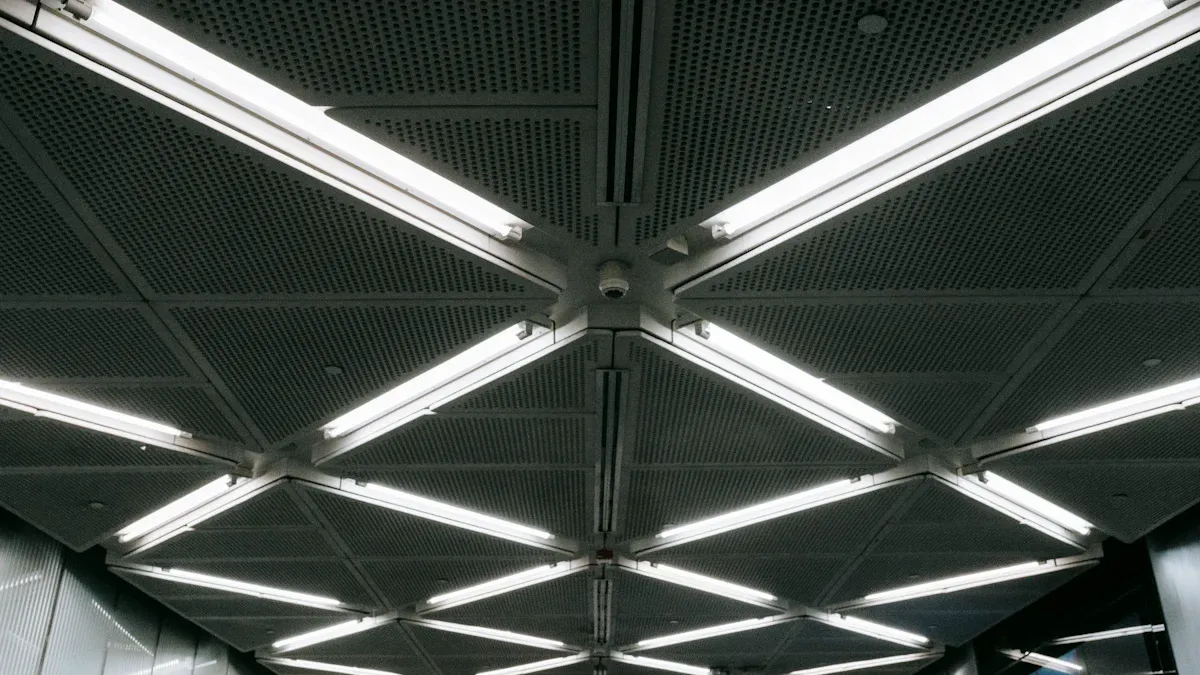
You want your workshop to feel bright and open, not shadowy or cramped. Good lighting covers every corner, so you can see what you’re working on without straining your eyes. When you choose fixtures, look for ones that spread light evenly across your workspace. This helps you avoid dark spots where accidents can happen. Brightness matters, but coverage is just as important. If you work with small parts or detailed repairs, you need clear, consistent light to spot problems fast.
Adjustability and Flexibility
Every job is different, so your lighting should adapt to your needs. Adjustable lights let you direct beams exactly where you need them. Flexible fixtures make it easy to switch between wide and narrow lighting, depending on the task. Take a look at some features that make workshop lighting systems versatile:
Feature | Description |
|---|---|
Secure Attachment | Clamp base lights attach securely to surfaces for stability. |
Adjustable Light Head | Switch between wide and narrow beams for different tasks. |
360-Degree Lighting | Illuminate your workspace from all angles for better visibility. |
Flexibility in Placement | Move compact lights into tight spaces for precise lighting. |
Manual Adjustments | Change the angle or direction of the light to suit your work. |
You can move lights around, clamp them to benches, or adjust their heads for perfect coverage. This flexibility helps you tackle any maintenance job with confidence.
Energy Efficiency
Saving energy means saving money. When you switch to LED lighting, you cut your energy use by a huge amount. For example:
Switching from Halogen to LED can drop energy use from 35,000 watts to 7,500 watts for 1,000 fixtures.
Monthly costs fall from $955.00 to $204.75, with annual savings of $9,003.00.
Many clients see a 50–70% reduction in lighting energy costs after upgrading.
LEDs last longer, so you spend less on replacements and maintenance.
Energy-efficient lighting isn’t just good for your wallet. It’s a smart choice for any workshop looking for an Indispensable Lighting Solution.
Durability and Safety
Workshop lights need to stand up to tough conditions. You want fixtures that last and keep you safe. LED lights often last 25,000 to 50,000 hours, while old bulbs burn out after about 1,000 hours. This means fewer replacements and less downtime. LEDs resist shock and vibration, so they’re perfect for busy workshops. Safety matters, too. Look for lights that meet these standards:
Standard | Description |
|---|---|
IEC 60598 | |
UL 1598 | Standard for Luminaires |
UL 8750 | LED Equipment for Use in Lighting Products |
UL 153 | Portable Electric Luminaires |
UL 2108 | Low Voltage Lighting Systems |
UL 8800 | Horticultural Lighting Equipment and Systems |
UL 48 | Electric Signs |
Manufacturers test these lights for safety, checking things like luminous output, color, energy use, and electrical safety. When you choose durable, certified lighting, you protect your team and keep your workshop running smoothly.
Top Workshop Lighting Options
LED Weatherproof Light
You want lighting that stands up to anything your workshop throws at it. LED weatherproof lights are built tough. They keep working even when dust, moisture, or temperature changes hit your workspace. Here’s why you might choose them:
These lights handle harsh weather and rough conditions, so you don’t have to worry about sudden failures.
You save money because they last longer and use less energy.
LED technology resists damage better than old-school bulbs, giving you steady light every day.
If you need reliability and safety, weatherproof LEDs are a smart pick for your workshop.
High Bay and Low Bay LEDs
Do you work in a space with high ceilings or wide open areas? High bay and low bay LEDs might be your best bet. You see these lights in places like auto garages, retail shops, and assembly areas. They fit ceilings from 12 to 20 feet and give you bright, even coverage. Check out how they compare:
Feature | High Bay LEDs | Low Bay LEDs |
|---|---|---|
Lumen Output | 3,000–10,000 lumens | |
Beam Angle | Narrow, focused | Wide, broad |
Lifespan | 50,000+ hours | 50,000+ hours |
Maintenance Costs | Low | Low |
Instant-On Performance | Yes | Yes |
Smart Controls | Yes | Yes |
You get consistent lighting for precision tasks. High bay lights work best for tall spaces, while low bay LEDs suit lower ceilings.
Task and Work Lights
Sometimes you need extra light for detailed jobs. Task and work lights help you see small parts and fine details. You can adjust them to reduce eye strain and boost productivity. Here’s what makes them great:
Focused beams let you see exactly what you’re working on.
No flicker or color distortion, so your eyes stay comfortable.
Ergonomic designs cut down on glare and shadows, making your workspace safer.
Task lights help you stay accurate and reduce mistakes, which is key for maintenance work.
Portable and Multi-functional Lights
You never know when you’ll need light in a tight spot or on the go. Portable and multi-functional lights give you flexibility. Many come with adjustable angles, magnetic bases, and rechargeable batteries. Take a look:
Feature | Description |
|---|---|
Adjustable Angles | Rotate 360° and tilt 120° for perfect lighting |
Magnetic Base | Attach to iron surfaces for hands-free use |
Rechargeable Battery | USB-C fast charging, long-lasting power |
Versatility | Use for home, car repairs, camping, and more |
Lighting Modes | Switch between LOW, MID, and HIGH brightness |
You can change brightness levels to match your task. These lights help you work safely and efficiently, even in tricky conditions. Portable lighting makes your workflow more flexible and keeps your workshop running smoothly. If you want an Indispensable Lighting Solution that adapts to every job, portable lights are a must-have.
Choosing and Installing the Right Lighting
Assessing Your Workshop Space
Before you pick out new lights, take a good look at your workshop. Every space is different, so you want to make sure your lighting fits your needs. Start by checking the layout and size of your workshop. Think about the shape of the room and how high the ceilings are. The layout and size will help you decide how many lights you need and where to put them.
Look at the dimensions and layout of your space.
Notice what types of tasks you do in each area.
Figure out if you need more light in certain spots, like workbenches or storage corners.
Make sure you get even light across the whole workshop to avoid dim spots.
Check the height and angle where you’ll install each fixture.
A good rule of thumb: For most workshops, aim for a total of 3,000 to 5,000 lumens, depending on the size and detail of your work.
Matching Lighting to Tasks
Not every job needs the same kind of light. You want to match your lighting to the work you do. For example, you might use bright overhead LEDs for general tasks and focused task lights for detail work. Here’s a quick guide:
Lighting Type | Maintenance Tasks |
|---|---|
LED Fixtures | Check color temperature, clean heat sinks, test dimming, update firmware. |
Fluorescent Fixtures | Replace flickering tubes, check ballasts, clean diffusers, inspect tube ends. |
Incandescent & Halogen | Handle bulbs carefully, check ventilation, replace before burnout. |
Outdoor Fixtures | Check seals, clean debris, inspect for corrosion, test GFCI systems. |
Keep your lights clean and replace bulbs as soon as they burn out. Test switches and dimmers often. If you use different types of lights, make sure each one fits the job you need it for.
Installation Tips
When you install your lighting, you want to get the best results. Try these tips to make your workshop brighter and safer:
Use indirect lighting or low-glare LED panels to cut down on harsh shadows.
Add light diffusing materials, like frosted glass, to spread light evenly.
Think about ceiling height. High ceilings need stronger lights, while lower ceilings work well with surface-mounted fixtures.
Point your lights toward work areas to reduce shadows and boost visibility.
Tip: Take your time planning your lighting layout. Good placement means fewer shadows and a safer, more comfortable workspace.
Lighting for Safety and Productivity
Reducing Hazards
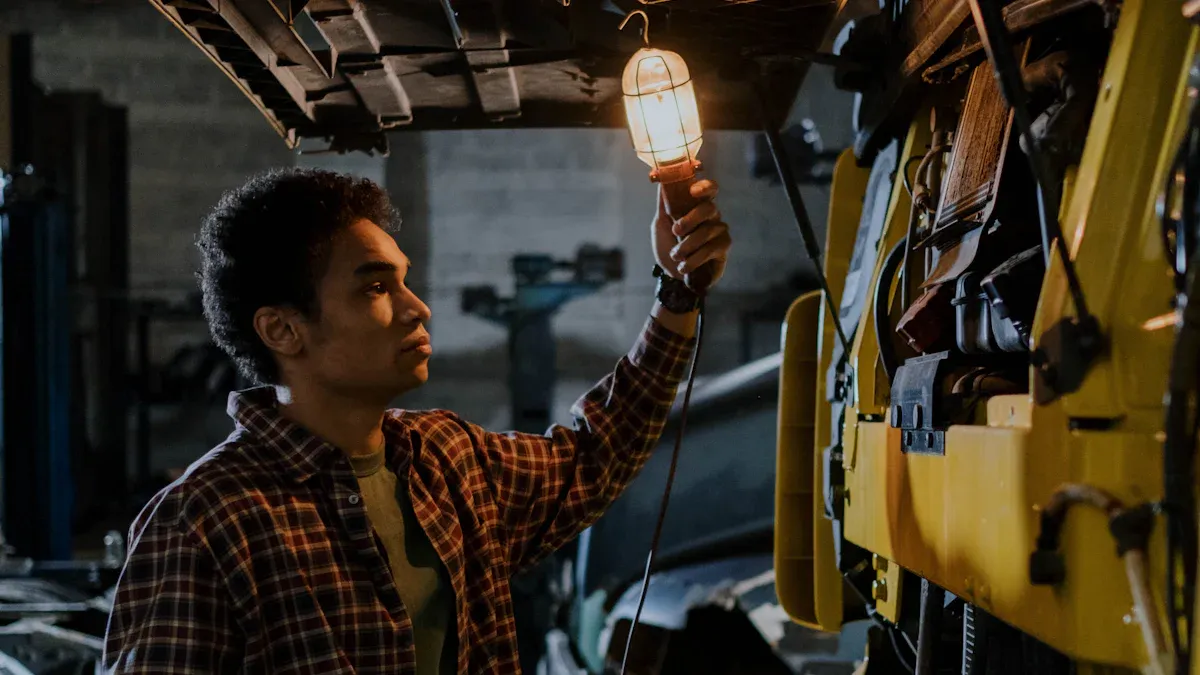
You want your workshop to be a safe place to work. Good lighting helps you spot spills, tools, and cords that might cause slips, trips, or falls. When you can see clearly, you react faster and avoid accidents. Many workshops have trouble with poor lighting, especially in busy or high-risk areas. You can fix this by making sure every corner gets enough light.
Here’s a quick look at how lighting helps reduce hazards:
Environmental Factors | Mitigation Strategies |
|---|---|
Provide adequate lighting in all areas, especially high-risk zones |
When you light up your workspace, you make it easier to see obstacles and keep everyone safe. You also help your team feel more confident moving around, even when they carry tools or parts.
Tip: Walk through your workshop and check for dark spots. Add extra lights where you need them most.
Enhancing Work Quality
Bright, clear lighting does more than keep you safe. It helps you do better work. When you use LED task lights, you see details that you might miss in dim light. Your eyes feel less tired, so you can focus longer and make fewer mistakes.
Here’s how better lighting boosts your work quality:
LED task lighting enhances accuracy and reduces eye strain, leading to fewer mistakes.
Improved visibility creates a safer work environment, which is crucial in maintenance operations.
Better focus and accuracy in tasks result in a more productive work environment.
You notice the difference right away. Enhanced visibility lets you read plans, spot small parts, and check your work with confidence. You also avoid shadows and dark spots, which often cause errors. When your lighting works for you, your whole team gets more done and feels proud of the results.
Note: Upgrading your lighting is one of the easiest ways to improve both safety and quality in your workshop.
You want your workshop to be safe, bright, and productive. LED lighting in a neutral-white tone gives you all that. You see every detail, work faster, and avoid accidents. If you want the Indispensable Lighting Solution, upgrade your lights and watch your workspace transform.
Boost safety and visibility
Save energy and money
Improve work quality
Tip: Take a fresh look at your lighting setup. Small changes can make a big difference.
FAQ
What color temperature works best for workshop lighting?
You get the best results with neutral-white LEDs, usually around 4000K to 5000K. This range gives you clear visibility without harsh glare. Your eyes stay comfortable, and you spot details easily.
How do I know if my workshop needs more lights?
Check for shadows or dim spots. If you struggle to see tools or parts, you need extra lighting. Walk around your space and notice where visibility drops. Add fixtures where you need brighter coverage.
Can LED lights handle tough workshop conditions?
Yes! LED lights resist dust, vibration, and temperature changes. You can use weatherproof models for extra protection. These lights last longer and keep working even in busy, demanding environments.
Do LED lights save money over time?
Absolutely. You use less energy with LEDs, so your electric bill drops. You also replace bulbs less often. Over time, you save money on both power and maintenance.
How do I reduce glare in my workshop?
Try using diffusers or frosted covers on your lights. Position fixtures so they shine toward work areas, not directly into your eyes. You can also choose low-glare LED panels for a softer, even glow.