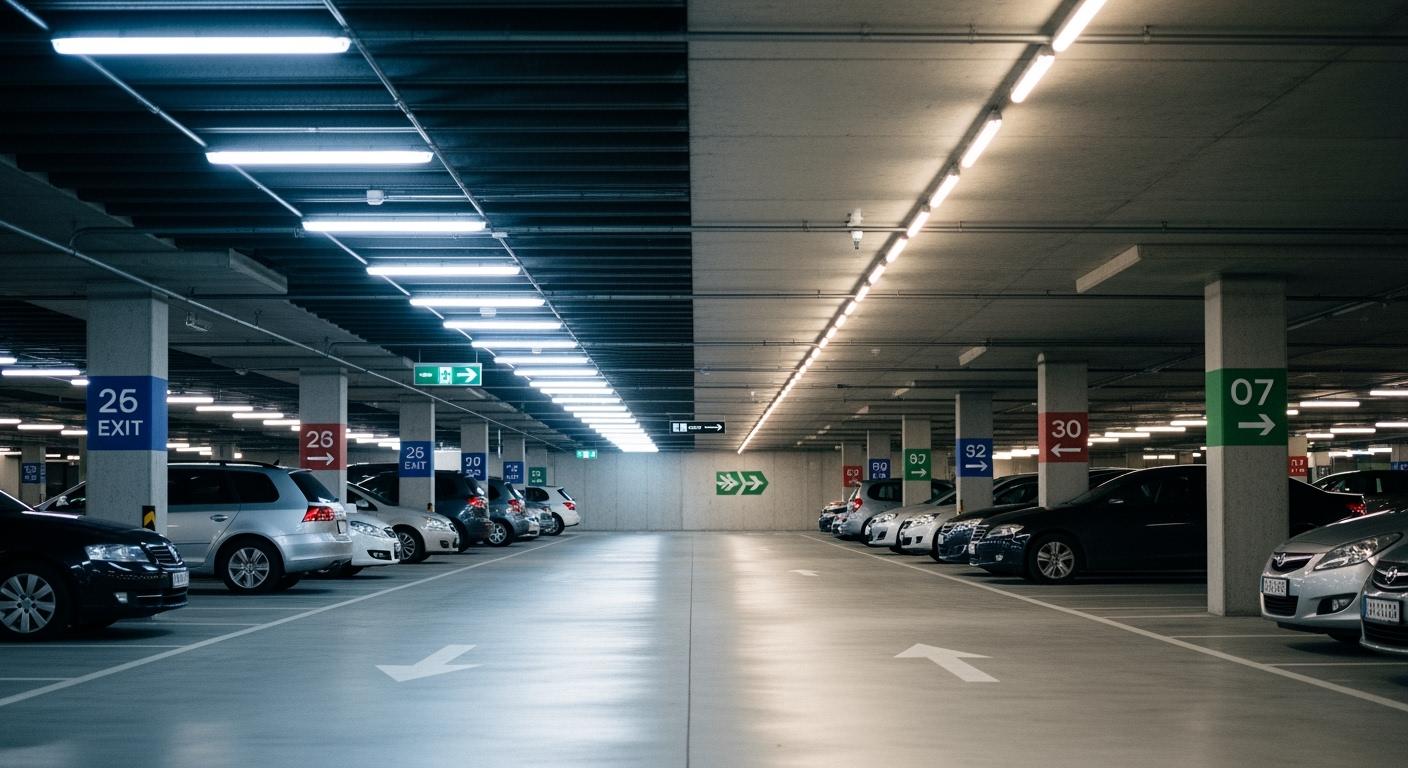
Underground parking facilities present a unique set of lighting challenges. Constant humidity, vehicle exhaust, potential for physical impact, and the need for 24/7 operation demand fixtures that are more than just “bright.” Modern managers must decide between Tri-proof LED lights and Batten LED lights. While both offer significant energy savings over legacy fluorescents, their technical architectures serve different operational goals. Choosing the right luminous solution is the difference between a safe, low-maintenance asset and a liability filled with shadowy corners and frequent hardware failures.
Key Takeaways
- Durability Champion: Tri-proof LED lights are the industry gold standard for underground parking due to their hermetic seals against moisture and high impact resistance (IK10).
- Retrofit Efficiency: LED Batten lights offer a sleek, cost-effective alternative for low-moisture corridors and administrative zones within parking decks.
- Protection Standards: For drive-lanes and open bays, a minimum of IP65 is required, while IK08-IK10 impact ratings protect against vehicle-related bumps.
- Smart Control ROI: Microwave motion sensors can reduce lighting energy consumption by up to 70% by utilizing bi-level dimming.
- Safety Mandates: Integrated emergency battery backups (LiFePO4) ensure at least 90 minutes of illumination during critical power failures.
Technical Breakdown: Tri-proof vs. Batten Fixtures
The core difference between these two categories lies in their Ingress Protection (IP) and Impact Protection (IK) ratings. Understanding these metrics is vital for determining the “useful life” of your investment.
Tri-proof LED Lights: The Heavy-Duty Choice
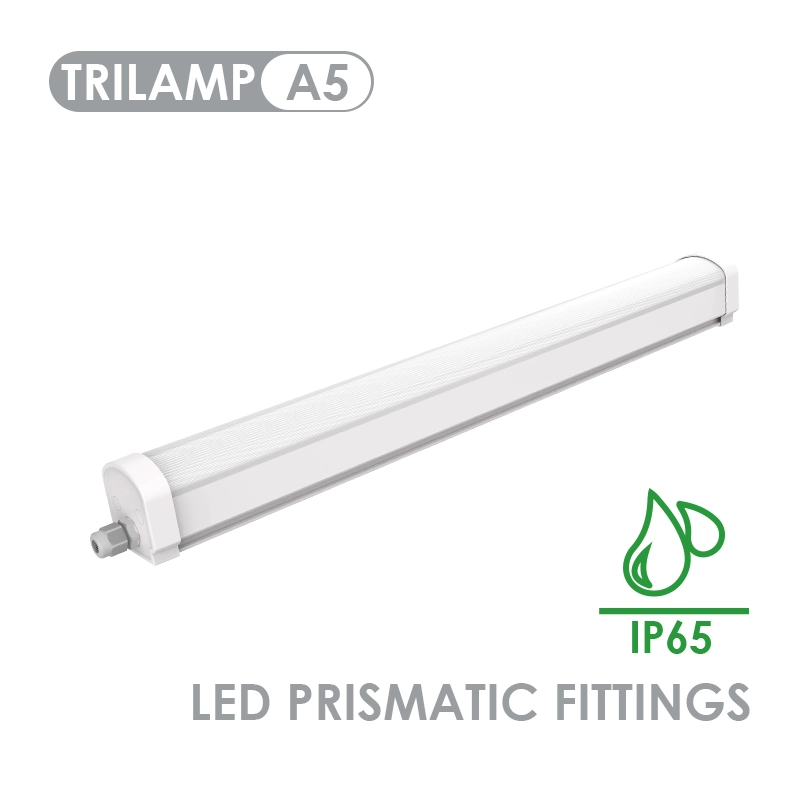
As the name suggests, Tri-proof lights are engineered to be waterproof, dustproof, and anti-corrosive. These fixtures utilize high-density polycarbonate housings and heavy-duty silicone gaskets. A quality Tri-proof light typically carries an IP66 rating, meaning it can withstand high-pressure water jets used during deck cleaning without moisture ingress.
LED Batten Lights: The Aesthetic & Budget Alternative
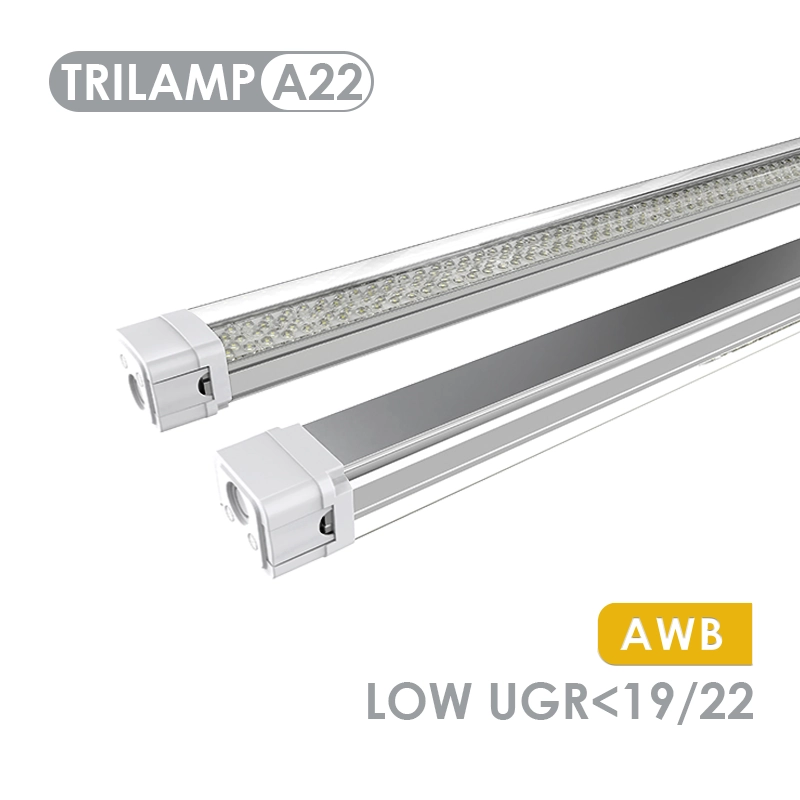
Batten lights are essentially modern, integrated versions of the traditional fluorescent strip. They prioritize luminous uniformity and a slim profile. While high-end battens can reach IP65, they often feature lower IK ratings than their Tri-proof counterparts. They are ideal for “standard” environments such as parking lobbies, elevator banks, and well-ventilated stairwells where extreme chemical exposure is minimal.
| Technical Feature | Tri-Proof LED Lights | Industrial LED Batten |
|---|---|---|
| Ingress Protection | IP65, IP66, or IP69K | IP20 to IP65 |
| Impact Resistance | IK08 to IK10 (High) | IK05 to IK08 (Moderate) |
| Thermal Management | Advanced Internal Heat Sink | Standard Aluminum Plate |
| Mounting Height | 8ft to 20ft | 8ft to 12ft |
| Corrosion Resistance | High (Coated/Sealed) | Moderate |
Ensuring Safety through Photometric Performance
Safety in an underground garage is measured in “Foot-candles” (fc) or “Lux.” Inadequate lighting distribution leads to “cave effects”—bright spots directly under the light and dangerous shadows between fixtures. To combat this, professional garage lighting uses wide-beam optics (typically 120 degrees) to ensure overlaps that create a uniform visual field.
Zone-Based Illuminance Requirements
Not every area of a garage requires the same intensity. Driving lanes need higher visibility than individual parking spaces. Adhering to IES (Illuminating Engineering Society) standards helps mitigate premises liability risks.
| Parking Garage Zone | Recommended Foot-candles (fc) | Priority Level |
|---|---|---|
| Entrance / Exit Points | 50 fc (Day) / 10 fc (Night) | Critical (Eyes must adapt) |
| Interior Driving Lanes | 10 – 20 fc | High (Safety) |
| Parking Bays | 5 – 10 fc | Moderate (Security) |
| Lobbies & Stairwells | 15 – 20 fc | High (Pedestrian Safety) |
Intelligent Energy Management: The ROI of Sensors
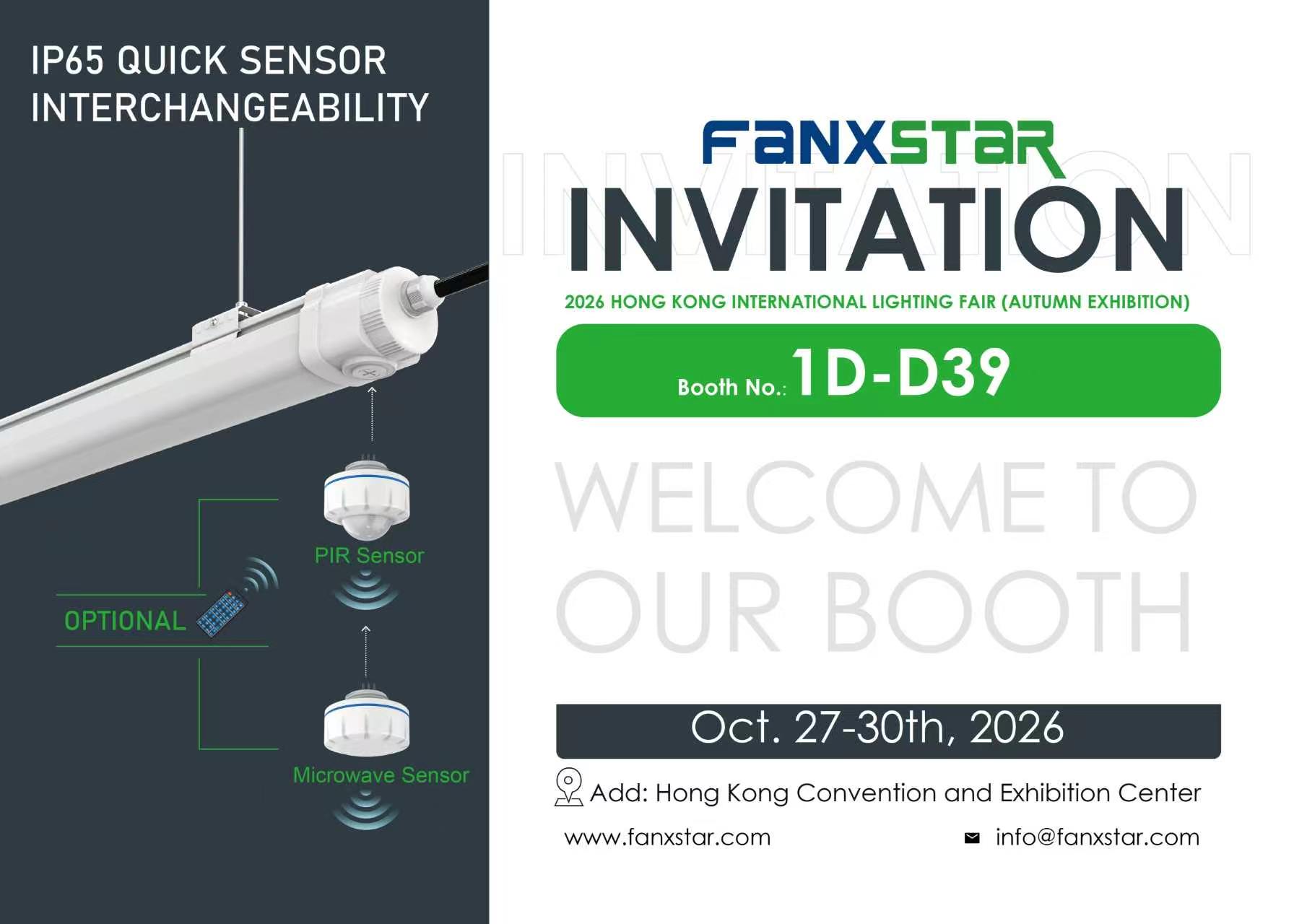
In a 24/7 parking environment, running lights at 100% brightness is a massive energy waste. Modern LED lighting systems integrate Microwave sensors rather than PIR (Passive Infrared). Microwave sensors are superior because they emit high-frequency waves that can detect movement through thin obstacles or around support columns, ensuring the light turns on before a car rounds a corner.
- Bi-Level Dimming: Fixtures stay at 10-20% brightness for security when no motion is detected and ramp to 100% instantly upon detection.
- Daylight Harvesting: For the top level of a garage or entrance ramps, sensors detect natural light and dim the artificial source accordingly, potentially saving an additional 30% on utility costs.
- Lifespan Extension: By reducing the “burn time” of the chips, smart controls can extend the chronological life of a fixture from 5 years to over 10 years.
“Smart controls are no longer an optional luxury. They are the primary driver of ROI in underground parking, often paying for the cost of the entire lighting upgrade within 18 months.”
Compliance: Emergency Lighting and Battery Backup
Underground parking is a high-risk area during power failures. NFPA 101 mandates that emergency lighting must restore power within 10 seconds and maintain a minimum of 1 foot-candle along the path of egress for at least 90 minutes. Modern emergency LED fixtures utilize LiFePO4 (Lithium Iron Phosphate) batteries, which offer higher thermal stability and longer cycle lives than older Lead-acid counterparts.
Self-Testing Features: Look for fixtures with automated self-diagnostic modules. These fixtures perform monthly 30-second discharge tests and annual 90-minute tests, signaling status via a multi-color LED indicator. This reduces the manual labor of inspection and ensures you are always ready for a fire marshal audit.
Installation and Proactive Maintenance
While LED technology is low-maintenance, it is not “no-maintenance.” In a garage, the “Lumen Maintenance” (L70) rating is affected by dust accumulation on the lens. High-quality Tri-proof lights from Fanxstar feature smooth, anti-static covers that minimize dust adherence.
- Surface vs. Suspension: Low-ceiling garages (under 9ft) should utilize surface mounting to maximize clearance. Suspended mounting is preferred for high-bay ramps to bring light closer to the floor.
- Retrofit Kits: If your existing fluorescent housings are in good condition, “Type B” ballast-bypass tubes are a budget-friendly way to move to LED. However, for a 10-year solution, an integrated fixture is always more reliable.
- Tool-Free Access: Choose fixtures with stainless steel clips or tool-free end caps. This allows maintenance teams to clean the interior or replace drivers without dismantling the entire unit.
Conclusion: Future-Proofing Your Facility
The shift toward long-term LED savings in underground parking is definitive. While Batten lights are excellent for secondary areas, Tri-proof LED lights remain the undisputed best choice for drive-lanes and open parking zones due to their IP66 and IK10 resilience. By matching your lighting technology to the environmental challenges of your garage, you ensure a safe, efficient, and cost-effective facility for the next decade.
Frequently Asked Questions (FAQ)
What does “Tri-proof” actually mean?
Historically, it referred to being waterproof, dustproof, and anti-corrosive. Today, it also implies high-impact resistance (IK rating) and durability in harsh industrial or parking environments.
How many lumens do I need for my underground garage?
It depends on the ceiling height. For standard 8-10ft ceilings, a 40W fixture producing 4,800 to 5,200 lumens is the industry standard for drive lanes, while 20W to 30W is often sufficient for parking stalls.
Can I use PIR sensors in a concrete garage?
PIR (Passive Infrared) requires a direct line of sight to detect heat signatures. In garages with many support columns, Microwave sensors are much better as they can “see” through obstacles and detect motion more accurately.
Is it worth upgrading from T8 LEDs to integrated Tri-proof lights?
Yes. While T8 LEDs are efficient, they lack the hermetic seal of an integrated fixture. Over time, moisture and exhaust fumes will degrade the internal sockets of a T8 housing, whereas a Tri-proof fixture is completely sealed for 50,000+ hours of operation.
What color temperature (CCT) is best for parking safety?
A color temperature of 4000K to 5000K (Cool White) is recommended. It improves driver alertness, provides better contrast for security cameras, and makes the environment feel safer compared to “yellowish” warm light.