In the complex environment of modern logistics and manufacturing, lighting is far more than a utility—it is a critical driver of safety and operational throughput. Choosing between high bay vs. low bay linear lights is a fundamental technical decision that hinges on mounting height, spatial layout, and specific task requirements. By matching the correct luminaire to each zone, facility managers can eliminate hazardous shadows, reduce energy waste by up to 75%, and foster a 20% increase in overall productivity.
Key Takeaways
-
Height Matters: High bay fixtures are engineered for ceilings above 20 feet, whereas low bay units are optimized for heights between 12 and 20 feet.
-
Optical Control: High bay lighting utilizes narrow beam angles (60°-90°) to project light over long distances, while low bay lighting uses wide angles (120°) for broad, soft coverage.
-
Luminous Flux: High bay luminaires deliver 15,000 to 40,000+ lumens to maintain target lux levels on the floor from extreme heights.
-
Smart Integration: Modern LED systems utilizing PIR or microwave sensors maximize ROI by implementing demand-driven illumination.
-
Durability Standards: Industrial-grade solutions should prioritize IP65/IP66 and IK10 ratings to withstand dust, moisture, and mechanical impact.
Defining the Standards: High Bay vs. Low Bay
To implement an effective lighting strategy, one must first categorize the facility zones based on vertical clearance. The transition point between high and low bay classification is universally recognized at the 20-foot (6-meter) mark.
What Is High Bay Lighting?
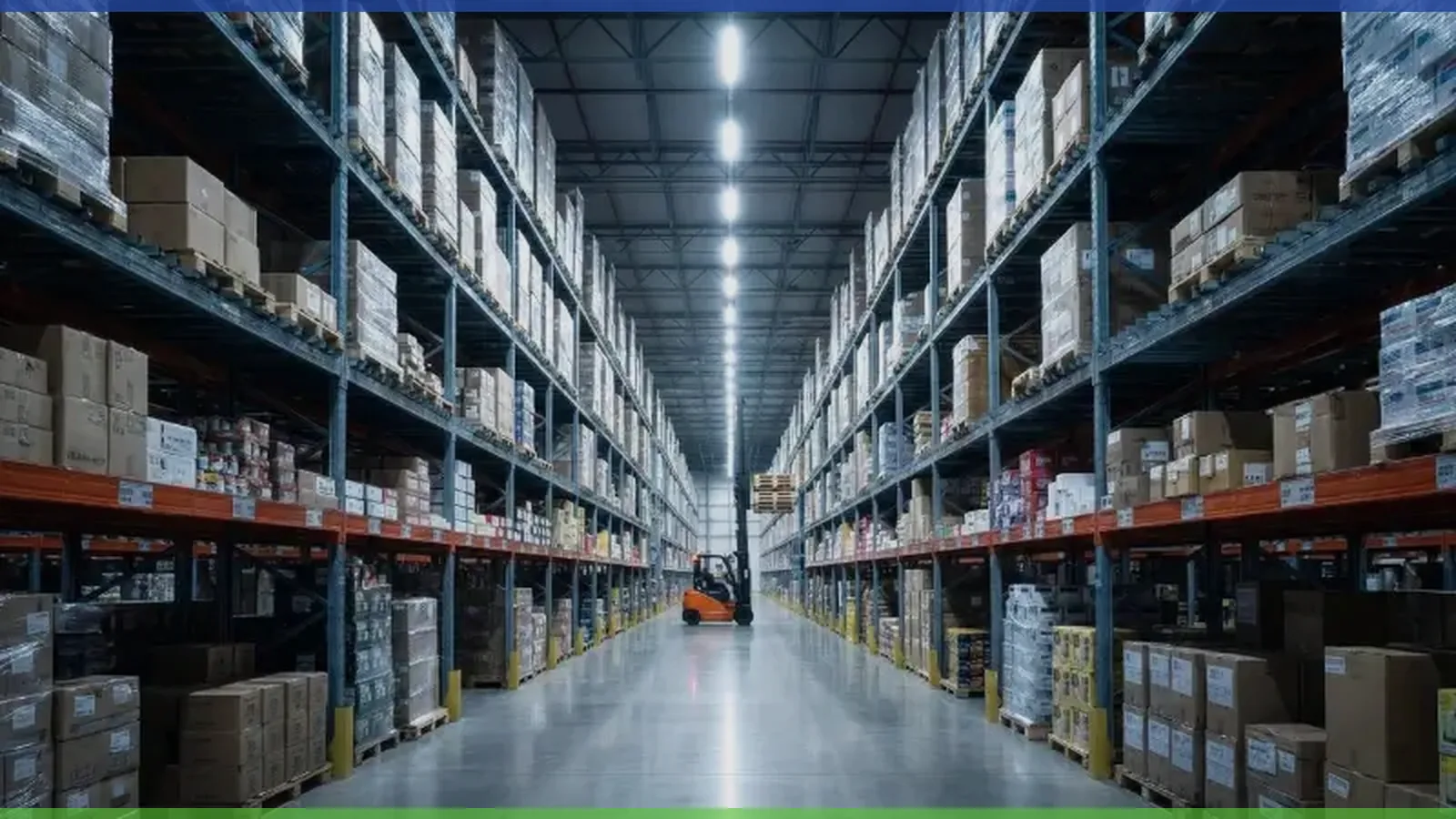
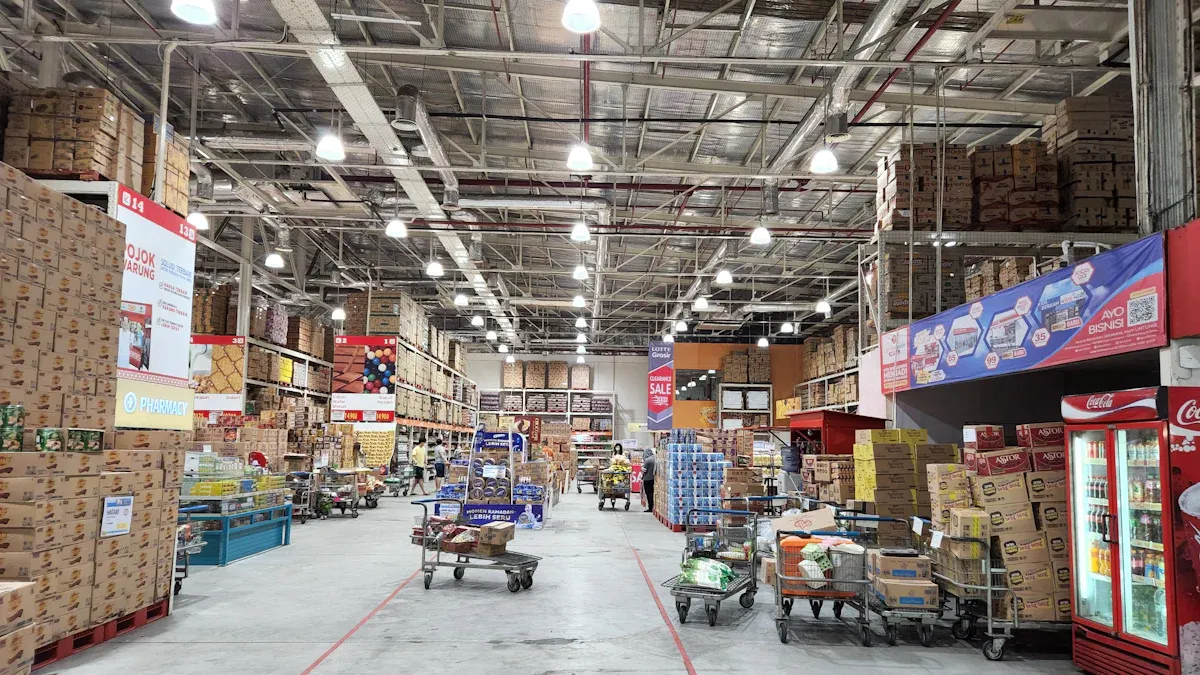
High bay fixtures are engineered for high-clearance environments such as distribution centers and heavy manufacturing plants. Because the light source is far from the working plane, these luminaires require high-wattage LED engines and specialized optics to maintain uniform foot-candles. Modern LED high bay lighting often features a linear form factor to align with warehouse racking, ensuring that light reaches the bottom levels of every aisle.
What Is Low Bay Lighting?
Low bay lighting is designed for “intimate” industrial spaces where ceilings range from 12 to 20 feet. These areas include packing stations, mezzanine offices, and workshops. The primary challenge in low bay design is avoiding direct glare, as the light source is closer to the worker’s line of sight. These fixtures often utilize frosted diffusers and wide beam angles to create a comfortable, low-glare environment.
|
Category |
Ceiling Height |
Typical Wattage |
Lumen Output |
|---|---|---|---|
|
High Bay |
20ft – 45ft+ |
150W – 400W |
15,000 – 60,000 lm |
|
Low Bay |
12ft – 20ft |
60W – 100W |
8,000 – 15,000 lm |
Technical Comparisons: Optics and Distribution
The fundamental difference in high bay vs. low bay solutions lies in how they manage the light beam. High bay lighting must overcome the inverse square law of light, which states that intensity drops significantly as distance increases.
Beam Angles and Intensity
High bay luminaires utilize narrow optics (60° or 90°). This concentrated beam ensures that the luminous flux is directed exactly where it is needed—on the racks and floor—rather than being wasted on the upper walls. Conversely, low bay lighting utilizes a 120° beam angle. This prevents “hot spots” and ensures that the entire area is flooded with a soft, uniform glow that reduces eye strain during detail-oriented tasks like picking or assembly.

Operational Efficiency and ROI
In a 24/7 warehouse environment, lighting is one of the highest operating expenses. Upgrading to advanced LED technology is a strategic financial move. Standard UFO or linear LED high bays consume 70% less energy than legacy metal halide or T5 fluorescent fixtures.
The Power of Intelligent Controls
The integration of smart sensors is where modern facilities achieve maximum ROI. Networked controls and Daylight Harvesting can reduce energy bills by an additional 20-60%.
-
Occupancy Sensing: Lights remain dimmed or off until a forklift or worker is detected, significantly extending the fixture’s service life.
-
Zonal Control: Grouping fixtures allows facility managers to reprogram lighting patterns as warehouse layouts change, providing unmatched operational agility.
-
Heat Management: Advanced aluminum heat sinks prevent “thermal droop,” ensuring that the LEDs maintain their rated brightness (L70) for up to 100,000 hours.
“Effective thermal management is the silent protector of industrial lighting. By drawing heat away from the chips, we ensure that a fixture installed today will maintain 70% of its brightness for over a decade.”
Durability: IP and IK Ratings
Warehouses are harsh environments characterized by dust, humidity, and mechanical risks. Industrial luminaires must be engineered for resilience. Vapor-tight and tri-proof housings are essential in these settings.
|
Standard |
Rating |
Industrial Benefit |
|---|---|---|
|
Ingress Protection |
IP65 / IP66 |
Complete seal against dust and high-pressure water jets. |
|
Impact Resistance |
IK10 |
Withstands 20 joules of impact (standard for forklift areas). |
|
Safety Factor |
Shatterproof |
Solid-state components won’t shatter like glass tubes. |
Practical Steps to Choosing Your Lighting Strategy
-
Conduct a Lux Audit: Determine the required brightness for each zone. IES recommends 10-20 foot-candles for bulk storage and 30-50 foot-candles for picking/packing.
-
Measure Vertical Clearance: Use high bay narrow optics for heights above 20ft to avoid light scattering.
-
Assess Environmental Hazards: If the facility is dusty or requires hosedowns, prioritize IP66-rated linear luminaires.
-
Plan for Automation: Ensure fixtures are compatible with DALI 2.0 or integrated microwave sensors to future-proof the investment.
-
Evaluate Color Accuracy: For printing or textile zones, choose high CRI (Ra > 90) to ensure accurate color discrimination.
Conclusion: A Productive Luminous Environment
Choosing between high bay and low bay linear lights is more than a technical formality—it is an investment in human performance and asset longevity. By prioritizing lighting quality and matching optics to ceiling height, you create a safer, more efficient workspace. As industrial LED technology continues to advance, the move toward integrated, sensor-controlled luminaires remains the most effective path to sustainability and cost-efficiency.
Frequently Asked Questions (FAQ)
1. Can I use high bay lights on a low ceiling?
It is not recommended. Using a high bay fixture on a low ceiling creates intense glare and “hot spots” that cause visual discomfort. Low bay fixtures with wider, diffused beams are much safer and more effective for heights under 20 feet.
2. What are the energy savings when switching from fluorescent to LED high bays?
Facilities typically see a 50% to 75% reduction in electricity bills. When sensors and dimming are integrated, the savings can exceed 80% due to the elimination of “idle burn” time.
3. Why are linear high bays preferred over round UFO bays in warehouses?
Linear high bays are designed to mirror the shape of warehouse aisles. They provide a rectangular light distribution that focuses light down the racks and aisles, whereas UFO bays have a circular throw that wastes light on top of the racking.
4. How often do LED warehouse fixtures need maintenance?
High-quality LEDs are virtually maintenance-free for 50,000 to 100,000 hours. The only routine maintenance required is periodic cleaning of the lenses to prevent dust-related lumen loss.
5. Is daylight harvesting effective in a warehouse with few windows?
Even if windows are limited, skylights provide significant natural light. Sensors can dim fixtures near these light sources, providing consistent “Lux” levels while reducing energy draw throughout the day.