In the competitive world of commercial real estate and facility management, lighting is often viewed as a fixed utility cost. However, the shift toward demand-driven illumination is transforming parking garages from energy-heavy liabilities into high-efficiency assets. By integrating Fanxstar motion sensor lights, facility managers can replace static expenses with a dynamic system that responds to real-time occupancy. This technical guide explores the components of smart parking illumination and provides a step-by-step framework for calculating your Return on Investment (ROI).
Key Takeaways
-
Demand-Driven Efficiency: Smart sensors ensure lights only operate at full capacity when needed, reducing electricity consumption by 60% to 90%.
-
Financial Performance: A typical ROI for a large-scale parking upgrade yields a payback period of 12 to 30 months.
-
Enhanced Security: Instant-on microwave sensing deters unwanted activity and provides immediate visual comfort for pedestrians and drivers.
-
Durability in Harsh Zones: Fanxstar’s IP65/IP66 rated aluminum and acrylic housings withstand salt, humidity, and extreme temperature fluctuations.
-
Maintenance Elimination: Solid-state LED technology removes the need for frequent bulb and ballast replacements, significantly lowering OPEX.
Redefining ROI for Modern Parking Facilities
Return on Investment (ROI) in a parking context is no longer just about the energy bill. A comprehensive analysis must account for the reduction in Operating Expenses (OPEX) and the potential increase in revenue through improved guest satisfaction. Traditional garages suffer from “always-on” waste—illuminating empty aisles 24/7. Smart lighting converts this waste into measurable savings.
Primary ROI Cost Drivers:
-
OPEX Reduction: Lower kWh usage and the elimination of the “relamping cycle.”
-
Asset Longevity: Modern LEDs, such as those used in Fanxstar systems, carry 50,000+ hour ratings, lasting up to 5 times longer than legacy fluorescents.
-
Liability Mitigation: Uniform, flicker-free lighting reduces the risk of accidents and the associated legal costs.
|
Facility Metric |
Traditional Lighting |
Fanxstar Smart LED |
|---|---|---|
|
Operation Mode |
100% Intensity (Static) |
Demand-Driven (Variable) |
|
Annual Maintenance |
High (Bulb/Ballast Failure) |
Near Zero (Solid-State) |
|
Standby Energy Use |
N/A |
~1W per Sensor |
|
Safety Response |
Constant but Dim over time |
Instant Full Brightness |
The Engineering Behind Motion Sensing
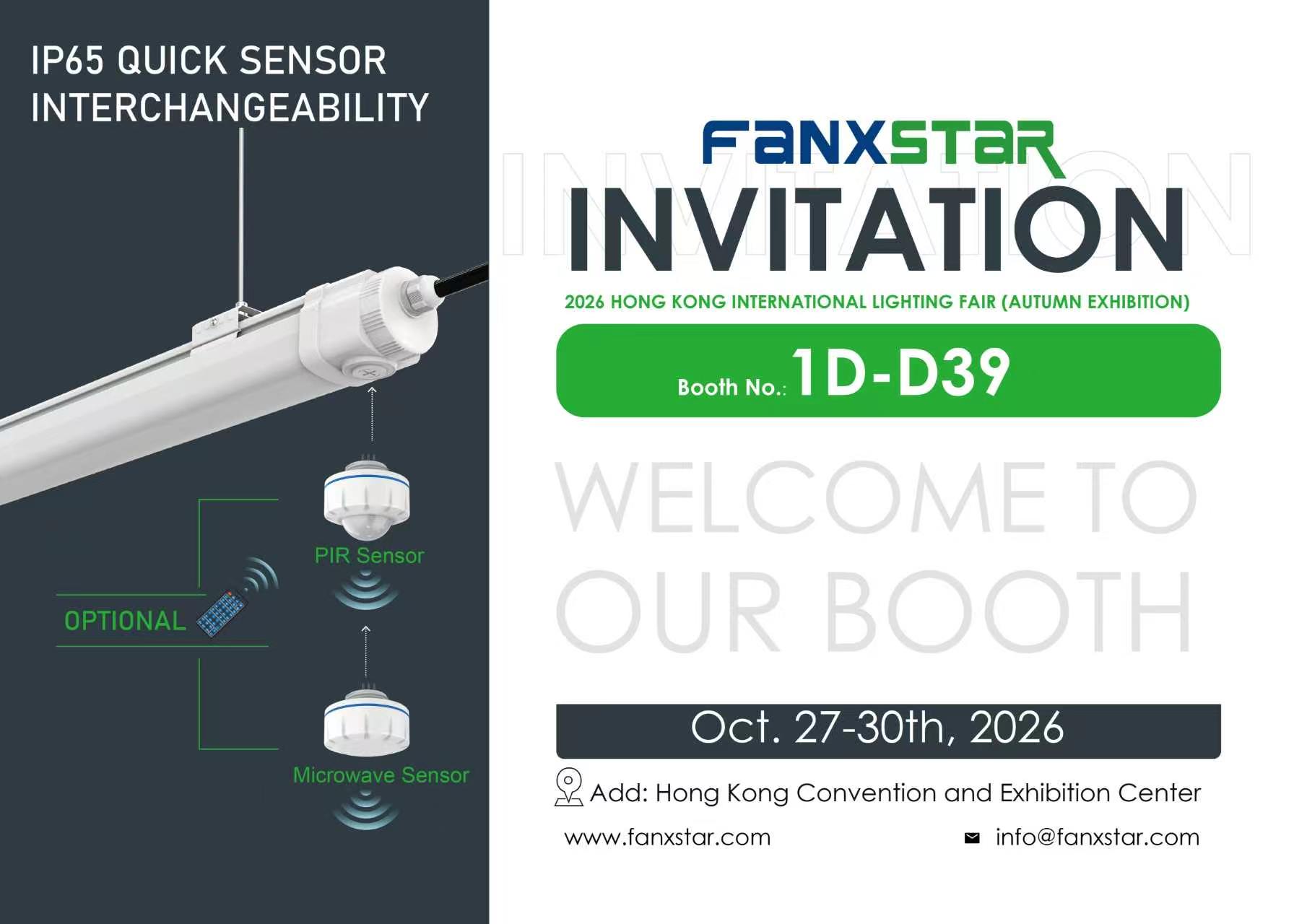
Success in smart parking depends on the type of sensing technology utilized. Fanxstar utilizes Dual-Tech Microwave Sensing, which offers distinct advantages over standard Passive Infrared (PIR) sensors commonly found in home security lights.
Microwave vs. PIR: Why Industrial Environments Demand More
PIR sensors detect heat signatures and require a direct line of sight. In a concrete garage with many pillars, PIR sensors often suffer from “blind spots.” In contrast, Microwave sensors emit high-frequency waves that can detect movement through thin obstacles and around corners. This ensures that the light reaches 100% intensity before a vehicle enters the next aisle.
“Microwave sensing acts like a proactive guide for the driver, whereas PIR is often reactive, turning on only after the person has already entered the dark zone.”
Integrated Features: Daylight Harvesting and RF Grouping
Modern parking lighting is part of a networked ecosystem. Fanxstar fixtures include:
-
Daylight Harvesting: Fixtures near ramps or open-deck edges measure ambient sunlight and prevent artificial light from activating during the day, saving an additional 20-30%.
-
RF Grouping: Using Radio Frequency technology, when one sensor is triggered, it communicates with the next group of lights. This creates a “light path” that follows the car, maximizing safety without needing to illuminate the entire facility.
Calculating Your ROI: A Step-by-Step Step Framework
To justify a capital expenditure, facility managers must provide a data-backed case. Use the following steps to build your financial model.
Step 1: Establishing the Baseline (Current Costs)
Calculate your current annual spend by multiplying the total wattage of your fixtures by your local utility rate and the total hours of operation. Do not forget to include the estimated labor cost of monthly bulb replacements.
Step 2: Identifying the Project Costs (CAPEX)
This includes the purchase price of the Fanxstar fixtures and the installation labor. Note that Fanxstar’s quick-connect design can reduce installation labor time by up to 40% compared to traditional hard-wired units.
Step 3: Calculating Annual Savings
Factor in the 60-70% reduction in kWh. For a 600-space garage, energy savings alone often exceed $30,000 annually. Add the “Avoided Maintenance” cost—the money you will no longer spend on lift rentals and ballast replacements.
Step 4: The Standard ROI Formula
ROI = [(Annual Savings – Initial Investment) / Initial Investment] x 100%
|
Scenario Component |
Estimated Value (Standard 500-unit Garage) |
|---|---|
|
Initial Investment (Fixtures + Install) |
$100,000 |
|
Annual Energy Savings (70% Reduction) |
$32,000 |
|
Avoided Maintenance (Labor/Parts) |
$8,000 |
|
Rebates & Tax Credits |
$15,000 |
|
Simple Payback Period |
~2.1 Years |
Financial Incentives: Utility Rebates and Section 179D
In the United States, several federal and local programs can significantly lower the upfront costs of a Fanxstar LED upgrade. The Section 179D Tax Deduction allows commercial building owners to deduct the cost of energy-efficient systems up to $5.00 per square foot. Furthermore, many utility providers offer prescriptive rebates for DLC (DesignLights Consortium) certified products, often covering $10 to $25 per fixture.
Maintenance and Long-Term Durability
Underground garages are harsh environments. Corrosive vehicle exhaust, high humidity, and dust can degrade cheap electronics. Fanxstar fixtures are engineered with aluminum and acrylic components to provide structural strength and resist “yellowing.”
-
IP65/IP66 Waterproofing: Protects against moisture ingress during humid summer months and power-washing cycles.
-
Shatterproof Housing: Reduces the risk of injury from accidental impact.
-
Self-Testing Diagnostics: Modern Fanxstar fixtures perform automated emergency tests, drastically reducing the manual labor required for safety compliance.
Frequently Asked Questions (FAQ)
1. How much energy can Fanxstar motion sensor lights really save?
Depending on the current system (e.g., T8 or Metal Halide), Fanxstar lights typically reduce energy consumption by 60% to 70%. When occupancy sensors are tuned correctly, total savings can reach 90% in low-traffic storage areas.
2. Will frequent switching damage the LED driver?
No. Unlike traditional fluorescent lamps which degrade with every “hard start,” Fanxstar LEDs are solid-state and designed for millions of switching cycles without a reduction in lifespan.
3. Are smart sensors difficult to install in an older garage?
Not with Fanxstar. Our fixtures utilize high-voltage splicing and quick connectors, allowing them to be installed into existing conduits with minimal rewiring.
4. Do motion sensors affect pedestrian safety?
They actually improve it. Instant illumination provides a psychological sense of safety and ensures that security cameras have clear, high-contrast footage the moment a person is detected.
5. Can I get a personalized ROI analysis for my property?
Absolutely. The Fanxstar technical team provides customized energy audits and ROI calculations based on your facility’s specific layout and local utility rates.