High-traffic corridors in airports, hospitals, and commercial offices are the circulatory system of a building. When motion sensors in these areas are poorly calibrated, the results are more than just a minor annoyance. Excessive false triggers waste thousands of dollars in energy annually, while “dead zones” where lights fail to activate create significant safety and security liabilities. Professional calibrating of motion sensors is a technical necessity that ensures a balance between visibility for occupants and operational efficiency for facility managers.
Research indicates that precise sensor optimization can reduce lighting energy consumption by up to 60% in public corridors. However, achieving these results requires a deep understanding of sensor physics—specifically the differences between Passive Infrared (PIR) and Microwave technologies—and a structured approach to setting detection thresholds, hold times, and grouping logic.
Key Takeaways
-
PIR vs. Microwave: Use PIR for direct line-of-sight detection and Microwave for long corridors or areas with lightweight partitions.
-
Sensitivity Thresholds: Calibrate sensitivity to distinguish between human movement and environmental factors like HVAC airflow.
-
Hold Time Logic: Set a minimum 3-5 minute hold time in corridors to prevent “strobing” effects that irritate occupants.
-
RF Grouping: Implement sequential activation (Follow-Me lighting) to ensure a safe path of light ahead of a walking person.
-
Maintenance Cycle: Perform sensor audits every 6 months to account for furniture changes or lens dust accumulation.
Technical Deep Dive: Sensor Selection for Corridors
Understanding the Physics of Detection
In high-traffic areas, the choice of sensor technology is the first step in successful calibration. Motion sensor lighting generally utilizes two primary methods:
-
Passive Infrared (PIR): These detect the movement of heat signatures across defined zones. They are excellent for preventing false triggers from wind or moving objects, but they require a clear line of sight. If a person walks behind a pillar or a high-back sofa in a lounge corridor, the PIR sensor will “lose” them.
-
Microwave (Active): These emit low-power microwave pulses and measure the reflection off moving objects (the Doppler Effect). They are much more sensitive and can “see” through thin walls or around corners. However, they are prone to being triggered by vibrating pipes or large HVAC fans if not calibrated correctly.
|
Sensor Type |
Detection Principle |
Best Corridor Application |
|---|---|---|
|
PIR |
Heat signature delta |
Small lobbies, restroom entries |
|
Microwave |
Doppler reflection |
Long warehouse aisles, tunnels |
|
Dual Technology |
PIR + Ultrasonic/Microwave |
Critical safety zones, hospitals |
Calibrating for Accuracy: The Step-by-Step Protocol
A systematic calibration process is essential for high-performance corridors. Follow this technical guide to ensure 100% detection reliability.
Step 1: Establishing the Detection Perimeter
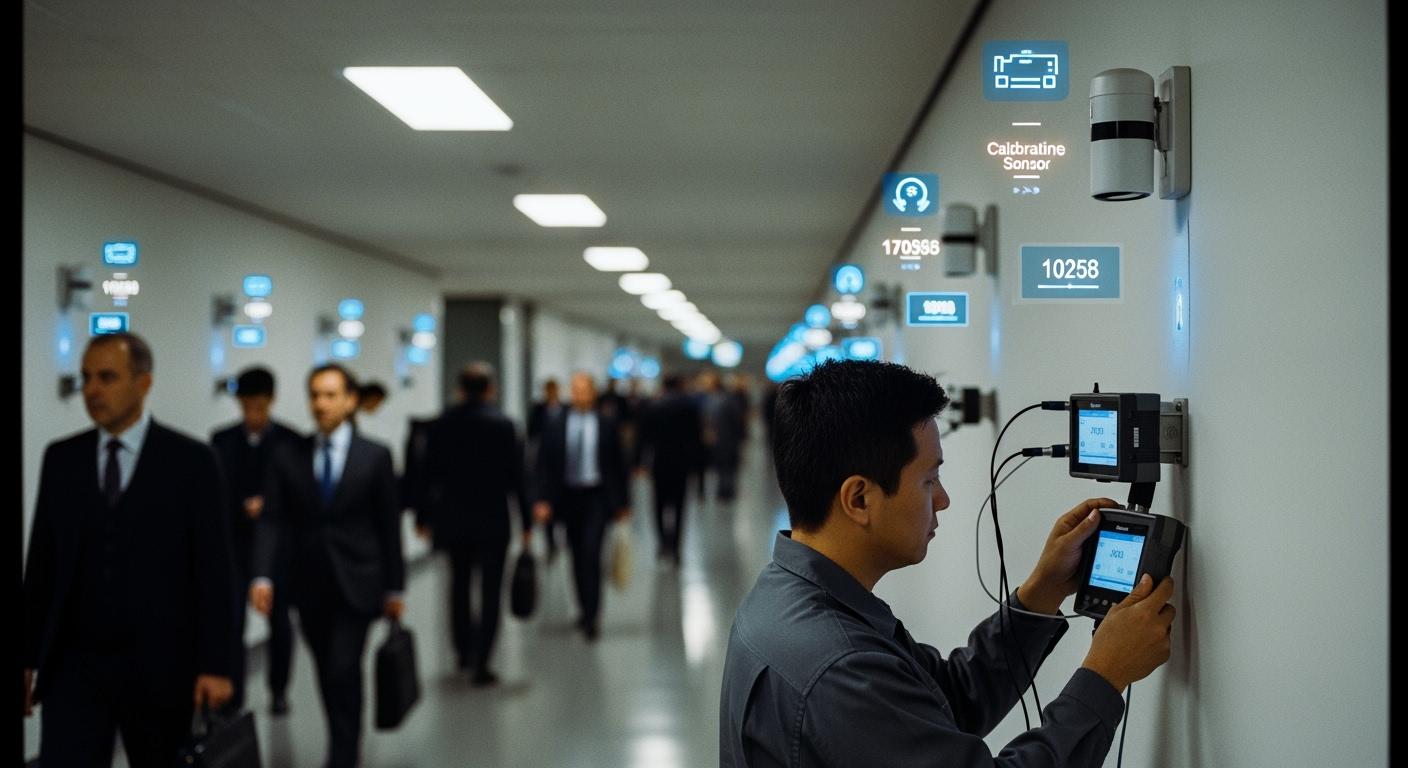
Start by identifying the “Max Detection Zone.” In a long corridor, a microwave sensor might have a range of 15 meters. Use a laser distance meter to mark 5-meter intervals. Have a technician walk at a normal pace (approx. 1.2 m/s) from the far end of the corridor toward the sensor. The light should activate when the person enters the target zone. If it triggers too early (detecting people in adjacent rooms), reduce the sensitivity by 20% increments.
Step 2: Optimizing Hold Time and Stand-by Dimming
One of the most common complaints in commercial corridor lighting is the frequent “off” cycle while people are still in the area but moving slowly. For high-traffic zones, we recommend a “Hi-Low” strategy:
-
Hold Time: 3 to 5 minutes at 100% brightness.
-
Stand-by Period: Instead of turning off, the lights dim to 10% or 20% for safety.
-
Stand-by Duration: Can be set to “Infinite” in high-security areas, or 10 minutes for energy-saving goals.
Step 3: RF Grouping and Sequential Pathing
For long corridors, activating only the light directly above a person creates a “spotlight” effect that is uncomfortable. Advanced Fanxstar fixtures support RF Grouping. When one sensor detects motion, it sends a wireless signal to the next three fixtures in the run. This creates a “carpet of light” that stays 10 meters ahead of the user, significantly improving the user experience and perceived safety.
Environmental Factors and False Trigger Mitigation
In high-traffic areas, sensors are bombarded with environmental noise. To maintain accuracy, installers must address the following:
-
Airflow Interference: PIR sensors can be fooled by rapid temperature changes from HVAC vents. Ensure sensors are at least 1.5 meters away from air diffusers.
-
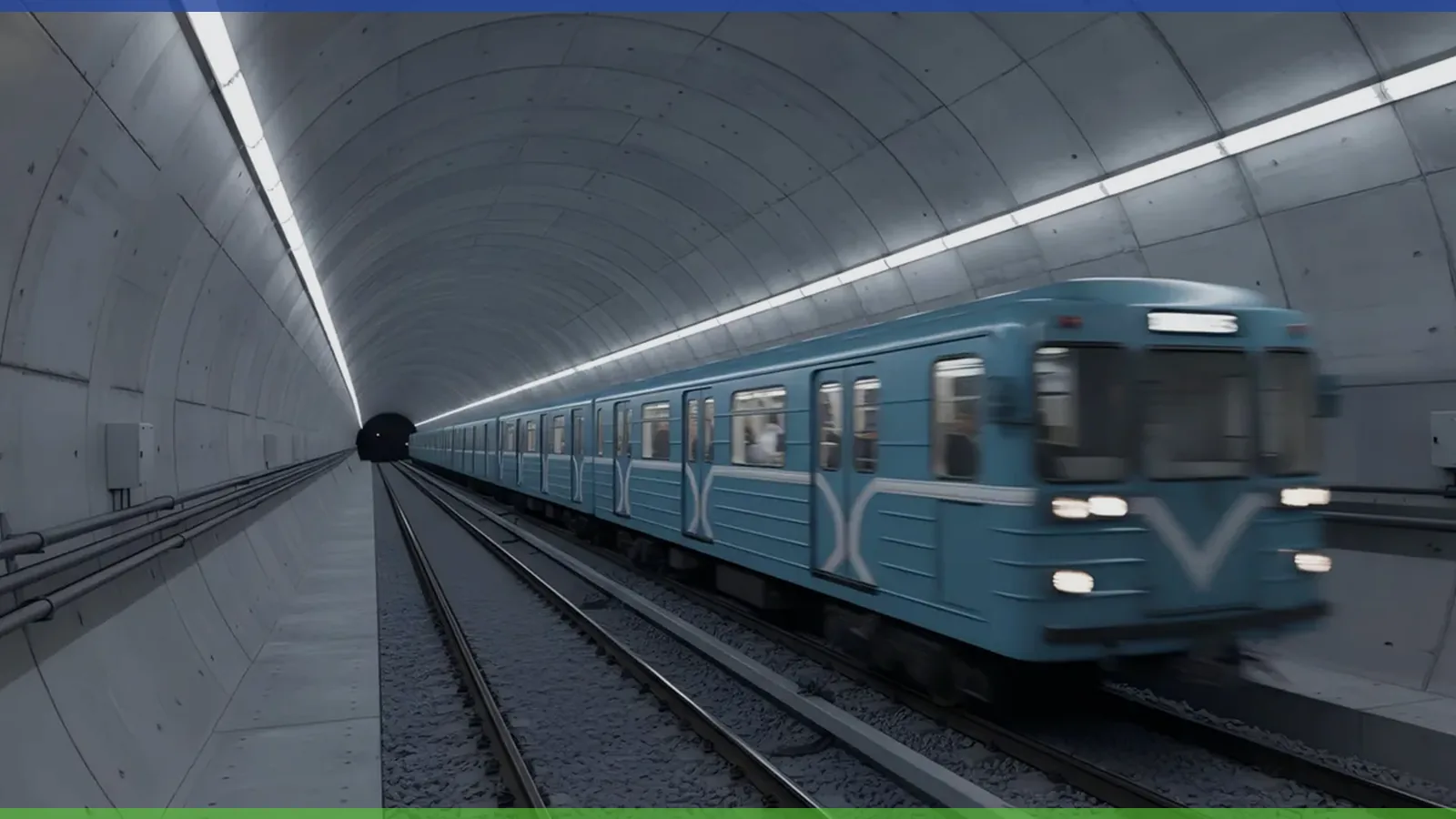
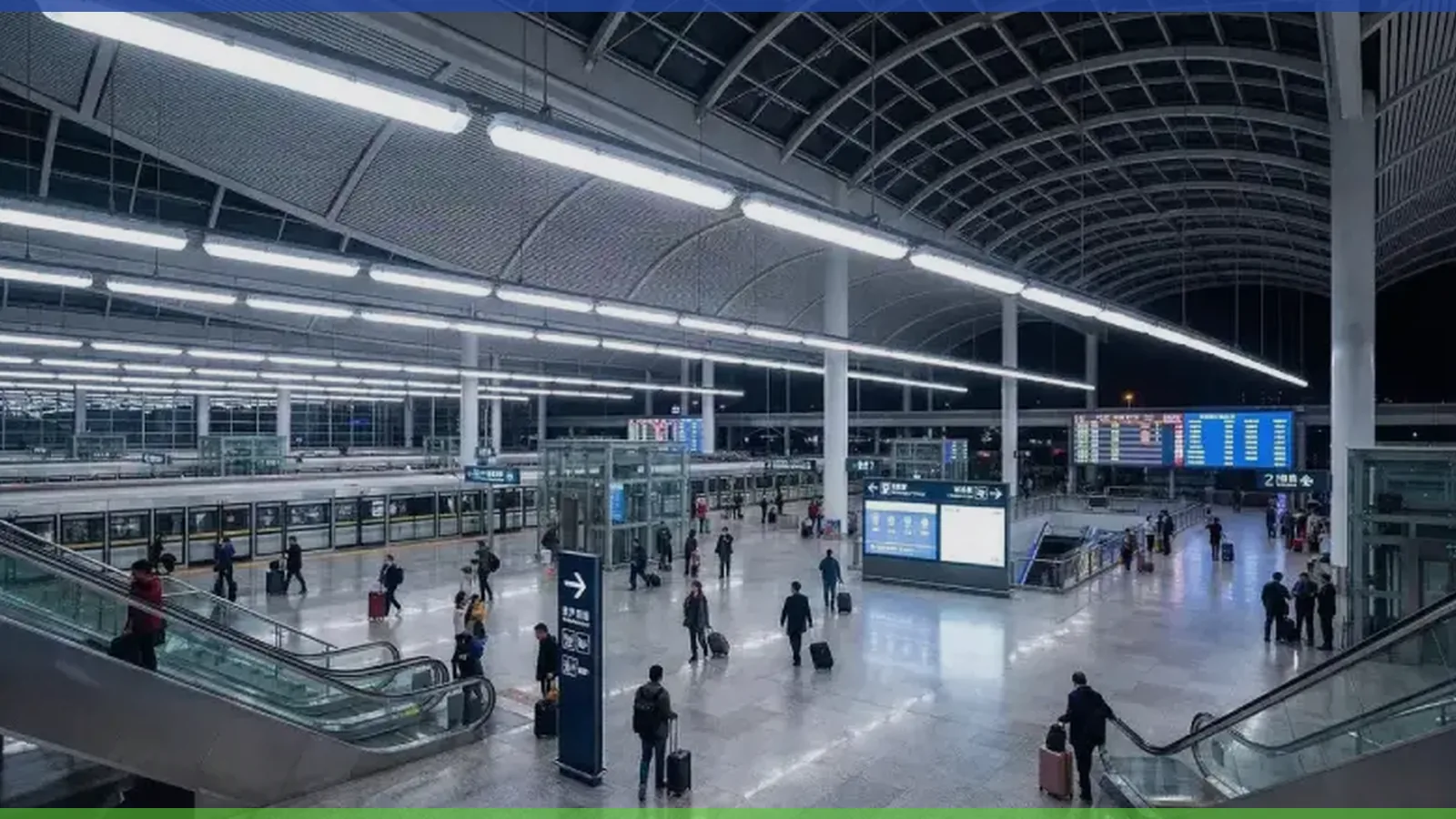
Vibration Control: Microwave sensors in airports or train stations can be triggered by structural vibrations. Calibrate the “Detection Threshold” to ignore small-amplitude vibrations while still responding to human-sized movements.
-
Daylight Harvesting: Integrate dual-photosensors. If the corridor has skylights or large windows, the system should be calibrated to remain off (or at a dimmed level) when the ambient light exceeds 150 lux, regardless of motion.
“The goal of corridor calibration is to make the lighting feel intuitive—like it’s anticipating your arrival rather than reacting to it.”
Building Management System (BMS) Integration
Modern sensors do more than switch lights; they act as data nodes. By integrating sensors into a DALI-2 or ZigBee-based BMS, facility managers can monitor “Occupancy Density.” If a specific corridor is rarely used during certain hours, the hold times can be shortened via software without the need for a technician to visit each fixture. This data-driven maintenance approach is the cornerstone of the modern smart building.
|
Calibration Setting |
Default Value |
Optimized Corridor Value |
|---|---|---|
|
Sensitivity |
100% |
75% (to prevent wall penetration) |
|
Hold Time |
30 Seconds |
3 – 5 Minutes |
|
Daylight Threshold |
Disable |
50 – 100 Lux |
|
Stand-by Dim Level |
0% (Off) |
10 – 20% (Safety) |
Maintenance Protocols for High-Traffic Sensors
-
Lens Cleaning: In dusty warehouse corridors, a layer of grime on a PIR Fresnel lens can reduce detection range by 50%. Clean with an anti-static cloth every 6 months.
-
Re-calibration after Renovations: If new partitions or signage are installed in a corridor, the microwave reflections will change. A full walk-test should be conducted to ensure no new dead zones were created.
-
Battery Checks: For wireless sensors, monitor battery health via the BMS dashboard to prevent sudden system failure.
Research published on arXiv regarding sensor density suggests that even a small reduction in sensor accuracy can exponentially increase the “error rate” in smart building logic. Therefore, routine verification is as important as the initial setup.
Conclusion: Efficiency Without Compromise
Calibrating motion sensors for high-traffic corridors is a delicate balance of engineering and user psychology. By moving away from “out-of-the-box” settings and implementing customized sensitivity, hold times, and grouping logic, facility managers can achieve substantial energy savings while providing a safe, well-lit environment. Utilizing professional-grade fixtures with integrated microwave sensors and remote commissioning tools allows for a future-proof lighting infrastructure that adapts to the changing needs of the modern workplace.
FAQ
Can microwave sensors see through concrete walls?
No. While they can penetrate drywall, glass, and thin wood, they cannot see through dense concrete or metal. This is useful for “containing” the detection within a specific hallway.
Why do my corridor lights keep flickering on and off?
This is usually due to a hold time that is set too short (e.g., 5 seconds). If a person stops to check their phone, the sensor thinks the area is vacant. Increase the hold time to at least 90 seconds.
Can I calibrate sensors using my smartphone?
Many modern smart sensors (like those from Fanxstar) can be calibrated via a dedicated IR remote control (MR003) or a Bluetooth app, allowing you to make adjustments from the ground without a ladder.
Is PIR better for energy saving than Microwave?
PIR consumes slightly less power as a component, but Microwave is often more effective at saving energy overall because it provides more reliable occupancy data, ensuring lights are never on when a corridor is truly empty.
How do I stop a sensor from detecting movement in an elevator?
This is a common issue with microwave sensors. You should adjust the “Detection Range” setting downward until the sensor only detects motion within the corridor, ignoring the movement behind the elevator doors.