The industrial landscape is undergoing a digital and luminous transformation. As we look toward 2026, the sector is moving beyond simple LED adoption and entering an era of digitized luminous infrastructure. For facility managers and engineers, the goal has shifted from “switching to LED” to “integrating smart ecosystems.” Advanced breakthroughs in semiconductor efficacy, 24G mmWave presence sensing, and modular system architectures are redefining the Total Cost of Ownership (TCO) and creating facilities that are safer, greener, and more autonomous. This guide analyzes the high-stakes trends shaping the next generation of industrial illumination.
Key Takeaways
-
Efficacy Breakthroughs: 2026 benchmarks expect industrial LEDs to exceed 200 lm/W, providing a 15% uplift in efficiency over current high-performance models.
-
Sensing Evolution: 24G presence sensing and Dual-PD daylight harvesting utilize radar technology to ensure lighting is 100% demand-driven, even through obstacles.
-
IoT Connectivity: DALI 2.0 and wireless RF grouping allow for centralized facility monitoring, enabling predictive maintenance and energy optimizations in real-time.
-
Modular Hardware: Tool-free quick-connect systems and DIP switches for CCT/Wattage adjustment slash installation labor by up to 70% and minimize SKU stress.
-
Emergency Reliability: Transitioning to LiFePO4 battery chemistry ensures 90-minute safety compliance even in extreme temperature zones (-40°C to +60°C).
Autonomous Energy Management: The Reactive Building
The core trend of 2026 is the elimination of “idle burn”—the energy wasted when lights are on in empty zones. Luminous infrastructure is becoming an autonomous subsystem that responds to environmental variables without manual intervention. By integrating with Building Management Systems (BMS), industrial lighting now functions as a data-gathering network that supports both visibility and facility-wide safety.
|
Control Strategy |
Physical Mechanism |
Projected Energy ROI |
|---|---|---|
|
Occupancy-Based |
24G mmWave Precision Sensing |
40% – 60% Reduction |
|
Daylight Harvesting |
Dual-PD Spectral Recognition |
25% – 40% Reduction |
|
Networked Scheduling |
DALI 2.0 / IoT Interconnectivity |
15% – 25% Reduction |
|
Combined Smart Logic |
Autonomous Infrastructure |
Up to 85% Total Savings |
Daylight Harvesting and Dual-PD Sensors
Modern daylight harvesting systems utilize Dual-PD (Photodiode) sensors to solve a common technical hurdle: distinguishing between natural sunlight and the fixture’s own LED output. Research published in ScienceDirect indicates that fine-tuning these sensors can reduce lighting demand by 27% in buildings with high architectural daylight provision. This precision ensures that artificial light is only used to “fill the gap,” maintaining a constant 500-lux target at the work plane while minimizing grid draw.
The IoT Era: DALI 2.0 and Networked Intelligence
The shift to DALI 2.0 (Digital Addressable Lighting Interface) has expanded the scalability of industrial networks. Unlike original digital systems limited to 64 devices, DALI 2.0 allows facility managers to monitor up to 512 nodes per line. This bidirectional communication facilitates “Predictive Maintenance,” where a fixture can report a driver temperature spike or a battery fault before an actual failure occurs.
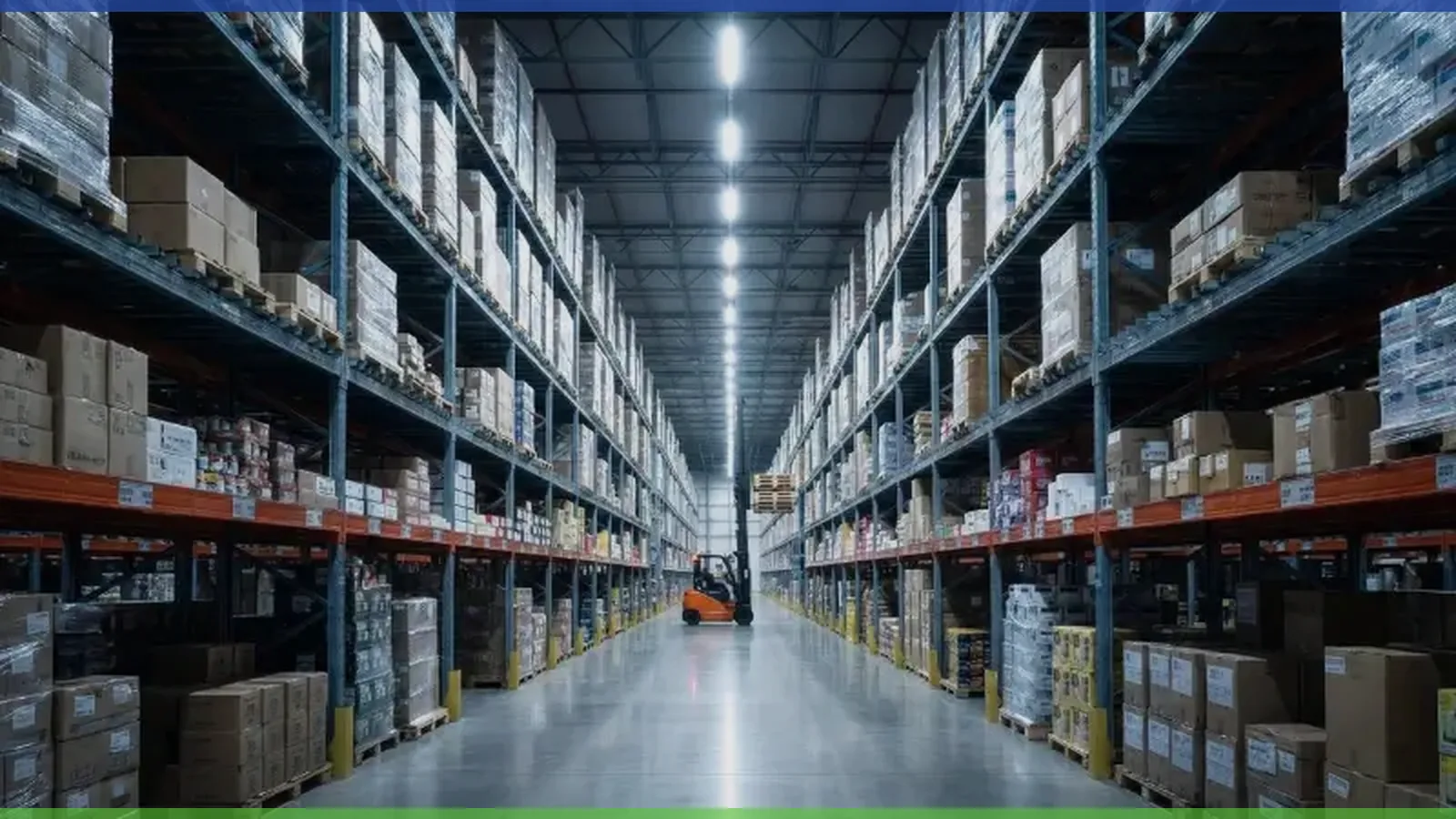
RF Grouping and “Motion Tracking”: Wireless Radio Frequency (RF) technology allows fixtures to be grouped into zones. When a forklift triggers a sensor in Aisle A, the system proactively illuminates Aisle B, ensuring the worker never enters a dark space. This “follow-me” lighting logic provides a safer visual environment and reduces the neurological fatigue associated with sudden light/dark transitions.
Semiconductor Breakthroughs: Reaching 200 lm/W
In 2023, the industry standard for high bay LED lights was roughly 130 lm/W. By 2026, Fanxstar’s high-efficacy models will push the 200 lm/W threshold. This advancement allows facilities to achieve target lux levels with lower wattage luminaires, which directly impacts the HVAC cooling load. For every kilowatt-hour saved on lighting, facilities typically save an additional 0.3 kWh on air conditioning because less heat is being introduced into the environment.
|
Performance Benchmark |
Legacy Standard (2023) |
2026 Projections |
Improvement Uplift |
|---|---|---|---|
|
Luminous Efficacy |
130 lm/W |
165 – 205 lm/W |
~25% Efficacy Gain |
|
Rated Lifespan (L80B10) |
50,000 hrs |
100,000 hrs |
100% Longevity Increase |
|
Smart Integration Rate |
35% of installs |
80% of installs |
Standardized Intelligence |
|
Installation Time |
15 min / Unit |
< 4 min / Unit |
73% Labor Reduction |
“Replacing just 1% of standard building lighting with 200 lm/W LEDs can prevent over 7 million metric tons of CO2 emissions annually. The future is not just brighter; it is fundamentally more sustainable.”
Modular Engineering: Solving SKU Stress
Large facilities often struggle with the complexity of maintaining dozens of different lighting models. Modular linear lighting design solves this through SKU Consolidation. A single fixture can now replace 12 to 18 traditional models by utilizing DIP switches that allow installers to adjust both the wattage (power output) and the Correlated Color Temperature (CCT) on-site.
-
Tool-Free Maintenance: Modular systems allow for driver or battery replacements in seconds without specialized tools, minimizing downtime in 24/7 logistics centers.
-
Flexible Mounting: Universal brackets support surface, suspended, or recessed mounting from the same housing.
-
Seamless Splicing: High-voltage internal harnesses allow up to 30 units to be linkable in a single run, reducing electrical conduit requirements by 60%.
Resilience in Extremes: Specialty Spectra and Durability
Industrial lighting is increasingly becoming application-specific. In vertical farming, spectra are tuned to stimulate carotenoid production. In fresh food processing, “Fresh Light” spectra (4000K + 660nm Red) enhance product vibrance while preventing the photooxidation that leads to spoilage. For extreme cold storage (-40°C), Fanxstar has developed fixtures using AL6063 aluminum substrates that prevent thermal contraction cracks while maintaining instant-on brightness.
Safety Standards and Global Compliance
Sustainability and legal compliance are converging. The industrial lighting market is projected to reach $20.5 billion by 2035, driven by strict energy mandates. Adherence to ATEX (hazardous gas), IP69K (high-pressure washdown), and IK10 (impact) standards ensures that fixtures remain functional in the most hostile environments. Certified luminaires reduce insurance premiums and mitigate the risk of catastrophic facility failure.
Next-Gen Emergency Reliability: The Switch to LiFePO4
2026 marks the definitive shift toward Lithium Iron Phosphate (LiFePO4) batteries for emergency systems. Compared to old Ni-Cd packs, LiFePO4 handles 2,000+ charge cycles and maintains 90-minute discharge capability across a wider temperature range. When paired with automated self-testing modules, the maintenance burden for safety compliance drops by nearly 40%.
Summary: Building a Future-Ready Lighting Strategy
The implementation of high-standard industrial lighting is a multi-step investment in a facility’s long-term performance. To stay competitive in 2026, managers should prioritize these actionable steps:
-
Audit for Efficacy: Replace fixtures under 130 lm/W with modular systems capable of reaching 185+ lm/W.
-
Leverage Incentives: Utilize government rebates and tax deductions (like the US $25-$50 per fixture bonus for networked controls) to lower CAPEX.
-
Integrate IT & OT: Bridge the gap between information and operational technology by deploying digitized systems for autonomous monitoring.
-
Focus on TCO: Evaluate potential upgrades based on total cost of ownership, including avoided labor and reduced HVAC loads.
Frequently Asked Questions (FAQ)
What is daylight harvesting in industrial lighting?
Daylight harvesting utilizes photosensors to monitor ambient natural light. The system automatically dims artificial LED sources when sunlight is sufficient, maintaining a consistent lux level while drastically reducing electricity costs.
How do modular LED fixtures reduce inventory stress?
By using integrated DIP switches for CCT and wattage control, one modular fixture can replace multiple SKUs. This allows facility managers to stock fewer parts while remaining flexible for varied installation needs across the facility.
Why is LiFePO4 battery chemistry better for emergency lighting?
LiFePO4 batteries offer higher thermal stability, longer cycle life (2,000+ cycles), and faster recharge rates than Ni-Cd or Lead-acid. They are also environmentally safer and perform more reliably in extreme temperature environments.
What does “RF grouping” mean in smart lighting?
RF grouping utilizes wireless Radio Frequency signals to link fixtures into logical zones. This allows a sensor in one area to trigger a group of lights simultaneously, providing a proactive “path of light” for workers and vehicles.
Can smart lighting controls really reduce maintenance costs?
Yes. Through IoT integration and automated fault reporting, facility teams can identify issues immediately and schedule batch maintenance. This shift from reactive to predictive repair reduces maintenance labor by up to 35%.
Ready to modernize your facility for 2026? Explore Fanxstar’s Smart Industrial LED Portfolio and future-proof your ROI today.