For decades, High-Pressure Sodium (HPS) lamps were the standard for industrial agricultural lighting. However, as our understanding of avian physiology advances, it has become clear that HPS technology is inherently poorly suited for poultry production. Compared to modern LED systems, HPS lamps create a stressful environment that hinders growth, inflates operational costs, and compromises animal welfare. This guide explores the biological and economic reasons why transitioning to LED is critical for the success of modern poultry facilities.
Key Takeaways
-
Spectral Superiority: Unlike the narrow orange-red spectrum of HPS, LEDs provide a tailored spectral distribution that matches avian visual sensitivity, boosting skeletal and muscle development.
-
Thermal Efficiency: HPS lamps waste up to 75% of energy as heat, complicating heat stress management; LEDs run cool, improving bird comfort and Feed Conversion Ratio (FCR).
-
Stress Reduction: The high flicker rate of HPS lamps (perceived by birds but not humans) triggers chronic stress and aggression. Flicker-free LEDs promote a calm, productive flock.
-
Massive ROI: LED systems consume 50-70% less energy (40W vs 150W for equivalent output) and last up to 5 times longer, yielding a full return on investment within 18–24 months.
-
Sustainability: Transitioning to LED reduces carbon footprints and eliminates hazardous mercury disposal risks associated with legacy bulbs.
The Science of Avian Vision: Why HPS Fails
Understanding the physiological impact of lighting requires a shift from human-centric metrics to avian biology. While humans perceive light through trichromatic vision, poultry possess a more complex visual system that includes ultraviolet sensitivity and extra-retinal photoreceptors. HPS lamps are designed for human visibility, not bird health.
The Limitations of Monochromatic Orange-Red Light
HPS lamps emit a monochromatic orange-red glow (heavily concentrated in the 550nm to 650nm range). This fails to stimulate the full range of avian photoreceptors. Unlike poultry-optimized LEDs, which can be tailored to specific developmental stages, HPS lamps offer a “one-size-fits-all” approach that ignores the bird’s biological requirements.
|
Light Wavelength |
Biological Effect on Poultry |
|---|---|
|
Green Light (500–560 nm) |
Critical during brooding; promotes skeletal muscle satellite cell proliferation, accelerating early growth by up to 5%. |
|
Red Light (620–750 nm) |
Stimulates testosterone and estrogen; improves mating activity and egg production, but can cause aggression if over-saturated. |
|
Blue Light (400–480 nm) |
Inhibits melatonin, helping establish a robust circadian rhythm; reduces activity levels and stress in older birds. |

Heat Stress and Ventilation: The “Hidden Tax” of HPS
High-Pressure Sodium lamps convert only about 25-30% of their energy into visible light; the remainder is dissipated as infrared radiation. In a commercial poultry house, this excess heat acts as a disruptive force that directly compromises heat stress management.
Impact on Feed Conversion and Water Consumption
When birds are subjected to thermal discomfort from HPS “hot spots,” they divert energy away from muscle growth toward thermoregulation (panting). This severely impacts broiler performance and increases water intake, leading to wet litter and respiratory issues. Modern LED lighting systems offer high efficacy without the infrared load, allowing ventilation systems to focus on air quality rather than constant temperature suppression.
Flicker and Stress: The “Strobe Effect”
The flicker fusion threshold of a chicken’s eye is significantly higher than a human’s. We see a steady glow, but birds perceive the 50-60Hz oscillation of HPS lamps as a rapid strobe light. This constant oscillation triggers a “fight or flight” response.
-
Increased Aggression: Chronic stress leads to feather pecking and cannibalism.
-
Metabolic Tax: Birds divert nutrients to produce stress hormones like corticosterone rather than muscle tissue.
-
Injury Rates: Research indicates injuries are more frequent in flocks under low-frequency flicker (HPS) compared to flicker-free LED systems.
“Growing poultry under HPS lamps is like trying to feed a specialized animal with a leaf blower instead of a precision dispenser. It wastes resources and creates unnecessary stress.”
LED Advantages: Durability and Photoperiod Management
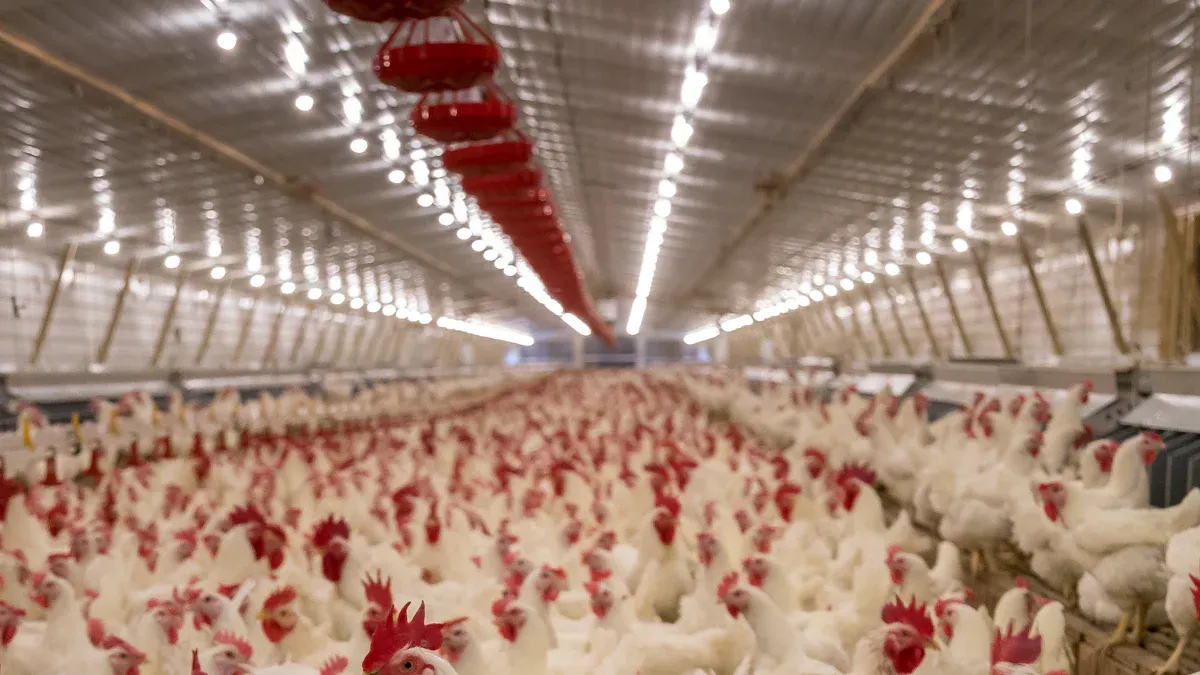
Beyond the spectrum, LED technology introduces precision in photoperiod management. Traditional HPS systems utilize abrupt switching that causes a “shock effect,” leading to bird piling and injury. LEDs facilitate automated sunrise and sunset simulation, establishing a natural circadian rhythm essential for growth hormones.
Durability in Harsh Environments
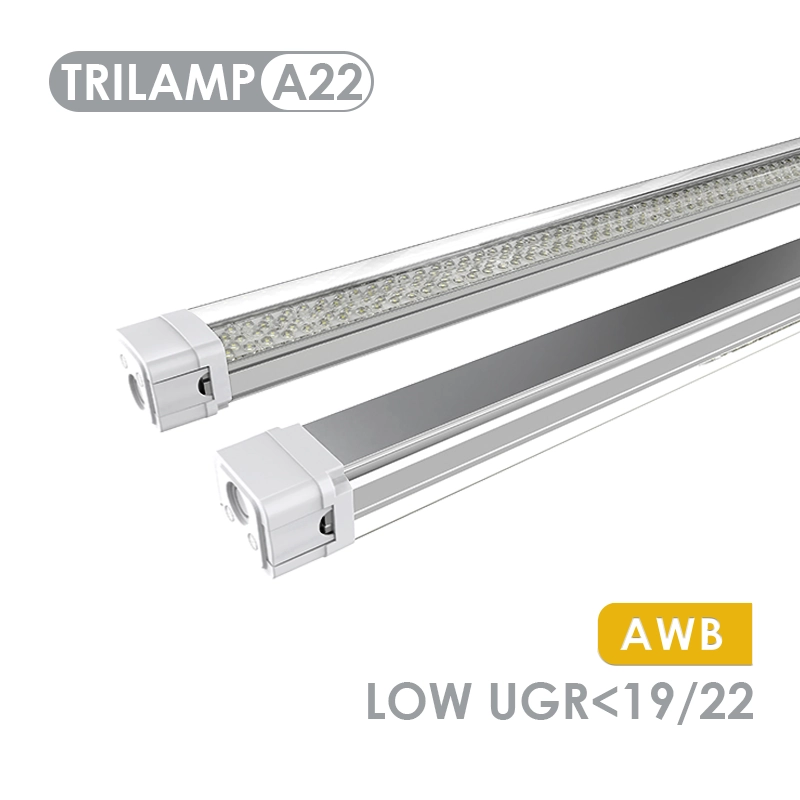
Poultry houses are high-humidity environments characterized by dust and ammonia exposure. HPS ballasts are prone to failure under these conditions. Modern agricultural LED fixtures, such as those from Fanxstar, are engineered with IP66+ or IP69K ratings to withstand high-pressure washdowns and chemical corrosion.
|
Feature |
LED Lighting Systems |
HPS Lamps |
|---|---|---|
|
Power Consumption |
40W – 60W |
150W – 250W |
|
Lifespan |
50,000 – 100,000 hours |
10,000 – 24,000 hours |
|
Heat Output |
Very Low |
Very High (Infrared) |
|
Maintenance |
Near Zero over 5 years |
High (Frequent bulb/ballast swaps) |
|
Dimming |
Smooth 0-100% (No color shift) |
Poor (Flickers/Shifts color) |
Practical Implications and Long-Term ROI
While the initial capital investment for LED fixtures may exceed that of HPS lamps, the transition typically pays for itself through direct energy savings (50-75%) and reduced labor costs. In regions with high electricity prices, the payback period can be as short as 12 months. Furthermore, improved animal welfare leads to higher yields and lower mortality rates, strengthening the farm’s overall profitability.
Conclusion: Why Transitioning to LED is Critical
The evidence is definitive: HPS lamps belong to the past. Their spectral deficiencies, excessive heat waste, and stressful flicker represent a bottleneck for producers aiming for peak performance. By adopting LED technology designed for avian vision, producers achieve uniform growth, better feed conversion, and a more sustainable operation. The future of poultry production depends on leaving HPS lamps behind and embracing the precision and efficiency of Fanxstar LED solutions.
Frequently Asked Questions (FAQ)
Why are HPS lamps bad for poultry growth?
HPS lamps produce excess heat, have a poor light spectrum (monochromatic orange-red), and create a high-frequency flicker. These factors cause chronic stress, aggressive behavior, and stunted muscle development in birds.
How does LED lighting improve poultry growth?
LED lighting provides a tailored spectrum, including green light for muscle satellite cell proliferation in brooding and blue light for calming. It also allows for smooth sunrise/sunset simulations that regulate growth hormones.
Do LED lights really help reduce cannibalism?
Yes. By eliminating the harsh flicker of HPS lamps and providing a balanced spectrum, LEDs create a calmer environment that significantly reduces aggressive behaviors like feather pecking.
Is the initial cost of LED systems significantly higher than HPS?
Yes, the CAPEX for LED is higher, but the massive 50-70% reduction in electricity bills and the 5x longer lifespan result in a complete return on investment within 1.5 to 2 years.
Are LED lights safe for poultry environments?
LEDs are actually safer because they do not contain toxic mercury and can be manufactured with high IP ratings to withstand the humidity, dust, and ammonia typical of poultry houses.