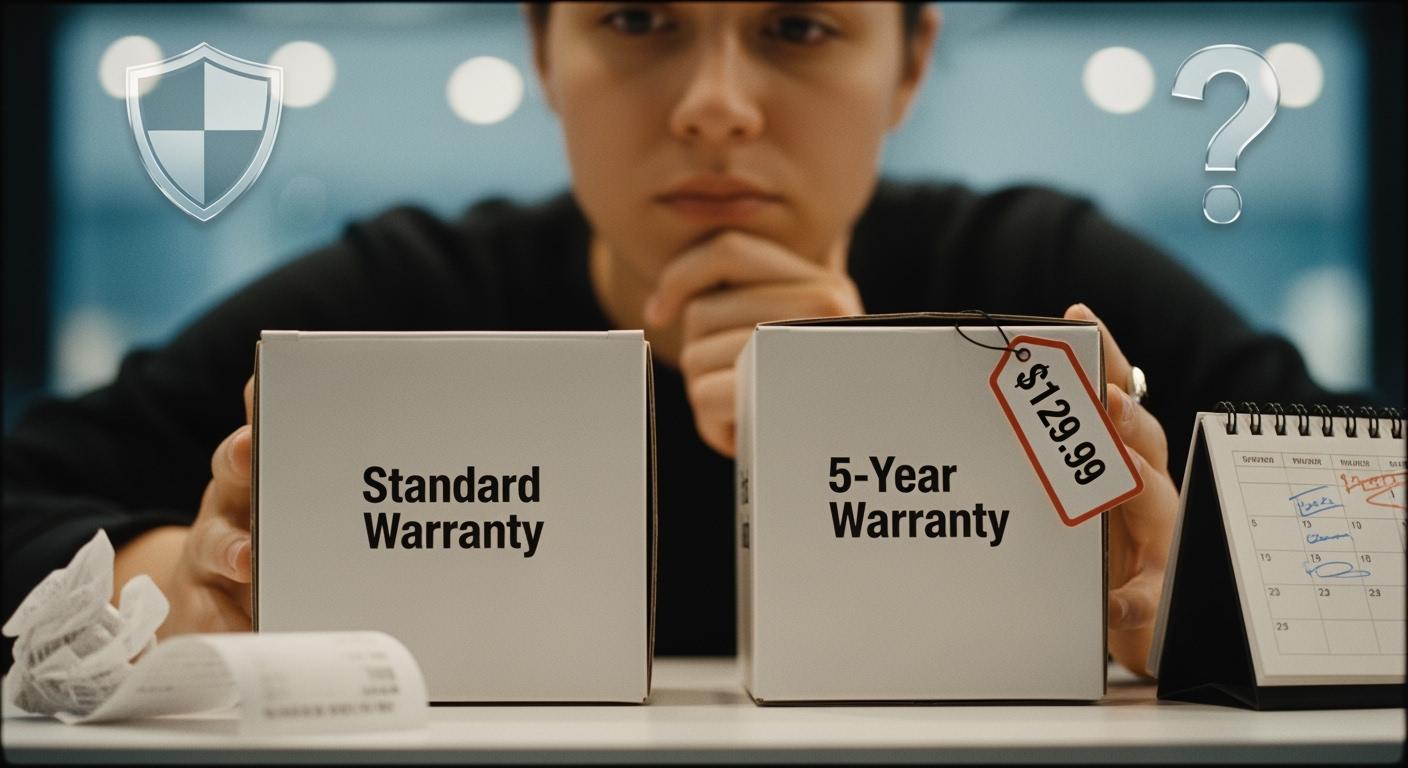
In the world of industrial procurement, the “5-Year Warranty” is often viewed through two different lenses: as an unnecessary insurance premium or as a vital shield against operational disruption. For high-value assets—ranging from automotive components where repairs can exceed $4,000 to industrial LED systems that keep a 24/7 factory floor running—the warranty is a declaration of the manufacturer’s engineering confidence.
The logic behind an extended warranty is rooted in the Total Cost of Ownership (TCO). While the initial purchase price might be 10-15% higher for a product with a 5-year guarantee, the cost of a single major failure, combined with labor and downtime, frequently eclipses that premium. This article explores the technical and financial variables that determine whether a 5-year warranty is a sound investment or a sunk cost.
Key Takeaways
-
Risk Mitigation: A 5-year warranty is a hedge against the “Bathtub Curve” of electronics failure, protecting you during the wear-out phase.
-
Hidden Costs: In industrial settings, the cost of labor (e.g., hiring a scissor lift) often exceeds the cost of the replacement fixture itself.
-
Reliability Indicators: A 5-year term typically implies high-grade components, such as LiFePO4 batteries in emergency units or superior heat sinks in LEDs.
-
Read the Exclusions: Coverage often excludes “Acts of God” (surges, floods) and labor; knowing these gaps is critical for financial planning.
-
ROI Decision: If the cost of the warranty is less than 20% of the potential repair/replacement cost, it is statistically favorable.
The Technical Anatomy of a 5-Year Warranty
Materials and Workmanship: The Core Promise
A 5-year warranty typically covers defects in materials and manufacturing. This means the provider guarantees that under normal operating conditions, the device will not fail due to a flaw in its assembly or a substandard internal component. For instance, in an LED driver, the failure of a single capacitor after 3 years would be covered under this clause.
|
Typical Inclusion |
Technical Basis |
Common Exclusion |
|---|---|---|
|
Internal Circuitry |
PCB and component defects |
Voltage surges/Lightening |
|
Structural Housing |
Corrosion or seal failure |
Vandalism or impact |
|
Battery (Emergency) |
Cycle life and capacity |
Deep discharge due to misuse |
|
LED Chips |
Lumen depreciation/Color shift |
Over-temperature operation |
The “Bathtub Curve” and Electronics Failure
Reliability engineering uses the Bathtub Curve to describe failure rates. Most products fail either very early (infant mortality) or much later (wear-out phase). A 2-year warranty only protects against early failures. A 5-year warranty extends deep into the useful life of the product, covering the period when wear-out failures begin to emerge due to thermal stress and component aging. By securing a 5-year term, you are essentially ensuring that the manufacturer has engineered the product to outlast the typical “wear-out” trigger points.
Industrial Lighting: A Case Study in Warranty Value
The Scissor Lift Factor
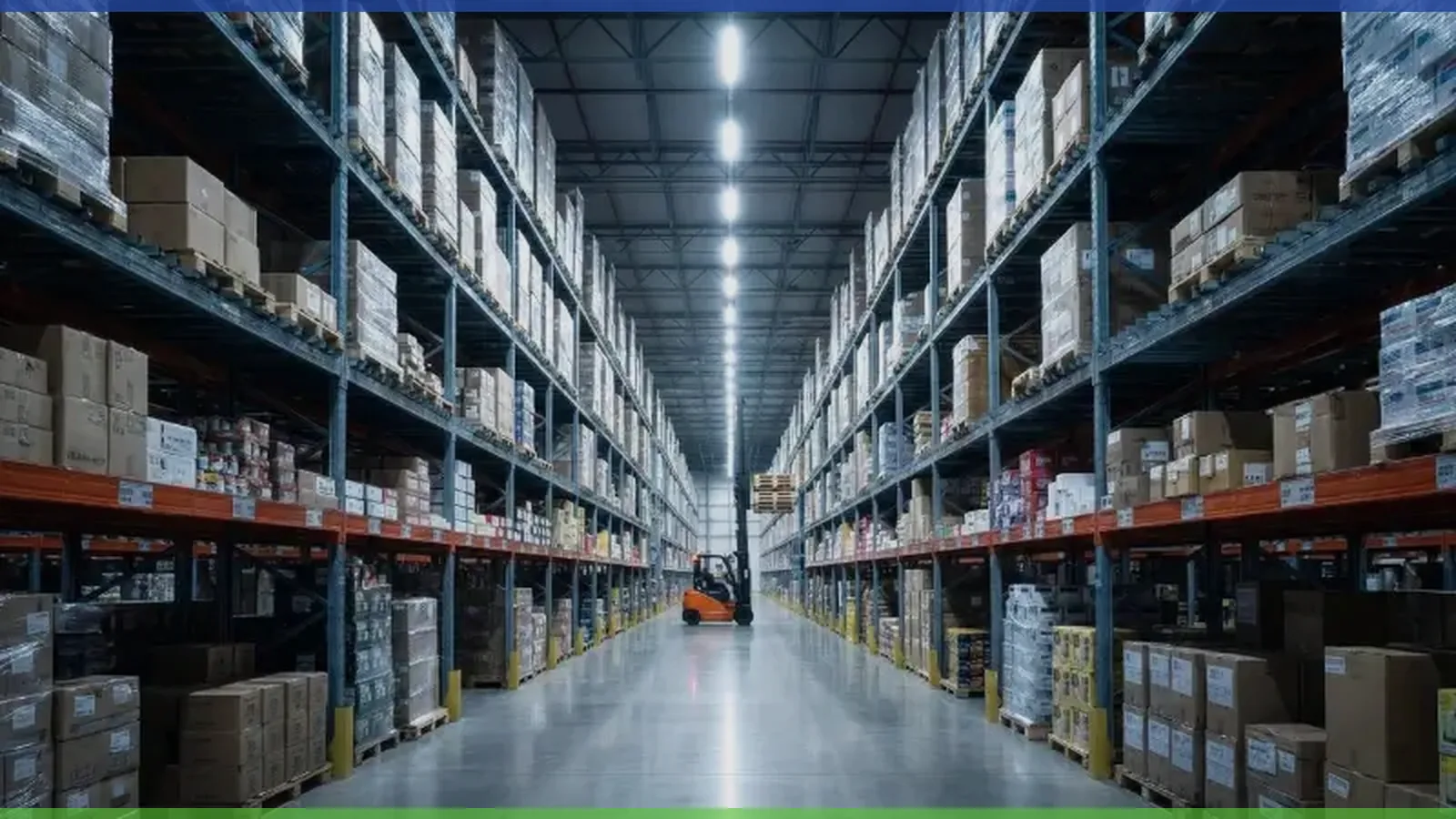
In a warehouse with 10-meter ceilings, replacing a single failed light fixture is not as simple as swapping a bulb. It requires renting a scissor lift (approx. $300-$500 per day), hiring certified electricians ($100+/hr), and potentially shutting down a production line. Even if the fixture itself only costs $150, the total Replacement Event Cost can exceed $800.
When you choose Fanxstar’s Tri-proof or Batten lights with a 5-year warranty, you are not just buying a piece of plastic and aluminum; you are buying an insurance policy against those $800 “hidden” labor events. Manufacturers who offer 5 years of coverage usually utilize superior MTBF (Mean Time Between Failures) calculations to ensure their fixtures don’t become a liability.
Battery Chemistry: LiFePO4 vs. Ni-Cd
For emergency lighting systems, the battery is the most common point of failure. A standard Ni-Cd battery may only last 2 years in high-temperature environments. In contrast, Fanxstar’s use of LiFePO4 (Lithium Iron Phosphate) technology allows for a robust 4-to-5-year battery warranty. This is a clear example of where the “extra cost” of a premium product and warranty translates into half the maintenance frequency.
The Cost-Benefit Math: Is the Premium Justified?
To determine the value, we use a simple formula: Expected Loss = Probability of Failure x Cost of Repair.
“If a warranty for a $2,000 industrial sensor costs $200 (10%), and the probability of a major circuit failure between year 3 and 5 is 15%, the expected loss is $300. In this case, the $200 warranty saves you $100 in risk value.”
|
Evaluation Factor |
High-Warranty Value |
Low-Warranty Value |
|---|---|---|
|
Product Complexity |
High (Sensors, Drivers, Chips) |
Low (Static parts, basic metal) |
|
Accessibility |
Difficult (Ceilings, Tunnels) |
Easy (Floor-level, Plug-play) |
|
Environment |
Harsh (Extreme Cold/Heat) |
Stable (Office AC) |
|
Brand Reputation |
Established (e.g., Fanxstar) |
Unknown/Generic White Label |
When to Skip the Extended Warranty
1. The “Reliability Paradox”
If a product is exceptionally reliable and inexpensive, the warranty is often a profit center for the retailer. For example, a $30 basic desk lamp with a $10 warranty is mathematically irrational. The cost of processing the claim (shipping the broken item back) might be close to the cost of buying a new one. Similarly, if you are buying a product that will be technologically obsolete in 3 years, a 5-year warranty is paying for coverage you will never use.
2. Overlapping Protections
Before purchasing, check for “Double Coverage.” Many professional credit cards automatically extend the manufacturer’s warranty by one year. Furthermore, certain statutory legal protections (like the EU’s 2-year minimum) might already cover the most critical period of the product’s life. Always review your existing insurance policies or corporate master service agreements (MSAs) which may include blanket equipment protection.
Practical Decision Checklist
Before signing off on the extra cost of a 5-year protection plan, ask these five critical questions:
-
Can the business afford the downtime? If the answer is no, the warranty is essential for expedited replacement services.
-
Does the warranty include on-site labor? Most don’t. If yours does, it’s worth a significant premium.
-
What is the failure rate of this brand? Check industrial consumer reports and reliability studies.
-
Is the company likely to exist in 5 years? A warranty is only as good as the company backing it. Only trust reputable, financially stable manufacturers.
-
Are there maintenance requirements? Some warranties are voided if you don’t perform annual documented maintenance.
Conclusion: Strategic Peace of Mind
The “worth” of a 5-year warranty isn’t just about the hardware; it’s about Predictable Budgeting. For a facility manager, knowing that there will be zero unplanned lighting replacement costs for the next 60 months allows for much tighter financial control. In harsh industrial environments, where heat, vibration, and continuous operation stress components to their limits, a 5-year warranty is more than a sales gimmick—it is a technical necessity.
At Fanxstar, we believe that heat dissipation and material choice are the foundation of warranty. By engineering for the worst-case scenario, we ensure that our 5-year promise is a reflection of reality, not just a marketing claim.
FAQ
1. Is a 5-year warranty transferable if I sell the building/equipment?
This varies. Professional-grade industrial warranties are often tied to the product’s serial number and are transferable. Consumer-grade “Extended Service Contracts” are often tied to the original purchaser. Always check the “Transferability” clause.
2. Does “5-Year Warranty” mean 5 years of 24/7 use?
In the LED industry,質保 often specifies usage hours (e.g., 5 years or 50,000 hours, whichever comes first). If your lights are on 24/7, you might hit the hour limit before the 5-year mark. Check the “Burning Hours” limitation in the fine print.
3. What happens if the manufacturer goes out of business?
If the warranty is a “Manufacturer’s Warranty,” it usually disappears with the company. If it is an “Extended Service Plan” backed by an insurance third-party, the coverage remains valid even if the manufacturer fails.
4. Does a warranty cover ‘Lumen Depreciation’?
High-quality LED warranties include an L70/B50 clause, which guarantees that the lights will still provide at least 70% of their original brightness at the end of the 5-year period. A light that is “on” but too dim to work under is technically a failure.
5. Can I buy an extended warranty later?
Most manufacturers require you to purchase or register the extended warranty within 30 to 90 days of the original purchase. Retrospective warranties are rare and significantly more expensive.