In the world of professional LED manufacturing and industrial procurement, speed is often prioritized, but efficiency is what actually drives project success. For facility managers, electrical contractors, and lighting designers, two Key Performance Indicators (KPIs) dominate the supply chain conversation: Lead Time and Cycle Time. While these terms are frequently used interchangeably, they represent fundamentally different aspects of the manufacturing lifecycle. Lead time tracks the entire journey from order receipt to final delivery, while cycle time focuses on the “heartbeat” of the factory floor—the actual time required to produce a single unit or batch.
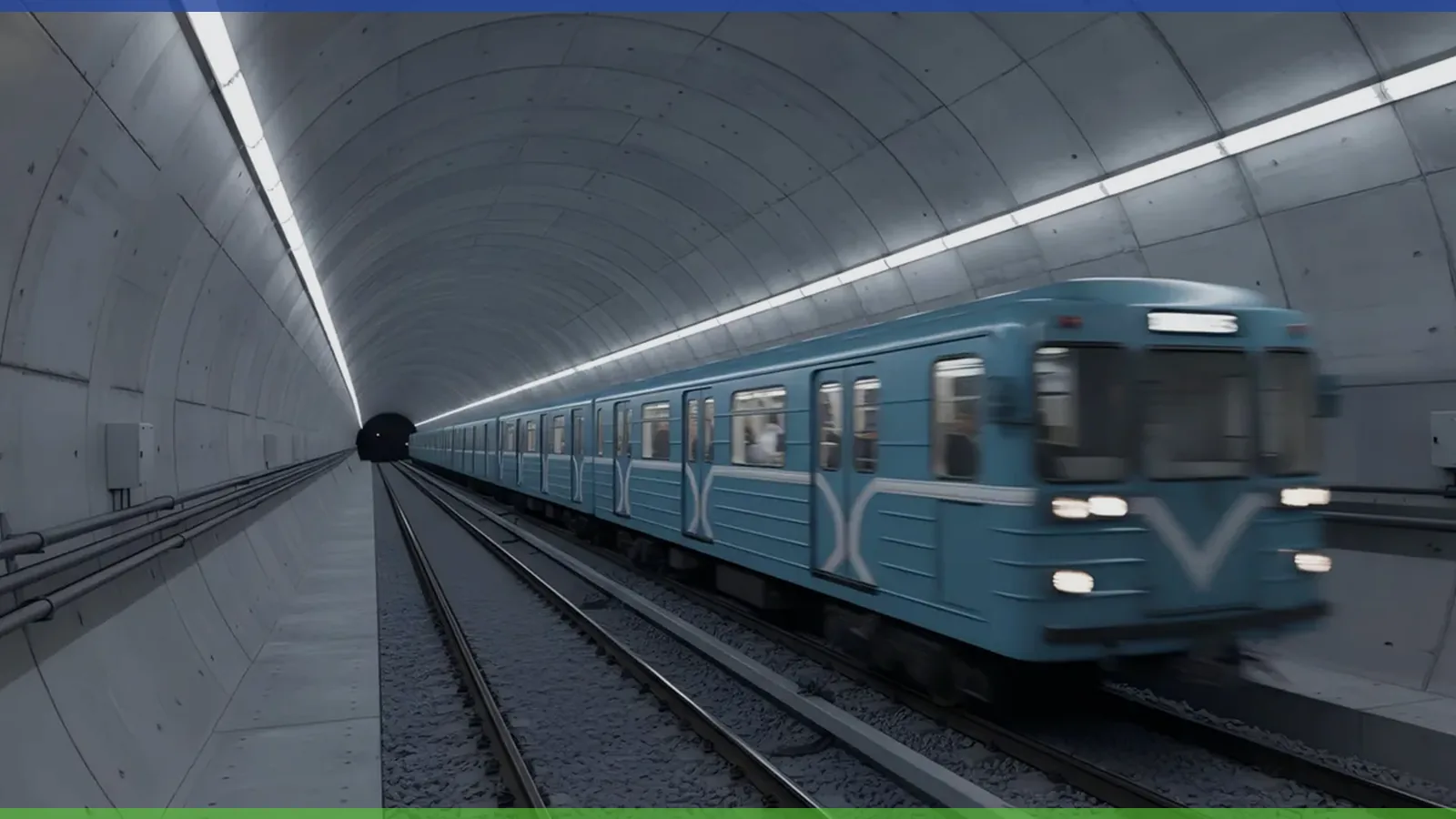
In 2026, as industrial projects demand higher customization and faster deployment (such as for 100-meter continuous runs in tunnels), the ability to differentiate and optimize these metrics is critical. This guide provides an engineering-level deep dive into these metrics, analyzing how technical testing cycles, automated assembly, and localized fulfillment impact the total duration of your lighting project.
Key Takeaways
-
Lead Time (The Buyer’s View): The total duration between the “Purchase Order” and the “Arrival at Site.” It is the most important metric for project scheduling.
-
Cycle Time (The Factory’s View): The active processing time for one unit. In LED production, this includes SMT assembly, manual soldering, and the mandatory 48-hour burn-in cycle.
-
The “Waiting Time” Gap: In professional lighting, 80% of Lead Time is often spent in “Wait States”—administrative processing, material sourcing, and logistics transit.
-
Specialized Bottlenecks: For emergency lighting, the mandatory 24-hour initial battery charge is a fixed cycle time that cannot be bypassed without compromising safety.
-
Strategic Optimization: Using “SKUs-in-one” designs and EU-based local warehouses can reduce total Lead Time by as much as 75%.
Technical Deep Dive: Defining the Metrics
1. Lead Time: The Macro Perspective
Lead Time is the sum of every event that happens after a buyer decides to procure a lighting system. In the context of industrial vapor-tight fixtures, this includes:
-
Order Lead Time: The administrative phase where specs are finalized and the PO is processed.
-
Manufacturing Lead Time: The time the order sits in the production queue plus the actual fabrication.
-
Logistics Lead Time: The time spent in transit, including customs clearance and “last mile” delivery.
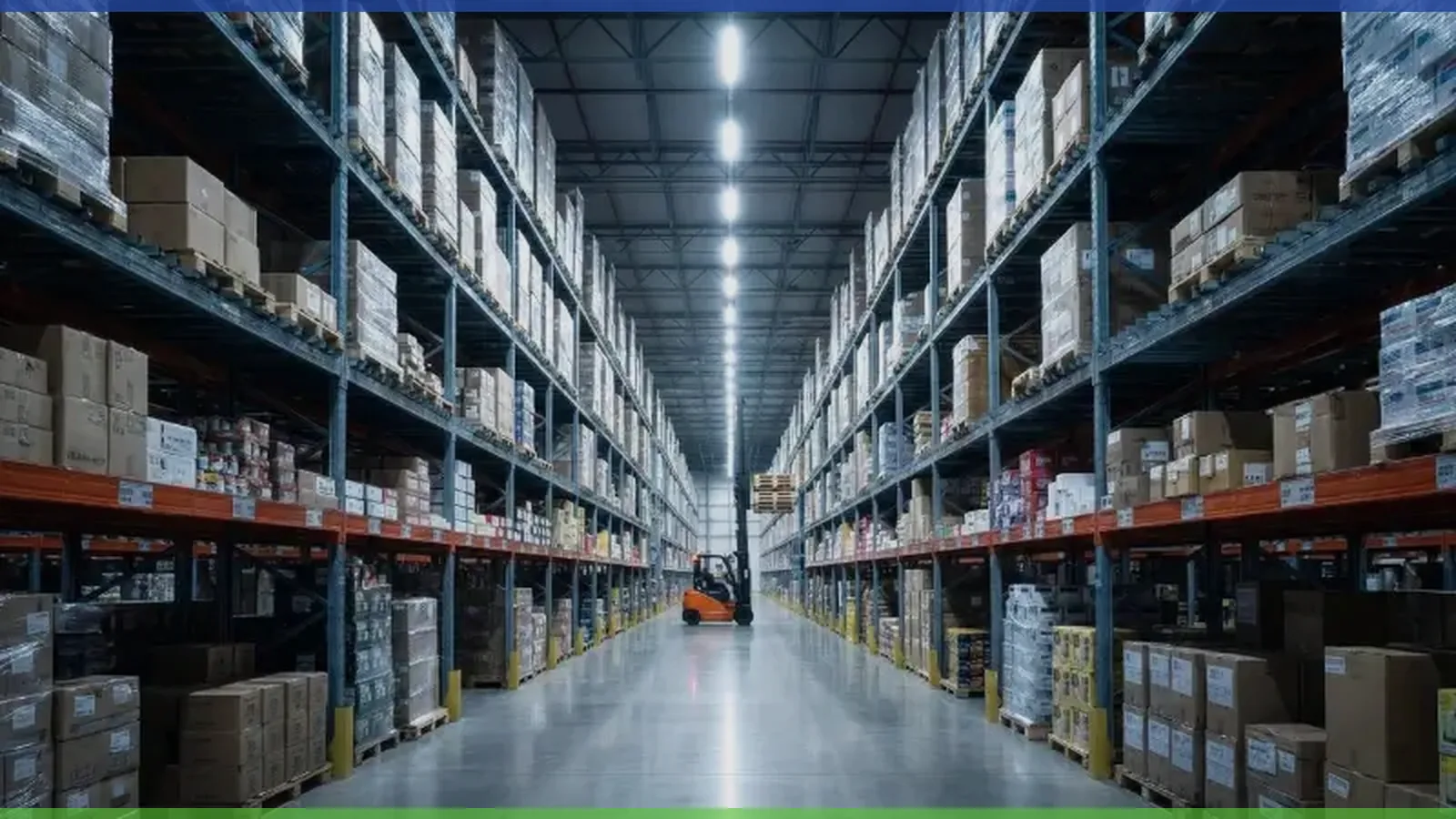
Lead Time is a measure of Responsiveness. If your warehouse expansion project starts in 12 weeks, you need a manufacturer whose Lead Time is guaranteed to be 10 weeks or less to avoid construction idling.
2. Cycle Time: The Micro Perspective
Cycle Time is a subset of Lead Time. It measures the mechanical and technical speed of the factory’s production line. For an LED linear light, this is the time from the first chip being placed on the PCB to the final “QC Pass” sticker being applied. Cycle time is a measure of Productivity. For a high-efficiency SMT (Surface Mount Technology) line, the cycle time for an LED strip might be only 60 seconds; however, for a complex tunable white fixture, the assembly and calibration cycle might extend to 30 minutes.
|
Metric |
Technical Scope |
Primary Calculation |
|---|---|---|
|
Lead Time |
End-to-End Supply Chain |
Delivery Date – Order Date |
|
Cycle Time |
Manufacturing Execution |
Total Production Time / Units Produced |
|
Wait Time |
Bottlenecks and Transit |
Lead Time – Cycle Time |
|
Takt Time |
Demand Pace |
Available Production Time / Customer Demand |
Factors Impacting Cycle Time on the Factory Floor
In high-end lighting manufacturing, cycle time isn’t just about speed—it’s about the technical intervals required for safety and performance. Some of these are fixed physical constants:
The 48-Hour Burn-In Cycle
Quality manufacturers like Fanxstar implement a mandatory 48-hour “Burn-In” test. This is the period where fixtures are run at full power to identify “infant mortality” failures in the drivers or LED chips. While this adds 48 hours to the Cycle Time, it reduces the probability of on-site failure by nearly 95%. For hazardous area lighting, this cycle is non-negotiable for compliance.
Emergency System Initialization
For compliant emergency lighting, the batteries (typically LiFePO4) must undergo a controlled 16-24 hour charging cycle and a subsequent discharge test to verify they meet the 3-hour backup duration required by fire safety codes. This technical cycle is often the single largest component of the total manufacturing cycle time.
|
Production Stage |
Typical Cycle Time |
Engineering Reason |
|---|---|---|
|
PCB SMT Assembly |
1 – 2 Minutes |
High-speed robotic placement |
|
Housing Extrusion |
10 – 15 Minutes |
AL6063 cooling and cut precision |
|
Final Assembly |
5 – 10 Minutes |
Manual wiring and gasket seal |
|
Burn-In / Stress Test |
24 – 48 Hours |
Ensures semiconductor stability |
|
Photometric QC |
3 – 5 Minutes |
Integrating sphere spectrum check |
Strategies for Lead Time Optimization
While some cycle times are fixed for quality reasons, Lead Time can be drastically optimized through strategic planning and infrastructure. For international B2B buyers, reducing lead time is the primary goal to improve cash flow and project agility.
1. Inventory Specialization: The “A16” Logic
One way Fanxstar reduces lead time is through “Modular Design.” Our A16 series utilizes a “12-SKUs-In-One” approach. By using on-site DIP switches for Power (wattage) and CCT (color temperature), we can stock a single base module that fits multiple project requirements. This reduces the “Wait Time” for custom components, allowing for shipment from our warehouses in 48 hours rather than 4 weeks of custom production.
2. Local Fulfillment Hubs
For European and North American projects, the “Logistics Lead Time” is often the longest phase, typically taking 30-45 days for sea freight. By maintaining local fulfillment centers in Spain and the Netherlands, Fanxstar allows partners to bypass the international leg of the supply chain. This logistical transparency turns a 2-month lead time into a 3-day local delivery.
3. Sourcing Verticality
When a factory relies on third-party driver or aluminum suppliers, their lead time is subject to those external bottlenecks. Fanxstar’s vertical integration—owning the aluminum extrusion process and maintaining authorized partnerships with driver brands like Philips—ensures that the “Sourcing Lead Time” is minimized. We control the raw materials, which means we control the production schedule.
“The best way to shorten a lead time isn’t to speed up the robots; it’s to eliminate the two weeks the order sits in an inbox waiting for parts.”
The Impact of Project Design on Delivery Speed
The complexity of a lighting specification directly influences both cycle and lead times. Understanding this relationship allows procurement officers to make smarter trade-offs.
-
Standard Fixtures: (e.g., IP65 LED Battens). Minimal lead time, high production speed, lowest cost.
-
Custom ODM Projects: (e.g., bespoke lengths or specialized sub-zero freezer lighting). Requires a “Non-Recurring Engineering” (NRE) phase, adding 2-3 weeks to the lead time.
-
Advanced Smart Systems: (e.g., DALI-2 DT8 / Zigbee). Requires firmware flashing and sensor calibration cycles, increasing the cycle time per unit by 20%.
Measuring for Continuous Improvement
To truly optimize your supply chain, you must measure these metrics accurately. Professional procurement teams utilize **Value Stream Mapping** to visualize where time is lost.
Formula for Lead Time:
$L = T_{adm} + T_{mfg} + T_{qc} + T_{log}$
(Admin + Mfg + QC + Logistics)
Formula for Cycle Time:
$C = text{Total Production Time} / text{Units Produced}$
In many cases, buyers focus only on the $T_{mfg}$ (Manufacturing), but the real opportunity for speed lies in $T_{adm}$ (Administrative) and $T_{log}$ (Logistics). By automating PO processing and using optimized logistics hubs, a firm can achieve 2x faster delivery without changing the factory floor speed at all.
|
Supply Chain Strategy |
Impact on Lead Time |
Impact on Cycle Time |
|---|---|---|
|
Just-in-Time (JIT) |
Moderate Reduction |
Minimal |
|
Modular SKUs |
Significant Reduction |
Minimal |
|
Automated SMT Line |
Minimal |
Significant Reduction |
|
Local Warehousing |
Extreme Reduction |
Zero |
Conclusion: Choosing the Right Production Partner
Understanding the difference between Lead Time and Cycle Time is essential for managing project expectations and budgets. Lead time is a metric of logistics and planning; cycle time is a metric of technical precision and manufacturing depth. A world-class manufacturer like Fanxstar balances both by investing in high-speed automated assembly (reducing cycle time) and localized global fulfillment (reducing lead time). For your next industrial or commercial LED lighting project, prioritize partners who provide technical transparency on these metrics. Choosing a partner that understands the **thermodynamics of production** ensures your lighting grid is delivered on time, at the highest quality, and with the best possible ROI. In the world of high-stakes infrastructure, speed is a preference, but reliability is a requirement.
FAQ
Why is lead time so long during ‘Peak Season’?
Peak seasons (like pre-Chinese New Year) cause a surge in “Order Lead Time” because the manufacturing queue is full. Additionally, port congestion adds 10-15 days to the “Logistics Lead Time.”
Can I get a shorter lead time for custom linear lights?
Yes, by selecting “Semi-Custom” options. If you choose a standard aluminum housing but request custom internal components (like a specific driver), the lead time is much shorter than a full bespoke build.
Does a faster cycle time mean lower quality?
Not if the speed comes from SMT automation. In fact, robotic assembly is more accurate than manual soldering. Quality only drops if the mandatory **48-hour burn-in cycle** is skipped.
How does ‘Through-Wiring’ affect lead time?
Through-wiring doesn’t change the manufacturing time significantly, but it massively reduces the Installation Lead Time on the construction site, as fixtures are snapped together 5x faster than manual wiring.
Does the country of origin affect these metrics?
Yes. Hubs like Shenzhen offer the world’s fastest cycle times due to the proximity of component suppliers (drivers/chips). However, they have longer logistics lead times for Western markets compared to local stockists.