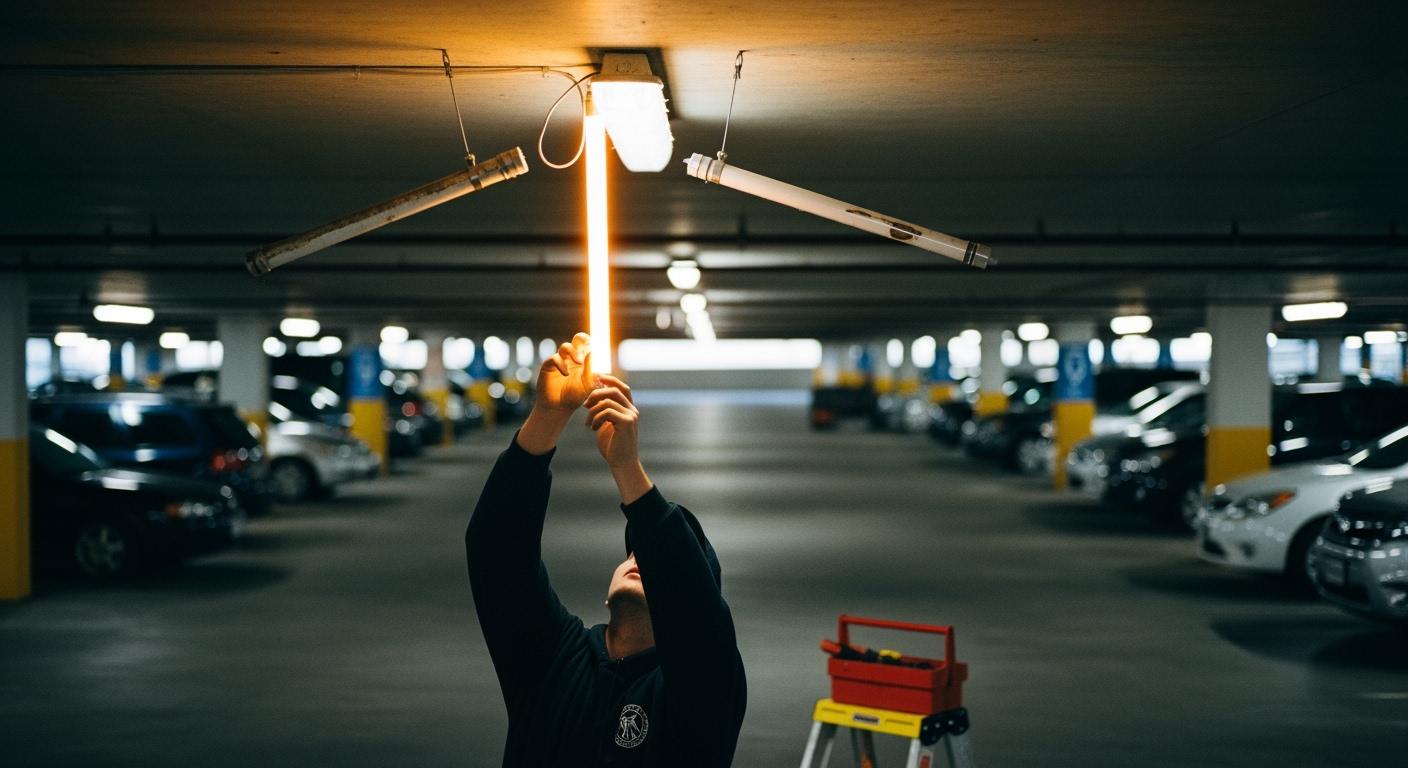
Parking garages are one of the most high-traffic and safety-critical environments in commercial real estate. Statistically, more than 10% of property crimes occur in poorly lit parking facilities, making visibility a primary concern for facility managers. Modernizing these spaces by replacing T5/T8 tubes with high-performance LED alternatives is no longer just an aesthetic choice; it is a critical safety upgrade. This guide provides a technical foundation for swapping legacy fluorescent systems with LED tubes and integrated tri-proof fixtures to enhance safety, reduce maintenance cycles, and slash energy overhead.
Key Takeaways
-
Energy Efficiency: Transitioning from fluorescent to LED reduces lighting energy consumption by 40% to 60%.
-
Safety and Visibility: LED tubes provide higher CRI and uniform light distribution, reducing glare and eliminating dark spots.
-
IP/IK Ratings: For parking garages, specify fixtures with at least IP65 (waterproof) and IK10 (impact resistant) ratings.
-
Ballast Strategy: Type B (ballast bypass) LED tubes are the industry standard for long-term reliability in garages.
-
Smart Controls: Integrating motion sensors can extend the lifespan of the fixture and save an additional 30% on energy.
The Case for Modernization: ROI and Performance
Financial Impact of the Upgrade
The financial argument for replacing T5/T8 tubes is compelling. Legacy fluorescent tubes have a lifespan of 15,000 to 30,000 hours, while high-quality LED tubes reach 50,000 to 100,000 hours. In a 24/7 parking environment, this translates to years without a single bulb change. By upgrading to LED tri-proof lights, a facility with 250 fixtures can see annual energy savings of nearly $30,000, often achieving a full return on investment (ROI) in under 18 months.
|
Comparison Metric |
Legacy T8 Fluorescent |
Modern LED Retrofit |
|---|---|---|
|
System Wattage (per 4ft) |
32W – 40W (Plus Ballast) |
12W – 18W (Internal Driver) |
|
Average Lifespan |
20,000 Hours |
50,000+ Hours |
|
Maintenance Frequency |
High (Every 2-3 years) |
Low (Every 7-10 years) |
|
CRI (Color Accuracy) |
70 – 80 Ra |
85 – 95 Ra |
Safety and the Human Factor
Uniformity is the most important factor in parking garage lighting. Fluorescent tubes often dim at the ends and flicker as they age, creating a “checkerboard” effect of light and shadow. LED technology provides 100% directional light, focusing the output on the driving lanes and pedestrian walkways rather than wasting energy lighting the ceiling. Improved visibility reduces the risk of collisions and increases the perceived safety for tenants and visitors.
Selecting the Right LED Hardware
T5 vs. T8: Understanding the Differences
When replacing T5/T8 tubes, it is vital to understand the mechanical and electrical differences. T5 tubes are smaller in diameter (5/8″) and usually operate on high-frequency electronic ballasts. T8 tubes (1″ diameter) are more common in older garages. While you can find “plug-and-play” LED tubes (Type A), we recommend Type B (Ballast Bypass) for parking garages. Type B tubes connect directly to the line voltage, eliminating the ballast—a common failure point in high-heat or damp environments.
Durability: IP and IK Ratings
Parking garages are semi-outdoor environments exposed to humid air, vehicle exhaust, and occasional pressure washing. Standard indoor LED tubes will fail if the fixture isn’t properly sealed. High-performance LED parking garage fixtures should carry:
-
IP65/IP66: Dust-tight and protected against water jets.
-
IK10: The highest level of protection against mechanical impact, protecting the light from accidental hits by tall vehicles or vandalism.
|
Rating Type |
Recommended Level |
Protects Against |
|---|---|---|
|
Ingress Protection (IP) |
IP65 or IP66 |
Moisture, Dust, Vehicle Exhaust |
|
Impact Resistance (IK) |
IK08 or IK10 |
Vandalism, Accidental Strikes |
|
Corrosion Resistance |
Stainless 304/316 Clips |
Road Salt, Salt-spray (Coastal) |
Step-by-Step Replacement: Type B Retrofit
For most professional retrofits, the Ballast Bypass (Type B) method is preferred. It requires minor rewiring but ensures the highest efficiency and zero future ballast maintenance. Always consult a qualified electrician before starting work.
Step 1: Safety and De-energization
Turn off the power at the main circuit breaker. Use a non-contact voltage tester to confirm that no power is reaching the fixture. Parking garages often have “Permanent Live” circuits for emergency lighting, so double-check every wire.
Step 2: Removal of Legacy Components
Remove the old fluorescent tubes and the ballast cover. Carefully disconnect the wires leading to the ballast. In most cases, you will physically remove the ballast from the fixture to reduce weight and avoid confusion for future technicians. Dispose of the old tubes properly, as they contain toxic mercury.
Step 3: Rewiring for Line Voltage
Depending on whether you are using Single-Ended or Double-Ended LED tubes, you will rewire the “tombstones” (lamp holders) to connect directly to the Live and Neutral wires from the building. Ensure you use non-shunted tombstones for single-ended tubes to prevent short circuits.
Step 4: Installation and Testing
Snap the LED tubes into place. For integrated tri-proof LED upgrades, this is the time to secure the mounting brackets to the concrete ceiling. Restore power and test the fixtures. Check for uniform brightness and ensure that any integrated sensors are calibrated correctly.
“The most expensive lighting is the light that stays on when nobody is there. Retrofitting with sensors is the single fastest way to achieve a 12-month ROI.”
Advanced Control Strategies
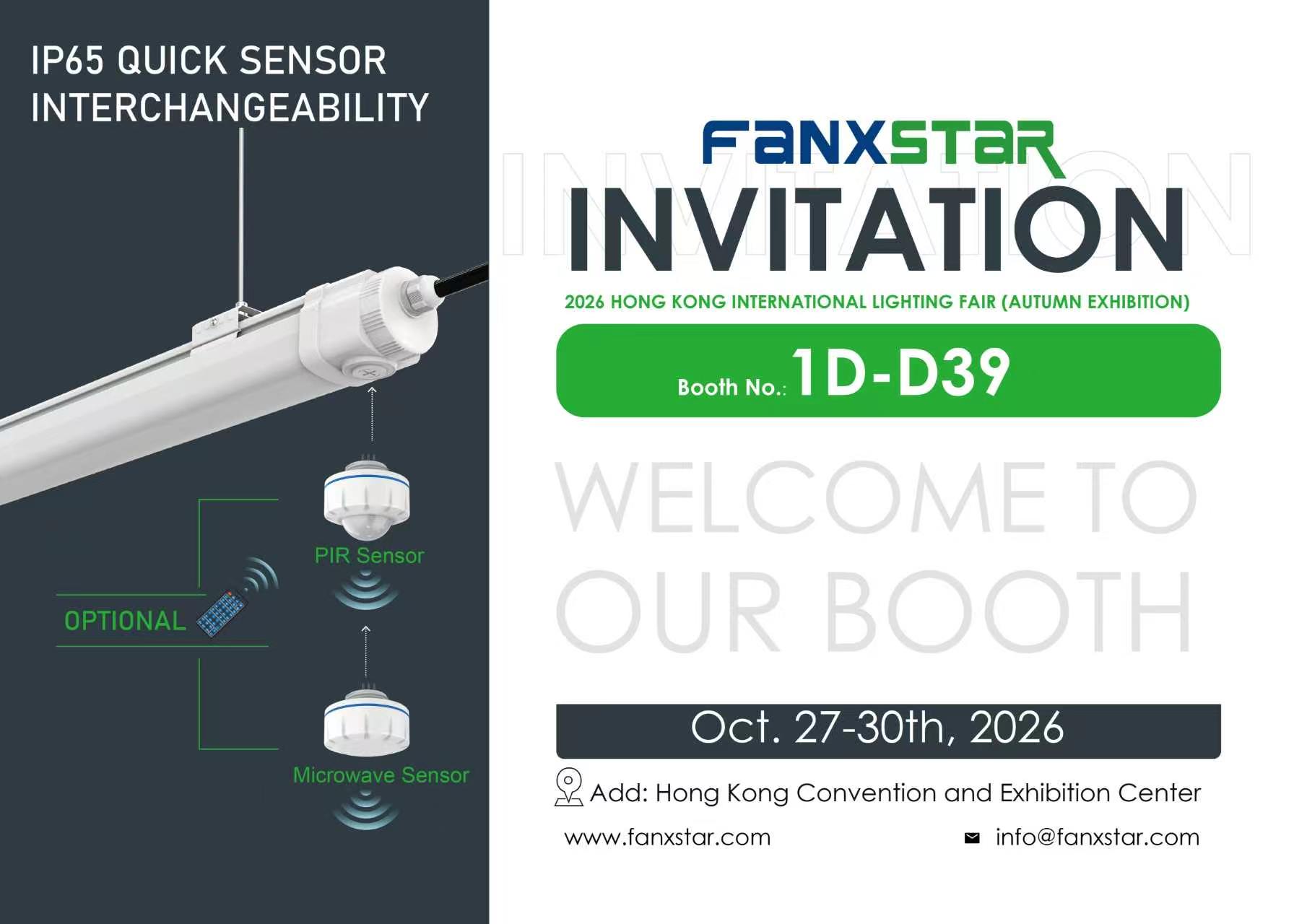
Open-air or multi-story garages benefit immensely from smart controls. By replacing T5/T8 tubes with fixtures that include integrated microwave sensors, you can implement a “Hi-Low” strategy. The lights remain at 10% brightness for safety and security, then instantly ramp up to 100% when a car or pedestrian enters the zone. This “follow-me” lighting path significantly enhances the user experience while maximizing energy savings.
Linkability and Grouping
In large-scale garages, you don’t want a single light to turn on in isolation. Linkable LED systems allow a sensor in one bay to trigger an entire row of lights. This ensures that the driver always has a well-lit path ahead of them, rather than driving into a dark zone and waiting for the next sensor to “catch” them. Many LED linear fixtures now support wireless or DALI-based grouping for this purpose.
Common Challenges in Garage Retrofitting
-
Thermal Management: In enclosed underground garages, heat can build up. Ensure the LED fixtures have aluminum heat sinks to prevent premature chip failure.
-
Voltage Spikes: Large garage elevators or industrial gates can cause power surges. Install surge protection devices at the panel level to protect your LED investment.
-
Corrosive Environments: For coastal parking or areas with heavy road salt, avoid fixtures with exposed carbon steel parts. Specify stainless steel 316 clips and hardware.
|
Potential Issue |
Root Cause |
Professional Solution |
|---|---|---|
|
Flickering LEDs |
Legacy Ballast Interference |
Bypass the ballast (Type B Retrofit) |
|
Premature Dimming |
Heat buildup in plastic housing |
Use AL6063 Aluminum-backed fixtures |
|
Sensor Failure |
Microwave signal interference |
Adjust sensitivity / Use PIR hybrid |
Conclusion
The modernization of parking garage lighting through replacing T5/T8 tubes is a foundational project for any facility management team. By choosing high-efficacy LED tubes, prioritizing robust IP/IK ratings, and embracing smart sensor technology, you can create a facility that is safer, cheaper to operate, and more environmentally responsible. As energy codes become stricter and maintenance labor costs rise, the transition to high-quality LED systems is the only viable path for sustainable garage management. Whether you are performing a simple safety upgrade or a full-scale renovation, prioritizing quality today ensures reliability for the next decade.
FAQ
Can I just swap the tubes without removing the ballast?
Yes, if you use “Type A” (Plug-and-Play) tubes. However, if the legacy ballast fails later, the light will go out, requiring a second maintenance visit. Type B (Bypass) is more reliable for long-term industrial use.
What color temperature (CCT) is best for garages?
4000K (Neutral White) or 5000K (Cool White) are recommended. These temperatures improve alertness and provide better contrast for security cameras compared to warmer 3000K lights.
Are LED tubes bright enough to replace two fluorescent tubes with one?
Often, yes. High-lumen LED tubes (e.g., 2500+ lumens) can often replace two standard 32W fluorescent tubes, allowing you to reduce the total “lamp count” and save even more energy.
How do I handle emergency lighting during a retrofit?
You must ensure that at least some of your LED fixtures include internal battery backups or are connected to an emergency inverter system. Always follow local fire codes for egress lighting.
Is it worth upgrading the whole fixture or just the tubes?
If the existing fixture housing is yellowed, cracked, or leaking, a full fixture replacement (integrated LED) is much better. If the housing is in great condition, a tube retrofit is a cost-effective alternative.