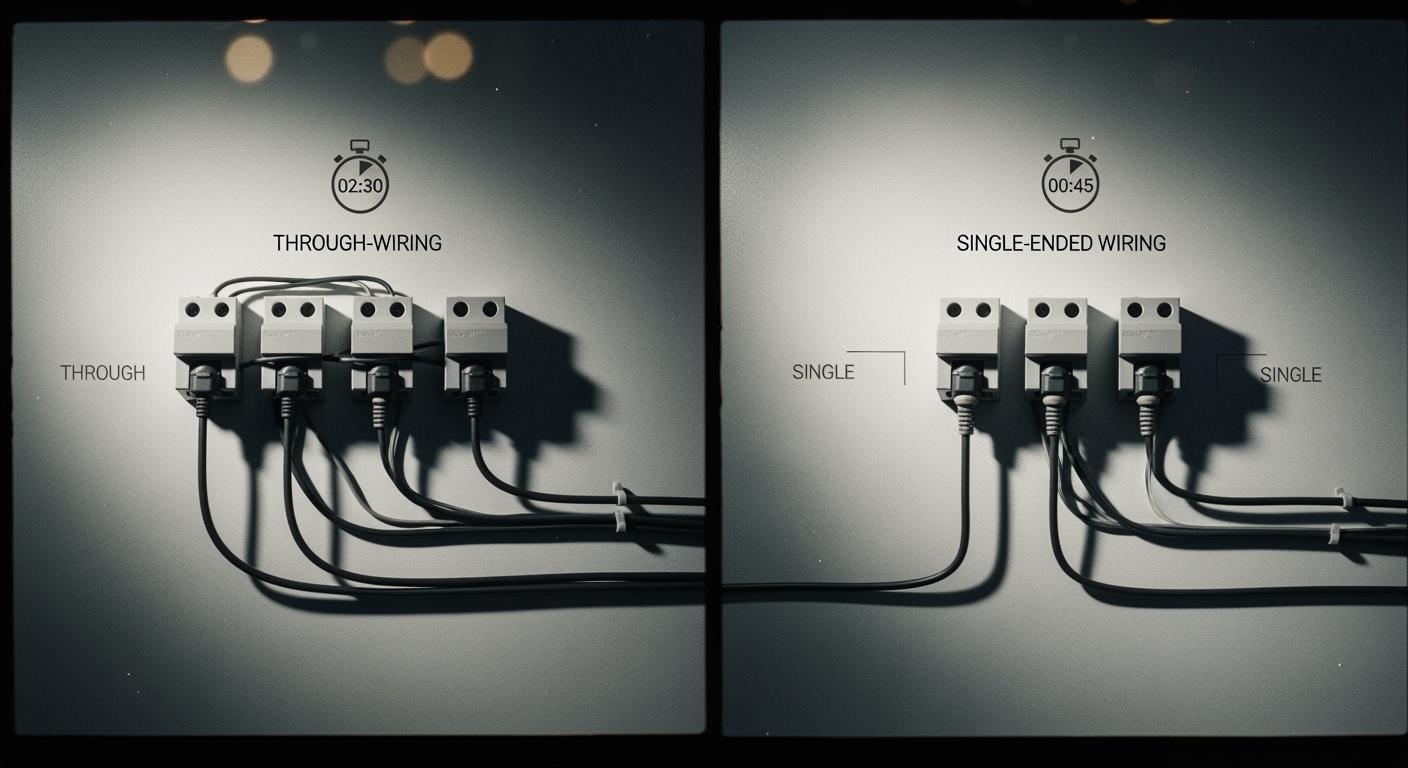
In the high-stakes environment of industrial facility management, installation efficiency is a primary driver of project profitability. When deploying large-scale LED lighting systems—such as in warehouses, retail corridors, or pharmaceutical plants—the choice between through-wiring and single-ended wiring topologies dictates the labor hours required and the complexity of the site infrastructure. While single-ended wiring serves a niche for isolated fixtures, through-wiring has become the industry benchmark for large projects. By utilizing tool-free connectors and streamlined daisy-chain protocols, technical teams can compress schedules and lower site costs significantly.
Key Takeaways
-
Installation ROI: Through-wiring enables multiple fixtures to connect in a single run (up to 30-50 meters), reducing the required number of electrical home-runs by up to 80%.
-
Labor Efficiency: Tool-free “PUSH IN” connectors and standardized terminal blocks can slash manual wiring time by 66% per fixture.
-
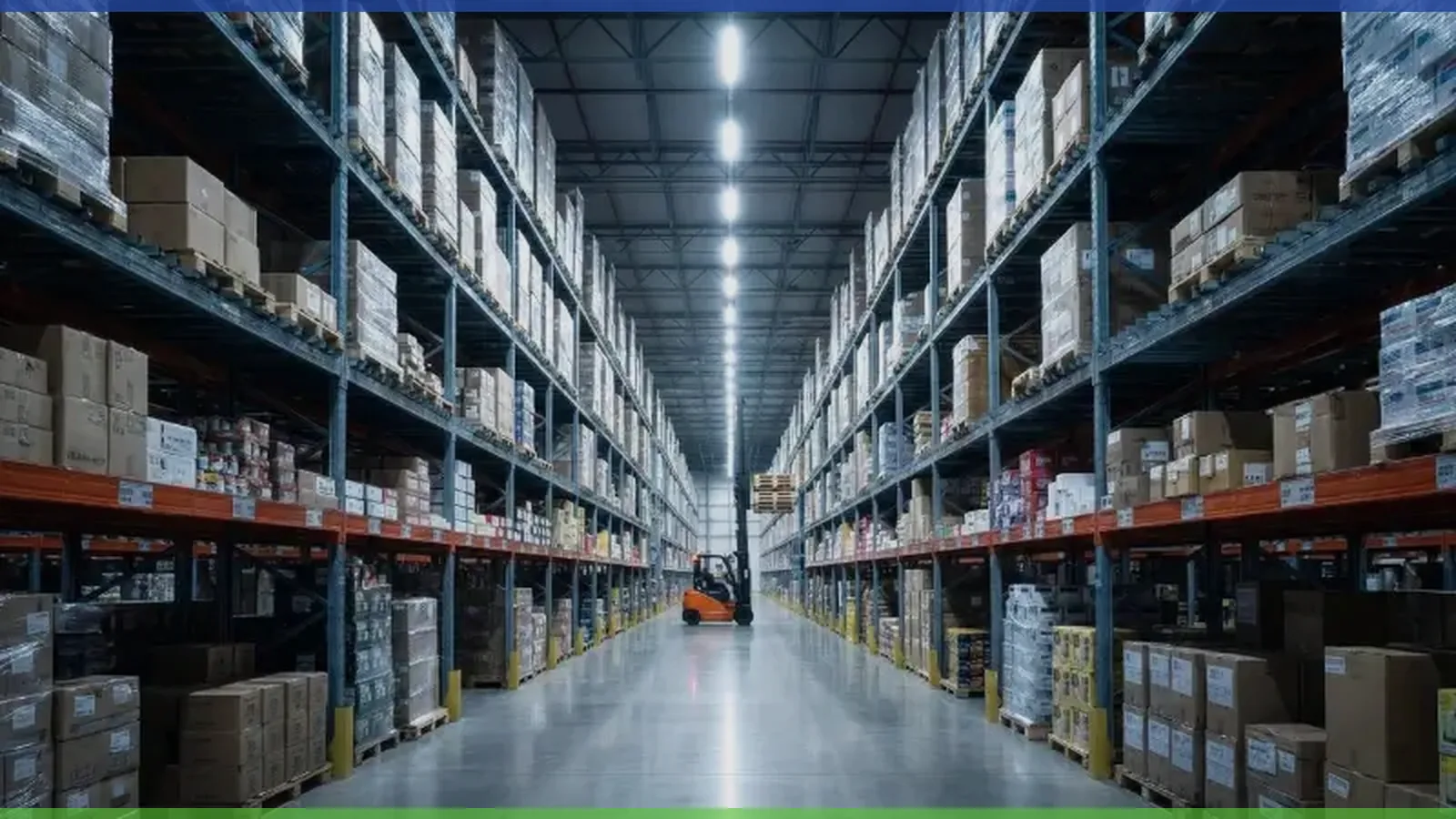
Scalability: Daisy-chaining is ideal for high-clearance environments like warehouses where installing individual electrical drops is prohibitively expensive.
-
Maintenance Continuity: Modern through-wiring systems facilitate rapid module swaps and future upgrades without disturbing the entire electrical circuit.
-
Technical Safeguards: Through-wiring systems from Fanxstar are engineered to mitigate voltage drop, ensuring uniform luminous efficacy across long series connections.
Technical Framework: Through-Wiring vs. Single-Ended
The fundamental distinction lies in how power is distributed across the luminous array. Technical personnel must evaluate the trade-off between installation speed and circuit complexity during the design phase.
|
Technical Metric |
Through-Wiring (Daisy-Chain) |
Single-Ended (Home-Run) |
|---|---|---|
|
Primary Installation Path |
Serial Connection (Fixture to Fixture) |
Parallel Connection (Fixture to Panel) |
|
Electrical Drop Requirement |
One feed for up to 30 units |
One feed per fixture (or cluster) |
|
Wiring Manual Labor |
Minimal (Integrated Harnesses) |
High (Manual Pigtails/Splicing) |
|
Ideal Application |
Industrial Aisles & Large Retail |
Isolated Rooms & Retrofits |
|
Troubleshooting Speed |
Fast (Visual Fault Indicators) |
Slower (Must trace individual lines) |
Efficiency Drivers in Serial Connectivity
Through-wiring allows for a streamlined electrical workflow. By leveraging “daisy-chain” technology, technical personnel avoid the need for repetitive drilling and threading of individual cables to the main panel. This is particularly transformative for warehouse projects, where heights often exceed 10 meters, making every additional electrical drop a significant labor expense involving scissor lifts and specialized equipment.
The Impact of Tool-Free Connection Technology
The evolution of connection technology has been a game-changer for installation speed. High-performance fixtures from Fanxstar utilize tool-free connectors and standardized terminal blocks. These systems allow for safe, error-free plugging by using individual coding, ensuring that L, N, and E lines are correctly assigned in seconds.
Unlike traditional screw-terminal connections—which are prone to over-tightening or loosening due to vibration—integrated “PUSH IN” terminals maintain a consistent contact pressure. This reliability is vital for luminous maintenance and electrical safety over the 50,000+ hour lifespan of an industrial LED system.
“Utilizing a unified design environment that integrates harness design can reduce the margin for error in complex industrial layouts, ensuring that every fixture in a 60-meter run performs at peak efficacy.”
When to Utilize Single-Ended Wiring Protocols
Despite the speed of through-wiring, single-ended (or home-run) wiring remains relevant for specific scenarios. This method involves running a dedicated cable from the power source to an isolated fixture. It is the standard approach for small residential spaces, isolated utility closets, or “one-for-one” LED retrofits where the existing infrastructure does not support serial connectivity.
The Limitations in Large-Scale Environments
For large facilities, the time factors of single-ended wiring are punitive. Each unit requires its own conduit, junction box, and termination point. This increases the bill of materials (BOM) and results in a cluttered ceiling environment. According to a case study by Rockwell Automation, transitioning from traditional manual splicing to modular in-cabinet and through-wiring solutions can reduce total wiring time by up to 66%.
Key Performance Factors: Beyond the Stopwatch
Choosing a wiring method involves more than just calculating minutes per fixture. Facility managers must account for long-term operational stability.
-
Voltage Drop Management: In through-wiring systems, the gauge of the internal harness is critical. Fanxstar’s through-wiring kits are designed with heavy-duty conductors to ensure that the last light in a 20-fixture run remains as bright as the first.
-
Thermal Stability: Continuous wiring harnesses must be rated for the thermal environments of the fixtures. Utilizing linear aluminum fixtures helps dissipate the heat generated by both the LED modules and the internal wiring.
-
Maintenance Agility: Through-wiring systems often feature modular drivers. If a component fails, it can be swapped out without interrupting the power flow to downstream fixtures, ensuring the rest of the facility remains illuminated.
|
Application Scenario |
Recommended Method |
Primary Benefit |
|---|---|---|
|
Multi-Aisle Warehouse |
Through-Wiring |
Maximum labor ROI; Clean lines |
|
Single Retail Fitting Room |
Single-Ended |
Simple, low-complexity install |
|
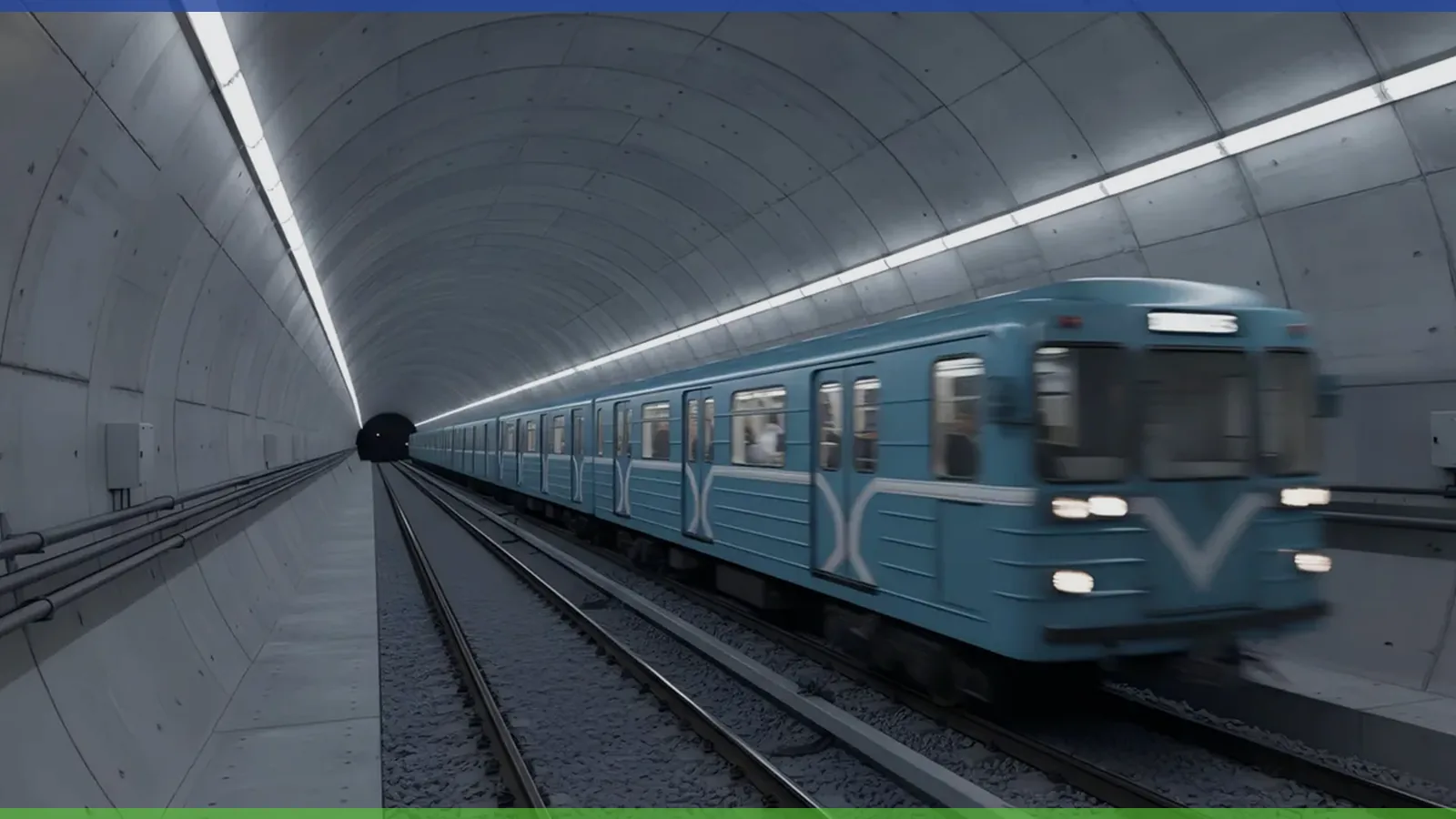
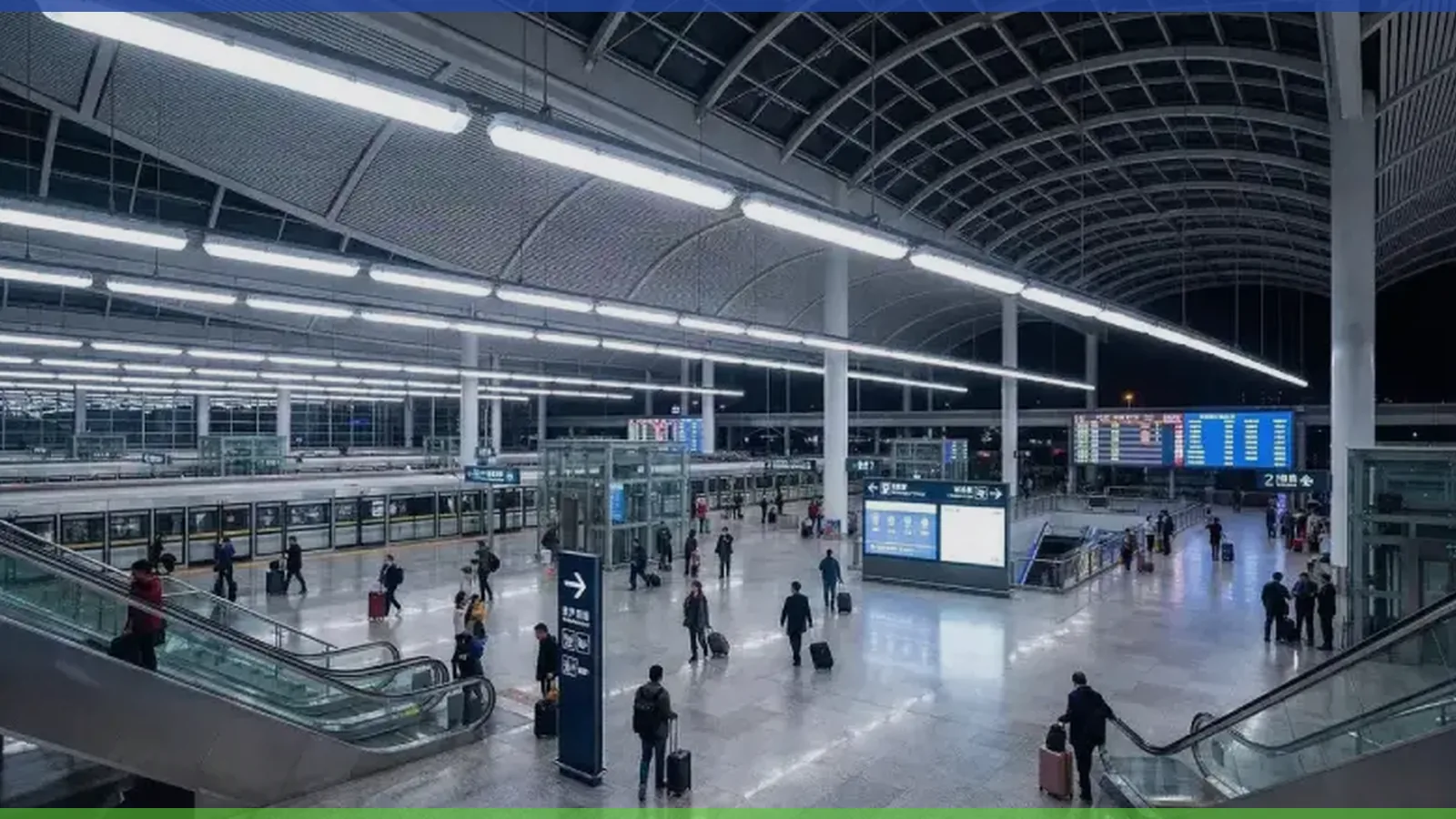
Public Transit Corridor |
Through-Wiring |
Scalability and rapid troubleshooting |
|
Office Pantry Retrofit |
Single-Ended |
Utilizes existing electrical drops |
Real-World ROI: Through-Wiring in Practice
Consider a 100,000 sq ft logistics center requiring 500 linear vapor-tight fixtures. Using a single-ended approach, an installation team might manage 4 fixtures per hour per technician. By switching to a Fanxstar Through-Wiring System with quick-connectors, that same team can increase throughput to 10 fixtures per hour. Over the life of the project, this results in a direct labor saving of over 60 workdays, significantly lowering the total CAPEX.
Summary: Implementing the Luminous Infrastructure
To maximize efficiency on your next electrical project, the consensus among industry professionals is clear: through-wiring saves more time and money. Technical teams should evaluate each project based on scale and future adaptability. To achieve the best results, consider these final implementation tips:
-
Prioritize fixtures with modular trunking capabilities for high-traffic zones.
-
Use high-voltage splicing to allow for longer runs without specialized booster power feeds.
-
Ensure all connectors are IP-rated (IP65/IP66) for environments exposed to dust or moisture.
-
Conduct regular photometric checks to confirm that through-wiring hasn’t resulted in inconsistent lux levels at the end of the line.
Frequently Asked Questions (FAQ)
What exactly is through-wiring in LED fixtures?
Through-wiring allows power to be passed from one fixture to the next through an internal electrical harness. It enables technical teams to power a whole row of lights from a single junction point, creating a “daisy-chain” effect.
Is through-wiring safe for high-wattage industrial lights?
Yes, provided the fixture is rated for the total current load. Manufacturers specify the maximum number of fixtures that can be connected based on the gauge of the through-wiring and the circuit breaker capacity.
Do tool-free connectors really speed up installation?
Absolutely. By eliminating the need for stripping wires, managing wire nuts, and using screwdrivers for every termination, tool-free “PUSH IN” connectors can reduce the time spent on a single connection by over 60%.
Can I mix through-wiring and single-ended fixtures on the same circuit?
Technically yes, but it is not recommended for new installations. Maintaining a consistent wiring topology throughout a zone simplifies troubleshooting and future system expansions.
Does through-wiring help with emergency lighting compliance?
Yes. Many through-wiring harnesses include a dedicated “Unswitched Live” line for emergency modules, ensuring that all fixtures in a run can support automated safety functions from a single feed.
Want to optimize your next project? Explore Fanxstar’s Professional Aisle Lighting Solutions and experience the ROI of seamless engineering.