Key Takeaways
-
Unprecedented Efficacy: Modern tri-proof lights now reach up to 230lm/W, allowing for a 50-80% reduction in electricity consumption compared to traditional T8 systems.
-
Marine-Grade Durability: Top-tier submersible models (IP68) offer specialized spectrums for aquaculture while maintaining industrial-level efficiency.
-
Intelligent Integration: Multi-functional “3-in-1” designs integrate drivers, emergency modules, and motion sensors to maximize localized energy savings.
-
Rapid ROI: High-efficacy luminaires typically achieve a full return on investment through energy savings and reduced maintenance within 18-24 months.
-
Impact Resilience: Utilizing IK10-rated polycarbonate ensures that efficiency does not come at the cost of durability in heavy industrial zones.
The industrial lighting landscape is undergoing a radical transformation driven by the pursuit of absolute efficiency. For facility managers and engineers, selecting the best tri-proof lighting is no longer just about durability—it is about the “lumens-per-watt” ratio. High-efficacy fixtures significantly lower the total cost of ownership by reducing wattage requirements without sacrificing brightness. Fanxstar’s latest seaweed and industrial series set a new industry benchmark, offering efficiencies that range from 160lm/W to an industry-leading 230lm/W.
Top 5 High-Efficiency LED Tri-Proof Solutions
1. V40 & V80 Seaweed Light (230 lm/W)
The V40 and V80 Seaweed series represent the pinnacle of current LED engineering. Utilizing specialized 2835R Pro chips, these luminaires achieve a staggering 230 lumens per watt. While primarily engineered for the high-humidity and submerged environments of aquaculture, their ultra-efficient design makes them suitable for any high-risk area requiring IP68 protection. They offer an unmatched light-to-energy conversion rate, supporting specialized growth spectrums at 2.8 micromol/J.
2. A3 Trilamp Max (185 lm/W)
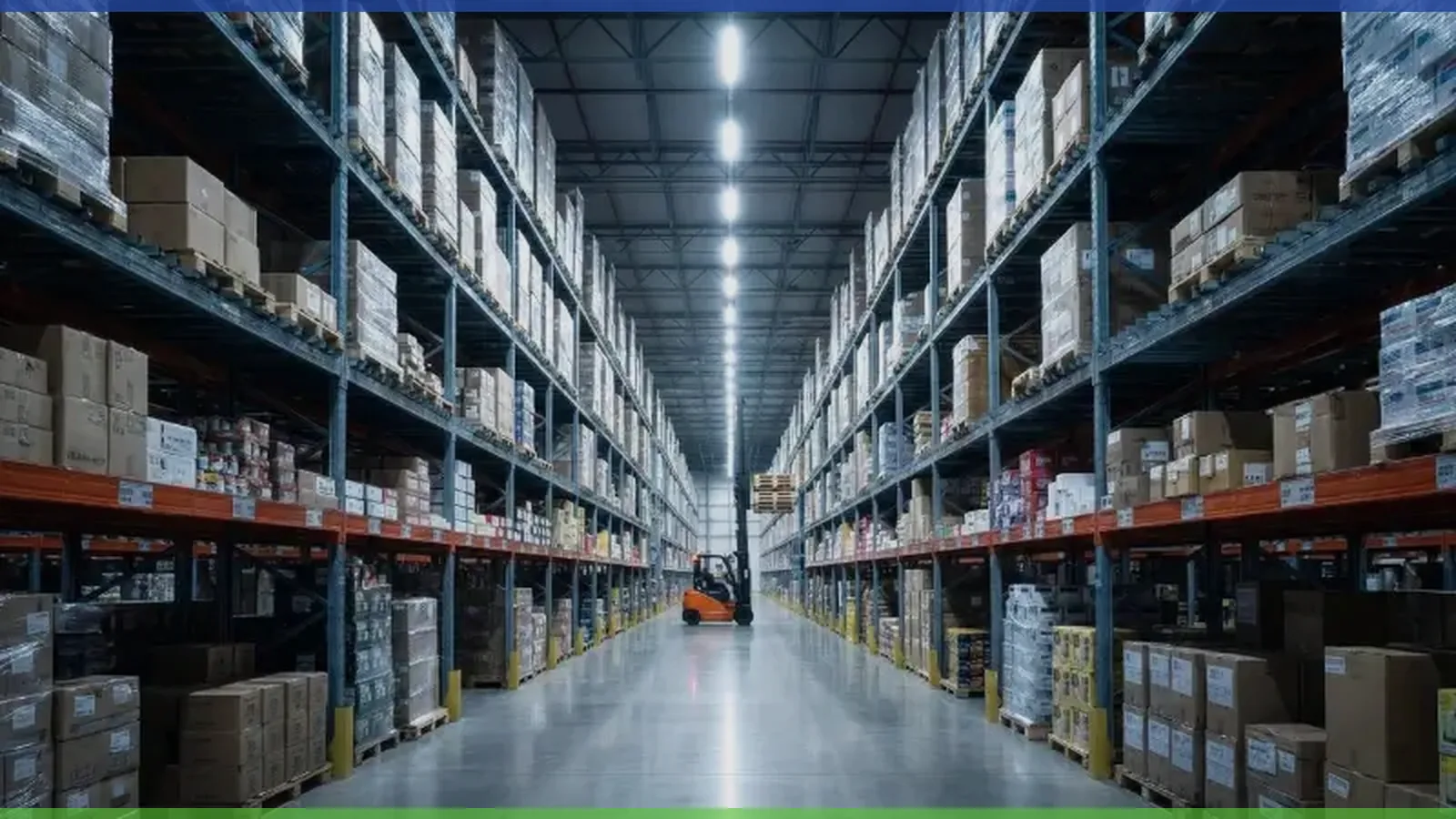
For large-scale warehouses and manufacturing plants, the A3 Trilamp Max provides a balance of high output and architectural elegance. Its seamless splice batten design allows for continuous end-to-end runs of light, which reduces wiring costs. With an efficacy of 185lm/W, it provides 15-20% more light than standard high-performance fixtures, all within a robust IK08 impact-resistant housing.
3. A18 Trilamp (165 lm/W)
The A18 series is defined by its “3-in-1” integrated logic. By housing the LED driver, an emergency converter, and a dimmable motion sensor in a single IP65 casing, it eliminates the need for external hardware. At 165lm/W, it serves as an ideal solution for smart parking garages and corridors where demand-based dimming can further cut energy costs by another 60%.
4. A4 Trilamp (165 lm/W)
The A4 Trilamp is the “heavy industry” choice. Achieving 165lm/W, it incorporates an integrated reflector that redirects scattered light back toward the work surface, increasing perceived brightness. Its IK10 rating means it can withstand massive mechanical impacts, making it a sustainable commercial LED lighting choice for areas prone to physical stress.
5. A16 Linkable Pro / Batman B2 (160 lm/W)
Sharing the fifth spot are the modular A16 and the aluminum-based Batman B2. Both deliver a consistent 160lm/W. The Batman B2 is particularly notable for its superior thermal management; the high-grade aluminum base allows for a lifespan of over 74,000 hours. These fixtures are the versatile workhorses of modern industry, offering linkable configurations and multiple mounting styles.
Technical Comparison: Efficiency and ROI
When evaluating these models, the relationship between luminous efficacy and operational cost is clear. A fixture producing 230lm/W requires roughly 30% less wattage to achieve the same foot-candle level as a 160lm/W fixture. Over a large facility with hundreds of units, this translates to thousands of dollars in annual utility savings.
|
Model Series |
Efficacy (lm/W) |
Lifespan (L70) |
IP/IK Rating |
Primary Benefit |
|---|---|---|---|---|
|
V40 & V80 Seaweed |
230 |
100,000h+ |
IP68 / Submersible |
Maximum Energy Savings |
|
A3 Trilamp Max |
185 |
80,000h+ |
IP66 / IK08 |
Seamless Continuous Lighting |
|
A18 / A4 Trilamp |
165 |
80,000h+ |
IP65 / IK10 |
Smart Sensing & Impact Resistance |
|
Batman B2 |
160 |
74,000h+ |
IP66 / Aluminum Base |
Advanced Heat Dissipation |
Buying Guide for High-Efficacy Tri-Proof Lighting
1. Calculating Lumens Per Watt (lm/W)
Luminous efficacy is the most critical metric for modern industrial LED upgrades. Always verify the lm/W by dividing the total lumen output by the total wattage. Beware of “chip-only” specs; the real-world performance of a fixture must include the losses from the driver and the diffuser lens.
2. Choosing the Right IP and IK Ratings
High efficiency is only valuable if the fixture survives its environment. IP65/IP66 is necessary for dust and water protection, while IK08/IK10 is required for areas with machinery or public access. For specialized underwater or wash-down environments, the IP68 rating of the V80 series is non-negotiable.
3. Evaluating Smart Sensor Value
Integrating motion and daylight sensors (Daylight Harvesting) can double your energy savings. Fixtures like the A18, which automatically dim when an area is unoccupied or when natural light is present, offer a significantly faster payback period than “on/off only” fixtures.
“Sustainable lighting is a two-fold strategy: reducing the power each fixture draws, and ensuring the fixture lasts long enough to never need maintenance. Modern 160lm/W+ LEDs achieve both.”
Installation Best Practices for Maximum Efficacy
To preserve the efficiency of your lighting system, proper installation is key. Ensure that voltage levels are stable and that fixtures are spaced to provide uniform coverage without excessive “hotspots.” Linkable models like the A16 allow for faster installation and fewer electrical points, which further reduces initial labor costs. Regular cleaning of the diffuser lenses is also recommended; dust buildup can reduce lumen output by as much as 10% annually.
Frequently Asked Questions
Is 230 lm/W light too bright for a standard warehouse?Efficacy refers to energy conversion, not just brightness. You would simply use a lower-wattage 230 lm/W fixture to replace a higher-wattage 140 lm/W fixture, achieving the same light level while using significantly less electricity.
What is the typical lifespan of these high-efficiency LEDs?Fanxstar’s professional series are rated between 74,000 and 100,000 hours. In a 12-hour-per-day industrial environment, this can equate to over 20 years of maintenance-free service.
Are these lights dimmable?Yes. Most high-efficiency models, including the A18 and A3 Max, support 0-10V or DALI dimming protocols, allowing them to integrate into broader building management systems (BMS).
Does a high IK rating affect light output?Not significantly. Advanced polycarbonate diffusers used in Fanxstar’s IK10 fixtures are engineered to provide maximum impact resistance while maintaining over 90% light transmission.
Can I use IP68 lights for standard industrial workshops?Absolutely. While designed for marine use, the IP68 rating of the V80 series provides the absolute best protection against fine industrial dust and pressurized cleaning, making it a premium choice for food processing and chemistry labs.
Investing in ultra-high efficacy tri-proof lighting is a strategic decision for any facility looking to future-proof its operations. By selecting fixtures that deliver 160lm/W and beyond, you ensure a safer, brighter environment with the lowest possible energy footprint. Explore Fanxstar’s full range of industrial LED solutions today.