Key Takeaways
-
Dark Spot Elimination: Seamless linking creates a continuous line of light, essential for architectural uniformity and professional aesthetics.
-
Advanced Interconnects: Patented plug-in and modular terminal systems ensure precise mechanical alignment and reliable power continuity.
-
Environmental Protection: Modern linkable units achieve IP65/IP66 ratings, maintaining vapor-tight integrity even at the junction points.
-
Energy Intelligence: Integrated smart controls can reduce operational energy costs by 60% through daylight harvesting and motion sensing.
-
Batch Precision: Maintaining color consistency requires selecting units from the same chromaticity bin (SDCM < 3) to prevent visible color shifts.
In modern architectural design, the pursuit of a “perfect line of light” has made seamless zero-gap linking a mandatory standard. Lighting professionals understand that any break in illumination—whether caused by mechanical misalignment or optical shadows—can degrade the visual experience of a space. Achieving a truly seamless linear trunking system requires a combination of high-precision engineering and meticulous installation protocols. Fanxstar’s Trilamp and Batman series provide the technical foundation for these continuous runs, delivering up to 160 lumens per watt and ensuring that every joint remains dark-spot free.
The Engineering Challenges of Linear Connectivity
Identifying the Source of Visible Gaps
Unwanted gaps in continuous lighting runs are rarely the result of a single factor. They often arise from a combination of mechanical tolerances, optical lens shrinkage, and electrical voltage drops. When fixtures are joined, even a 1mm deviation can create a visible shadow. High-quality luminaires utilize “light-blocking shields” and overlapping diffusers to hide these physical junctions.
|
Technical Obstacle |
Primary Cause |
Engineering Solution |
|---|---|---|
|
Mechanical Sagging |
Inadequate structural rigidity of the chassis. |
Extruded AL6063 Aluminum housing. |
|
Optical Shadows |
Light not reaching the end of the diffuser. |
Precision end-to-end LED board placement. |
|
Voltage Drop |
Excessive distance from the power source. |
Loop-in/Loop-out wiring with larger gauge conductors. |
|
Thermal Expansion |
Material shifting due to operating heat. |
Floating mechanical connectors and silicone gaskets. |
Professional Connection Methods: Achieving Continuity
1. Patented Plug-in Systems
Direct plug-in systems represent the gold standard for linear light installation. These systems utilize a mechanical locking mechanism that pulls two fixtures together until they are flush. Fanxstar’s A3 Trilamp series incorporates this technology, allowing for end-to-end connection without dark spots. This method ensures both mechanical registration and electrical continuity, significantly reducing the labor required for on-site wiring.
2. Modular Tool-Free Terminals
For high-speed deployments, modular systems like the A16 Linkable series are indispensable. These units feature quick-connect terminals that support up to 30 strips on a single 230V circuit. By eliminating the need for internal wire nuts and manual soldering, modular terminals minimize the risk of wiring errors that can lead to flickering or inconsistent brightness at the junction points.
|
Connectivity Feature |
Standard Linkable LED |
Fanxstar Professional Series |
|---|---|---|
|
Max Linking Quantity |
5 – 10 Units |
Up to 30 Units (A16 Pro) |
|
Junction Seal |
Exposed gaps |
IP66 Vapor-tight registration |
|
Installation Speed |
Moderate (manual wiring) |
Ultra-fast (Tool-free plug-in) |
|
Dimming Support |
None or limited |
DALI 2.0 / 0-10V Seamless dimming |
Ensuring Optical and Mechanical Uniformity
Chromaticity Binning and Batch Control
Nothing ruins a continuous line of light faster than a color temperature mismatch between linked fixtures. To avoid this, designers must ensure that all luminaires come from the same production batch. Professional manufacturers utilize narrow “binning” processes—typically aiming for an SDCM (Standard Deviation Color Matching) of less than 3. This ensures that the human eye cannot detect the subtle chromatic shifts between the first and the last fixture in a run.
Management of Thermal Expansion
Linear fixtures produce heat. Over a 50-meter run, the cumulative expansion of aluminum and polycarbonate can be several centimeters. If connections are too rigid, the fixtures may buckle or pull apart, creating gaps. Fanxstar’s through-wiring solutions are designed with built-in tolerances to accommodate these physical shifts while maintaining a light-tight seal.
“The junction is the most vulnerable part of any linear system. A truly seamless light is one where the hardware disappears, leaving only pure, uniform illumination.”
Installation Best Practices for Flawless Results
-
Structural Alignment: Utilize a laser level during the mounting process. Any vertical or horizontal deviation in the mounting brackets will be amplified at the junction point.
-
Electrical Load Calculation: When daisy-chaining multiple fixtures, ensure the total wattage does not exceed the capacity of the internal bus-bars. For the A20 series, this allows for continuous runs of up to 60 meters.
-
Sealing Integrity: In industrial or wet environments, verify that the gaskets are properly seated before locking the units together. An IP66 rating at the junction is critical for long-term safety.
Sustainability and Smart Control Integration
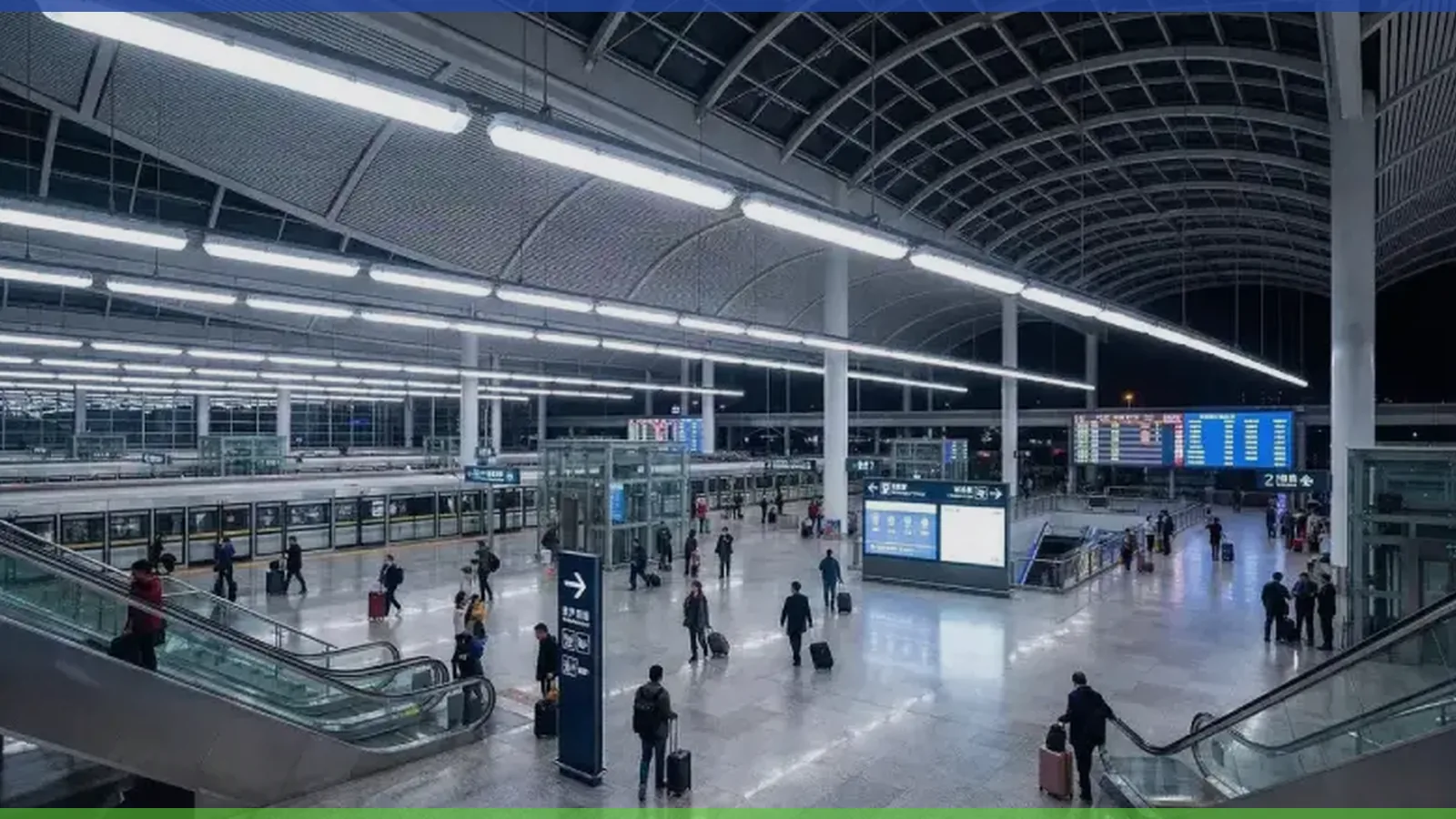
Modern linear systems offer more than just aesthetics; they are powerful tools for energy management. Integrating DALI dimming and daylight sensors allows a continuous line of light to adjust its output based on ambient conditions. In retail and office environments, this intelligent control can reduce operational costs by as much as 60%, while features like RF grouping facilitate easy wayfinding and zoning in public transit hubs.
Frequently Asked Questions (FAQ)
How do seamless connectors prevent light leaks?Seamless connectors align the fixture housings and diffusers with sub-millimeter precision. Specialized overlapping end-caps and light-blocking shields inside the housing ensure that no light escapes through the physical junction point.
Can I mix different lengths of linear lights in a single run?Yes, Fanxstar’s modular systems allow you to mix standard lengths (e.g., 2ft, 4ft, 5ft) within the same continuous circuit, provided the total load remains within the rated capacity of the supply line.
What happens if one fixture in a seamless run fails?Fanxstar’s professional series utilize “Independent Parallel Wiring.” If one fixture fails, the electrical continuity for the rest of the line is maintained, allowing for localized maintenance without taking down the entire lighting system.
Is special wiring required for zero-gap dimming?To achieve uniform dimming across a linked run, we recommend using fixtures with integrated DALI or 0-10V through-wiring. This ensures the control signal reaches every fixture simultaneously, preventing visible lag or dimming inconsistencies.
Are these seamless systems suitable for outdoor use?Absolutely. Our linkable series are available with IP65 and IP66 ratings, making them ideal for outdoor facades, bridges, and parking structures where continuous architectural lighting is required.
In conclusion, achieving a flawless, zero-gap linear lighting installation is a matter of choosing the right engineering partner. By prioritizing batch consistency, thermal management, and modular interconnects, you can deliver a lighting system that is as durable as it is beautiful. Explore Fanxstar’s full range of linear solutions to find the perfect match for your next infrastructure upgrade.