
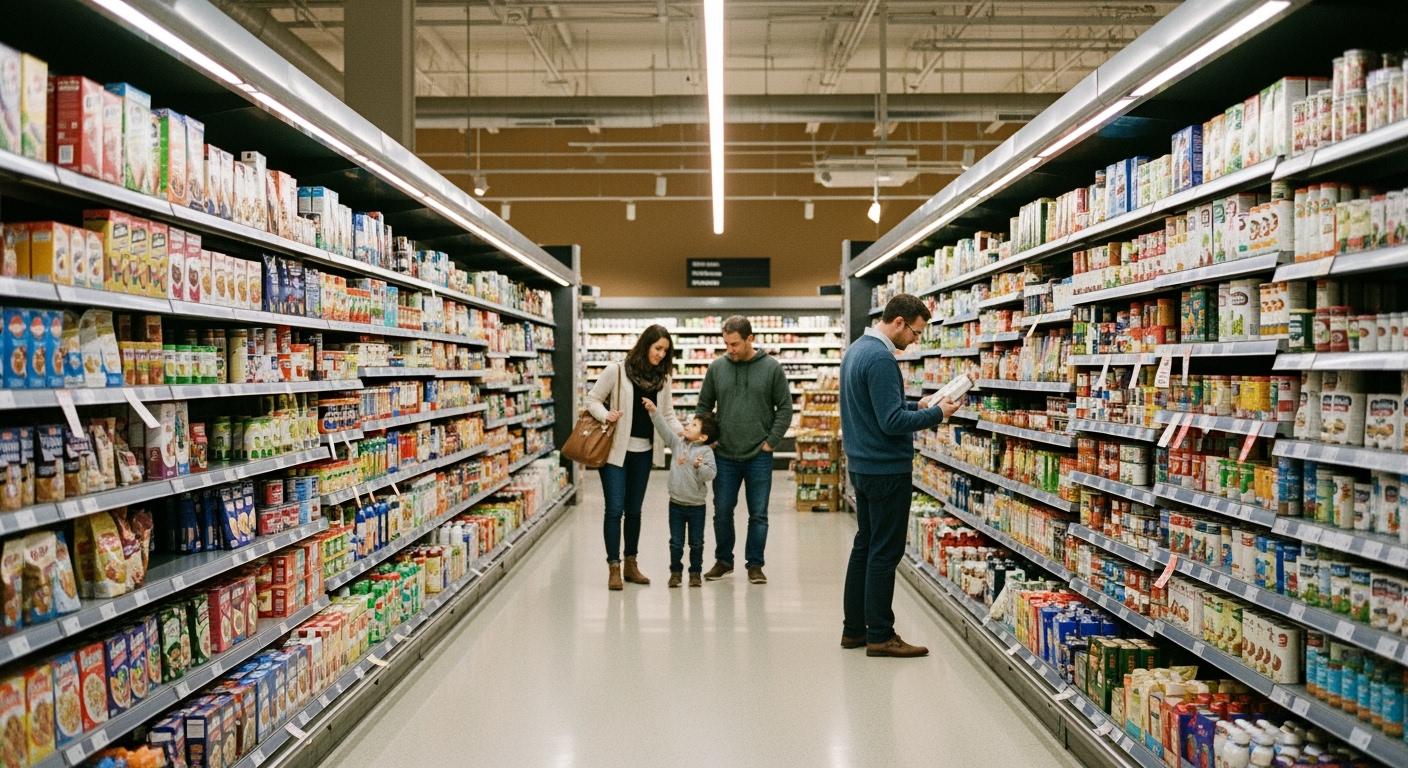
In the competitive world of modern retail, the customer journey is dictated by subtle environmental cues. High-performance lighting is the primary architect of this experience. While brightness is necessary for product visibility, “uncontrolled brightness” results in glare—a significant physiological stressor that leads to eye strain, headaches, and shopper fatigue. By implementing UGR<19 low glare lighting, supermarkets can transform harsh, clinical aisles into welcoming spaces that encourage longer dwell times and boost product appeal.
Key Takeaways
-
Visual Ergonomics: UGR<19 is the definitive standard for retail comfort, ensuring that light sources remain soft and non-distracting to the human eye.
-
Product Fidelity: Low glare systems enhance contrast, allowing product labels and colors to appear more vibrant and easier to read.
-
Flicker-Free Technology: Advanced LED drivers eliminate the stroboscopic effect, significantly reducing the risk of neurological fatigue for both shoppers and staff.
-
Luminous Uniformity: Seamless splicing technology removes the “zebra pattern” of dark spots, providing a continuous flow of light across long aisles.
-
Energy Efficiency: Modern low-glare LEDs offer up to 80% energy savings compared to traditional fluorescent systems while maintaining higher lux levels.
Defining Glare: The UGR Standard for Supermarkets
Glare in commercial environments is quantified using the Unified Glare Rating (UGR). This index measures the discomfort caused by luminaires in a specific space, taking into account the observer’s position, the background luminance, and the brightness of the fixture. In retail, a high UGR (above 22) creates “disability glare,” where the pupils constrict so aggressively that products in shadows become nearly invisible.
A UGR<19 rating is considered the gold standard for high-traffic supermarkets. It balances the need for high vertical illuminance (lighting the shelves) with the need for horizontal comfort (protecting the eye). International standards for workplace and retail environments increasingly mandate these levels to support the well-being of occupants.
|
Glare Category |
UGR Value |
Impact on Shoppers |
|---|---|---|
|
Critical / Disability Glare |
25 – 28 |
Aggressive eye strain; immediate discomfort. |
|
Uncomfortable |
22 – 24 |
Shoppers move faster to exit; product appeal drops. |
|
Ideal Retail Standard |
16 – 19 |
Optimal comfort; relaxed browsing; high focus. |
|
Premium / Specialized |
Below 13 |
High-end luxury feel; zero visual noise. |
Optical Engineering for Luminous Comfort
Creating a low glare lighting environment requires advanced optical design. Simply adding a diffuser to a bright LED is often insufficient. Professional solutions utilize micro-prismatic diffusers and deep-recessed LED chips to shield the direct light source from the shopper’s line of sight.
Flicker-Free Stability
Beyond physical glare, “temporal light artifacts” or flicker can ruin the shopping experience. Traditional fluorescent tubes and low-quality LED drivers pulse at frequencies that cause neurological fatigue. Flicker-free LED technology ensures a stable DC output, maintaining flicker levels below 1%. This stability is crucial for supermarkets with reflective surfaces like glass refrigerator doors and polished floors, where even a slight flicker is amplified by reflections.
The High CRI Advantage
In the grocery sector, color is a proxy for freshness. High Color Rendering Index (CRI) lighting renders reds, greens, and yellows with scientific accuracy. While a CRI of 80 is the baseline, supermarket linear solutions often utilize CRI 90+ modules for fresh produce and meat departments. When combined with low glare, high CRI allows the natural brilliance of the food to stand out without the “washout” effect of harsh direct light.
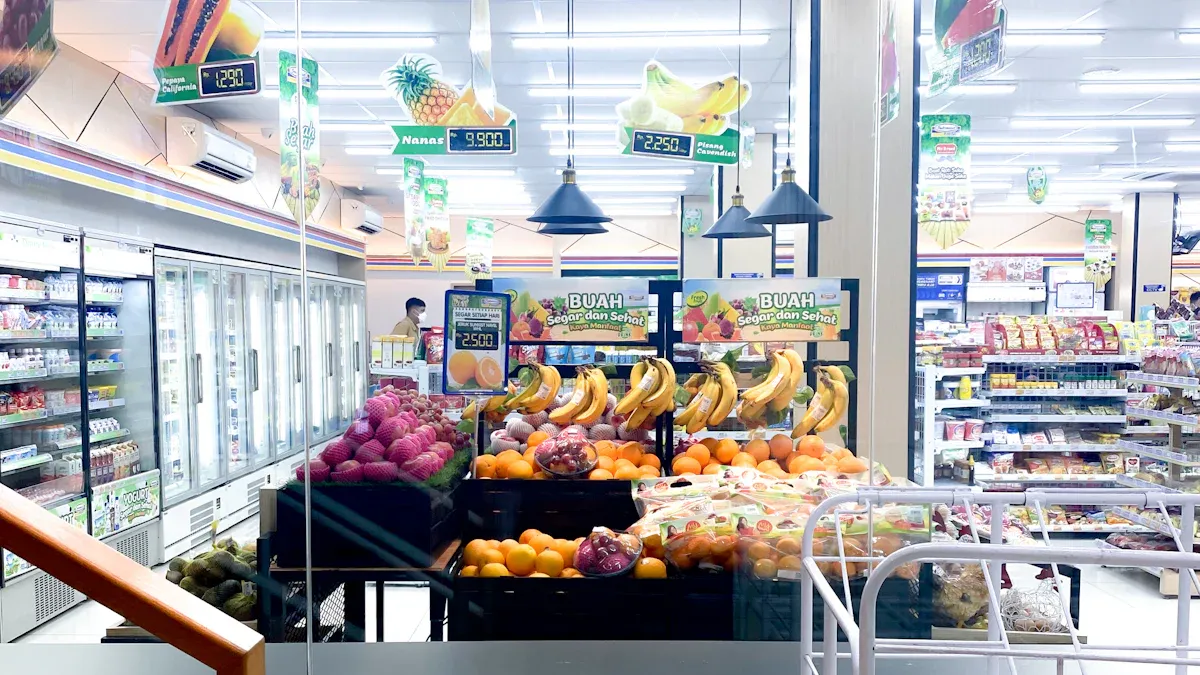
Continuous Aisle Illumination: Eliminating Shadows
Dark spots and “unlit cavities” in supermarket aisles are psychological barriers. If a shelf is dimly lit, shoppers perceive the products as less valuable or aged. Seamless linear trunking systems use series connection technology and seamless splicing to create an uninterrupted ribbon of light. This removes the “zebra effect” and ensures every product, from the top shelf to the bottom rack, receives uniform luminous flux.
|
Lighting Feature |
Design Advantage |
ROI Impact |
|---|---|---|
|
Micro-Prismatic Lenses |
Reduces UGR to <19 |
Increased customer dwell time. |
|
Opal PMMA Covers |
Soft, uniform diffusion |
Premium store brand image. |
|
Seamless Splicing |
Continuous light runs |
Reduced installation labor by 40%. |
|
Thermal Management |
Advanced heat sinks |
Fixture lifespan up to 100k hours. |
“Lighting a supermarket with high-glare fixtures is like trying to read a menu with a flashlight shining in your eyes. Upgrading to UGR<19 linear lights is like reading under a high-end library lamp: the products are perfectly clear, but the source remains soft and unobtrusive.”
Safety, Durability, and Compliance
Supermarket lighting must be resilient. Fixtures face accidental impacts from carts and constant exposure to the building’s HVAC and cleaning cycles. IK10 impact protection ensures that even a direct hit from a cart won’t shatter the housing, keeping both the shoppers and the food supply safe from debris.
Furthermore, 94V0 fire-rated materials and high IP ratings (IP65/IP66) are essential for fixtures located near open-case freezers or areas prone to high humidity. Proper thermal management prevents color shifting over time, ensuring that the light quality on day one is the same on day 3,000.

Conclusion: A Strategic Investment in Consumer Comfort
Transitioning to low glare LED lighting is a strategic move that pays dividends in shopper loyalty and operational efficiency. By prioritizing visual comfort and technical precision, supermarket owners can create an environment that highlights freshness, cleanliness, and value. In the modern retail landscape, the “comfort” of the shopper is the most effective driver of sales growth.
Frequently Asked Questions (FAQ)
What does the UGR<19 rating actually mean for a supermarket?
It means the lighting is engineered to keep visual discomfort to a minimum. It prevents the harsh “whiteout” reflections on shiny packaging and ensures that shoppers don’t feel the need to squint while looking at labels.
How does low glare lighting increase sales?
Comfortable lighting reduces the body’s cortisol response, making the shopper feel more relaxed. Relaxed shoppers tend to move slower through the store, explore more categories, and are more likely to make impulse purchases.
Are low-glare LED systems more expensive to maintain?
No. In fact, high-quality UGR<19 systems typically use superior LED chips and drivers that last significantly longer than standard commercial grade lights, leading to lower maintenance costs over a 10-year period.
Can I use low-glare lighting in frozen food sections?
Absolutely. High-quality Fanxstar fixtures are available with IP66 ratings and sub-zero drivers, making them ideal for areas with high moisture and temperature fluctuations where glare off glass freezer doors is a major issue.
What is the ideal lux level when using low-glare fixtures?
For general supermarket aisles, a target of 500-750 lux is recommended. The low UGR allows you to maintain these high brightness levels without causing discomfort for the customers.
Ready to upgrade your retail experience? Explore Fanxstar’s Retail Lighting Solutions and future-proof your supermarket today.








