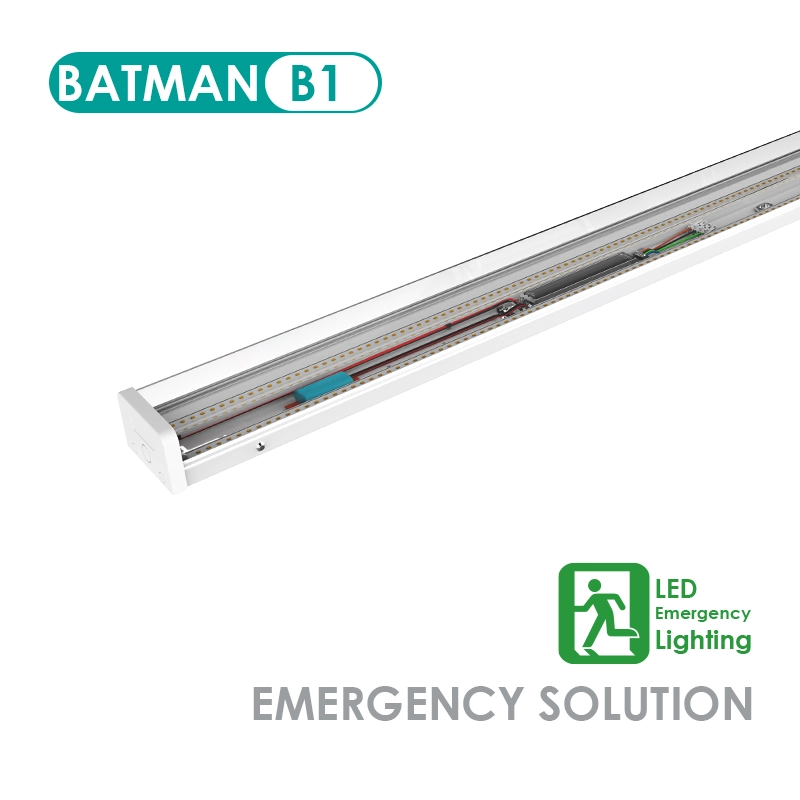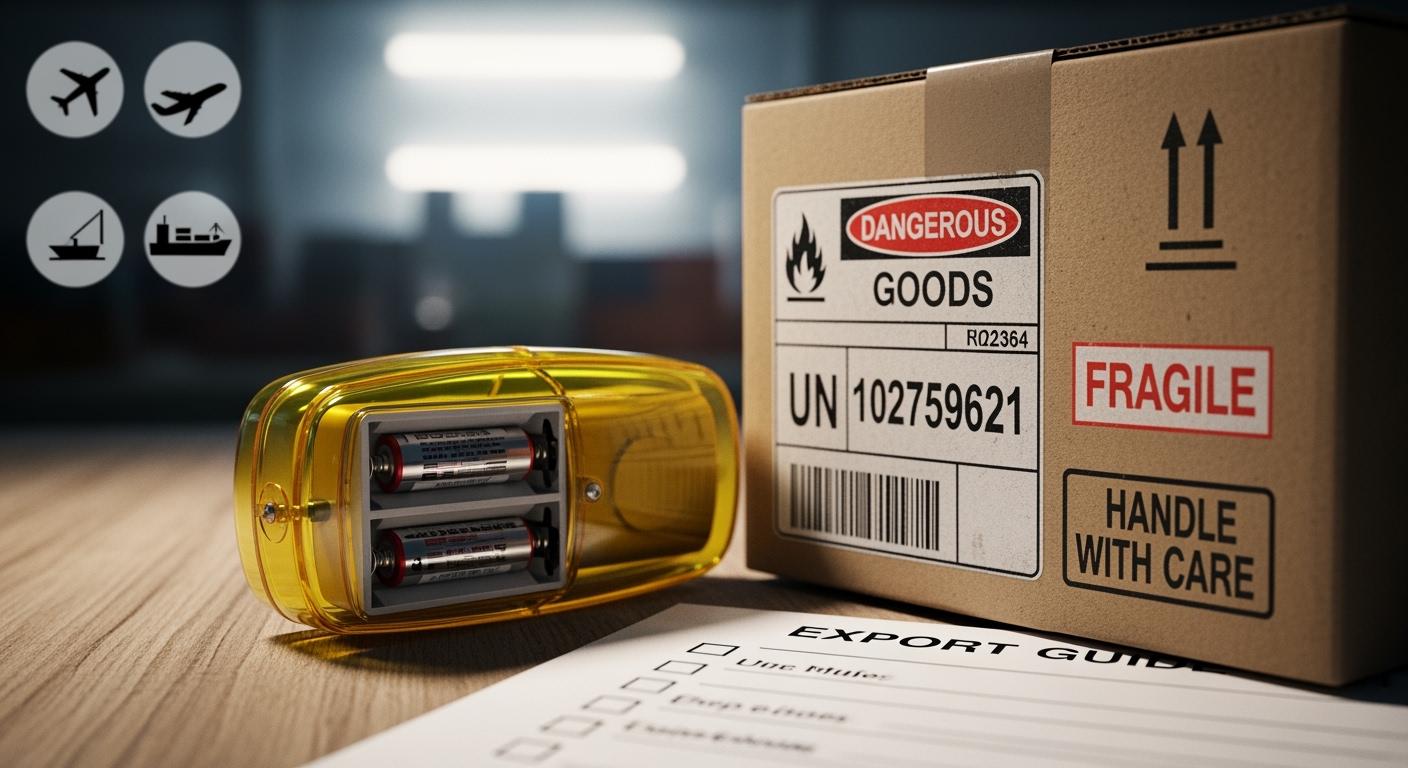
In the global LED market, emergency lighting is a unique product category that presents significant logistical challenges. Because these fixtures contain an onboard power source to ensure safety during power failures, they fall under the strict regulatory umbrella of Shipping Dangerous Goods. In 2026, international oversight of lithium-based batteries has reached an all-time high, driven by the need to prevent thermal runaway incidents during air and sea transit. Exporting emergency lights with batteries requires more than just standard customs forms; it demands a deep technical understanding of Class 9 classifications, UN3481 standards, and the rigorous UN38.3 testing framework.
Failure to comply with these regulations doesn’t just lead to shipment rejections—it can result in massive daily fines (exceeding $75,000 per violation in certain jurisdictions) and potential criminal liability. This guide provides a comprehensive technical overview for B2B buyers and exporters, focusing on the safe transport of LiFePO4-based systems, mandatory documentation, and packing protocols for global markets.
Key Takeaways
-
UN3481 Classification: Mandatory for batteries “contained in equipment.” UN3480 is used only for standalone battery packs.
-
Class 9 Labeling: Emergency lights must carry the miscellaneous dangerous goods diamond and the specific lithium battery handling mark.
-
UN38.3 Test Report: This is the foundation of battery safety; it proves the cells can survive altitude, vibration, and thermal shock.
-
LiFePO4 Advantage: Lithium Iron Phosphate is technically preferred for export due to its higher thermal stability and lower risk of fire compared to NMC.
-
Carrier Certification: Only use freight forwarders certified in IATA (Air) and IMDG (Sea) hazardous materials handling.
The Regulatory Framework: Class 9 and UN3481
Understanding UN Numbers for Lighting
In the world of logistics, every dangerous good is assigned a UN number. For the lighting industry, the distinction is clear:
-
UN3481: Lithium-ion batteries contained in equipment (e.g., an integrated emergency LED batten). This is the most common classification for Fanxstar products.
-
UN3480: Lithium-ion batteries shipped as a separate item (e.g., replacement battery packs).
These are categorized asClass 9 Dangerous Goods. While “miscellaneous,” this class is strictly enforced because lithium-ion batteries can act as both a fuel source and an ignition source in a fire.
The 100Wh Threshold
Regulations vary based on the Watt-hour (Wh) rating of the battery. Most standard emergency light batteries fall under the 100Wh limit. For units exceeding 100Wh (typically large central battery backups), the shipment moves from “Excepted” to “Fully Regulated,” requiring specialized UN-specification packaging and much higher freight surcharges.
|
Transport Mode |
Primary Regulation |
Core Requirement |
|---|---|---|
|
Air Freight |
IATA DGR |
Prohibits batteries on passenger aircraft; mandatory Wh limits |
|
Sea Freight |
IMDG Code |
Strong outer packaging; strict container segregation |
|
Road (Europe) |
ADR |
Standardized driver training and vehicle placarding |
|
Road (USA) |
49 CFR (DOT) |
Comprehensive hazardous materials labeling |
Mandatory Export Documentation: The Technical Trio
To clear customs in major ports like Rotterdam, Los Angeles, or Jebel Ali, exporters must provide a “Technical Package” for their lithium battery products. This package consists of three vital documents:
1. UN38.3 Test Summary
This report is the result of an intense 8-stage testing process. Before a battery can be exported, it must pass:
-
Altitude Simulation (Pressure)
-
Thermal Test (Extreme temp cycling)
-
Vibration (Simulating transport)
-
Shock (Simulating rough handling)
-
External Short Circuit
-
Impact/Crush (Cell level)
-
Overcharge
-
Forced Discharge
At Fanxstar, everyLED emergency battenutilized in our export projects is backed by a verified UN38.3 report from a CNAS-accredited laboratory.
2. Material Safety Data Sheet (MSDS)
The MSDS (or SDS) is a document that identifies the chemical makeup of the battery. For emergency responders, this is the most critical document, as it outlines how to extinguish a fire involving the specific chemistry (e.g., Class D extinguishers for lithium). A compliant MSDS must be updated at least every 2 to 3 years to reflect current GHS (Globally Harmonized System) standards.
3. Shipper’s Declaration for Dangerous Goods (DG Dec)
This is the exporter’s legal affirmation that the goods are packed, marked, and labeled correctly. For air freight, this document must have the “Red Hatch” border. For “Excepted” batteries (under 100Wh), a full DG Dec might not be required, but a specific “Lithium Battery Statement” on the airway bill is still mandatory.
“Missing a single checkbox on a dangerous goods declaration can stop a project’s logistics for weeks. Accuracy is the only way to ensure 100% supply chain uptime.”
Packing and Labeling Protocols
Packaging Integrity
When shipping lithium batteries, the goal of packaging is to prevent short circuits. Each fixture must be placed in a way that its switch cannot be accidentally activated during transit. If the batteries are shipped alongside the fixture (but not inside), they must be in individual, non-conductive inner packaging. Fanxstar utilizes high-density honeycomb cardboard and IK10-rated housings to provide the structural “crush resistance” required by IMDG and IATA standards.
Labeling and Marking Standards
In 2026, the “Lithium Battery Mark” (UN3481) must include the UN number and a valid telephone number for emergency information. This is not just a customer service line; it must be a number where someone with technical knowledge of the shipment can be reached 24/7 during the transit period.
|
Label Type |
Dimensions |
Meaning |
|---|---|---|
|
Class 9 Diamond |
100mm x 100mm |
Miscellaneous Dangerous Good |
|
Lithium Battery Mark |
100mm x 100mm |
Contains UN3481 (Ion) or UN3091 (Metal) |
|
CAO Label |
Standard Orange |
Cargo Aircraft Only (No passenger flights) |
Logistics Strategy: LCL vs. FCL for Batteries
The choice of shipping method has a profound impact on the cost of shipping dangerous goods.
-
FCL (Full Container Load): Highly recommended for large projects. FCL shipments of Class 9 goods are often easier to clear because the container is not “contaminated” with other non-compatible dangerous goods (like flammable liquids or acids).
-
LCL (Less than Container Load): More expensive per unit. Carriers charge a “Hazardous Surcharge” for LCL, and you face higher risks of delays if another buyer’s goods in the same container are not compliant.
Fanxstar helps mitigate these risks by offeringEU-based warehousingin Spain and the Netherlands, allowing our European partners to receive DDP (Delivered Duty Paid) shipments without managing international DG logistics themselves.
The LiFePO4 Advantage in Export Safety
In 2026, the transition from traditional NMC (Nickel Manganese Cobalt) to LiFePO4 (Lithium Iron Phosphate) has become a technical trend. From a logistics perspective, LiFePO4 is the superior choice. It has a higher “thermal runaway” temperature (approx. 270’C vs 210’C for NMC) and does not release oxygen when it fails, significantly reducing the risk of a self-sustaining fire in a shipping container. At Fanxstar, we prioritize LiFePO4 for our emergency series to ensure maximum safety for our global clients.
The Cost of Non-Compliance: Penalties and Risks
The Department of Transportation (DOT) and international bodies have a “Zero Tolerance” policy for undeclared or improperly labeled lithium batteries. Penalties include:
-
Financial Fines: Ranging from $500 for minor labeling errors to $200,000 for “Willful Violations.”
-
Blacklisting: Carriers may refuse to handle any future shipments from an exporter who has had a “Dangerous Goods Incident.”
-
Seizure: Customs authorities can destroy non-compliant goods at the importer’s expense.
This is whycompliance safetyis the first step in any successful export project.
Conclusion: Building a Reliable Infrastructure
Exporting emergency lights is a technical discipline that requires a strategic partnership between the manufacturer and the logistics team. By adhering to the **Class 9 and UN3481** frameworks, ensuring 100% documentary accuracy with UN38.3 reports, and utilizing safer chemistries like LiFePO4, exporters can ensure a smooth path to market. At Fanxstar, we don’t just engineer high-efficacy lighting; we engineer a seamless global supply chain. Choosing a manufacturer that handles the technical burden of dangerous goods compliance is the only way to safeguard your facility’s safety and your project’s profitability. In 2026, precision in the paperwork is as important as the precision of the LED chip itself.
FAQ
Are all emergency lights considered ‘Dangerous Goods’?
Yes, if they contain a lithium-ion or lithium-metal battery. Even small backup batteries in exit signs are regulated. However, if the batteries are under 100Wh, they may qualify for “Section II” excepted status, which has simpler requirements.
Can I ship emergency lights by air?
Yes, but they must go on “Cargo Only” aircraft (CAO). Lithium-ion batteries (UN3480/3481) are generally prohibited on passenger planes. You must also ensure the batteries are charged to no more than 30% of their capacity for air transit.
What is a ‘UN-Rated’ box?
A UN-rated box is a specialized container that has been tested to withstand specific pressures, drops, and stack-loads. For fully regulated batteries (over 100Wh), the box must carry an official UN specification mark (e.g., 4G/Y…).
How long does the UN38.3 certification last?
The certification is specific to the battery design. As long as the battery’s chemistry, weight, and internal structure remain unchanged, the report remains valid. If you upgrade the battery capacity, a new test is required.
Does Fanxstar provide MSDS for all products?
Absolutely. We provide a comprehensive technical data package with every international order, including MSDS, UN38.3 summaries, and IP/IK certification reports.