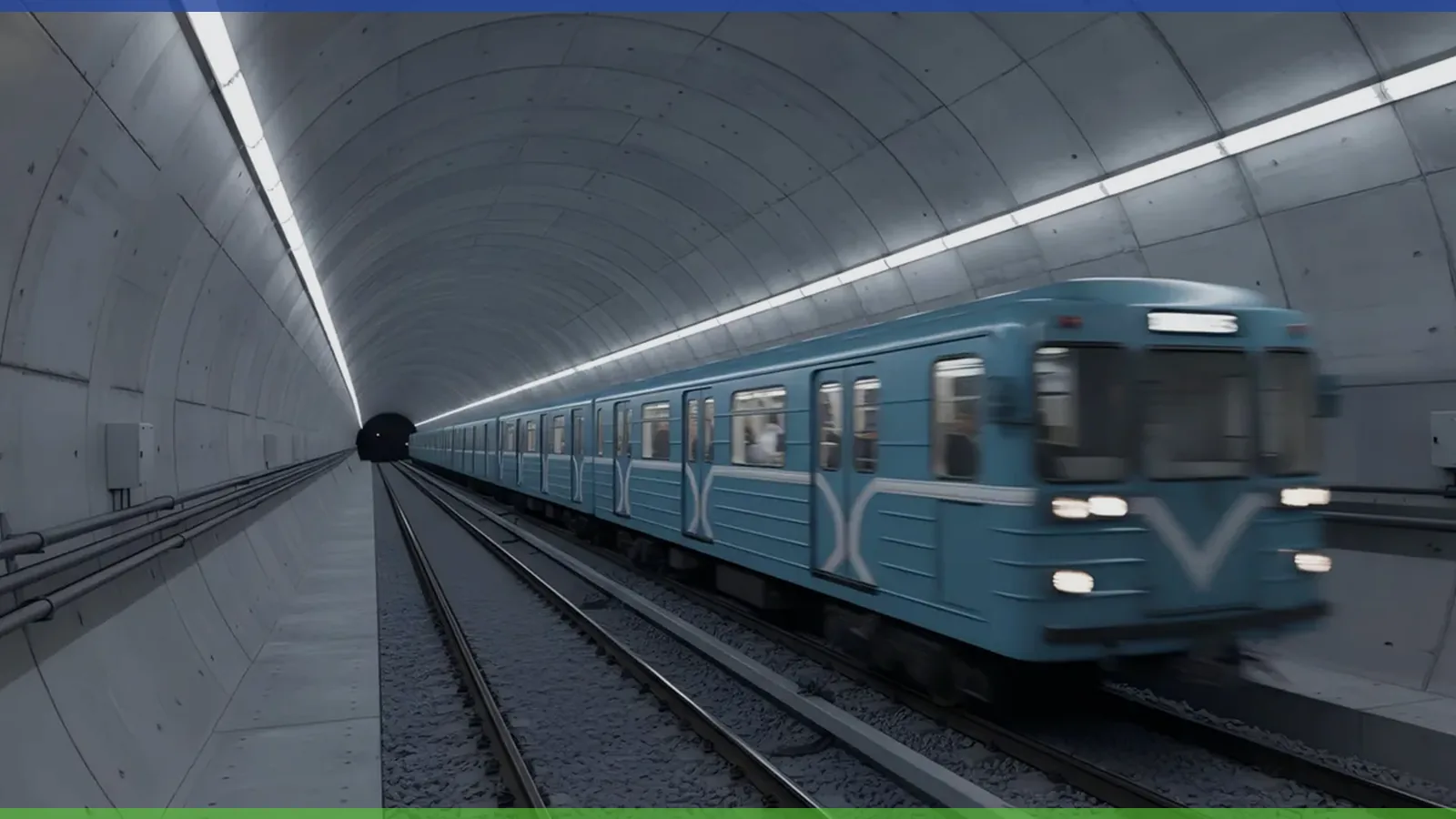
Subway stations represent some of the most punishing environments for electrical infrastructure. These underground hubs operate 24/7, subjected to constant high-frequency vibrations from heavy rolling stock, airborne metallic “brake dust,” and significant air pressure changes known as the “piston effect.” Beyond environmental stressors, public transit facilities are high-risk areas for vandalism and accidental impact. To ensure continuous operation and passenger safety, facility managers must prioritize IK10 impact-resistant lights. A luminaire with an IK10 rating is engineered to withstand a 20-joule impact—equivalent to a 5kg mass dropped from a height of 40cm—ensuring that the light remains functional and shatter-free even under duress.
In 2026, station lighting is moving beyond simple durability to include smart integration and ultra-high efficacy. This guide analyzes the technical requirements for transit lighting and identifies the top-performing solutions from Fanxstar’s Trilamp and Allstar series, designed specifically for the rigors of modern rail infrastructure.
Key Takeaways
-
IK10 Benchmark: Mandatory for transit environments to resist vandalism and mechanical shocks from the “piston effect.”
-
Conductive Dust Management: Subway “brake dust” is conductive. Fixtures must be IP66+ rated to prevent internal short circuits.
-
Vibration Control: All fixtures should meet ANSI C136.31 standards to survive the constant oscillation of passing trains.
-
High Efficacy ROI: Switching to 160 lm/W LED systems reduces energy overhead by 60% compared to legacy fluorescent units.
-
Emergency Integration: Integrated DALI-2 emergency drivers ensure 3-hour backup safety compliance without external battery cabinets.
The Science of Subway Lighting: Technical Challenges
Understanding the IK10 Standard
The International Electrotechnical Commission (IEC 62262) defines the IK rating scale, which measures the degree of protection provided by enclosures against external mechanical impacts. While IK08 is common for commercial settings, it is insufficient for subways. IK10 impact resistance is necessary because it provides four times the energy protection of IK08. This is achieved through the use of reinforced polycarbonate lenses and thick-walled aluminum housings (typically 1.3mm or thicker) that absorb and dissipate kinetic energy without fracturing.
The Conductive Brake Dust Threat
A unique challenge in subway stations is the accumulation of fine metallic particles from train braking systems. This dust is both magnetic and conductive. If it enters a luminaire, it can settle on the LED driver circuitry, causing “tracking” failures and short circuits. Therefore, an IP66 or IP69K ingress protection rating is as critical as the IK rating. A hermetically sealed fixture prevents this dust from ever reaching the sensitive internal components.
|
Environmental Factor |
Technical Challenge |
Impact on Lighting |
|---|---|---|
|
Impact / Vandalism |
Strikes from objects/vandalism |
Requires IK10 reinforced lens |
|
Piston Effect |
Cyclical air pressure changes |
Requires heavy-duty bracketry |
|
Vibration |
1.5G to 3G acceleration |
Requires ANSI C136.31 compliant build |
|
Brake Dust |
Conductive metallic particles |
Requires IP66 hermetic sealing |
Selection Criteria for Transit Grade Lighting
Durability and Thermal Architecture
In the confined spaces of an underground tunnel or platform, heat dissipation is vital. While a fixture must be rugged, it cannot be a “heat trap.” Fanxstar fixtures utilize wide-area aluminum cooling plates. Aluminum moves heat away from the LED chips far more effectively than full-plastic alternatives, ensuring the LEDs maintain their brightness (L70) for over 100,000 hours. This material science is what allows our vibration-proof lighting to survive for decades with zero maintenance.
Safety Certifications and Low EMI
Transit facilities are filled with sensitive signaling and communication equipment. Lighting systems must adhere to strict Electromagnetic Interference (EMI) standards, such as MIL-STD-461E. High-quality fixtures use certified flicker-free drivers that do not emit radio noise, ensuring that the station’s wireless communication and train control systems remain unpolluted by the lighting grid.
|
Certification |
Standard Body |
Safety Benefit |
|---|---|---|
|
IK10 |
IEC 62262 |
Withstands 20J impact energy |
|
IP66 / IP69K |
IEC 60529 |
Vapor-tight and dust-proof seal |
|
UL Wet Location |
Underwriters Laboratories |
Safe for damp/flooding scenarios |
|
94V0 Flame |
UL Standard |
Self-extinguishing material safety |
Top Impact Resistant Lights for 2026 Projects
Trilamp A1 Series – The Platform Standard
The Trilamp A1 is the benchmark for platform illumination. Designed as a 1:1 replacement for traditional fluorescent vapor-tight fixtures, it combines an IK10 polycarbonate lens with an IP66 seal. Its 1KV lightning surge protection is essential for transit grids that often experience power fluctuations.
Trilamp A8 “Super Terminator” – High-Traffic Specialist
For high-traffic transfer corridors where the risk of vandalism is extreme, the A8 utilizes a 1.3mm thick aluminum housing. This “Super Terminator” is engineered with through-wiring support, allowing multiple units to be linked across long hallways without messy external conduits. Its rapid-cooling plate ensures it thrives even in the stagnant, hot air common in deep-bore subway systems.
Trilamp A4 Series – The Expansive Hall Choice
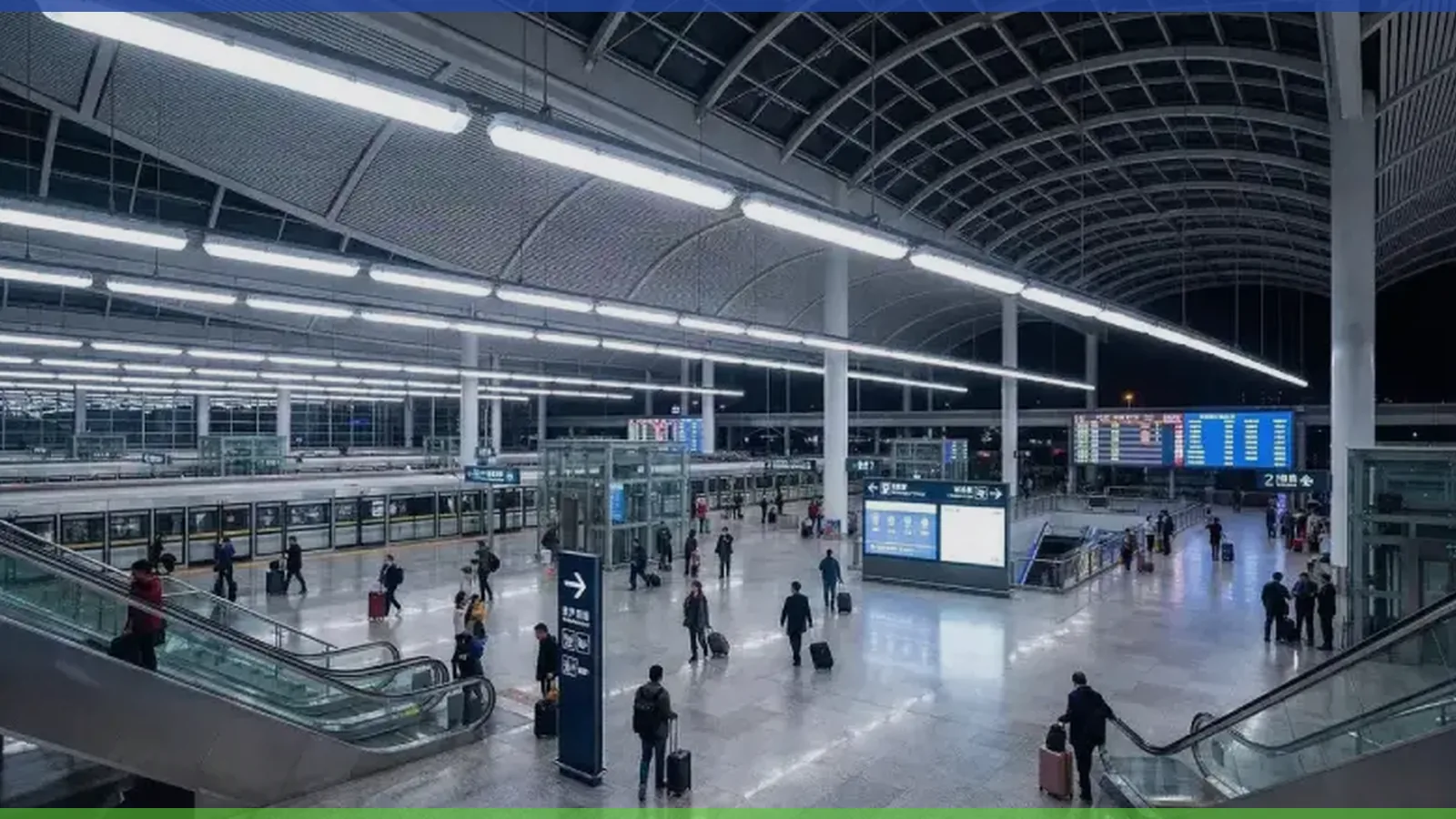
For ticket halls and grand station entrances, efficiency is the primary metric. The A4 delivers up to 165 lm/W, providing massive lumen output from a sleek, impact-resistant package. Its stainless steel clips ensure that the fixture remains locked even during the intense vibrations of express trains passing through.
Trilamp A18 Series – Stairwells and Service Corridors
Stairwells are critical for egress during power failures. The A18 series is a “3-in-1” integrated solution that includes the LED light, an emergency backup battery, and a microwave motion sensor. Its Anti-panic Lens ensures that even from a height, it delivers the mandatory lux levels required for safe evacuation under emergency guidelines.
Allstar DX & D2-H – Architectural Ruggedness
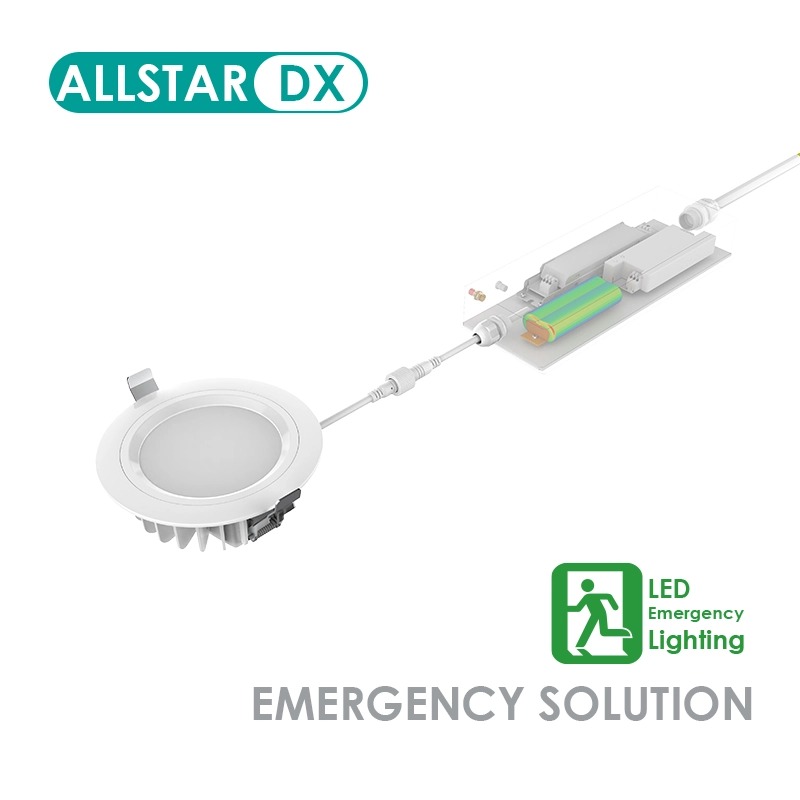
Station lobbies often require a more aesthetic touch than a linear batten. The Allstar series provides IK10-rated downlights with die-cast aluminum construction. These fixtures offer flicker-free comfort for passengers waiting on platforms while maintaining the impact resistance needed for a public space.
“Underground, reliability isn’t a feature—it’s a life-safety requirement. A broken light in a subway isn’t just dark; it’s a hazard.”
Installation and ROI: The Long-Term Perspective
While the initial cost of an IK10-rated tri-proof LED fixture is higher than standard commercial lighting, the Return on Investment (ROI) is achieved through drastically reduced maintenance labor. Accessing a subway station for maintenance requires track closures, security permits, and specialized crews—all of which are expensive. By installing fixtures rated for 100,000 hours with IK10 impact protection, stations can eliminate 90% of their lighting-related maintenance visits over a 15-year period.
Maintenance Checklist for Transit Managers:
-
Bi-Annual Cleaning: Use non-abrasive cleaners to remove conductive brake dust from the exterior lens to maintain light transmittance.
-
Gasket Verification: Inspect silicone gaskets for “embrittlement” caused by the dry, hot subway air to maintain the IP66 seal.
-
Emergency Test: Utilize DALI-2 systems for automated monthly testing of battery packs to ensure readiness.
Conclusion: Building Resilient Transit Hubs
As urban centers expand, the pressure on subway infrastructure continues to rise. By selecting IK10 impact resistant lights with high efficacy and robust ingress protection, transit authorities can create environments that are safe, welcoming, and cost-effective. The Fanxstar Trilamp and Allstar series represent the technical pinnacle of this engineering, providing a durable foundation for the future of urban mobility. For your next station lighting project, prioritize mechanical resilience—because in the subway, durability is the only path to safety.
FAQ
What makes a light ‘IK10’ instead of ‘IK08’?
IK10 can withstand 20 Joules of impact, while IK08 only handles 5 Joules. This difference is usually achieved through thicker polycarbonate lenses and a multi-point mounting system that dissipates energy into the wall or ceiling rather than the fixture itself.
Is IP66 sufficient for subway flooding?
IP66 handles powerful water jets. For areas prone to full submersion during heavy rain, an IP68 rating is required. IP68 allows the fixture to be submerged under pressure for extended periods without failure.
Why is ‘flicker-free’ light important in subways?
Passengers in subways are already in a low-natural-light environment. Stroboscopic flicker can cause dizziness, headaches, and can even interfere with the vision of train operators. All Fanxstar drivers are certified flicker-free.
Can I use motion sensors in high-vibration stations?
Yes, but you must use Microwave sensors specifically calibrated to ignore structural vibrations while still detecting human movement. PIR sensors are less effective in areas with high wind/airflow (the piston effect).
How long will these IK10 lights last?
With high-purity aluminum heat sinks and professional-grade drivers, these fixtures typically operate for 75,000 to 100,000 hours, which is over 10 years of 24/7 continuous use.