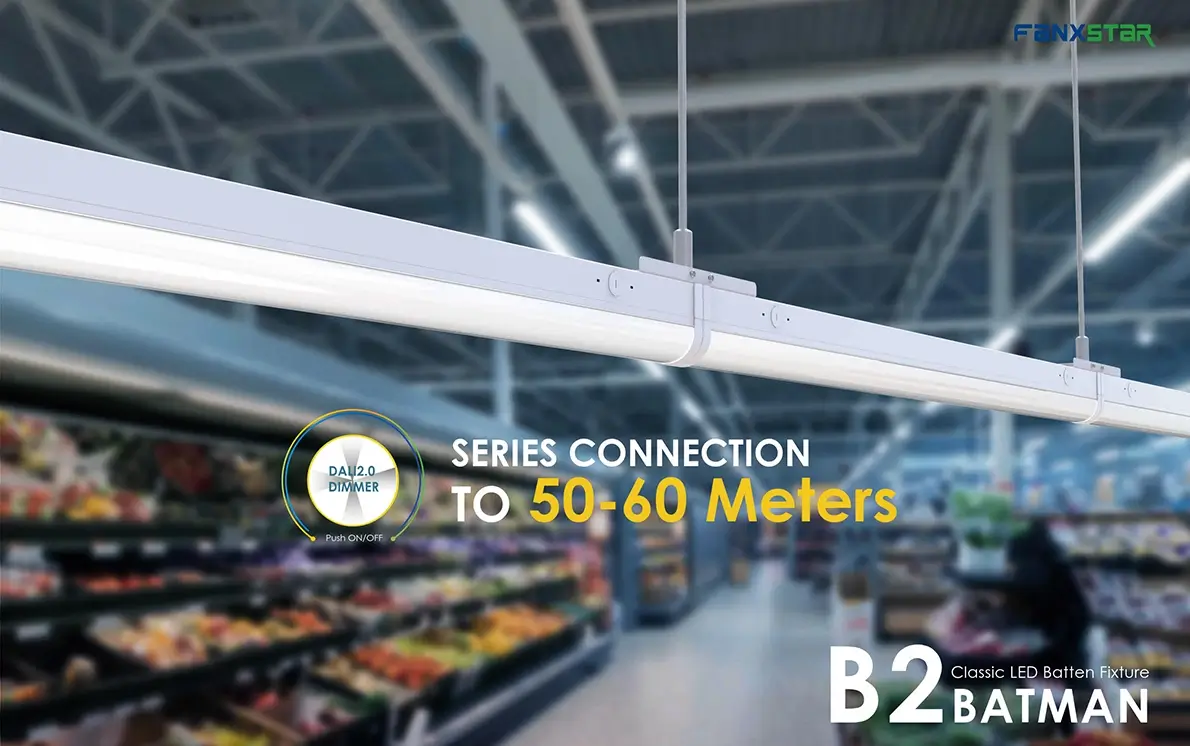
If you want lights that save money and last long, pick a linear batten light. You can use it for over 50,000 hours. It uses less energy and gives bright, even light. This helps keep your eyes safe. These lights keep out dust and water because of their IP65 rating. They are strong and can take hits, thanks to IK08. They are made from materials that are good for the planet. Look at the table to see the facts:
Feature | Benefit |
|---|---|
Lifespan | 50,000+ hours |
Energy Efficiency | More light per watt, less heat |
Protection Rating | IP20/IP40 (dust and water resistance) |
Impact Resistance | IK08 (robust housing) |
Eco-Friendly | No mercury, easy to recycle |
Key Takeaways
Linear batten lights use LED technology. They save energy and lower bills. They give bright and even light. This light is gentle on your eyes.
These lights last much longer than old bulbs. You do not need to change them often. This saves you time and money on maintenance.
Their design is strong and resists dust and water. You can use them indoors or outdoors. They work well in tough places.
You can change the brightness and colour temperature. This helps you make lighting comfortable for different activities and spaces.
Choosing linear batten lights helps the environment. They use less energy and make less waste. They do not have harmful materials like mercury.
Efficiency
Energy Use
You want lights that use less energy and save money. Linear batten lights have LED technology. This gives you more light but uses less power. For example, an LED batten light only needs 7 to 10 watts. It can shine as bright as a 60-watt incandescent bulb or an 18-watt fluorescent tube. This means you pay less for electricity each year.
Brightness (Lumens) | Incandescent Power (W) | Fluorescent Power (W) | LED Power (W) |
|---|---|---|---|
400 – 500 | 40 | 8 – 12 | 6 – 7 |
650 – 850 | 60 | 13 – 18 | 7 – 10 |
1000 – 1400 | 75 | 18 – 22 | 12 – 13 |
1450 – 1700+ | 100 | 23 – 30 | 14 – 20 |
You can see LED batten lights use much less power than old bulbs. They give the same amount of light. Using less energy helps you save money. It also lowers your carbon footprint.

Light Output
You need bright and even light in your room. Linear batten lights have high luminous efficacy. They often reach over 130 lumens per watt. Standard fluorescent tubes give about 72 lumens per watt. Incandescent bulbs give only 15 lumens per watt. So, you get more light but use less energy.
Light Type | Luminous Efficacy (lm/W) |
|---|---|
High-end LED Batten Light | Over 130 |
Mid-range LED Batten Light | Around 110 |
Low-end LED Batten Light | 60-70 |
Standard T8 Fluorescent | About 72 |
Typical T8 Fixture (flat cover) | As low as 33 |
T8 Fixture with Cover | Under 40 |
Linear batten lights give bright and even light.
They can light up big or long spaces.
You can use them in garages, workshops, offices, or living rooms.
They do not get very hot, so your space is safer.
Their design spreads light well and stops dark spots and glare.
You get better visibility and comfort in any space. Linear batten lights are efficient, strong, and always give good light.
Lifespan
Durability
You want lights that last a long time. A linear batten light can do this. Most LED linear batten lights work for 50,000 to 100,000 hours. This is much longer than incandescent bulbs. Incandescent bulbs only last 1,000 to 2,500 hours. Fluorescent tubes last 7,500 to 15,000 hours. LEDs have a solid-state design. They do not have fragile filaments or ballasts. This means there is less to break. These lights keep working for years, even in tough places.
Light Type | Typical Lifespan (hours) | Relative Lifespan Compared to Incandescent |
|---|---|---|
LED Linear Batten | About 20 times longer | |
Fluorescent Tubes | 7,500 – 15,000 | About 3 times longer |
Incandescent Bulbs | 1,000 – 2,500 | Baseline |
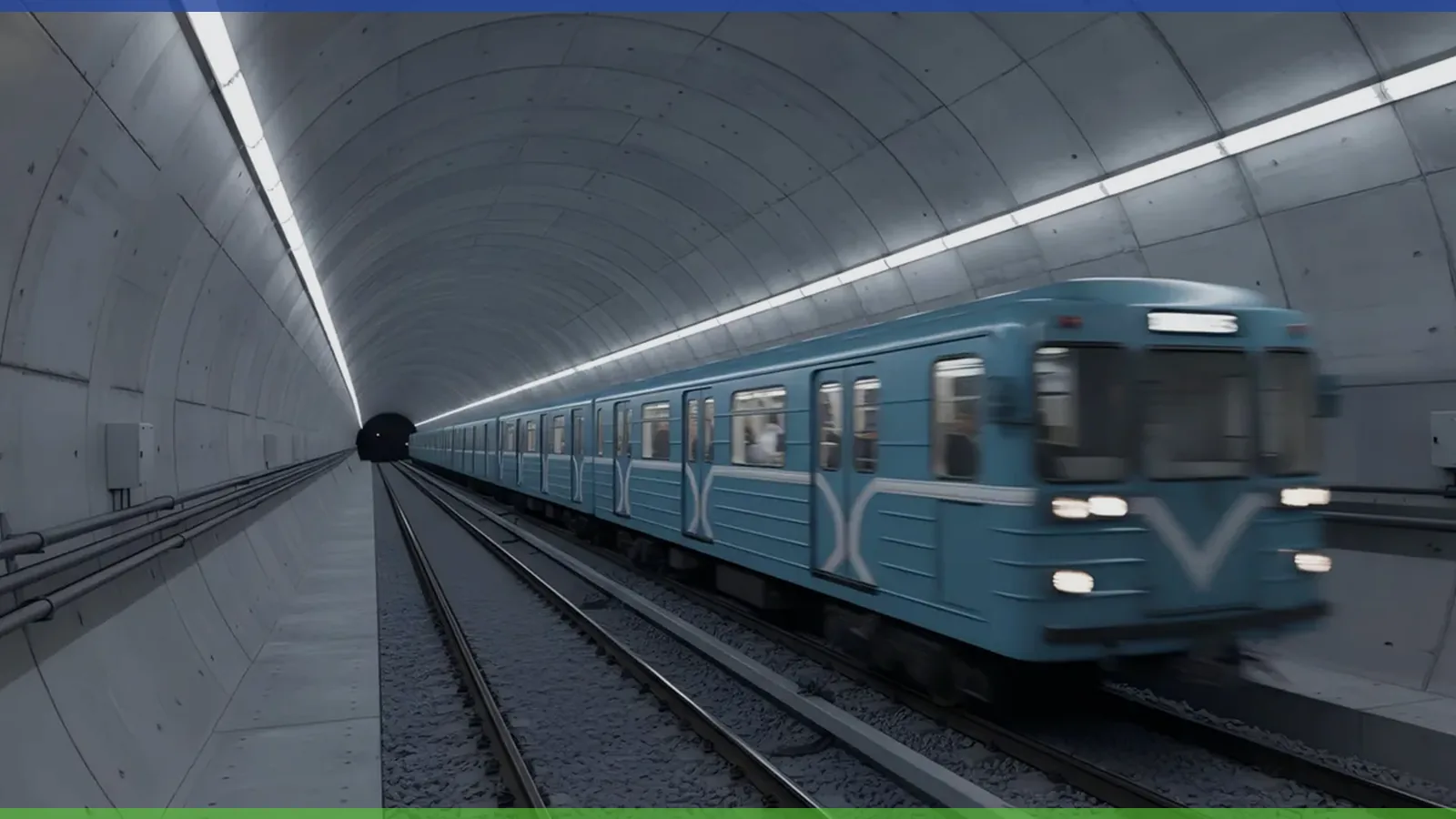
You can use these lights where dust or water is a problem. They also work well where salty air is found. Their special design stops corrosion, dust, and moisture. You can trust them in garages, tunnels, food plants, or docks. They keep shining bright in any place.
Tip: Pick a linear batten light with a high IP and IK rating. This gives the best protection from dust, water, and knocks.
Maintenance
You save time and money with a linear batten light. You do not need to replace it often. In five years, you may only need to clean it. Old bulbs need to be replaced and fixed more often. LED batten lights have a modular design. If you need to change a part, you can do it quickly and safely.
Aspect | LED Batten Lights | Traditional Linear Bulbs |
|---|---|---|
Lifespan | Much longer (30,000 to 50,000+ hours) | Shorter (8,000 to 20,000 hours) |
Replacement Frequency | Very low (once every 5–10 years) | High (multiple replacements in 5 years) |
Maintenance Frequency | Minimal; mostly cleaning | Frequent bulb and ballast replacements |
Maintenance Cost | Lower due to fewer replacements and labour | Higher due to frequent repairs and parts |
Safety & Environmental | Safer (no mercury), easier disposal | Contains mercury; more hazardous handling |
Maintenance Complexity | Modular design allows quick part swaps | More labour-intensive, requires power off and fixture disassembly |
You do not have to fix these lights all the time. You also stay safer, as they do not have mercury. It is easier to get rid of them safely. In the end, you get lights that work well with less effort and lower costs.
Cost
Upfront vs Long-Term
When you choose lighting for your home or office, you often look at the price first. A linear batten light usually costs between £27 and £60, depending on its size and wattage. This is more than a traditional bulb, which can cost less than £1 for an incandescent or around £2 for a CFL. However, the higher price of a linear batten light pays off over time. You get a fixture that lasts up to 50,000 hours and uses up to 80% less energy. This means your electricity bills drop, and you save money every month. Most people recover the initial cost within a few years because of these savings.
Note: LED lighting upgrades often pay for themselves in 1.5 to 3 years due to lower energy and maintenance costs.
You also spend less on repairs. The strong build and efficient design mean you do not need to call an electrician often. Over the years, you will notice that your investment in a linear batten light gives you better value than sticking with old bulbs.
Replacement
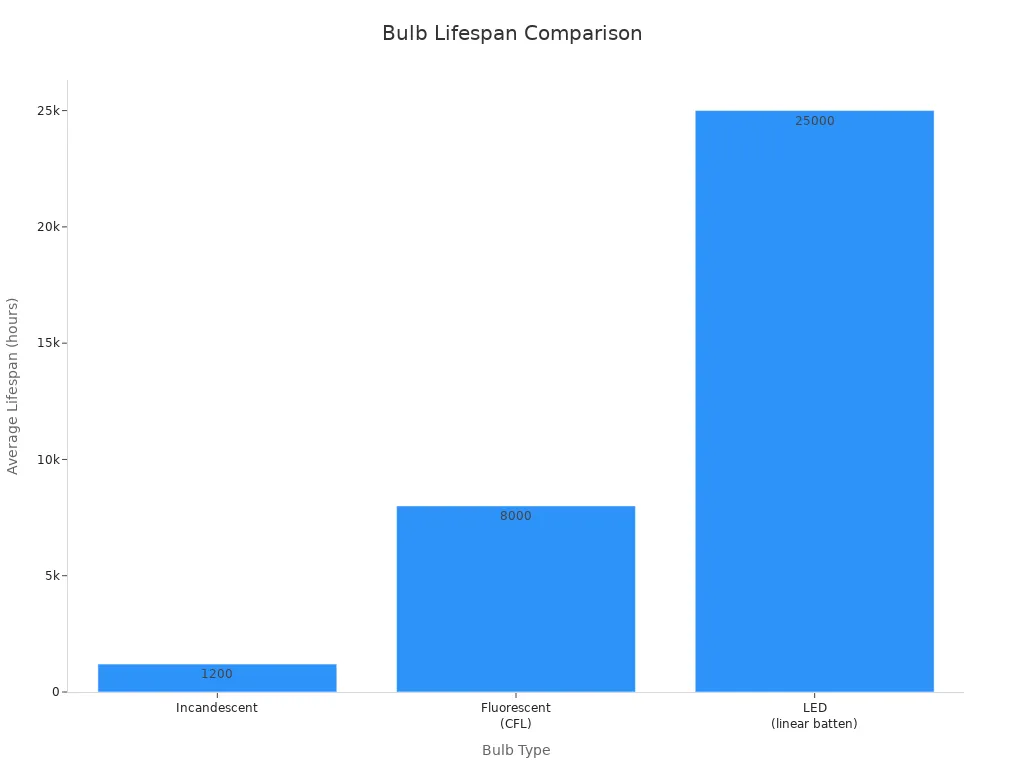
You want lights that last and do not need frequent changes. Linear batten lights shine for 25,000 hours or more, with many models reaching 50,000 hours. In contrast, incandescent bulbs last about 1,200 hours, and fluorescent bulbs last around 8,000 hours. This long lifespan means you replace your lights far less often.
Bulb Type | Average Lifespan (hours) |
|---|---|
Incandescent | ~1,200 |
Fluorescent (CFL) | ~8,000 |
LED (including linear batten lights) | 25,000 or more |
You also avoid the hassle of frequent maintenance. LED batten lights use drivers that keep them stable, even when the power supply changes. This design makes them more reliable and reduces the need for replacements. You save time, effort, and money by switching to a linear batten light.
Lighting Quality
Consistency
You want light that is always bright and even. A linear batten light does this well. It uses good LED chips and a milky polycarbonate diffuser. This helps the light spread out smoothly. You do not see dark spots or strong glare. You can pick from three colour temperatures: 3000K (warm white), 5000K (neutral white), and 6000K (daylight). Each one is good for different places. For example, 6000K is best for workshops or garages. It gives clear, bright light. The 5000K setting works well in offices or shops. It gives a balanced, neutral look. If you want a cosy feeling in a café or lounge, 3000K makes the space warm and welcoming.
You can change the colour temperature to fit your mood or task. This lets you make the right setting for any activity.
The anti-UV cover keeps the light soft. It also stops the light from turning yellow as time goes by. You get good, steady light every day.
Eye Comfort
You spend lots of time under artificial lights. Old bulbs can flicker and glare. This can give you headaches and make your eyes tired. A linear batten light fixes this problem. It gives steady, flicker-free light that protects your eyes. Many offices and warehouses use LED battens now. People say they have fewer headaches and less eye strain. Workers find it easier to focus because the light does not flicker.
Flicker-free light helps stop eye pain and headaches.
Soft, even light keeps you comfortable for long hours.
You can change the brightness and colour temperature. This helps your body clock and stops tiredness.
You will feel better and work better with the right light. Good lighting makes your workspace safer and nicer.
Linear Batten Light Features
Design
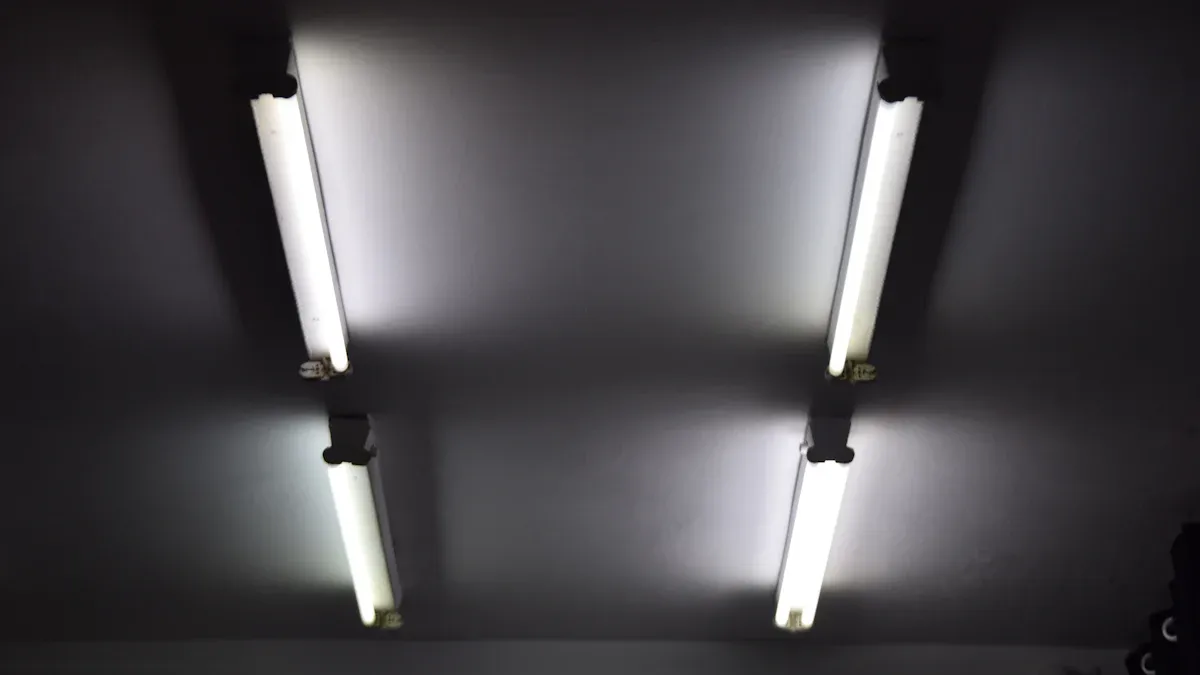
When you pick a linear batten light, you notice it looks different. The slim shape fits well in low ceilings and tight hallways. It matches modern rooms and looks neat. You get a simple style that works in offices, schools, and homes. You can put the light right on the ceiling or wall. This makes putting it up quick and easy. You do not need special tools or to be an expert. Many lights come with plug-and-play kits, so anyone can set them up.
Low glare diffusers and smart optics help your eyes feel better.
You can use modular layouts to make many lighting patterns.
Modern shapes give your space a fresh look.
Wide beam angles spread light evenly and stop dark spots.
Polycarbonate and strong aluminium keep the light safe from bumps. These materials stop rust, dust, and water from getting in. You can trust these lights in tough or seaside places. The sealed case keeps out salt and water, so the light lasts longer.
Tip: Pick a model with IP65 or higher for the best dust and water protection.
Versatility
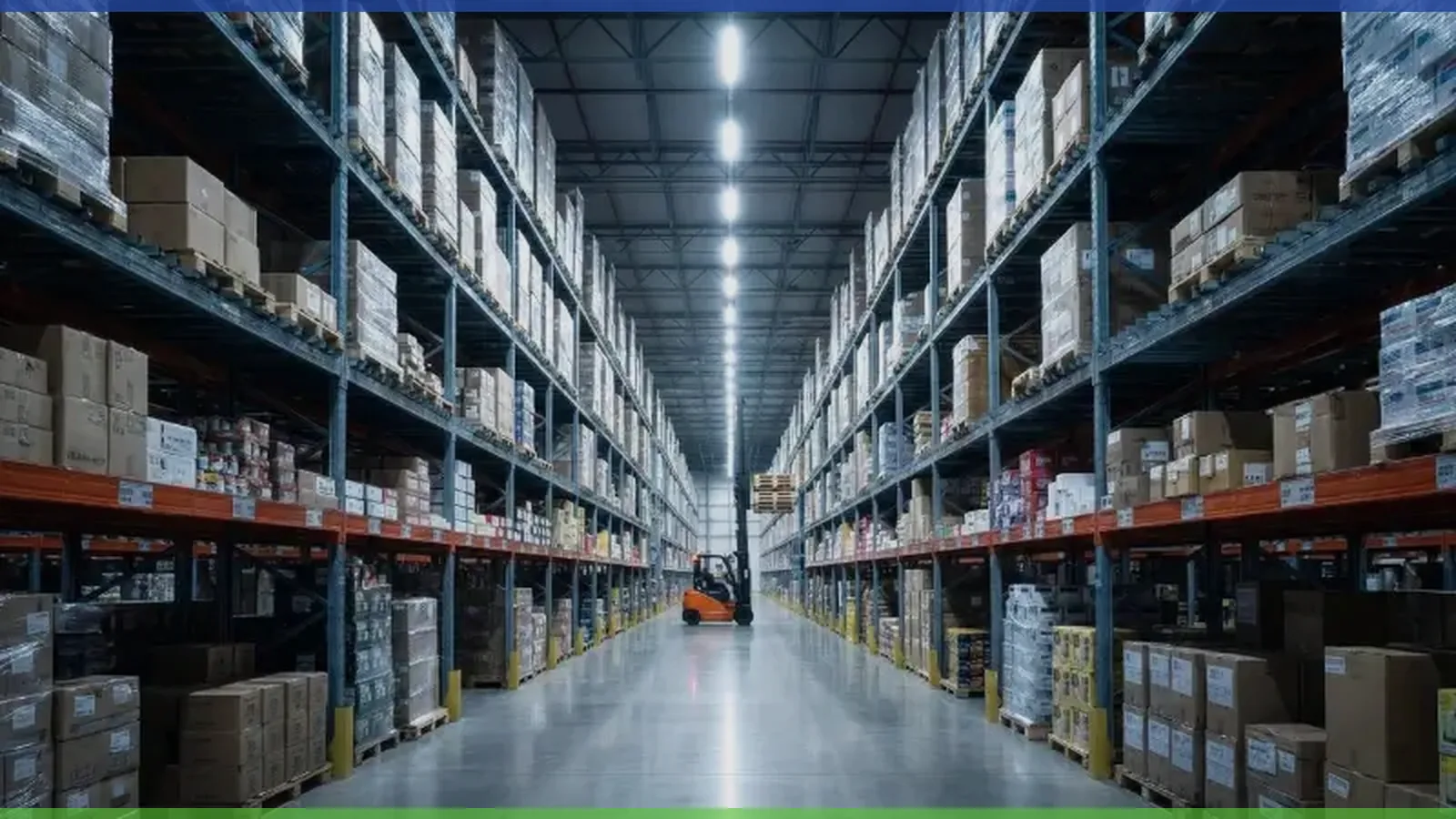
You want lights that work in many places and weather. Linear batten lights are very flexible. You can use them in warehouses, factories, tunnels, car parks, shops, schools, and outside. The tough build and good seals keep them working in rain, snow, heat, and cold.
Feature/Aspect | Details | Support for Versatility |
|---|---|---|
IP Rating | IP65 is good for outside; IP66 is best for strong water jets | Keeps working in wet outdoor places |
Operating Temperature | Works from -20°C to 40°C | Stays strong in hot or cold weather |
Application Areas | Warehouses, factories, tunnels, car parks, loading docks, outside storage, business lighting | Good for many indoor and outdoor jobs |
Energy Efficiency | Uses less energy and saves money | Cheaper for long use inside or outside |
Safety | Gives steady light in bad weather, so you see better and stay safe | Makes places safer indoors and outdoors |
Smart Control | Can use wireless, DMX, and other controls for changing brightness and colour | Lets you change the light for different needs |
You can join many lights in a row or make shapes. The modular design lets you move and change them easily. You can put them on the surface, hang them, or fit them into the ceiling. Clips and snap-on brackets make it fast and safe to install. Cleaning and fixing them is easy because you can reach them quickly.
Polycarbonate and strong plastics stop damage and protect from chemicals. Silicone seals and steel fasteners keep out water and dust. These things make the lights good for seaside, food factories, and tough work sites. You get lights you can count on, even in hard places.
Note: You can change the brightness, colour, and use smart controls. This helps you make safe, useful, and nice-looking spaces inside and outside.
Environmental Impact
Carbon Footprint
When you pick modern lighting, you help the planet. LED technology turns more electricity into light, not heat. This means you use less power and help cut pollution from power stations. Old bulbs often have mercury, but LEDs do not. LEDs last a long time, sometimes up to 50,000 hours. You throw away fewer bulbs and save energy on making new ones.
LEDs use much less electricity than fluorescent tubes.
You do not need to replace them often, so there is less rubbish.
Using less energy means fewer greenhouse gases go into the air.
Directional lighting puts light where you need it, saving even more power.
Dimmable lights let you change brightness, which saves energy.
LEDs do not have mercury, so it is safer for the environment when you get rid of them.
Every time you use an energy-saving light, you help lower your carbon footprint.
Recyclability
You help keep the environment clean by choosing eco-friendly lights. Makers use aluminium and iron for the lamp base and bracket. Aluminium is strong and good for the planet. These lights do not have mercury, stay cool, and do not give off UV rays. Most parts can be recycled, so less rubbish goes to landfill. Top brands use high-quality materials and have ISO 14001:2015 and ISO 9001:2015 certificates. The CE mark and Energy Star show these lights are safe, save energy, and are easy to recycle.
You can trust your lighting choice helps the planet. You keep bad substances out of nature and make recycling simple. When you pick certified lights, you know you are making a good choice for your home or business.
You get many good things when you pick a linear batten light.
You use less energy and pay lower bills with LED technology.
You get lighting that lasts a long time and needs little fixing.
You have better light in more places and can change settings easily.
Many companies say their bills go down and their spaces feel nicer after changing lights. Experts and the government both say this switch is smart for saving energy and feeling comfortable.
FAQ
What is a linear batten light?
A linear batten light is a long, slim lighting fixture. You often see it in offices, garages, and shops. It uses LED technology to give bright, even light. You can mount it on ceilings or walls.
Can you install linear batten lights outdoors?
Yes, you can. Many models have an IP65 or higher rating. This means you can use them outside in rain or dust. You get reliable lighting for car parks, walkways, or outdoor work areas.
Do linear batten lights save you money?
You save money with linear batten lights. They use less energy and last much longer than old bulbs. You spend less on electricity and replacements. Over time, your investment pays off.
Are linear batten lights safe for your eyes?
You get steady, flicker-free light from linear batten lights. This helps reduce eye strain and headaches. The even light makes your workspace safer and more comfortable.
How do you clean and maintain linear batten lights?
Turn off the power before cleaning.
Wipe the surface with a dry or slightly damp cloth.
Check for dust or dirt on the diffuser.
You rarely need to replace parts due to their long lifespan.