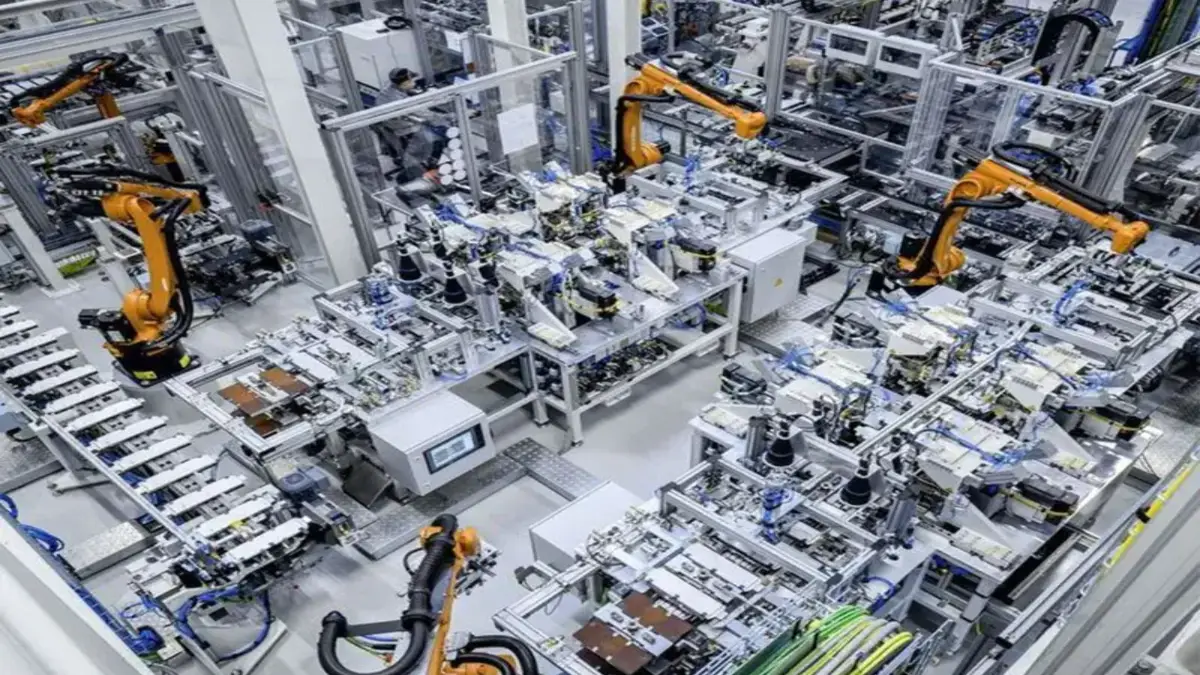
You face unique challenges in semiconductor manufacturing. Cleanrooms must stay ultra-clean to prevent contamination. Optimal Lighting Solutions help you spot tiny defects like hairline cracks and foreign particles that are smaller than dust. Specialized lights, such as coaxial and ring lights, allow you to see wafers clearly. UV lighting helps you detect residue, while IR imaging reveals bonding problems. Cleanrooms with strict lighting standards support higher product quality and keep workers safe.
Key Takeaways
Choose LED lighting for semiconductor factories to save energy and reduce maintenance costs. LEDs last longer and produce less heat, ensuring a stable cleanroom environment.
Ensure cleanroom compatibility by selecting lighting fixtures that do not shed particles or allow dust accumulation. This helps maintain the cleanliness required for semiconductor manufacturing.
Prioritize uniform illumination to improve defect detection. Even light distribution reduces shadows and enhances visibility, leading to higher product quality.
Invest in high CRI lighting to see true colors and identify defects accurately. A CRI of 80 or above is essential for reliable inspections and quality control.
Utilize automated lighting systems to enhance energy efficiency. Smart controls adjust brightness based on occupancy and natural light, reducing energy waste.
Optimal Lighting Solutions Overview
Key Factory Lighting Standards for Semiconductor Fabs
You need to consider several important factors when choosing lighting for semiconductor factories. Cleanroom compatibility stands out as a top priority. Lighting fixtures must not release particles or fibers that could contaminate your wafers. You also want fixtures that are easy to clean and resistant to chemicals. Uniform illumination is another key criterion. Even light distribution helps you spot defects and reduces shadows that can hide problems for worker safety. High color accuracy, measured by the Color Rendering Index (CRI), lets you see true colors and subtle differences on wafers. Low heat emission is essential because too much heat can affect sensitive processes and equipment. Safety and compliance matter as well. Lighting must meet strict standards to prevent accidents and protect workers.
Tip: Choose fixtures with sealed designs and high CRI ratings to meet cleanroom and inspection needs.
Impact on Performance and Safety
Optimal Lighting Conditions do more than just brighten your workspace. They help you work faster and with fewer mistakes. Good lighting reduces eye strain and fatigue, so you can focus on detailed tasks for longer periods. Poor lighting, on the other hand, can lead to errors and even injuries. Studies show that workers in well-lit environments make fewer mistakes and feel more comfortable. You will notice that your team works more efficiently when lighting quality is high.
Proper lighting lowers the risk of accidents and injuries.
Bright, even light helps you spot hazards and avoid mistakes.
Comfortable lighting boosts productivity and keeps your team alert.
When you invest in Optimal Lighting Solutions, you create a safer and more productive environment for everyone in your semiconductor fab.
Lighting Requirements
Cleanroom Compatibility
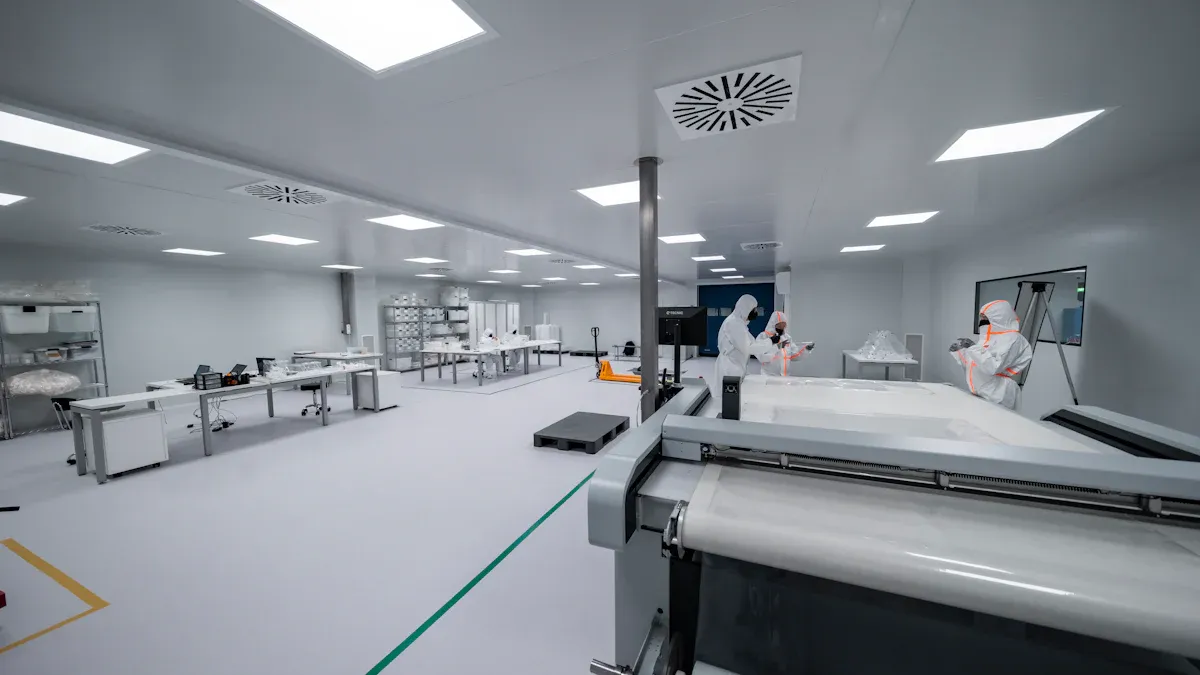
You work in an environment where even the smallest particle can cause major problems. Cleanroom compatibility is essential for lighting in semiconductor factories. Fixtures must not shed particles, outgas, or allow dust to collect. You need lighting that supports strict ISO cleanroom standards, such as ISO Class 1 to Class 100. These standards limit airborne particles to protect your wafers and equipment.
The design of your lighting fixtures plays a big role in contamination control. Many cleanroom lights use a teardrop shape to support laminar airflow. This shape helps air move smoothly, carrying away particles before they settle. Sealed housings keep out dust and water, so you can use wet cleaning methods without worry. Some fixtures even have anti-bacterial coatings to help maintain hygiene.
Feature | Benefit |
|---|---|
Amber lighting | Blocks harmful blue and UV light, protecting sensitive materials |
Wavelength range (590-570nm) | Shields photosensitive materials during processes like photolithography |
Teardrop fixture shape | Supports laminar airflow, reducing particle contamination |
Sealed housing | Allows for wet cleaning and resists dust and water |
Anti-bacterial coating | Helps keep the cleanroom uncontaminated |
Tip: Choose lighting fixtures with sealed, easy-to-clean designs and consider amber lighting for areas with photosensitive processes.
Uniform Illumination
Uniform illumination is critical for your inspection and manufacturing tasks. You need even light distribution to spot defects and avoid shadows that can hide problems. When you use uniform lighting, you improve the quality of line-scan images and increase the reliability of defect detection.
Uniform lighting improves contrast, making it easier to see small defects.
High homogeneity in illumination reduces false positives and negatives during inspections.
Proper lighting techniques reveal surface irregularities, helping you catch issues early.
Targeted, even illumination is necessary for identifying defects on challenging surfaces.
You can achieve uniform illumination by selecting fixtures with wide beam angles and placing them strategically. This approach helps you maintain high standards in your inspection processes.
High CRI and Color Accuracy
Color accuracy matters in semiconductor manufacturing. You need to see true colors to identify defects and ensure quality. The Color Rendering Index (CRI) measures how well a light source shows colors compared to natural light. For accurate color inspection, you should use lighting with a CRI of 80 or above. This level ensures that colors appear as they should, which is important for both commercial and industrial applications.
High CRI lighting offers several benefits:
You can spot very small defects, which is crucial for maintaining yield.
Enhanced contrast and reduced glare improve image quality for defect detection.
Accurate color representation helps you identify issues in semiconductor materials.
Even minor defects become visible, supporting high product quality.
When you use lighting with a high CRI, you make your inspections more reliable and your products more consistent.
Low Heat Emission
Temperature control is vital in your cleanroom. Lighting that emits too much heat can disrupt sensitive processes and increase the load on your HVAC system. LED lighting is a top choice because it produces minimal heat and uses energy efficiently. Low heat emission helps you maintain the strict temperature and particulate control needed for semiconductor manufacturing. This not only protects your products but also reduces energy costs and supports a stable environment.
Safety and Compliance
You must follow strict safety and compliance standards in your semiconductor factory. Lighting systems need to meet regulations from organizations like OSHA, ATEX, and UL. These standards help protect workers and ensure safe operation around flammable gases and chemicals. For example, SEMI S2/S8 standards focus on safety in semiconductor manufacturing, while OSHA covers general workplace safety. In North America, ANSI/IES RP-7 and ISO 8995-1:2021 set guidelines for industrial lighting.
Standard | Description | Compliance Area |
|---|---|---|
SEMI S2/S8 | Standards for semiconductor manufacturing, focusing on safety and compliance | Semiconductor factories |
OSHA | General safety compliance standards | Workplace safety regulations |
EN 12464-1 (Europe)
ANSI/IES RP-7 (North America)
ISO 8995-1:2021 (Industrial lighting)
You should always check that your lighting solutions meet these standards. This ensures a safe, compliant, and efficient workspace.
Note: Following these requirements helps you create an environment where Optimal Lighting Solutions can deliver the best results for your semiconductor operations.
Types of Lighting Fixtures
LED Solutions for Fabs
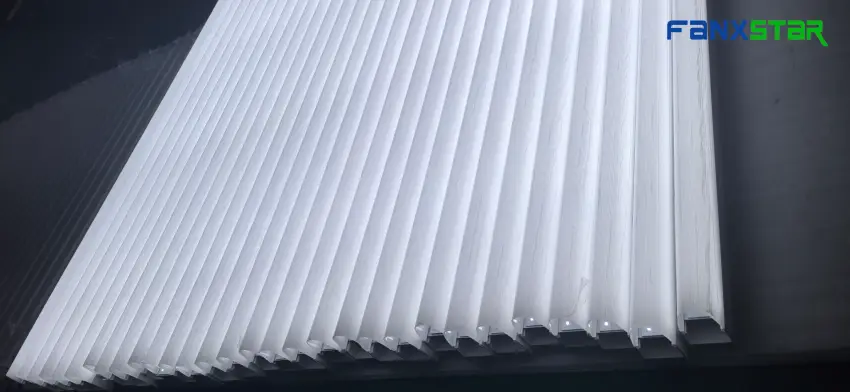
You need lighting that meets the strict demands of semiconductor cleanrooms. LED solutions offer the best performance for these environments. You benefit from sealed and contamination-resistant fixtures that keep dust and bacteria out. Many LED lights come with IP-rated casings, which protect against airborne microbes and contaminants. You can also find smart LED systems that connect to factory networks. These systems let you monitor lighting in real time and adjust brightness to save energy.
LEDs produce very little heat. This helps you keep your cleanroom at a stable temperature, which is important for sensitive processes. The materials used in LED fixtures resist harsh cleaning chemicals, so you can disinfect them often without damage.
Here is a table showing the main advantages of LED lighting in semiconductor cleanrooms:
Advantage | Description |
|---|---|
Sealed and contamination-resistant | Fixtures prevent dust and bacteria accumulation, ensuring a sterile environment. |
IP-rated lighting | Fully enclosed casings protect against airborne microbes and contaminants. |
Smart LED solutions | Integration with IoT for real-time monitoring and adaptive dimming, enhancing energy efficiency. |
Lower heat output | Reduces thermal load, crucial for maintaining stable temperature in cleanrooms. |
Chemical-resistant materials | Fixtures withstand harsh disinfectants, maintaining integrity during frequent sterilization. |
You also save money with LEDs. These lights last up to 100,000 hours and often come with long warranties. You can reduce your energy costs by up to 65%. LEDs do not burn out suddenly. Instead, they slowly dim, so you know when to replace them. This reduces maintenance and keeps your production running smoothly.
LEDs last 50,000 to 100,000 hours, giving you decades of reliable operation.
Many businesses report that LED lights keep their brightness for 5–7 years.
You only need to clean the fixtures regularly to maintain optimal light output.
LEDs are more durable than traditional bulbs, with no fragile filaments or glass.
You can find high-quality LED products from brands like Sylvania Helios Gold and OSRAM. These products offer high color accuracy and energy efficiency, making them a top choice for your fab.
Tip: Choose LED fixtures with high CRI ratings and sealed designs to meet both inspection and cleanroom needs.
Fluorescent and Halogen Options
You may still see fluorescent and halogen lights in some older semiconductor factories. These options provide bright light, but they have several drawbacks compared to LEDs. Fluorescent and halogen bulbs do not have sealed designs, so they can allow dust and particles to escape. This increases the risk of contamination in your cleanroom.
LED lighting uses up to 75% less energy than incandescent lights and 50% less than fluorescent lights. LEDs also last much longer. Traditional bulbs need to be replaced about 25 times more often than LEDs. This means you spend more time and money on maintenance with older lighting options.
Aspect | LED Troffers | Traditional Lighting |
|---|---|---|
Energy Use | 50–75% savings | Higher consumption |
Lifespan | 50,000+ hours | 1,000–15,000 hours |
Maintenance | Low (sealed design) | High (bulb replacements) |
Environmental Impact | No mercury; recyclable | Contains mercury; higher waste |
You should consider upgrading to LED lighting if you want to improve energy efficiency and reduce contamination risks in your fab.
Specialized Cleanroom Fixtures
Specialized cleanroom fixtures give you extra protection and performance. Products like Cleanroom Teardrop luminaires and DIANA Amber lights are designed for the unique needs of semiconductor manufacturing. These fixtures have smooth, sealed surfaces that are easy to clean and disinfect. This design helps you meet ISO 14644-14 standards for low particle emission.
You get flicker-free illumination, which reduces eye strain and helps you focus on detailed tasks. High-CRI LEDs in these fixtures provide accurate color representation, making it easier to spot contamination or defects.
Design Feature | Benefit |
|---|---|
Sealed, smooth surface | Easy to clean and disinfect, minimizing particle emission |
Flicker-free illumination | Reduces eye strain, maintaining focus during detailed tasks |
High-CRI LEDs | Accurate color representation, essential for spotting contamination |
Cleanroom Teardrop luminaires support laminar airflow, reducing the chance of particles settling on wafers.
Amber lighting, such as DIANA Amber, protects photosensitive materials during photolithography.
You should look for fixtures with a CRI of 85 or higher for the best inspection results.
When you choose Optimal Lighting Solutions with specialized fixtures, you create a safer, cleaner, and more efficient environment for your semiconductor production.
Design Considerations
Fixture Placement and Ceiling Height
You need to plan fixture placement and ceiling height carefully to achieve the best lighting in your semiconductor factory. The right setup ensures even coverage and reduces shadows.
For ceilings under 15 feet, use wide-beam, low-bay fixtures. These spread light evenly across work areas.
If your ceilings are between 15 and 30 feet, high-bay fixtures with narrower beams work best. They focus light where you need it most in larger spaces.
For ceilings above 30 feet, choose powerful, high-output fixtures. Pair them with reflectors or lenses to direct light down to the workspace.
Proper placement and fixture selection help you maintain high visibility and support cleanroom standards.
Forest Lighting or Amber Lighting
You must protect sensitive materials during photolithography. Yellow or amber lighting is essential in these areas.
Amber lighting blocks harmful UV and short-wavelength visible light.
This lighting prevents unwanted reactions in photoresists, which can cause defects in semiconductor circuits.
Using amber light ensures precise and error-free processing.
You create a safer environment for both your products and your team by using the right lighting in photolithography zones.
Energy Efficiency and Longevity
You can lower your energy costs and reduce maintenance by choosing efficient lighting.
LEDs use up to 90% less energy than traditional incandescent lights.
They produce almost no heat, which keeps your cleanroom stable and safe.
LEDs last from 25,000 to 50,000 hours, so you replace them less often.
Fewer replacements mean less waste and lower maintenance costs.
The long lifespan of LEDs is especially valuable in areas where changing fixtures is difficult or disruptive.
By selecting energy-efficient and long-lasting lighting, you support both your budget and your cleanroom’s performance. These choices are a key part of Optimal Lighting Solutions for semiconductor manufacturing.
Automated Lighting Systems
Benefits of Automation
You can improve your semiconductor factory by using automated lighting systems. These systems use smart technology to control lights based on real-time needs. You save energy because lights turn off in empty rooms. Motion-activated sensors detect when someone enters or leaves a space. Daylight-responsive dimmers adjust brightness when natural light is available. This helps you reduce energy waste and lower your electricity bills.
Automated lighting systems offer several advantages:
Motion sensors turn lights on only when people are present.
Daylight sensors dim lights when sunlight is strong, saving more energy.
Scheduling features let you set lights to turn on or off at specific times.
Smart controls help you avoid leaving lights on by mistake.
You also benefit from improved process control. Automated systems keep lighting levels steady, which supports quality inspections and safe work. You can trust that your cleanroom stays well-lit without wasting power.
Integration with Factory Operations
Automated lighting systems fit easily into your factory’s daily operations. You can connect them to your building’s management system. This allows you to monitor and adjust lighting from a central location. IoT sensors and machine learning help optimize lighting for each area. For example, you can set different lighting levels for inspection stations and storage rooms.
Smart lighting adapts to your workflow. When a production line starts, lights turn on automatically. When the area is empty, lights turn off to save energy. You can also track lighting performance and schedule maintenance before problems occur.
Tip: Automated lighting systems help you create a safer, more efficient factory. You support both your team and your bottom line by using smart controls.
Practical Applications
Wafer Inspection Stations
You need precise lighting at wafer inspection stations to spot even the smallest defects. High illuminance ensures you can see tiny cracks or particles that might affect product quality. Different inspection tasks require specific wavelengths, so you should choose lighting that matches your needs. LED lamps work best because they last long and use less energy. A reliable cooling system keeps the lights stable and prevents overheating. The right setup lets you detect defects as small as 10 microns, which is critical for semiconductor manufacturing.
Specification | Details |
|---|---|
Illuminance | Minimum 100,000 lux at 30 cm for effective defect detection |
Wavelength | 365 nm, 525 nm, 595 nm for various inspections |
LED Technology | Long lifespan (up to 30,000 hours), energy efficient |
Cooling System | Essential to prevent overheating and ensure stable performance |
Detection Ability | Can detect defects as small as 10 microns |
Tip: Use adjustable LED lighting to match the inspection task and improve accuracy.
Equipment and Work Areas
You spend much of your time in equipment and work areas. Good lighting design helps you work better and stay safe. LED fixtures give you bright, even light that reduces eye strain and fatigue. You can adjust the lighting to fit different tasks, which helps you stay focused and comfortable. Proper lighting also makes your workspace safer by reducing the risk of accidents. When you feel comfortable and can see clearly, your job satisfaction and productivity increase.
Machine Vision Lighting
You rely on machine vision systems for fast and accurate inspections. To get the best results, you should:
Evaluate the inspection environment and how light interacts with your samples.
Understand the physical limits of your inspection area, including the type of lighting, geometry, distance, intensity, and pattern.
Consider how ambient light, such as overhead factory lights or sunlight, might affect your inspections.
Choose from common sources like fluorescent, quartz halogen, and LED lighting, which are widely used for machine vision.
Optimal Lighting Solutions help you achieve high-quality inspections and support every step of semiconductor manufacturing.
You can achieve the best results in your semiconductor factory by following a few key steps.
Upgrade to LED lighting for energy savings and long life.
Schedule regular inspections and keep fixtures clean.
Use smart controls to adjust brightness and save energy.
Test emergency lighting often for safety.
Keep a maintenance log and replace failed parts quickly.
By following these practices, you ensure your Optimal Lighting Solutions stay efficient, safe, and ready for future advances.
FAQ
What lighting is best for semiconductor cleanrooms?
You should use LED fixtures with sealed, smooth surfaces. These lights resist contamination and support easy cleaning. Choose models with high CRI and low heat output for the best results.
How often should you maintain cleanroom lighting?
You should inspect and clean fixtures every month. Replace any damaged or dimming lights quickly. Regular maintenance helps you keep your cleanroom safe and efficient.
Why is color accuracy important in semiconductor lighting?
Color accuracy lets you spot defects and material differences. High CRI lighting helps you see true colors, which is critical for quality control and inspection.
Can automated lighting systems save energy in fabs?
Yes! Automated systems use sensors and timers to adjust lighting. You save energy by turning off lights in empty areas and dimming them when possible.
What standards should your lighting meet?
Always check for compliance with ISO, OSHA, SEMI S2/S8, and ANSI/IES standards. These ensure your lighting supports safety, cleanliness, and performance in semiconductor manufacturing.