Algae LED farming lights give you control over the light environment in aquaculture systems. You rely on proper lighting because algae need specific wavelengths to grow and absorb carbon dioxide. When you choose the right Algae Farming Lighting, you help increase productivity and support sustainable practices.
Tip: Good lighting choices can improve algae health and boost your yields.
Key Takeaways
Choose the right LED spectrum for your algae species. Red and blue lights boost growth and health.
Adjust light intensity and photoperiod to optimize algae growth. This leads to higher yields and better biomass.
Regularly maintain your lighting system. Clean lights and check for performance issues to ensure efficiency.
Invest in programmable LED systems. These allow you to customize light settings as your algae grow.
Switching to LED lights can save energy and reduce costs. LEDs last longer and use less electricity than traditional bulbs.
Algae Farming Lighting Basics
What Is Algae Farming Lighting?
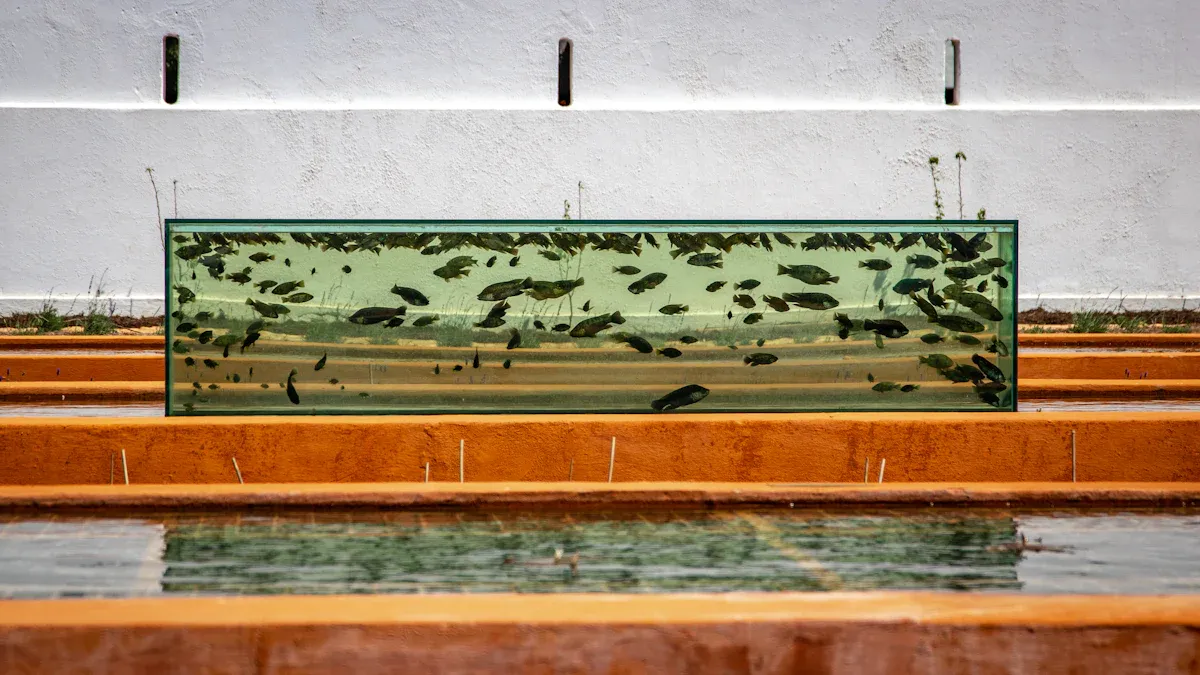
You use Algae Farming Lighting to create the best environment for algae to thrive in aquaculture systems. This lighting system gives you control over the amount and type of light your algae receive. You can choose specific wavelengths and adjust the intensity to match the needs of your algae. Many systems use LED lights because they are energy-efficient and easy to program. You can set timers and change the light spectrum to fit the growth cycle of your algae. Some farms use natural sunlight, but artificial lighting lets you grow algae indoors or in places with limited sunlight.
Note: Algae Lighting helps you maintain consistent conditions, which leads to healthier algae and better yields.
Why Light Sources for Growing Algae
You need to understand why light is so important for algae. Algae use light for photosynthesis. This process lets them turn carbon dioxide into organic matter, which helps them grow and produce oxygen. The type of light you provide makes a big difference. Algae contain chlorophyll a and b, which respond best to blue and red light. When you use lights that the energy at the correct wavelength, you boost algae growth and improve their health.
Light quality affects how fast algae grow.
The length of time algae receive light (photoperiod) changes their reproduction rate.
The strength of the light (irradiance) influences how much lipid algae can store.
You can use Algae Farming Lighting to control these factors. When you set the right photoperiod and intensity, you help your algae reach their full potential. This means you get more biomass and better results from your aquaculture system.
How LED Lights Support Algae Growth
Photosynthetically Active Radiation
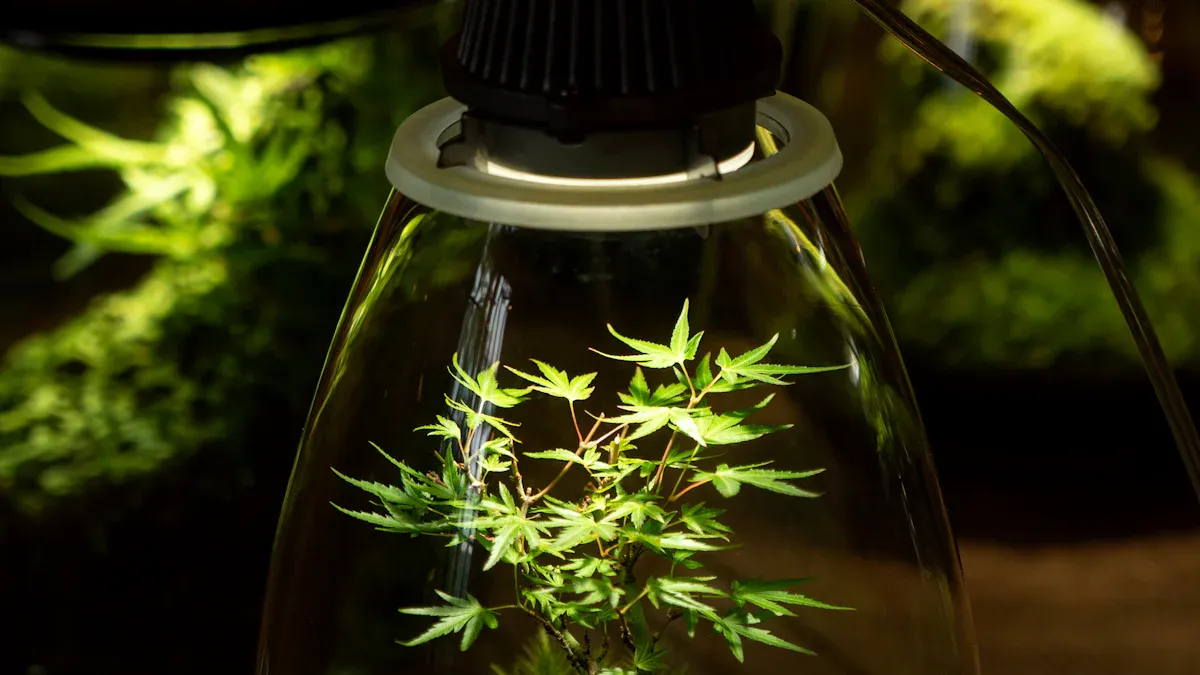
You need to understand how LED lights help the growth of macro-algae. Algae use light to make food through photosynthesis. The color, or spectrum, of the light matters a lot. Different algae species absorb different colors because they have unique pigments. Most microalgae grow fastest under red and blue light. Red light gives C. vulgaris the highest dry weight and strong chlorophyll a production. Blue light also supports high protein and lipid content. Green light helps some species like A. platensis and S. obliquus make more chlorophyll b and carotenoids.
Here is a table that shows how different LED colors affect algae growth:
LED Color | Microalgae Species | Growth Effect (Dry Weight) | Chlorophyll a (mg g-1) | Chlorophyll b (mg g-1) | Carotenoid (mg g-1) | Total Carbohydrates (mg g-1) | Protein Content (mg g-1) | Lipid Content (%) |
|---|---|---|---|---|---|---|---|---|
Red | C. vulgaris | Highest | 8.4 | N/A | N/A | N/A | 102.7-97.5 | 4.37 |
Blue | C. vulgaris | High | N/A | N/A | N/A | 52.1 | 102.7-97.5 | 5.68 |
Green | A. platensis | N/A | N/A | 2.0 | 6.1 | N/A | N/A | N/A |
Green | C. vulgaris | N/A | N/A | 1.98 | N/A | N/A | N/A | N/A |
Green | S. obliquus | N/A | N/A | 1.68 | N/A | N/A | N/A | N/A |
Tip: You should select the LED spectrum based on the algae species you want to grow. Red and blue LEDs work best for most microalgae, but some macroalgae need different colors.
You can use Algae Farming Lighting to match the light spectrum to your algae. This helps you get faster growth and higher yields. Changes in the spectrum can also trigger different responses in algae. For example, blue light can affect reproduction in some species. You need to test and adjust the spectrum for your specific algae.
Comparing LED, Sunlight, and Other Light Sources
You have several choices for lighting in algae farming. Direct sunlight for growing micro-algae, which is free and covers all colors, but it is not always available or easy to control. LED lights let you pick the exact color and intensity. This gives you more control over growth. Fluorescent lamps for growing micro-algae also work well, but they use more energy and do not last as long.
Studies show that red LED light helps C. vulgaris reach high cell density quickly. White LED light supports fast growth during the exponential phase. Fluorescent lights can give higher population density over time, but LEDs are more efficient and easier to program.
Here is a table that compares energy use and lifespan for different lights:
Lamp Type | Typical Efficacy (lumens/w) | Lamp Life (hrs) | CRI |
|---|---|---|---|
Incandescent | 11-20 | 750-2,000 | 100 |
White LED | 50-100 | 25,000-100,000 | 70-90 |
Tubular Fluorescent | 75-98 | 15,000-20,000 | 70-95 |
LED lights use less energy and last much longer than incandescent or fluorescent lights.
You save money on electricity and replacement costs when you use LEDs for Algae Farming Lighting.
You should also think about how different algae species respond to light:
Each species has its own pigment mix, so it absorbs light differently.
Red and blue light help most microalgae grow faster.
White light supports all species, but the effect depends on the spectrum.
Some colors work better for certain species, so you need to match the light to your algae.
Changes in light spectrum can change how algae grow and reproduce.
Note: You can use Algae Farming Lighting to create the best conditions for your algae. LEDs give you the flexibility to adjust color, intensity, and timing. This helps you optimize growth and save energy. So choose the correct light for your culture.
Key Benefits of Algae LED Lighting
Energy Efficiency and Cost Savings
You can lower your energy bills when you switch to LED lighting for your algae farm. LED lights use less electricity than traditional bulbs. They last much longer, so you do not need to replace them often. This means you spend less money on maintenance and replacement parts. You can also control the brightness and timing of LED lights. This helps you avoid wasting energy during periods when algae do not need extra light.
LEDs produce less heat than other types of lights. You do not need to run cooling systems as often. This saves even more energy and reduces your operating costs. Many farmers choose LED lights because they help them run their farms more efficiently.
Tip: Investing in LED lighting can help you save money over time and make your farm more sustainable.
Growth Optimization and Sustainability
You can use Algae Farming Lighting to create the best conditions for algae growth. LED lights let you adjust the color and intensity to match the needs of your algae species. This helps you get faster growth and higher yields. You can grow algae all year, even when sunlight is limited.
LED lighting supports environmental sustainability in several ways:
LED lights improve energy efficiency, which is important for sustainable farming.
You use fewer resources, such as water and fertilizers, because you can control the growing environment.
Controlled-environment agriculture with LEDs lets you produce algae year-round and optimize growth conditions.
You help protect the environment when you use LED lighting. You reduce your carbon footprint and make your farm more eco-friendly. You also support the health of your algae, which leads to better results and higher productivity.
Note: Choosing the right lighting system helps you balance cost, growth, and sustainability for your algae farm.
Choosing Algae LED Lights
Important Features (Wavelength, Intensity, Programmability)
You need to look at several features when you choose LED lights for your algae farm. The most important features are wavelength, intensity, and programmability. Each one affects how well your algae grow and how much energy you use.
Wavelength: You should select lights that match the absorption spectrum of your algae. Most microalgae grow best under red and blue light. Macroalgae may need different colors, so you must check the needs of your species.
Intensity: The strength of the light changes how fast your algae grow and how much lipid they produce. If you use higher intensity, you can increase growth rate and lipid content, but protein productivity may decrease. You need to find the right balance for your farm.
Here is a table that shows how light intensity and programmability affect algae growth and productivity:
Light Intensity (μmol photons m−2 s−1) | Lipid Content (%) | Protein Productivity | Growth Rate Impact |
|---|---|---|---|
130 | 12.7 | Decreased | Increased |
520 | 20.0 | Decreased | Increased |
70 | – | – | Maximum at 140 |
140 | – | – | Maximum observed |
Programmability: You can use programmable LED systems to set the photoperiod and change the spectrum. This lets you match the light cycle to the needs of your algae. You can boost growth during key phases and save energy when algae do not need extra light.
Tip: Programmable lights help you adjust settings as your algae grow. You can test different cycles and find the best setup for your farm.
Matching Lights to Algae Species and Farm Size
You need to match your lighting system to the type of algae you grow and the size of your farm. Each species has its own light requirements. Microalgae often need red and blue light, while macroalgae respond best to specific color temperatures and spectra.
The selection of color temperature and spectrum is crucial for macroalgae. Blue light can give you the highest growth rates for some species, such as Chlorococcum sp. This means you can optimize your lighting to increase nutrient uptake and biomass production. You should check the needs of your algae before you buy your lights.
Small farms can use simple LED panels with basic controls.
Large farms may need advanced systems with programmable features and sensors.
You can use indirect sunlight for some macroalgae, but artificial lighting gives you more control.
When you choose Algae Farming Lighting, you should consider your budget and long-term goals. Energy-efficient LEDs save money over time. Programmable systems let you change settings as your farm grows. You can start with a basic setup and upgrade as you expand.
Note: Matching your lights to your algae species and farm size helps you get the best results. You can increase yield, save energy, and support sustainable aquaculture.
Best Practices for Algae Farming Lighting
Installation and Setup Tips
You need to set up your algae LED lighting system with care. Start by identifying the main pigments in your algae strain. This helps you choose the right light. Select a light that emits energy in the range your algae can absorb. For example, green light does not work well because algae pigments like chlorophyll a and b do not absorb it. Position your light close to your tank so your algae get enough exposure.
Select a light that emits radiation in the correct range for your algae.
Position your light next to your tank for maximum coverage.
Tip: Always check the type of light you use. LED, fluorescent, incandescent, and sunlight all have different effects. LEDs give you more control and efficiency.
Maintenance and Maximizing Yield
You need to keep your lighting system in good condition to get the best results. Clean your lights often to remove dust and algae buildup. This keeps the light strong and clear. Watch for flickering or dimming, which can signal a problem. Replace bulbs when needed, and always use the correct type for your tank. Adjust your light timer to keep a steady schedule, usually 8-10 hours of light each day.
Regularly clean the lighting system to remove dust and algae buildup.
Monitor the performance of the lights, checking for flickering or dimming.
Replace bulbs as needed, using the correct type for your tank.
Adjust the light timer to maintain a consistent schedule.
You can use advanced strategies to boost your algae yield. Photobioreactors (PBRs) let you control light and other conditions for your algae. New lighting systems, like submerged wireless lights, improve efficiency and reduce dark zones. Better PBR designs help with energy savings and make gas and light exchange easier.
Strategy | Description |
|---|---|
Use of Photobioreactors (PBRs) | PBRs allow you to control conditions for your algae, improving growth and reducing risks. |
Advanced Lighting Systems | Submerged wireless lights in PBRs increase light efficiency and create more uniform exposure. |
Improved PBR Designs | New designs save energy and help with better gas and light exchange, lowering production costs. |
Note: Good installation and regular maintenance help you get healthy algae and higher yields. Smart lighting choices and new technology can make your farm more productive.
Algae farming lighting gives you powerful tools to transform aquaculture. You can boost growth and reproduction in aquatic animals by managing light more effectively. LED technology lets you control intensity and spectrum, creating optimal conditions that traditional lights cannot match. You also save energy—up to 60%—when you switch to LEDs.
You improve yields and support sustainability with smart lighting choices.
You can use both natural and artificial light to maximize results.
Apply best practices to get healthy algae and strong aquaculture systems.
FAQ
What is the best LED color for growing microalgae?
You should use red and blue LEDs for most microalgae. Red light boosts dry weight and chlorophyll a. Blue light increases protein and lipid content. Check your algae species for specific needs.
How many hours should you run LED lights for algae each day?
You should run your LED lights for 8 to 10 hours daily. This schedule supports healthy growth and maximizes yield. Adjust the photoperiod based on your algae’s response.
Can you use regular LED lights for algae farming?
You need specialized LED lights with the correct spectrum. Regular LED lights for photosynthesis may not match the wavelengths algae’s need. Choose lights designed for aquaculture.
How do you maintain your algae LED lighting system?
Clean lights weekly to remove dust and algae.
Check for flickering or dimming.
Replace bulbs as needed.
Tip: Regular maintenance keeps your system efficient and your algae healthy.
Does LED lighting help reduce energy costs in aquaculture?
Yes, LED lighting uses less electricity and lasts longer than other bulbs. You save money on energy bills and replacement costs. LEDs also produce less heat, lowering cooling expenses.