Key Takeaways
-
Extended Hiatus: Expect a minimum 3-to-4 week production halt as factories close for the Lunar New Year, followed by a month-long normalization period.
-
Logistical Bottlenecks: Peak cargo surges leading up to the holiday result in port congestion and “blank sailings,” causing significant transit variability.
-
Quality Control Risks: The “Pre-CNY Rush” often leads to increased defect rates; proactive inspections and early order placements are essential.
-
Inventory Strategy: Implement a “Safety Stock Buffer” (typically 4-6 weeks of extra supply) to mitigate stockout risks during the February-March window.
-
Proactive Communication: Maintaining constant contact with vendors to confirm “Actual Last Ship Dates” is critical for managing downstream customer expectations.
For global industries dependent on East Asian manufacturing—particularly the LED and electronics sectors—the arrival of the Lunar New Year (CNY) represents the single most disruptive event in the annual calendar. Unlike Western holidays, which typically involve short closures, the Spring Festival initiates a massive manufacturing hiatus. For manufacturers like Fanxstar, maintaining supply chain reliability during this period requires meticulous long-term planning. Understanding the technical and logistical nuances of this disruption is paramount for procurement managers looking to safeguard their project timelines and operational continuity.
The Anatomy of Disruption: Pre-Holiday and Post-Holiday Phases
The impact of Chinese New Year is not localized to the official seven-day public holiday. In reality, the “Supply Chain Shadow” extends for nearly ten weeks, categorized into three distinct technical phases: the Pre-CNY Surge, the Shutdown, and the Ramp-up.
1. The Pre-CNY Rush and “Quality Fade”
Beginning 4-6 weeks before the holiday, manufacturers experience a massive surge in demand as clients attempt to front-load orders. This results in extreme manufacturing pressure, which can lead to a phenomenon known as “Quality Fade,” where production speed is prioritized over stringent inspection protocols. Professional buyers must ensure that their quality assurance (QA) processes remain rigid during this high-stress period.
2. The “Chunyun” Logistical Freeze
The shutdown is preceded by “Chunyun”—the largest human migration on Earth. As hundreds of millions of workers travel to their hometowns, domestic logistics (trucking and drayage) begin to fail as early as 10 days before the official holiday. According to research from the MIT Center for Transportation & Logistics, this labor shortage effectively freezes the flow of goods from inland factories to coastal ports.
|
Disruption Phase |
Timeline (Relative to CNY) |
Primary Technical Challenge |
|---|---|---|
|
Pre-CNY Rush |
-6 to -2 Weeks |
Labor shortages and raw material price spikes. |
|
Factory Shutdown |
-1 to +2 Weeks |
Zero production capacity; total manufacturing hiatus. |
|
Ramp-Up Window |
+2 to +4 Weeks |
“Ghost Workers” (employees not returning) and re-calibration. |
|
Normalization |
+4 to +6 Weeks |
Clearing backlogs and stabilizing freight spot rates. |
Logistics Bottlenecks and Freight Volatility
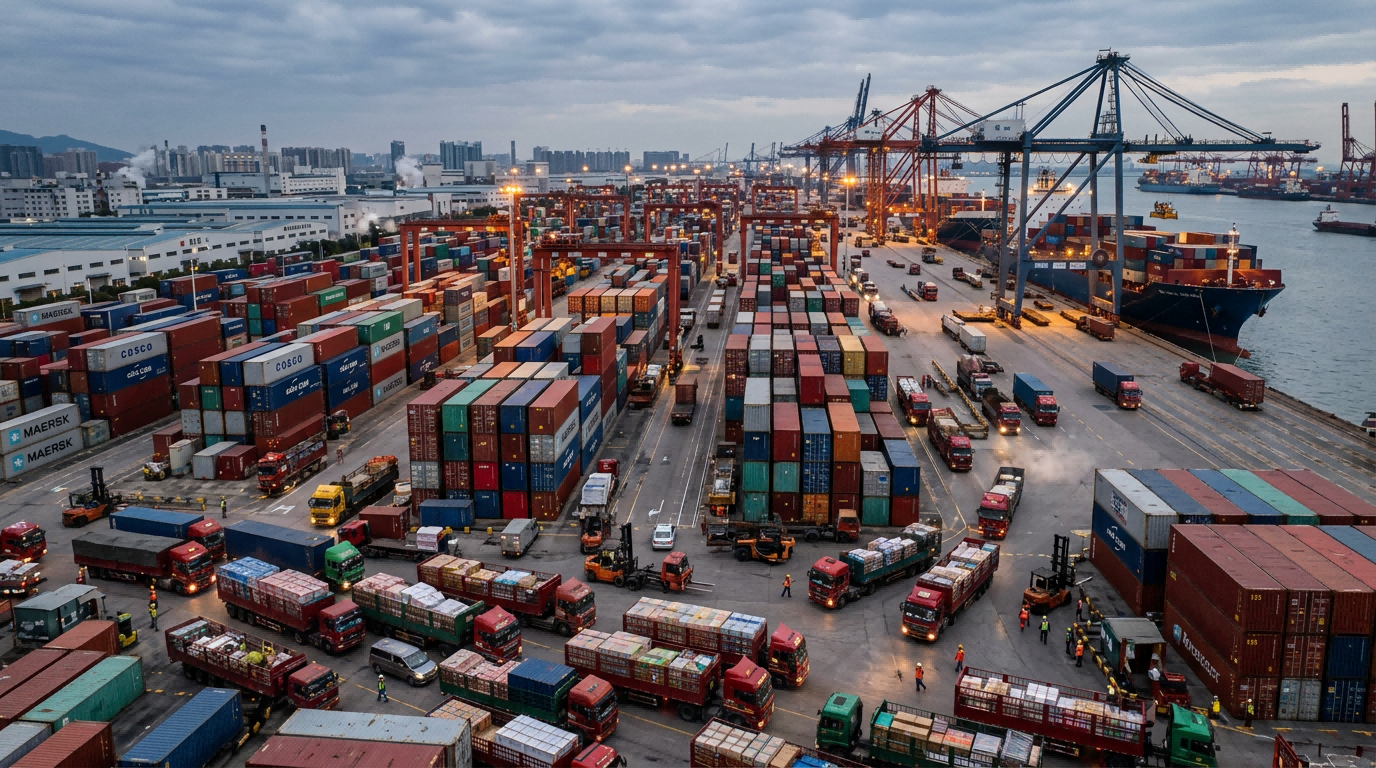
The maritime and air freight sectors experience extreme volatility during this window. To manage the sudden drop in demand *after* the holiday, ocean carriers often implement “Blank Sailings”—canceling entire scheduled voyages. This reduces the available capacity for any goods that manage to reach the port, leading to a “rollover” where containers are stuck at origin for weeks. Monitoring sea freight reliability is essential for avoiding the high costs of emergency air-freight retrofits.
Inland Drayage and Equipment Shortages
Even if a factory completes an order, the lack of available truck drivers during the holiday can prevent the goods from reaching the port. This often results in “chassis shortages” and increased storage fees at origin terminals. Importers must secure their capacity bookings at least 4-6 weeks in advance to ensure a space on the last vessel before the shutdown.
Financial and Operational Risks for Global Brands
The operational impact of CNY is felt most acutely by firms with “Lean” inventory models. For specialized components like waterproof LED drivers or customized heatsinks, the inability to source parts during the February window can lead to total project halts. This creates secondary financial risks, including cash flow instability and reputational damage if downstream deliveries are missed.
|
Sector |
Primary Impact |
Financial Risk Level |
|---|---|---|
|
Manufacturing |
Critical component stockouts. |
High (Total line stoppages). |
|
Logistics |
Drayage costs surge by up to 200%. |
Moderate (Margin erosion). |
|
Retail / E-Commerce |
Extended “Out of Stock” notices. |
High (Loss of market share). |
|
Technology |
Delayed R&D and prototyping. |
Low to Moderate (Delayed launch). |
“Supply chain resilience is measured by how well a company prepares for the predictable. Chinese New Year is not an anomaly; it is a recurring seasonal stress test.”
Strategic Mitigation: The CNY Readiness Playbook
1. Advanced Forecasting and “China + 1”
Strategic firms utilize historical data to adjust their Q1 and Q2 forecasts. While many companies are moving toward a “China + 1” strategy by diversifying into Southeast Asia, it is important to note that many of these secondary factories still rely on Chinese raw materials (components, PCBAs), meaning the CNY disruption still indirectly impacts them. Proactive sourcing strategies must account for this interdependency.
2. Inventory Buffering and Safety Stock
Building a 6-week safety stock buffer is the industry standard for managing the Lunar New Year hiatus. This inventory should be positioned as close to the end-user as possible to bypass potential shipping delays during the late-February cargo rush. For high-revenue SKUs, placing orders by mid-November is essential to ensure they clear customs before the migration begins.
3. Supplier Relationship Management
In a period of limited capacity, suppliers prioritize their “Tier 1” partners. Maintaining a direct relationship with the factory—rather than relying solely on third-party intermediaries—ensures that your orders are at the top of the production queue during the ramp-up phase in March.
Recovery and Normalization
Operations do not return to 100% efficiency the day after the holiday ends. Many workers may not return to the same factory, leading to a period of “New Hire Training” which can temporarily impact production speed and quality. Most global supply chains achieve full operational stability approximately 21-30 days after the festival ends. Managing this “recovery window” is vital for avoiding the “Bullwhip Effect,” where over-ordering leads to an eventual inventory glut in Q2.
Frequently Asked Questions (FAQ)
Exactly how long do Chinese factories close for CNY?While the official public holiday is 7 days, most factories close for 14 to 21 days to allow workers to travel. Some smaller facilities may close for a full month if their order books are light.
When should I place my orders to avoid CNY delays?Ideally, bulk orders should be finalized and deposits paid by late October or early November. Any order placed after mid-December runs a high risk of being delayed until March of the following year.
Does CNY affect shipping from other Asian countries?Yes. Ports in Vietnam, Singapore, and Korea often experience congestion as they handle the spillover and transshipments from Chinese cargo surges. Additionally, many of these countries celebrate their own versions of the Lunar New Year (e.g., Tet in Vietnam).
What is a ‘Blank Sailing’ and how does it impact me?A blank sailing is when a shipping line cancels a scheduled stop or an entire voyage to save costs. If your goods are ready but your vessel is “blanked,” your cargo will be delayed by at least another week, often more if subsequent ships are already full.
How can I monitor my shipment status during the holiday?Utilize real-time visibility tools and maintain contact with your freight forwarder. However, be aware that many customer service teams in China will also be on leave, so updates may be less frequent during the peak holiday week.
In conclusion, the impact of Chinese New Year on supply chain reliability is a significant but manageable challenge. By prioritizing early planning, inventory buffering, and direct supplier communication, global businesses can navigate this seasonal hiatus without compromising their service levels. Explore Fanxstar’s engineering-driven lighting solutions to see how we maintain excellence and reliability year-round, despite global logistical headwinds.