The global cleanroom lighting market is getting bigger. Many industries want better ways to stop contamination. In 2024, the market size was USD 1.04 billion. This shows there is a lot of money and rules in this area. The table below shows the market size for cleanroom lighting:
|
Year |
Market Size (USD Billion) |
Notes |
|---|---|---|
|
2024 |
1.04 |
Reported market size for 2024 |
Pharmaceutical, semiconductor, and healthcare sectors have the most critical demand for cleanroom lighting—needs that Fanxstar addresses by aligning its solutions with stringent regulatory frameworks like ISO 14644 and GMP which mandate not only exact lighting performance (including uniformity, color temperature, and brightness) but also adherence to strict cleanroom hygiene standards to mitigate contamination risks. New lighting technology, like LED and smart lights, helps the market grow.
Understanding the cleanroom lighting market size is key to informed industry decisions: it helps stakeholders choose wisely, supports planning and budgeting, and provides actionable insights—like how trends reveal current cleanroom needs, size changes show regional/industrial growth, and comparisons clarify lighting’s role in cleanroom design. It also shapes long-term strategies: projections guide smart planning and future direction, while analysis influences product development and compliance rules. Additionally, market size studies ground research, reports highlight lighting’s importance in cleanrooms, updates track sector shifts, and this data underpins ongoing work—ensuring the market balances innovation with regulation.
Key Takeaways
-
The cleanroom lighting market is getting bigger each year. It may reach USD 1.06 billion by 2025. The market grows about 5.9% every year.
-
Cleanroom lighting is needed in many industries. These include pharmaceuticals, healthcare, biotechnology, and semiconductors. These places have strict rules for cleanliness and safety.
-
Cleanroom LED lighting is the most popular choice. It saves energy and lasts a long time. It also follows strict rules. Smart lighting helps make things easier and gives more control.
-
Asia-Pacific is growing the fastest in this market. New hospitals and factories are being built there. More money is spent on healthcare and electronics in this region.
-
Companies follow rules and use new technology. This helps make cleanrooms safer and lowers costs. It also helps companies find new ways to grow.
Cleanroom Lighting Market Size
2024 and 2025 Estimates
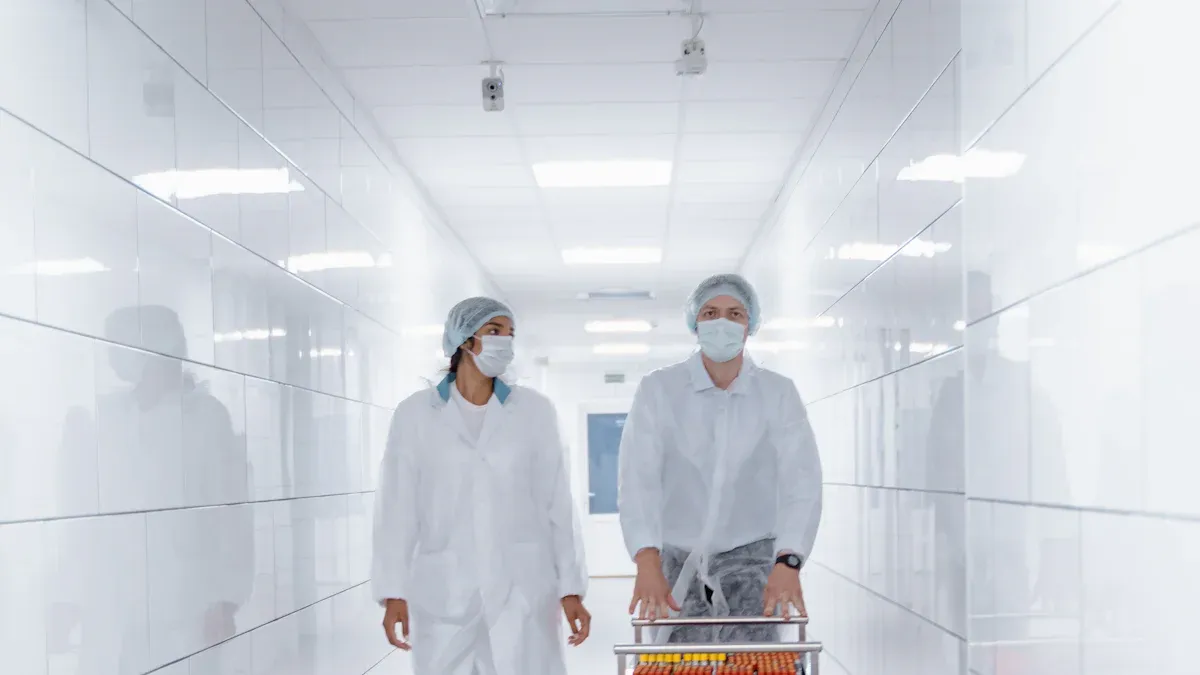
The cleanroom lighting market is getting bigger every year. In 2024, the market was worth USD 1.01 billion. Experts think it will grow to USD 1.06 billion in 2025. This steady growth shows cleanroom lighting is very important. Some industries need very clean spaces to work.
|
Metric |
Value |
|---|---|
|
Market size in 2024 |
USD 1.01 billion |
|
Projected market size in 2025 |
USD 1.06 billion |
|
CAGR (2025-2030) |
5.9% |
|
Forecast period |
2025 to 2030 |
These numbers show that companies keep spending money on cleanrooms. Businesses in pharmaceuticals, semiconductors, and healthcare need cleanroom lighting. New rules and better technology help the market grow. Knowing the market size helps people plan and use their money wisely.
Note: Good market size numbers help people make smart choices and plan for the future in the cleanroom lighting market.
Growth Rate and Forecast
Experts think the cleanroom lighting market will grow between 5.3% and 5.9% each year from 2025 to 2030. This growth comes from many things:
-
Companies want better quality and must follow rules like ISO 14644 and GMP.
-
New LED lighting saves energy and is better for the planet.
-
More research and more sickness mean the pharmaceutical and biotechnology sectors are growing.
-
The semiconductor industry needs very clean rooms to make microchips.
-
More factories use robots and smart machines, so they need better lights.
-
Governments like the FDA and EMA have strict rules for lighting.
-
Using LED lights means less money spent on repairs and power.
-
Asia-Pacific is building more hospitals and chip factories, so they buy more cleanroom lights.
-
Companies try new ideas, like smart lights and IoT, to beat others.
-
Mergers and partnerships help companies sell more products and reach new places.
Market studies show the cleanroom lighting market will keep growing. More industries will use new lighting as time goes on. Companies that spend money on new ideas can find new chances to grow. The study also says places like Asia-Pacific will grow the fastest.
The size and growth of the cleanroom lighting market show what is happening in the industry. People can use this information to decide where to invest and what to make next. Studying the market helps everyone understand where clean-room lighting is going.
Key Growth Drivers
Industry Demand
Many industries need more cleanrooms now. Pharmaceutical and biotechnology companies need cleanrooms to make drugs safely. They also need good lighting for research. Healthcare and life sciences use cleanrooms for making medical devices. Labs need special lighting to keep things clean. The semiconductor industry needs cleanrooms to make microchips. Each industry has its own needs, but all need bright and clean spaces. The pharmaceutical industry is the biggest part of the market. It is worth over one billion dollars and keeps growing. Hospitals and labs are getting bigger, so they need more clean-room light fixtures. Electronics and semiconductor factories also need lots of cleanroom lighting.
Regulatory Impact
Rules are very important for cleanroom lighting. Groups like the FDA, OSHA, and the European Union make strict rules. These rules help keep places clean and safe. ISO and GMP rules say lighting must be certified and safe. These rules make companies use better lighting that is safe and lasts longer. North America and Europe grow fast because they follow these rules. New rules from the EPA and FDA want lights to save energy and help the planet. Companies make lights with special coatings and smart features to follow the rules. Following the rules can be hard, but it helps new ideas and makes the market growth.
Technology Trends
New cleanroom lighting fixtures use less energy and have smart features. LED lights are now used instead of old fluorescent lights. LED lights use less power and cost less to run. These lights help keep rooms cool and clean. Smart lights use sensors and connect to the internet. Energy-efficient cleanroom lighting helps people watch and fix lights before they break. These new lights help keep healthcare and labs clean and safe. Companies make LED lights that can change color and have special coatings. They also make lights that are easy to use with sensors. Saving energy is still very important for new cleanroom lights.
Note: Industry needs, rules, and new technology all help the cleanroom lighting market grow.
Market Segmentation
By Product Type
The cleanroom lighting market has different product types. LED cleanroom lighting is the most popular choice. Companies like LED because it saves energy and lasts longer. LED lights do not get very hot. Fluorescent lighting is still used but is being replaced by LED. Some places use incandescent and UV-C lighting, but not many. Most people pick LED for its bright light and easy care.
By Mounting Type
How lights are mounted is important in cleanrooms. Recessed-mounted fixtures are the most used. These lights go into the ceiling and help keep dust away. Recessed lights spread light evenly in the room. This is good for cleanroom work. Surface-mounted lighting is less common but is used when needed. Some cleanrooms use surface-mounted lights if the ceiling cannot hold recessed ones.
By Cleanroom Classification
Cleanrooms have classes based on air cleanliness. The ISO system ranks cleanrooms from ISO 1 to ISO 9. ISO 1 is very clean, and ISO 9 is less clean. Most cleanrooms are ISO 7 or ISO 8. The table below shows common classes and their particle limits:
|
ISO Class |
Max Particles (≥0.5 µm/m³) |
Federal Standard 209E Equivalent |
|---|---|---|
|
ISO 7 |
352,000 |
Class 10,000 |
|
ISO 8 |
3,520,000 |
Class 100,000 |
Higher-class cleanrooms need special lights. These lights should not mess up airflow or add particles. Recessed and sealed fixtures are best for these rooms.
By End-User
Many industries need cleanroom lighting.
-
Healthcare and life sciences use the most. They need clean rooms for making drugs and devices.
-
Manufacturing, like semiconductor and electronics, also uses a lot of cleanroom lights.
-
Food and beverage companies are using more cleanroom lighting for safe production.
-
Other users are research labs and special factories.
By Region
Different regions affect the cleanroom lighting market.
|
Region |
Market Position |
Key Insights |
|---|---|---|
|
Fast growth in pharmaceuticals, biotechnology, and semiconductors. China leads; Japan is growing. |
||
|
North America |
Significant share |
Strong rules and many big companies. |
|
Europe |
Close follower |
Strict rules and focus on saving energy with lighting. |
|
Middle East & Africa |
Growing |
More hospitals and drug companies are opening. |
|
Latin America |
Emerging |
More money spent on healthcare and factories. |
Asia-Pacific has the biggest part of the cleanroom lighting market. Growth comes from new hospitals, factories, and research centers. North America and Europe are also important because of strong rules and advanced industries.
Cleanroom Applications
Industry Use Cases
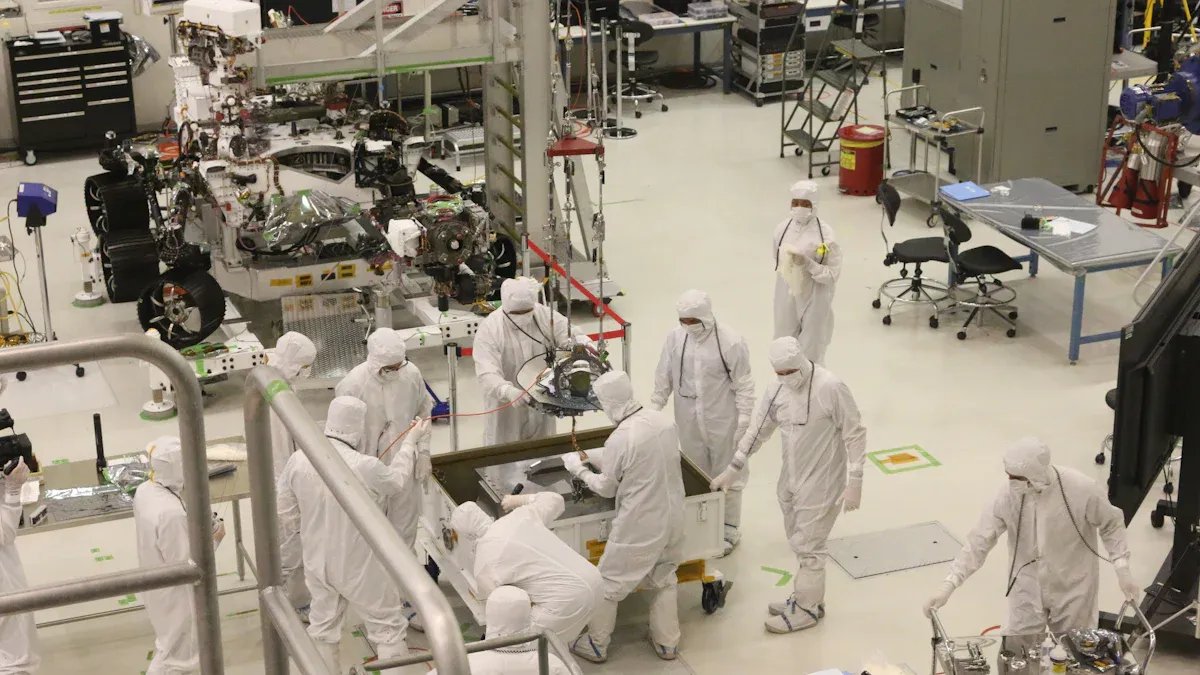
Cleanroom lighting helps many industries keep spaces clean. Each industry uses special lights to stay safe and follow rules.
-
Pharmaceuticals use cleanroom lighting in labs and packaging rooms. These places need to be very clean and checked often.
-
Electronics makers, like those making semiconductors, use lights that stop contamination. These lights help workers build tiny parts.
-
Hospitals and clinics use cleanroom lighting in operating rooms and labs. This lighting keeps patients safe and rooms clean.
-
Biotechnology and research labs use cleanroom lighting for testing and experiments.
-
Food and drink factories use lighting to keep packaging and storage areas clean.
-
Medical device makers use cleanroom lighting in sterile rooms to protect products.
-
Aerospace and optics factories use cleanroom lighting in workshops and special assembly areas.
Cleanroom lighting is important for keeping these places free from contamination. Good lighting from Fanxstar helps workers avoid mistakes and keeps everything clean.
Standards and Classifications
Cleanroom lighting must follow strict rules to work safely. In pharmaceuticals, lights need to be sealed and safe from explosions. These lights protect against dangerous gases and dust. Semiconductor and battery factories need lights that block tiny particles. These lights must also handle lots of cleaning. Cleanroom lighting helps places meet ISO 14644-1 rules and safety ratings like Class I, Division 1. Following these rules keeps cleanrooms safe and products high quality. Hospitals and factories use these standards to keep their spaces very clean and safe.
Cleanroom Lighting Market Trends
LED Adoption
LED technology is the top choice for cleanroom lighting. In 2024, over half of cleanroom lights were LED. Companies pick LED because it saves power and lasts longer. LED lights do not need much fixing or care. These lights also follow strict rules from groups like the FDA and ISO. More companies are switching from fluorescent to LED lights. This change is happening quickly. Industries like pharmaceuticals and semiconductors want safe and clean spaces. They use LED systems that are reliable and save energy. New LED lights have smart features and coatings that stop germs. This makes them even more liked by companies.
Smart Lighting
Smart lighting is making cleanrooms work better. Many new lights use sensors and AI to change brightness. The lights adjust based on what is happening in the room. This helps save power and money for companies. For example, the DUO 222 Downlight uses LED and Far-UVC to kill germs. It lights up the room at the same time. Smart lights can connect to the internet for easy control. Managers can change the lights from one place. Some smart lights learn from past use to work better. This makes cleanrooms safer and helps workers do their jobs.
|
Feature |
Benefit |
|---|---|
|
AI-powered lights |
Change to fit what is needed right now |
|
IoT integration |
Lets people control and watch lights |
|
Antimicrobial |
Helps stop germs from spreading |
Sustainability
Sustainability is a big trend for cleanroom lighting. Most new cleanrooms use LED lights to save energy. LED lights last longer and use less power. Companies add smart sensors to help control the lights. This saves even more energy and money. Many cleanrooms use materials that are better for the planet. Governments and rules ask for energy-saving lights. In Asia-Pacific and Latin America, new hospitals and factories use green lighting. This helps lower costs and protect nature. LED systems help cut down on pollution and support green goals.
Companies that follow these trends can save money, follow rules, and keep cleanrooms safe for everyone.
Competitive Landscape
Leading Companies
Many big companies are important in the cleanroom lighting market. These companies are known for making good cleanroom lights. They use new ideas to make their products better. Some of the top companies are:
-
Signify Holding (Netherlands)
-
Wipro Lighting (India)
-
Crompton Greaves Consumer Electricals Ltd. (India)
-
Eaton Corporation Inc. (Ireland)
-
LUG Light Factory Sp. z o.o. (Poland)
-
Terra Universal Inc. (U.S.)
-
Kenall Manufacturing (U.S.)
-
LEDspan Ltd (Ireland)
-
Havells India Ltd (India)
-
Thorlux Lighting (U.K.)
-
CleanAir Solutions (U.S.)
Other important companies are Acuity Brands, Inc., OSRAM Licht AG, Hubbell Incorporated, and Panasonic Corporation. These companies spend money on research to make better cleanroom lights.
Market Share
There are many companies in the cleanroom lighting market. No one company is the biggest. Many companies sell similar cleanroom lights and services. Most companies try to make new and better products. They also work hard to follow global rules. This helps them get customers from healthcare, electronics, and pharmaceuticals. Because there is no clear leader, the market stays very competitive.
Companies that use new technology and follow strict rules can do better than others.
Recent Developments
Big companies keep making new smart cleanroom lights. The table below shows some new ideas:
|
Company |
Innovation/Development |
Key Features and Benefits |
|---|---|---|
|
Kenall Manufacturing |
AI-driven lighting systems |
Changes light when people enter; checks lights all the time; saves power |
|
Signify (Philips) |
Interact Industry platform with AI and IoT |
Controls lights live; fixes problems before they happen; follows rules |
|
Cree Lighting |
AI-enhanced LED lighting |
Smart controls; learns how lights are used; uses less energy |
|
Lumenwerx |
AI and sensor integrated lighting |
Changes brightness; fixes lights before they break; saves energy |
|
Energy Focus |
AI-powered tunable LED lighting |
Changes lights in real time; finds problems fast; costs less |
These new lights help companies save energy and follow cleanroom rules. Smart lights also make it easier to check and fix lights in cleanrooms.
Impact of COVID-19
Short-Term Effects
COVID-19 changed the cleanroom lighting market a lot. Lockdowns and travel bans made it hard to get supplies. Many companies could not finish cleanroom projects on time. They did not have enough workers or materials. Prices for things like nitrile and polypropylene went up fast. These materials were also used for personal protective equipment. Because of this, making cleanroom lights cost more money.
At the same time, hospitals and labs needed more cleanroom lighting. They needed clean spaces for COVID-19 tests and vaccines. Companies built new cleanrooms quickly. This made cleanroom lighting even more needed. But electronics factories slowed down because of social distancing and closed plants.
The pandemic showed people that cleanroom technology is very important for health and safety. This made more people spend money on cleanroom lighting, especially in hospitals and labs.
Long-Term Outlook
After COVID-19, the cleanroom lighting market is growing strong. Companies now buy modular cleanrooms that are easy to change. They use digital tools and machines to avoid supply problems. Experts think the market will grow by over 6% each year from 2023 to 2028.
Many things help this growth:
-
The biopharmaceutical industry keeps getting bigger.
-
Hospitals and medical device makers need more cleanrooms.
-
New technology, like smart lighting and artificial intelligence, makes cleanrooms better.
-
North America is the leader because of strong healthcare and strict rules.
-
Asia Pacific is growing fast as countries spend more on healthcare and medicine.
There are still some problems, like high costs and not enough skilled workers. But people still want clean spaces, so the market looks good. This shows that the cleanroom lighting market is stronger and can handle tough times after learning from the pandemic.
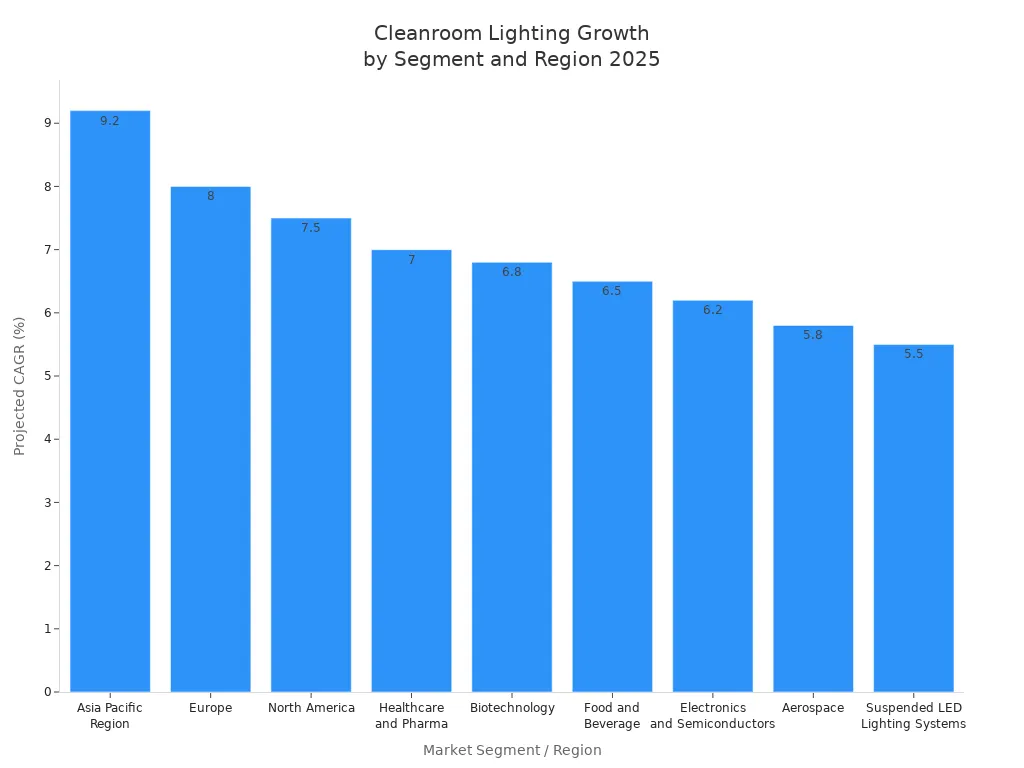
The cleanroom lighting market is getting bigger in 2025. Healthcare, pharmaceuticals, and biotechnology help it grow the most. Asia Pacific is the fastest-growing region. The table below shows which segments and regions are growing and why:
|
Market Segment / Region |
Growth Drivers / Reasons |
Projected CAGR / Growth Outlook |
|---|---|---|
|
Healthcare and Pharmaceuticals |
Need for sterile environments, stricter regulations |
High growth driven by demand for sterile cleanrooms |
|
Biotechnology |
Contamination-free research environments, regulatory compliance |
Significant expansion due to biotech innovation |
|
Food and Beverage |
Hygiene and contamination prevention demands |
Growing due to food safety and quality requirements |
|
Electronics and Semiconductors |
Booming electronics manufacturing, contamination control |
Strong growth, especially in Asia Pacific |
|
Aerospace |
Demand for reliable, compliant lighting solutions |
Steady growth driven by industrial needs |
|
Asia Pacific Region |
Booming electronics & semiconductor industry; investments in healthcare & pharma |
Highest CAGR ~9.2% |
|
Europe |
Advancements in biotechnology; stringent regulations |
Steady growth with CAGR ~8% |
|
North America |
Established healthcare & pharmaceutical sector; advanced technologies |
Steady growth with CAGR ~7.5% |
|
Suspended LED Lighting Systems |
Flexibility and adaptability in larger cleanrooms |
Steady growth due to mounting type advantages |
People in the industry should focus on modular designs. They should use UV-C and have different supply chains. Working together and using smart data can make lighting better and cheaper. Asia Pacific and healthcare, biotechnology, and electronics have the best chances for growth. These facts help people plan and invest for bigger market size in the future.
FAQ
What is cleanroom lighting?
Cleanroom lighting means special lights for clean spaces. These lights stop contamination and follow strict rules. They use sealed covers and smooth surfaces. This helps keep dust and particles away.
Why do industries prefer LED lighting in cleanrooms?
Industries pick LED lights because they use less energy. LED lights last longer and make less heat. They also meet cleanroom standards. LED lights help companies spend less on repairs and stay safe.
Which industries use cleanroom lighting the most?
Pharmaceuticals, healthcare, biotechnology, and semiconductor factories use cleanroom lighting most. These places need very clean rooms for making things and testing.
How do regulations impact cleanroom lighting choices?
Rules like ISO 14644 and GMP say what lights are needed. Companies must use lights that follow these rules. This keeps workers safe and helps companies follow the law. Rules also help make new and better lights.
What are the latest trends in cleanroom lighting?
-
Using LED lights to save energy
-
Smart lights with sensors
-
Eco-friendly materials and designs
These trends help companies work better, save money, and protect nature.