

In industrial and commercial facility management, lighting is often viewed as a “fixed” utility cost. However, the choice between “Always-On” lighting—where fixtures run at 100% capacity during all operational hours—and “Sensor-Based” lighting is the difference between a stagnant expense and a high-yield investment. Academic and industry studies have shown that integrating motion and daylight sensors into LED systems can drive energy savings of 25% to 75%, depending on the facility type.
For a facility manager, a Return on Investment (ROI) calculation is the primary tool used to justify a hardware upgrade. This guide breaks down the financial and technical variables required to calculate the ROI of sensor-based systems, specifically focusing on how modern wireless controls can slash installation labor by up to 44% and expedite project timelines by 70% compared to traditional wired sensor networks.
Key Takeaways
-
Exponential Savings: Sensor-based lighting typically reduces energy consumption by 30% to 70% in warehouses and offices.
-
Maintenance Extension: Sensors reduce the “burn time” of LED chips, effectively doubling or tripling the calendar life of the fixture.
-
Labor Efficiency: Integrated microwave sensors eliminate the need for secondary control wiring, reducing initial labor costs by approximately 40%.
-
Thermal Reduction: Lower energy draw translates to less heat dissipation, indirectly reducing the load on industrial HVAC systems.
-
Sustainability Compliance: Smart lighting is a prerequisite for LEED and BREEAM certifications, increasing the market value of the property.
The Anatomy of a Lighting ROI Formula
To calculate a professional-grade ROI, you must look beyond the “Simple Payback” (how long it takes to save the initial cost). A robust ROI model includes energy cost reduction, maintenance amortization, and tax/rebate incentives.
ROI (%) = [(Total 5-Year Savings – Initial Investment) / Initial Investment] x 100
Where:
– Savings = (Wattage Reduction x Operating Hours x Energy Rate) + Reduced Labor Costs.
– Investment = Fixture Cost + Labor + Permitting – Rebates.
For instance, an industrial facility replacing 100 traditional high bays with Fanxstar’s sensor-integrated LEDs can recover the initial investment in under 24 months. Over a five-year horizon, the ROI often exceeds 200%, making it one of the most profitable infrastructure upgrades available to businesses today.
Technical Deep Dive: Why Sensor-Based Systems Outperform Always-On
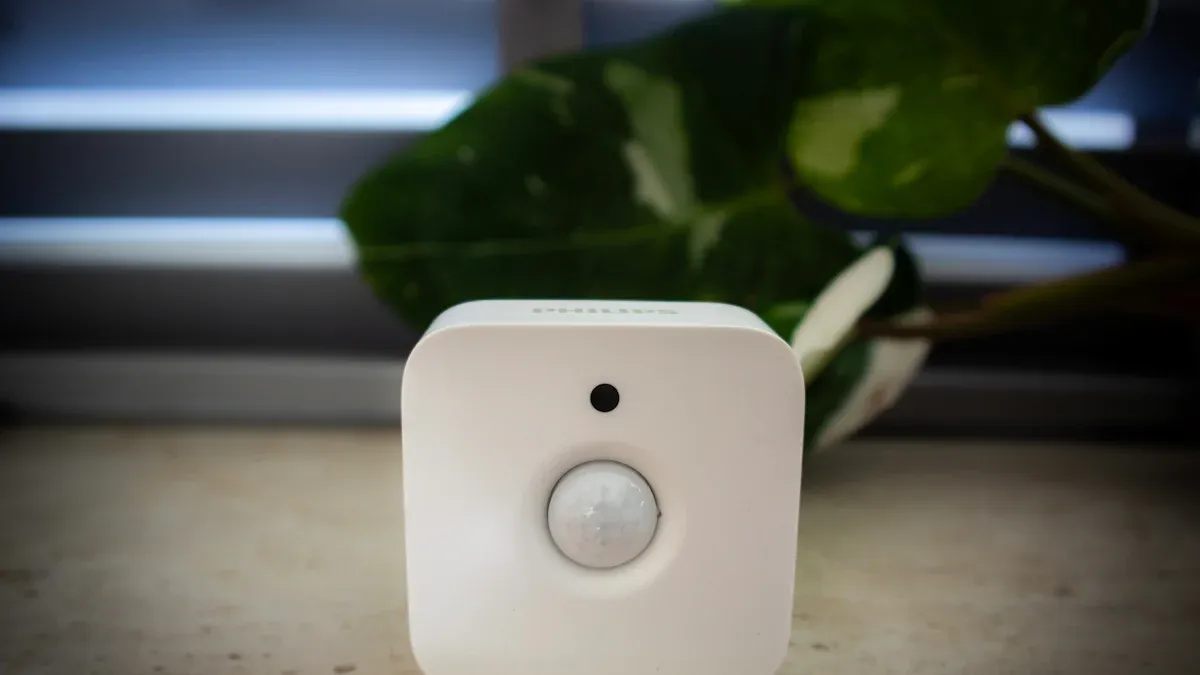
PIR vs. Microwave Sensors
Choosing the right sensor technology is critical for ROI. Passive Infrared (PIR) sensors detect heat signatures and require a direct line of sight. They are cheaper but often suffer from “false offs” if a worker is shielded by a rack. Microwave sensors, like those found in Fanxstar’s tri-proof series, utilize radar technology to detect motion through obstacles. This ensures the lights are 100% reliable in complex warehouse environments, preventing productivity drops caused by lights accidentally turning off.
Daylight Harvesting and Multi-Step Dimming
Modern “Always-On” systems are binary—they are either 100% on or 0% off. Sensor-based ROI is bolstered by daylight harvesting, where the LED output adjusts automatically based on the amount of natural sunlight entering through skylights. In many modern logistics centers, the LEDs may only run at 20-30% power during midday, saving thousands of kWh annually without human intervention.
The Hidden Driver of ROI: Maintenance and Fixture Life
An LED’s lifespan is typically rated at 50,000 to 100,000 hours (L70). However, this rating is based on continuous use. When a sensor-integrated LED batten is installed in an aisle with only 40% occupancy, the effective lifespan of that fixture is more than doubled. This delays the capital expenditure required for the next round of upgrades by several years.
|
Feature |
Always-On System |
Sensor-Based System |
ROI Impact |
|---|---|---|---|
|
Annual Energy Draw |
100% (Baseline) |
35% – 55% (Reduced) |
High energy bill reduction. |
|
Fixture Replacement |
Every 5.7 years (@24/7) |
Every 12-14 years |
Major reduction in CAPEX cycle. |
|
Labor per Unit |
Standard Wiring |
“Click-and-Play” Integrated |
40% faster installation. |
|
HVAC Impact |
High Heat Output |
Minimal Thermal Load |
Secondary HVAC savings. |
Use Case Comparison: Parking Garages and Warehouses
Parking garages are the “gold mine” for sensor-based ROI. Because these spaces must be lit for safety 24/7, but are often empty for hours at night, the savings are astronomical. In a 500-fixture garage, the switch from always-on fluorescent tubes to sensor-based tri-proof LED lights often yields a payback period of less than 12 months.
In warehouses, the ROI is driven by “Zonal Control.” By grouping fixtures so that only a specific aisle illuminates when a forklift enters, the facility avoids lighting 90% of the building unnecessarily. This precision is impossible with always-on systems, which typically use broad-zone breakers that light up thousands of square feet at once.
Pro-Tip: Don’t Forget the Rebates
Most utility companies offer tiered rebates. “Level 1” rebates apply to simple LED swaps, but “Level 2” rebates—which are significantly higher—require smart controls or sensors. In some cases, the rebate for a sensor-based light can cover up to 50% of the hardware cost, making it cheaper than an always-on light after incentives are processed.
Step-by-Step Guide to Using the Fanxstar ROI Logic
-
Audit Existing Baseline: Calculate your current annual lighting bill. (Wattage x Hours x $ per kWh).
-
Determine Occupancy Rate: Estimate what percentage of the time a space is actually in use. (e.g., a meeting room might be 20%, a shipping dock 70%).
-
Factor in Multi-Step Dimming: Sensor-based ROI is best when using “Step-Dimming” (e.g., 100% when active, 10% when idle). 10% brightness provides enough safety for CCTV and security while consuming almost zero power.
-
Calculate Labor Delta: Compare the cost of installing through-wired fixtures vs. single-ended Always-On fixtures.
-
Amortize Maintenance: Calculate the cost of renting a scissor lift every 3 years for Always-On vs. every 10 years for Sensor-Based.
|
ROI Factor |
Always-On Metrics |
Sensor-Based Metrics |
|---|---|---|
|
Daily Burn Time |
24 Hours |
Avg. 6.5 Hours (Occupancy Based) |
|
Electricity Rate |
$0.15 / kWh |
$0.15 / kWh |
|
Annual Cost (Per 100 Units) |
$14,500 |
$3,800 |
|
Net 5-Year Profit |
$0 |
$53,500 Saved |
Conclusion: The Smart Choice for Future-Proofing
The “Always-On” lighting model is a relic of the era of inexpensive energy and short-lived lamps. In today’s economy, where energy volatility is high and ESG (Environmental, Social, and Governance) targets are mandatory, sensor-based lighting is the only viable path forward. While the initial hardware cost may be 15-20% higher, the drastic reduction in energy consumption, combined with the extension of the hardware lifespan and available utility rebates, ensures that the ROI is vastly superior.
By leveraging integrated smart controls, facility managers can transform their lighting from a maintenance headache into a quantifiable source of operational savings.
FAQ
1. Do motion sensors reduce the life of LED chips by turning them on and off?
No. Unlike traditional fluorescent tubes, which suffer wear during the starting cycle, LEDs are semiconductor devices. Rapid on/off cycles do not damage the LED chip. In fact, by keeping the LEDs off when not needed, you keep them cooler, which actually extends their lifespan.
2. What is “Daylight Harvesting”?
Daylight harvesting uses a light-level sensor to dim the LEDs when there is enough natural light. If the sensor detects 500 lux of sunlight, it will dim the LED to 0%. If clouds move in, it will ramp the LED back up to maintain a consistent brightness in the workspace.
3. Is wireless sensor control better than wired?
Wireless control is significantly easier for retrofits because it doesn’t require new control wires to be run through existing walls or ceilings. It is generally more flexible and easier to reconfigure if the warehouse layout changes. For new builds, both are viable, but wireless often wins on labor savings.
4. Can I adjust the sensor “Hold Time”?
Yes. Most professional sensor-based fixtures allow you to set the hold time (how long the light stays on after the last motion is detected) via a remote control or internal dip switches. Standard times range from 30 seconds to 30 minutes.
5. Are there sensors suitable for extremely high ceilings?
Yes. Specialized high-bay microwave sensors are designed to operate at mounting heights of up to 15 meters. These sensors have a vertical sensitivity profile that prevents “blind spots” directly under the fixture.








