

You often see long, slim lights brightening up offices, kitchens, and shops. These are called linear light fixtures. Unlike round or square lights, linear light stretches out in a straight line, giving a modern look and even brightness. Many people think only special vapor-tight lights work in wet or dusty places, but regular linear light can also fit some of these areas. Learning about linear light helps you choose the right lighting for your needs and avoid common mistakes.
Key Takeaways
Linear light fixtures provide even and uniform illumination, making them ideal for large spaces like offices and retail stores.
LED technology in linear lighting saves energy and lasts longer, reducing electricity bills and maintenance costs.
These fixtures come in various shapes and types, allowing for creative designs that enhance the aesthetics of any room.
Installation options include recessed, suspended, and surface-mounted, giving flexibility to fit different spaces and styles.
Linear lights are versatile for both residential and commercial use, improving functionality and ambiance in kitchens, living rooms, and workplaces.
What Is Linear Light

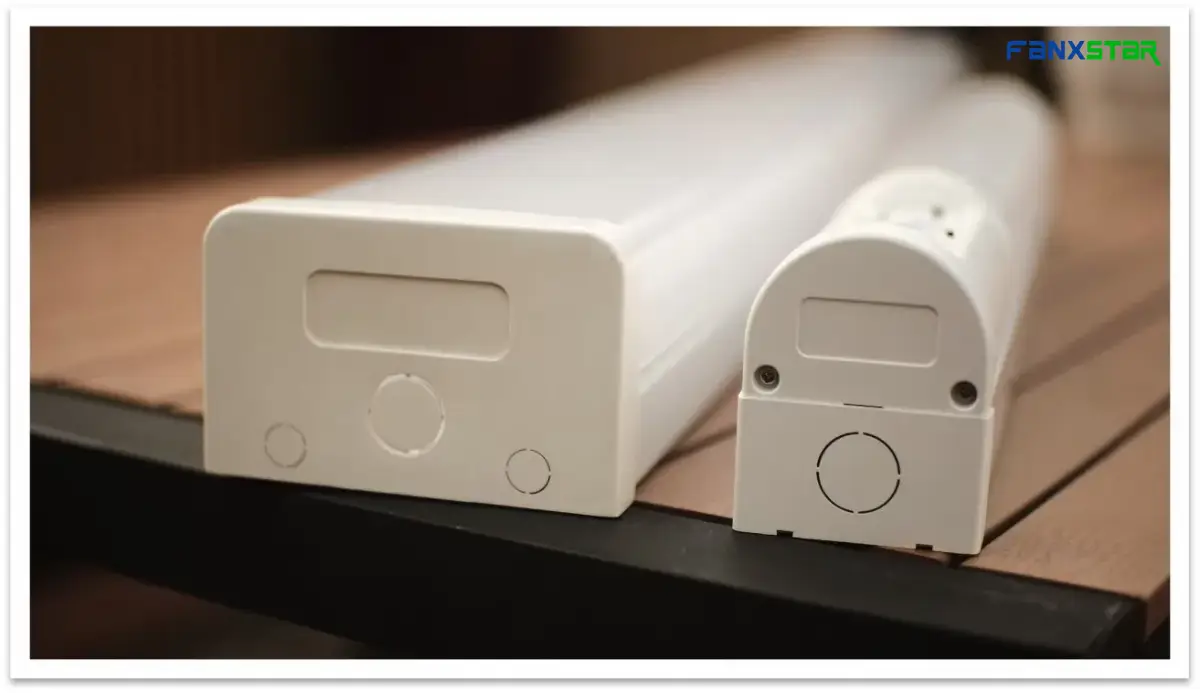
LED Linear lighting refers to a long, thin lighting fixture that gives you a steady and even spread of light. You often see these fixtures in places where you want a modern look and a bright, uniform glow. Unlike round or square lights, linear light stretches out in a straight line. This shape lets you light up large areas or create special effects along walls, ceilings, or floors.
Key Features
You can spot linear light by its unique design and function. Here are some features that set it apart from other lighting options:
Features | Nonlinear Lighting | |
|---|---|---|
Design Patterns | Light sources arranged in straight lines or bars | Light sources arranged in curves or clusters |
Light Distribution | Uniform, continuous light | Variable, dynamic light effects |
Application Scene | Offices, commercial spaces, homes, hallways | Art spaces, displays, stage performances |
Function | Basic lighting and decoration | Visual impact and artistic atmosphere |
Tip: Linear fixtures use LED technology, which means you get energy savings and a long lifespan. The design often includes LEDs lined up inside a slim housing. Some models add lenses or reflectors to control the light and reduce glare.
You can find modular led lighting in many shapes, lengths, and finishes. This makes it easy to match your lighting to the style of your room or building. The fixtures can also create continuous lines of light, which is great for modern designs.
Types and Shapes
You have many choices when it comes to the types and shapes of linear light. Here are some of the most common forms you will see:
LED strip lights: Flexible and easy to install. You can cut them to fit under cabinets, along stairs, or around corners.
LED tube lights: These replace old fluorescent tubes. They work well in garages, basements, and utility rooms.
LED linear fixtures: Strong and built for permanent use. You often see them in offices, stores, and warehouses.
Slim pendant lights: Hang from the ceiling and add a stylish touch to kitchens or meeting rooms.
Modular LED lights: You can connect these pieces to make custom lengths or patterns.
Type | Description | Common Uses |
|---|---|---|
LED Strip Lights | Flexible, can be cut to size, easy to install | Accent lighting, under cabinets, stairs |
LED Linear Fixtures | Sturdy, for permanent setups, bright and even light | Offices, retail stores, warehouses |
LED Tube Lights | Replace fluorescent tubes, energy-efficient, long-lasting | Garages, basements, utility areas |
You can also find linear light in creative shapes. Some fixtures form rectangles, triangles, or even zigzag and snake-like patterns. Designers use these shapes to make bold statements or to fit tricky spaces.
Geometric shapes like rectangles, triangles, and hexagons
Custom patterns for unique architectural needs
Smooth, illuminated corners for continuous light lines
Note: Linear inground uplighters work well when you want a long, narrow beam of light. These are perfect for highlighting pathways or creating dramatic effects along walls.
Linear light stands out because it gives you flexibility in design and function. You can use it for basic lighting, decoration, or to create special visual effects. The straight, slim shape makes it different from round or square lights, which often focus light in one spot or create a different mood.
How Linear Light Works
Illumination Principles
You might wonder why linear light creates such a smooth and even glow. The secret lies in its design and how it spreads light. Linear lights distribute light evenly, so you see fewer shadows and more consistent brightness across a room. This makes them perfect for spaces where you need clear, uniform lighting.
Linear lights distribute light evenly.
They reduce shadows.
They provide consistent illumination across larger areas.
Designers use several principles to achieve this effect. The table below explains how these principles work together:
Principle | Explanation |
|---|---|
Light Distribution Design | Precise optical design ensures uniform light output, avoiding local brightness or darkness. |
Lighting Layout and Installation | Accurate calculation of distance, height, and angle of fixtures ensures even illumination in spaces. |
Intelligent Control System | Automatically adjusts brightness based on ambient conditions, maintaining uniform lighting effects. |
You get a balanced and comfortable environment when these principles come together. This is why you often see linear light in offices, classrooms, and retail spaces.
Mounting Options
You have several ways to install linear light fixtures. Each method offers unique benefits and fits different needs. The most common options include recessed, suspended, and surface-mounted installations.
Installation Type | Key Features | Advantages | Limitations | Common Applications |
|---|---|---|---|---|
Recessed | Installed flush into ceilings, walls, or furniture | Clean and seamless look; Minimal visual intrusion; Great for modern interiors | Requires pre-planned slots or cavities; Higher installation complexity; Less flexible for retrofits | High-end offices, hotel corridors, museums, retail stores |
Suspended | Hung from ceiling using cables or rods | Adjustable height; Adds depth and visual rhythm; Ideal for high ceilings | Visible fixture may affect minimal designs; Requires careful alignment; Needs suitable ceiling for suspension | Open-plan offices, reception areas, retail shops, classrooms |
Surface Mounted | Mounted directly on ceiling or wall surfaces | Quick and easy installation; Low labor cost; Perfect for retrofits | Fixture is visible; Less sleek than recessed; May not fit high-end aesthetics | Hospitals, schools, renovated buildings, industrial spaces |
Surface mounted linear lighting are easy to install and maintain. You can use them in many types of spaces, but they may not blend in with minimalist designs.
Recessed linear lighting give you a clean, integrated look. They work well for modern spaces and low ceilings, but installation is more complex and may cost more.
Suspended linear lighting hang from the ceiling, adding style and flexibility. They suit high ceilings and open areas, but you need to plan for proper alignment.
Tip: Choose the mounting option that matches your space, budget, and design goals. Each method changes how the light looks and feels in your room.
Linear Lighting Benefits
Energy Efficiency
You save energy when you choose linear light fixtures. LED technology converts more electricity into light and less into heat. This means you get brighter spaces without wasting power. Here are some important facts about energy efficiency:
LEDs convert a larger percentage of electrical energy into light compared to incandescent bulbs.
Incandescent bulbs lose most energy as heat, making them less efficient.
LED bulbs produce 40-80 lumens per watt and require less power to achieve high brightness levels.
LEDs use 80-90% less energy than incandescent bulbs and about 30% less than CFLs for the same light output.
The average lifespan of LEDs is 25,000 hours, while CFLs last about 8,000 hours and incandescent bulbs only 750 hours.
Lighting an LED for 25,000 hours costs about $30, which is much less than using CFLs or incandescent bulbs.
You also see big savings when you switch from traditional lighting to LED linear fixtures. The table below shows typical energy savings:
Energy Savings Percentage | Context |
|---|---|
Transition from traditional to LED lighting | |
Up to 75% | Incandescent and halogen lights |
Tip: You lower your electricity bills and reduce maintenance costs when you use LED linear lighting. The long lifespan means you change bulbs less often.
Design Flexibility
You can create many different looks with linear light. Designers use these fixtures to highlight architectural features and meet various lighting needs. You get even illumination that works in many spaces. Here are some ways linear lights offer flexibility:
Lighting designers require flexibility to create optimal atmospheres.
Linear LED lighting is versatile for highlighting architectural features and meeting diverse lighting needs.
It provides even illumination suitable for various spaces.
Linear LED lighting adapts to minimalistic designs with clean lines.
Modern fixtures can bend and connect seamlessly, enhancing architectural flow.
This flexibility allows for continuous lighting that complements the overall design.
Architectural linear lighting shapes aesthetics in offices, galleries, and retail spaces.
It creates continuous light lines that integrate into ceilings or walls.
Enhances the geometry and rhythm of architectural spaces.
You see creative applications in modern spaces. Designers twist and curve linear LED fixtures to connect floors, walls, and ceilings. Custom connections allow for unique patterns that fit specific styles. You find shapes like rectangles, triangles, and curves that enhance the look of a room. Some fixtures form zigzag or snake-like patterns, while others create three-dimensional designs for a distinctive aura. Smooth, illuminated corners let you build creative shapes such as hexagons and crosses. Architects use these patterns both horizontally and vertically to add interest to a space.
Note: You can use custom-length linear lights in suspended or recessed setups. This lets you match the lighting to your room’s size and style.
Wide Area Coverage
You get wide and uniform coverage with linear light. These fixtures provide continuous illumination along their length, so you do not see gaps in the light. You can outline paths or add accents to large areas. Point-source lights create dots of light, but linear fixtures fill the space evenly.
Linear lights offer continuous illumination along their length, ensuring no gaps in light coverage.
They are ideal for outlining paths and providing uniform accents, making them suitable for large areas.
In contrast, point light sources create discrete dots of light, which do not provide uniform coverage across a space.
You achieve optimal coverage by following placement guidelines. The table below lists important factors to consider:
Factor | Recommendation |
|---|---|
Ceiling Height | Consider the height when determining fixture spacing. |
Fixture Output | Higher output allows for wider spacing. |
Beam Angle | Wider angles may require closer spacing. |
Room Dimensions | Larger rooms may need more fixtures spaced appropriately. |
Task-Specific Lighting Needs | Adjust spacing based on the specific light requirements of different tasks. |
Surface Reflectivity | Reflective surfaces can allow for wider spacing; darker surfaces may need closer placement. |
NEMA Guidelines | Maintain at least 1.5 times the mounting height between fixtures and walls. |
OSHA Standards | Use as a baseline for minimum illumination requirements for various tasks. |
Tip: You get the best results when you plan your fixture placement based on your room’s size, ceiling height, and lighting needs.
Applications of Linear Light
Residential Uses
You can use linear light in many areas of your home to improve both function and style. These fixtures work well in kitchens, living rooms, and even laundry rooms. You often see them as under-cabinet lighting, which gives you focused light for cooking or working. Cove lighting adds a soft glow to living spaces, making rooms feel warm and inviting.
Type of Lighting | Description |
|---|---|
Cove Lighting | Creates a warm ambiance in living areas, enhancing aesthetic appeal. |
Under-Cabinet Lighting | Provides task lighting for countertops and workspaces, particularly useful in kitchens. |
Cabinet Lighting | Illuminates countertops and workspaces, enhancing visibility for cooking and food preparation. |
Linear light offers several benefits in homes:
Benefit | Description |
|---|---|
Sleek lines and customizable finishes enhance modern spaces. | |
Energy efficiency | Consumes less power than traditional lighting, reducing utility costs. |
Customization & flexibility | Can be shaped to match interiors and complement custom furniture. |
Uniform illumination & glare reduction | Provides even brightness, ensuring comfort and clarity in the space. |
Tip: You can shape these fixtures to fit your cabinets or shelves, giving you both style and function.
Commercial Uses
You see linear light used widely in offices, retail stores, and hotels. In offices, it helps create a bright, even workspace that reduces eye strain and boosts productivity. Retail spaces use these lights to highlight products and make displays more attractive. Hotels and restaurants use them to set a welcoming mood and show off unique architectural features.
Environment | Primary Use | Benefits |
|---|---|---|
Offices | General lighting with uniform distribution | Reduces eye strain, enhances productivity, and improves employee well-being. |
Retail Spaces | Highlighting merchandise displays and creating visually appealing environments | Attracts customers and enhances the shopping experience. |
Hospitality | Creating a warm and welcoming atmosphere, highlighting architectural features | Enhances guest experience and makes spaces more inviting. |
Linear lighting in offices promotes productivity and well-being.
In retail, it highlights merchandise and enhances the shopping experience.
In hospitality, it creates inviting atmospheres and emphasizes architectural features.
Note: Good lighting design can make customers feel welcome and encourage them to spend more time in a space.
Modern Trends
You now have more creative options than ever with linear light. New fixture profiles and configurations let you design unique layouts, such as zigzags or curves, that fit your space perfectly. Recessed designs allow you to blend lights into walls or ceilings for a seamless look. Smart lighting controls and IoT integration bring even more flexibility. Features like occupancy sensors and daylight sensors help you save energy by adjusting light levels in real time.
Advancements in fixture profiles allow for creative layouts and applications.
Custom-length lights can form shapes like zigzags and curves.
New recessed designs create dynamic visual effects in modern interiors.
IoT-enabled systems offer smart controls, improving efficiency and sustainability.
Sensors enable real-time adjustments, reducing unnecessary energy use.
Callout: Smart linear lighting systems help you save energy and create the perfect atmosphere for any room or business.
Evolution of Linear Light
Traditional to Modern
You have seen linear light change a lot over the years. Early on, people used fluorescent tubes because they lasted longer and saved more energy than old incandescent bulbs. These tubes helped move lighting away from round bulbs and toward long, straight fixtures. As technology improved, LED lighting became the new standard. LEDs are smaller, create less heat, and let you customize your lighting setup. Modern LED fixtures now offer even more energy savings and lower costs, making them a smart choice for homes and businesses.
Here is a quick look at how linear light has evolved:
Stage of Evolution | Key Features | Impact |
|---|---|---|
Traditional Fluorescent Tubes | Introduced energy savings and longevity | Shifted away from incandescent lighting |
LED Technology | Compact size, customization, minimal heat | Enhanced versatility and sustainability |
Significant energy efficiency, reduced costs | Contributes to environmental sustainability |
Early linear lights had some problems. You might have noticed dark spots or uneven coverage because you could not link fixtures together easily. Long spaces often looked poorly lit. Incandescent and fluorescent bulbs did not work well for large or custom areas. Today, modular LED designs let you connect pieces for smooth, even light. You can also repair or replace parts more easily, which lowers maintenance costs.
Tip: Modern LED linear lights give you more control and flexibility. You can light up any space, big or small, without worrying about dark spots.
Current Popularity
Today, linear light is more popular than ever. The global market for linear lighting is expected to reach about $47.2 billion by 2030. You can see this growth in many places, from homes to offices and even in farming. The market is growing at a fast rate of 11.2% each year from 2024 to 2030.
More people want LED technology and smart lighting in their spaces.
You see a big push for sustainable lighting as people care more about the environment.
New LED and smart systems are changing how you use and control light.
Energy efficiency is now a top priority for both consumers and businesses.
The fastest growth is happening in the Asia-Pacific region. Countries like China and India lead the way because of rapid urbanization and strong government support. These places have booming industries and new buildings that need modern lighting. Commercial and industrial sectors are also adding smart features, like IoT controls, to their lighting systems.
Region | Key Factors Driving Growth | Market Position |
|---|---|---|
Asia-Pacific | Rapid urbanization, digital connectivity, government-backed industrial modernization efforts | Dominant |
China | Leading producer with robust manufacturing infrastructure and increased domestic demand | Leading Position |
India | Rising consumer spending and infrastructure development | Significant Growth |
Note: As technology keeps advancing, you will see even more creative and efficient uses for linear light in every part of life.
You have learned that linear light offers many advantages for homes and businesses. It brings versatility, energy savings, and easy installation. The table below highlights key benefits:
Advantage | Description |
|---|---|
Versatility | Fits many designs and spaces |
Mood Setting | Adjusts for different occasions |
Easy Installation | Simple to set up and maintain |
Energy Efficiency | Saves power and lasts longer |
Task Lighting | Brightens work areas and offices |
You can use linear lights to create a cozy living room, a productive office, or a stylish retail space. Explore different fixture types to match your needs and enjoy better lighting every day!
FAQ
How do you install linear light fixtures?
You can install linear lights in three main ways: surface-mounted, recessed, or suspended. Each method fits different spaces. Always follow the manufacturer’s instructions. If you feel unsure, ask a licensed electrician for help.
Can you dim linear LED lights?
Most linear LED lights support dimming. You need a compatible dimmer switch and driver. Check the product details before buying. Dimming lets you control brightness and save energy.
How long do linear LED lights last?
Linear LED lights usually last 25,000 to 50,000 hours. You get years of use with little maintenance. LEDs last much longer than traditional bulbs.
Are linear lights safe to use in wet areas?
Note: Some linear lights have waterproof ratings like IP65 or higher. You can use these in bathrooms, kitchens, or outdoors. Always check the product label for safety information.
What are the main benefits of using linear light?
You get even, wide coverage.
You save energy with LED technology.
You can customize the design for any space.
You enjoy a modern look that fits many styles.








